Discover the science-backed truth about whether brushing hair stimulates growth and the best brushes proven to support healthier, longer strands.
In the quest for thicker, longer hair, one simple habit keeps surfacing: brushing. Search interest in “does brushing hair stimulate growth” and “best brush for hair growth” spikes every year as people look for affordable, non-invasive ways to boost their mane. But does daily brushing actually make hair grow faster? Or is it just an old beauty myth? In this comprehensive guide, we’ll separate fact from fiction, reveal how proper brushing supports scalp health, and share the best brushes for hair growth backed by dermatologists, stylists, and real-user results. By the end, you’ll know exactly how to brush for maximum benefits—without causing damage.
Does Brushing Hair Stimulate Growth? Myth vs. Fact
The short answer: Brushing hair does not directly stimulate new hair growth at the follicle level, but it creates optimal conditions for healthier, faster-growing strands by improving scalp circulation and reducing breakage.
Hair growth is primarily genetic—averaging ½ inch per month in the anagen (growth) phase. No brush can override your DNA or hormones. However, gentle brushing acts like a natural scalp massage. It increases blood flow, delivering oxygen and nutrients to follicles. It also distributes sebum (natural scalp oils) down the hair shaft, protecting against dryness and split ends that make hair appear shorter.
Scientific backing is limited but supportive. A 2009 PubMed study found that reducing brushing frequency lowered hair shedding in women, while excessive friction causes cuticle damage. Clinics like Wimpole and Bosley note that while brushing won’t revive dormant follicles, it prevents breakage so your hair can reach its full genetic length. Brands like Gisou and Viviscal emphasize indirect benefits: better nutrient delivery and a clean, exfoliated scalp.
Key takeaway: Brushing supports growth indirectly. Over-brushing (the old “100 strokes a day” rule) does the opposite—causing friction, breakage, and even traction alopecia.
What the Science Says About Scalp Stimulation
Improved circulation from brushing may enhance follicle activity, but results vary by individual health, diet, and stress levels. Combine brushing with a nutrient-rich diet for best outcomes.
Proven Benefits of Brushing for Hair Growth
When done correctly, brushing delivers multiple hair-growth advantages:
- Boosts scalp blood flow: Acts as a mini massage, nourishing follicles.
- Distributes natural oils: Reduces frizz, adds shine, and prevents dry, brittle ends.
- Exfoliates buildup: Removes dead skin cells and product residue that clog follicles.
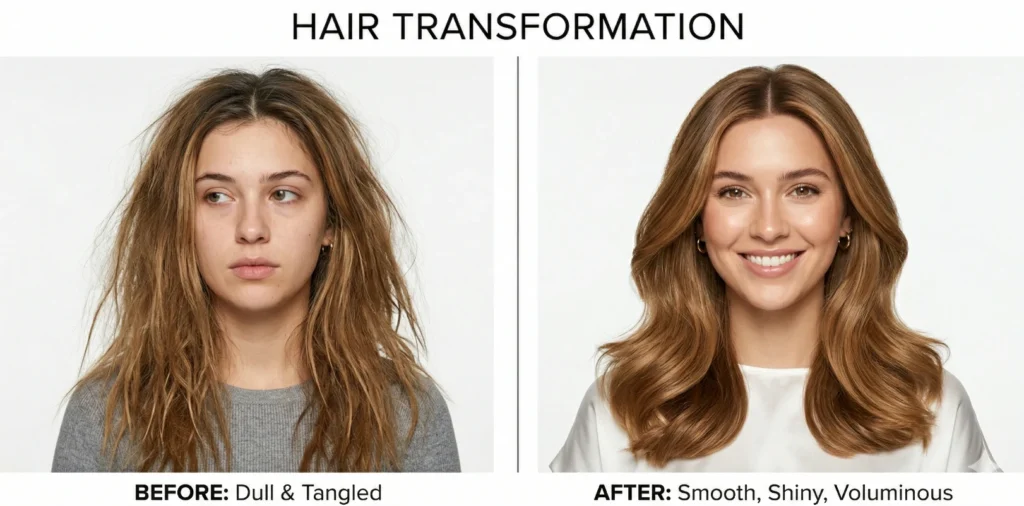
- Reduces breakage and shedding: Keeps strands tangle-free and strong.
- Improves overall hair health: Leads to visibly thicker, longer hair over time.
These benefits explain why stylists and trichologists recommend daily gentle brushing as part of any hair-growth routine.
How to Brush Your Hair to Maximize Growth (Step-by-Step Guide)
Proper technique is everything. Here’s how to brush for growth without damage.
Frequency and Timing
Brush 1–2 times daily—morning to distribute oils and evening to detangle. Avoid brushing wet hair unless using a specialized detangler; wet strands are 3x more fragile.
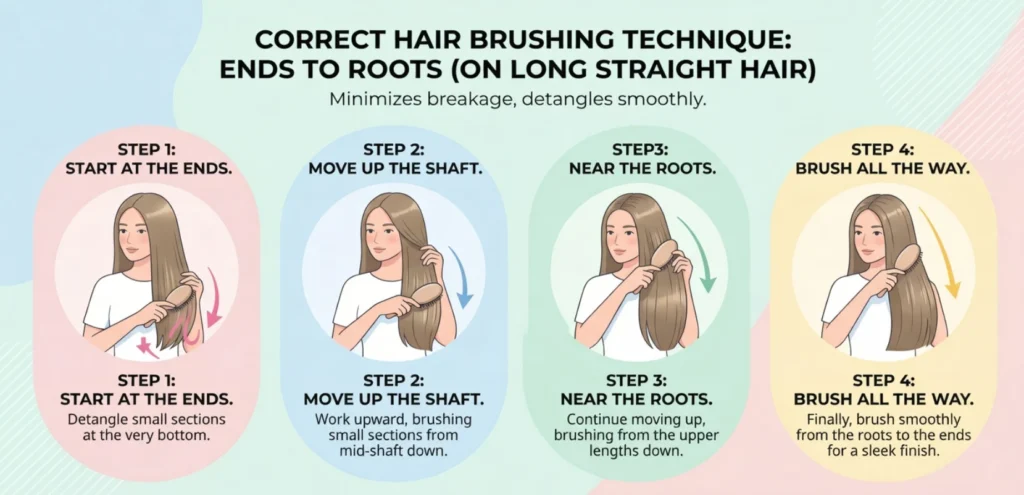
Step-by-Step Brushing Technique
- Start at the ends and work upward in small sections to prevent knots.
- Use gentle, smooth strokes—never yank.
- Focus on the scalp with light circular motions for massage benefits.
- Finish by brushing from roots to tips to spread sebum.
- For thick or curly hair, section and use a wide-tooth comb first.
Pro tip: Apply a leave-in conditioner on mid-lengths to ends before brushing for extra slip and protection.
Best Brushes for Hair Growth: 2026 Comparison
The right brush turns a simple habit into a growth-boosting ritual. Boar bristle brushes excel at oil distribution and gentle scalp massage, while hybrid and detangling options minimize breakage. Here’s a comparison table of the best brushes for hair growth based on expert reviews, user feedback, and performance for circulation and scalp health.
| Brush Name | Bristle Type | Best For | Key Growth Benefits | Approx. Price (USD) | Rating (Out of 5) |
|---|---|---|---|---|---|
| Mason Pearson Junior | Boar + Nylon | All hair types, fine to medium | Superior oil distribution, scalp massage, long-lasting shine | $200–$225 | 4.9 |
| Wet Brush Original Detangler | Soft nylon, flexible | Wet/dry, thick/curly | Painless detangling, reduces breakage by up to 50% | $8–$12 | 4.8 |
| Tangle Teezer Ultimate | Flexible plastic | All types, especially sensitive scalps | Gentle massage, stimulates circulation without pulling | $15–$20 | 4.7 |
| La Bonne Brosse N.04 | Nylon (varied sizes) | Thick/curly, thinning | Deep scalp exfoliation + massage for nutrient delivery | $100–$120 | 4.8 |
| Crown Affair Boar Bristle | Natural boar | Fine/thin hair | Excellent sebum distribution, natural shine and growth support | $110–$120 | 4.6 |
| Bamboo Paddle Brush (e.g., GAINWELL) | Natural bamboo/wood | Eco-friendly, all types | Lightweight, antimicrobial, gentle scalp stimulation | $15–$25 | 4.5 |
| Olivia Garden Healthy Hair | Ionic + boar/nylon | Dry/damaged hair | Ionic technology reduces static, promotes healthy follicle environment | $20–$30 | 4.7 |
Table notes: Prices are approximate retail as of 2026. Choose boar bristles for dry hair and detanglers for thick/curly textures. Always replace brushes every 6–12 months when bristles wear out.
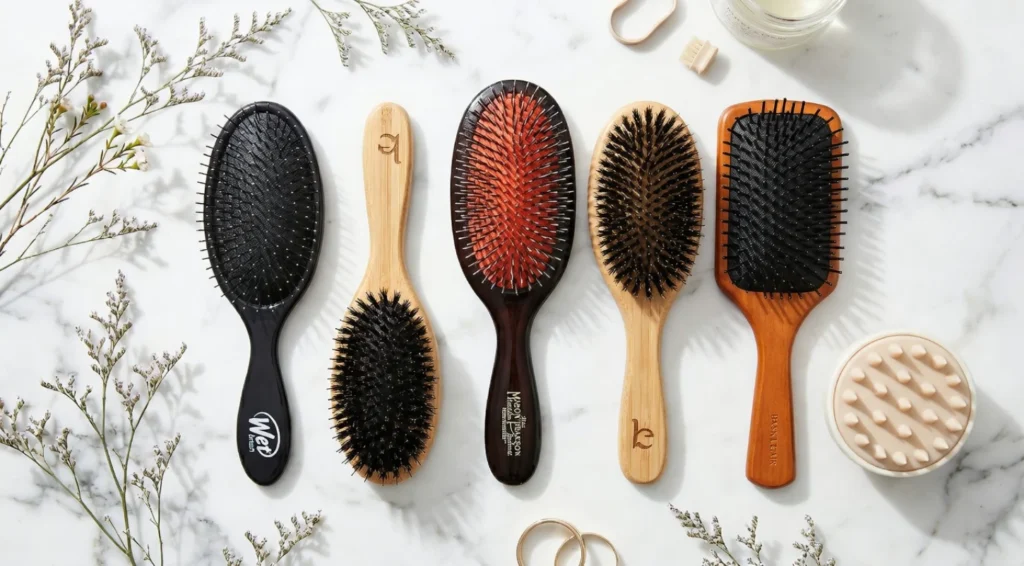
Choosing the Right Brush for Your Hair Type
- Fine/thin hair: Soft boar bristle (e.g., Crown Affair) for gentle stimulation without pulling.
- Thick/curly/coily: Flexible detanglers like Wet Brush or Tangle Teezer to avoid breakage.
- Dry or damaged: Hybrid boar + nylon (Mason Pearson) for oil distribution and smoothing.
- Sensitive scalp: Paddle brushes with cushioned bases and ball-tipped bristles.
Look for natural materials like bamboo for antimicrobial properties and eco-appeal.
Common Mistakes to Avoid When Brushing for Growth
- Brushing wet hair vigorously (use a wide-tooth comb instead).
- Using dirty or old brushes (clean weekly with mild soap).
- Over-brushing or aggressive strokes—gentle is better.
- Ignoring hair type (wrong brush = more damage).
Additional Tips to Amplify Brushing Benefits for Hair Growth
Pair brushing with scalp massages (2–5 minutes daily), a balanced diet rich in biotin, iron, and omega-3s, and stress management. Consider supplements or topical treatments if shedding persists. For best results, brush consistently for 4–6 weeks and track progress with monthly photos.
Conclusion: Start Brushing Smarter for Healthier Hair Growth
Does brushing hair stimulate growth? Not directly—but the best brushes for hair growth combined with proper technique create the ideal scalp environment for longer, stronger strands. Skip the myths, invest in a quality brush, and adopt the gentle routines outlined here. Your hair will thank you with shine, strength, and visible length gains.