
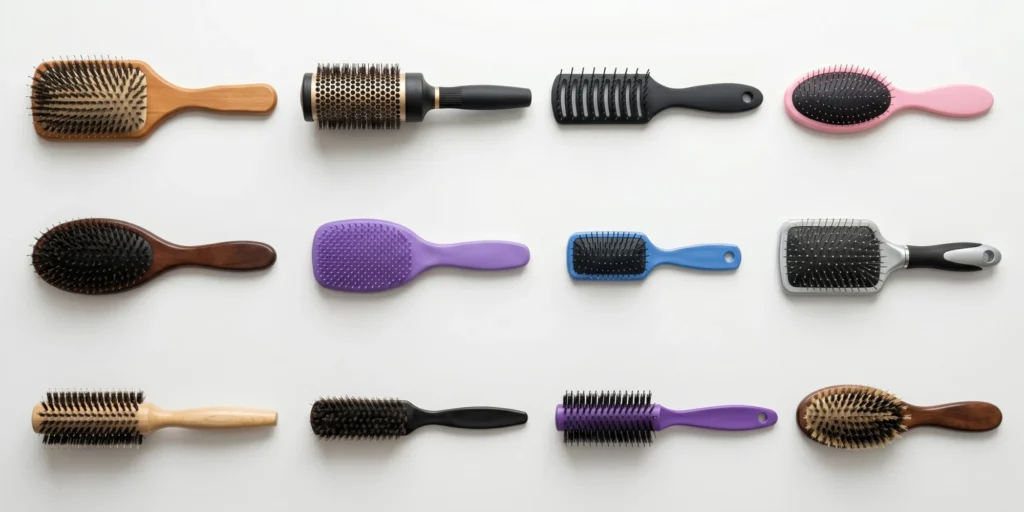
Placing a custom hair brush order without a systematic pre-order checklist is one of the most reliable ways to encounter expensive problems after production has begun. Specification mismatches, certification gaps, sampling shortfalls, and unclear tooling ownership are the four most common categories of dispute between buyers and hair brush manufacturers — and all four are largely preventable if the right questions are asked before the purchase order is signed.
This checklist is structured for brand developers, importers, and retail buyers working with OEM and private label hair brush manufacturers for the first time or expanding an existing range. Each point identifies what to confirm, why it matters, and what the consequence of overlooking it typically is.
1. Bristle Specification Is Documented in Writing
Verbal agreement on bristle type is not sufficient. Before placing an order, the full bristle specification should appear in writing in the product specification sheet or purchase order, including bristle material (boar, nylon, mixed, or synthetic alternatives), bristle grade for natural bristle, nylon diameter and stiffness rating for synthetic bristle, bristle length, and row density.
Bristle specification is the single variable most likely to be substituted during production if it is not explicitly locked. Manufacturers working under cost pressure may substitute lower-grade boar bristle for the specified grade, or adjust nylon pin diameter, without notifying the buyer if the specification has not been formally documented. The performance difference between bristle grades is significant — particularly for fine hair applications where soft, dense bristle is functionally necessary, as covered in our guide on the best hair brush for fine and thin hair.
2. A Golden Sample Has Been Approved and Retained
A golden sample — also called a production standard sample — is the physical reference unit against which all production output is measured. Before any order is placed, a golden sample that has been physically approved and signed off by both the buyer and the manufacturer should exist, with one copy retained by each party.
The golden sample should reflect every specification variable that matters: bristle type and grade, cushion base firmness, handle material and finish, pin tip type, logo placement, and packaging. If disputes arise during or after production, the golden sample is the objective reference point. Without it, quality disputes become subjective, and the manufacturer’s position is inherently stronger because they have visibility into the production standard that the buyer does not.
3. MOQ and Production Lead Time Are Confirmed for Each SKU
Minimum order quantities and lead times should be confirmed for each individual SKU in the order, not for the order as a whole. A manufacturer may state a lead time of 45 days for the range, but individual SKUs with custom tooling requirements, specialty bristle grades, or complex handle constructions may require additional time that is not communicated until after the order is placed.
Confirming MOQ per SKU is also important for buyers testing a range before committing to full production volumes. Some manufacturers offer lower MOQ for repeat SKUs than for new tooling, and understanding this distinction before placing the order prevents the situation where a buyer commits to higher volumes than necessary on test SKUs because the MOQ differential was not discussed. Our article on how to choose a reliable hair brush factory covers how to evaluate these commitments as part of factory assessment.
4. Tooling Ownership and Reuse Rights Are Agreed
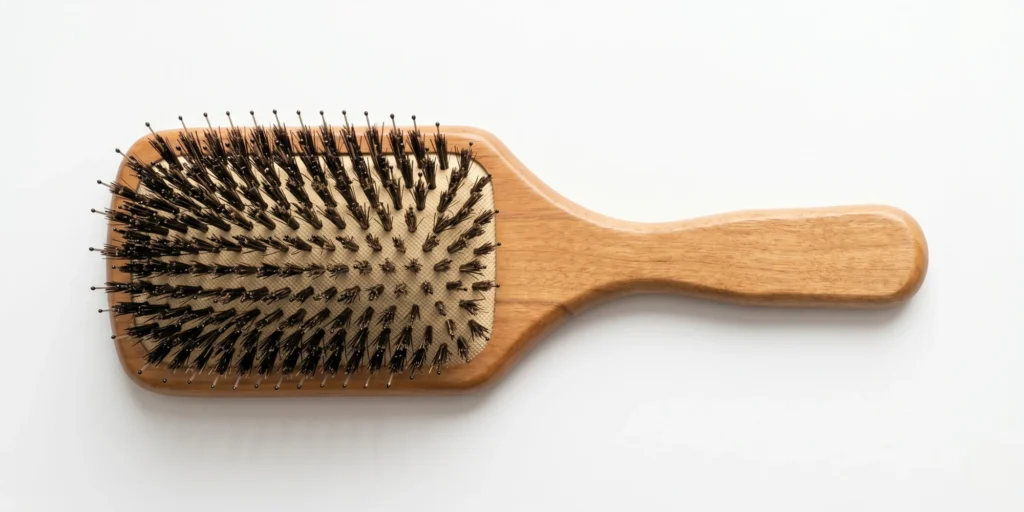
Custom hair brush handles, bases, and mould-specific components require tooling — physical moulds used in the manufacturing process. Tooling costs are typically charged separately from unit price, and the question of who owns the tooling after the first order is one of the most commonly contested points in OEM hair brush manufacturing.
Before placing an order, confirm in writing: who pays for the tooling, who retains ownership of the tooling after the first production run, whether the tooling fee is amortised across the first order or charged as a separate upfront cost, and whether the buyer has the right to transfer the tooling to a different manufacturer if the relationship ends.
Buyers who do not own their tooling are dependent on the original manufacturer for reorders, regardless of performance, price, or relationship issues. For brands investing in custom handle or base development, tooling ownership is a strategic question with long-term implications for manufacturing flexibility.
5. Certifications Match Your Target Market Requirements
Hair brush export markets have different certification requirements, and the relevant certifications vary by destination market, retail channel, and product material. Before placing an order, confirm that the manufacturer holds — or can support compliance with — the certifications required for your specific market.
Common requirements include BSCI or SEDEX for ethical manufacturing audits (required by most major European and US retailers), REACH compliance for chemical safety in materials sold in the EU, California Proposition 65 compliance for US market products, and GRS (Global Recycled Standard) certification if recycled material content is being claimed. For brands entering professional channels, additional retailer-specific quality audit requirements may apply.
Confirming certification status before placing an order prevents the situation where production is complete but the product cannot be legally sold or listed in the target retail channel. A more detailed breakdown of relevant certifications for hair brush sourcing is available in our article on how to choose a reliable hair brush factory.
6. Packaging Specification Is as Detailed as the Product Specification
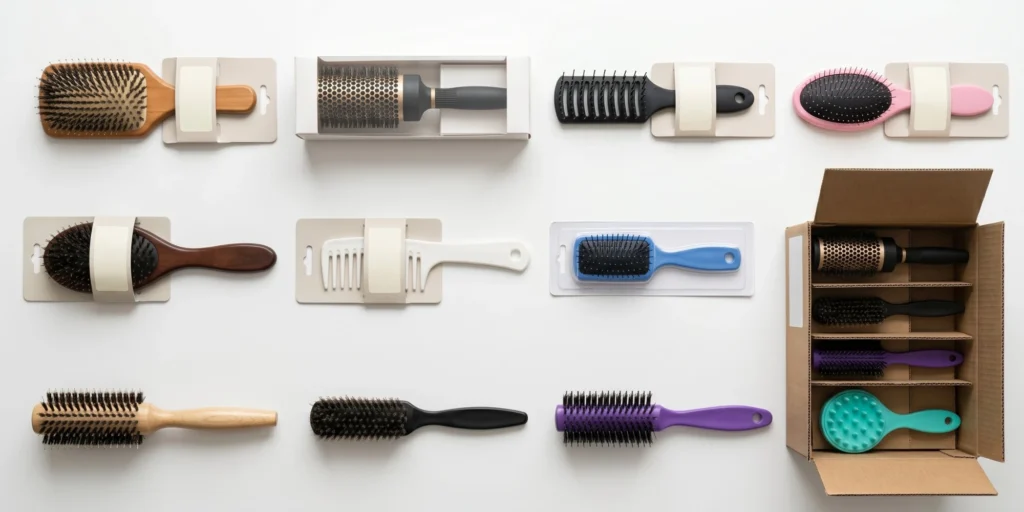
Packaging failures — wrong dimensions, incorrect print colours, missing barcode placement, incompatible inner carton configurations for retail shelf or e-commerce fulfilment — are among the most common causes of production delays and re-work costs in hair brush orders. They are also among the most consistently under-specified items in the pre-order process.
Before placing an order, the packaging specification should include: retail unit dimensions and material, header card or hang tag specification, barcode position and format, inner carton quantity and dimensions, master carton quantity, dimensions, and gross weight, and any retail-specific requirements such as shelf-ready packaging or peg-hole positioning.
If the order is destined for Amazon fulfilment, FNSKU label requirements and polybag suffocation warning label placement should also be confirmed before production. Correcting packaging non-compliance after production is significantly more expensive than specifying it correctly upfront.
7. Payment Terms and Inspection Rights Are Formalised
Standard OEM hair brush payment terms are typically 30 percent deposit at order placement and 70 percent balance before shipment, though terms vary by manufacturer and order volume. Before placing an order, confirm the full payment schedule, the currency in which payment is required, and whether the balance payment is triggered by production completion or by passing a pre-shipment inspection.
The right to conduct a pre-shipment inspection — or to engage a third-party inspection service — should be explicitly agreed before the order is placed. Some manufacturers include pre-shipment inspection rights in their standard terms; others treat it as an add-on that must be negotiated. For buyers who cannot conduct in-person inspection, engaging a third-party quality inspection service (such as SGS, Bureau Veritas, or a specialist consumer goods inspector) before the balance payment is a standard risk management measure.
8. The OEM vs. ODM Model for This Order Is Clear
Before placing a custom hair brush order, the manufacturing model should be explicitly agreed: are you supplying the design and the manufacturer is producing it (OEM), or is the manufacturer providing the design and you are branding it (ODM)? The distinction has significant implications for tooling ownership, design IP, reorder flexibility, and the degree of specification control the buyer has during production.
Both models are legitimate, and both have use cases where they are appropriate. The decision between them should be made before the order is placed, not resolved ambiguously after disputes arise. Our article on OEM versus ODM manufacturing models provides a detailed comparison to help buyers clarify which model applies to their sourcing situation.
9. Hair-Type Performance Claims Are Supported by the Specification
If the product will carry hair-type positioning — fine hair, curly hair, colour-treated hair — on the packaging, the specification should be reviewed to confirm that it actually supports the claim. A brush marketed for fine hair that uses a medium-grade boar bristle with a hard base, or one marketed for frizz reduction that uses hard nylon pins, will generate the consumer complaints and returns that follow from positioning a product beyond what its specification can deliver.
This is not only a consumer satisfaction issue — it is a regulatory issue in markets where hair care product claims are subject to substantiation requirements. Before placing an order on a product with hair-type or performance claims, confirm that the bristle grade, pin stiffness, cushion base, and overall specification are consistent with what the claim implies. The performance mapping by bristle type and hair type is covered in our guide on how to choose the right hair brush for your hair type.
10. Reorder Consistency Terms Are Agreed
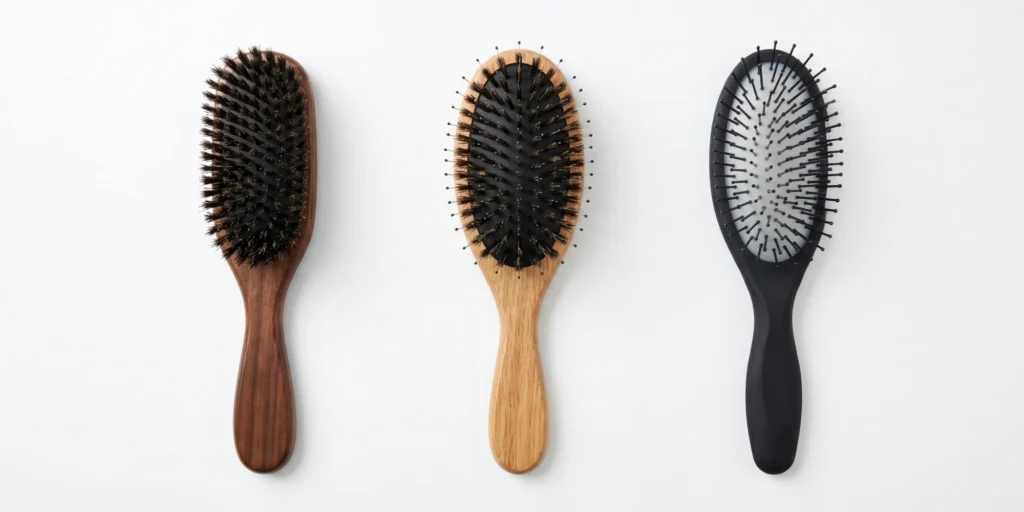
The first production run of a new custom hair brush SKU is not the end of the specification management process — it is the beginning. Before placing the initial order, confirm what the manufacturer commits to for reorder consistency: will the same bristle grade and source be used for all subsequent orders, are there conditions under which material substitutions may be made without buyer notification, and what is the process for raising and resolving quality deviations between runs?
Reorder consistency is particularly critical for brands that have built consumer trust around specific product performance. A second production run with lower-grade bristle, a different cushion base firmness, or an altered nylon pin diameter may be imperceptible to the manufacturer but immediately noticeable to repeat customers. Formalising reorder consistency standards before the first order ensures that the golden sample approved at the outset remains the production standard across all subsequent runs.
Frequently Asked Questions
What is the minimum information I need to place a custom hair brush order?
At minimum: bristle type and grade, pin configuration and tip type, cushion base specification, handle material and finish, logo placement and method, packaging specification, MOQ per SKU, lead time, payment terms, and certification requirements for the target market. Any of these left unspecified creates a gap that will typically be filled by the manufacturer’s default, which may not match the buyer’s expectation.
How many samples should I request before approving production?
Most buyers request an initial development sample to confirm design direction, followed by a pre-production sample incorporating all revisions, and then a golden sample approved as the production standard. For complex specifications or new supplier relationships, a production pilot run of a small quantity before committing to full production volume is a common additional step.
Who typically pays for tooling in a custom hair brush order?
The buyer typically pays for custom tooling, either as an upfront charge or amortised across the first production run. Standard tooling — handle and base designs already held by the manufacturer — may carry no additional tooling cost. The ownership of buyer-funded custom tooling should be explicitly agreed before payment, with the buyer retaining ownership and the right to transfer it to another manufacturer if needed.
What certifications are most commonly required for hair brush exports?
BSCI or SEDEX for major retail channels in Europe and the US; REACH for EU chemical safety compliance; California Proposition 65 for US market products; GRS for recycled content claims. Specific retailers may require additional proprietary audit certifications. Requirements should be confirmed for each specific target market and retail channel before finalising the order.
What happens if production output does not match the golden sample?
If a pre-shipment inspection right has been agreed, deviations from the golden sample can be identified before the balance payment is made and before the goods are shipped. The corrective action — rework, replacement, or price adjustment — is then negotiated before the buyer accepts the goods. Without a pre-shipment inspection, quality deviation disputes are significantly more difficult to resolve once the goods have been shipped and cleared customs.
Conclusion
A systematic pre-order checklist prevents the majority of disputes, delays, and quality failures that occur in custom hair brush manufacturing. The ten points above address the most common sources of post-order problems: under-specified bristle and packaging, unclear tooling ownership, certification gaps, ambiguous payment and inspection terms, and reorder consistency standards that were never formalised. Addressing each before the purchase order is signed converts the pre-order process from a formality into the primary risk management stage of the sourcing relationship.
For brands working with manufacturers that support a structured pre-order process — providing detailed specification sheets, golden sample protocols, and formalised reorder consistency commitments — the relationship starts on a foundation that produces consistent output rather than managed surprises. Manufacturers such as JunYi Beauty, which supports buyers through specification development, sample approval, certification documentation, and production consistency protocols from its Dongguan facility, represent the type of OEM partner suited to brands for whom pre-order clarity and post-production consistency are sourcing priorities.