
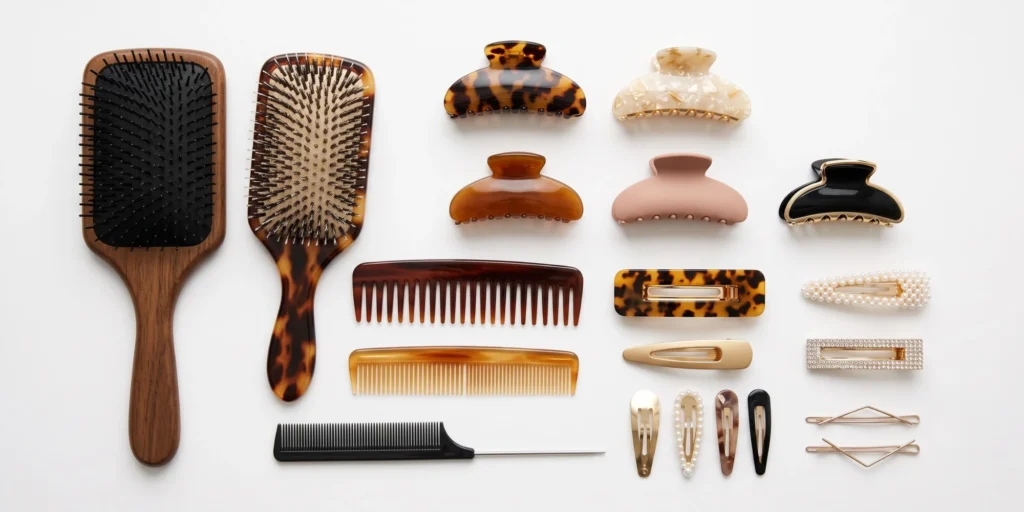
Sourcing hair accessories from China is one of the most established and cost-effective supply chain routes in the global consumer goods industry. It is also one of the most competitive and least standardised — with manufacturer quality, service levels, and reliability varying by orders of magnitude between suppliers that appear superficially similar in trade show listings and B2B platform search results. For buyers new to Chinese hair accessories sourcing, and for experienced buyers expanding into new product categories, the qualification and selection process determines whether the sourcing outcome is a durable commercial advantage or an ongoing operational problem.
This checklist covers the practical stages of sourcing hair accessories from China — from initial supplier identification through production management and post-shipment quality control. It applies across the hair brush, hair comb, and hair clips categories, and complements the manufacturer-specific evaluation guidance in our profiles of the top 5 hair clip manufacturers and top 5 acetate hair clip manufacturers.
Stage 1: Define Your Sourcing Requirement Before Contacting Suppliers
The most common preventable failure in Chinese hair accessories sourcing is contacting suppliers before internal requirements are fully defined. Suppliers respond to the specifications and volumes they are given — a poorly defined enquiry produces unhelpful quotes, mismatched samples, and wasted development cycles.
Product Specification
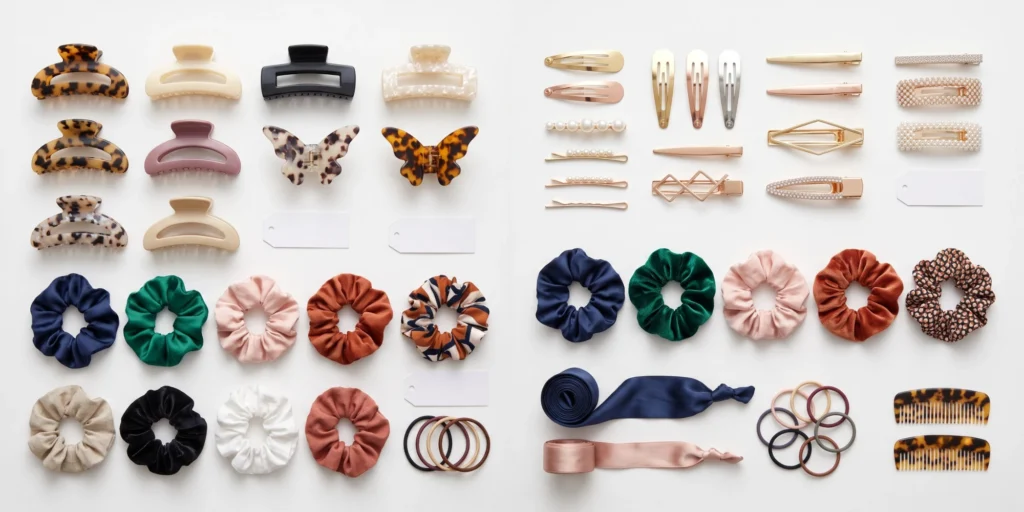
Before approaching manufacturers, document the specific product being sourced at a level of detail that a supplier can quote against. For hair brushes, this includes bristle type and grade, cushion base specification, handle material and finish, and shape. For hair combs, tooth spacing, tooth count, material, and handle design. For hair clips, material (cellulose acetate, resin, ABS, metal, recycled plastic), hardware type and finish, and size range.
A specification defined at this level allows the supplier to quote accurately and prevents the ambiguity that produces sampling discrepancies. Vague enquiries — “custom hair brush for premium market” — generate vague quotes that do not commit the supplier to specific quality standards.
Target Market and Retail Channel
The target market determines which certifications, chemical safety standards, and packaging requirements apply. Sourcing for EU retail requires REACH compliance and typically BSCI audit certification. US retail requires Proposition 65 compliance and often CPSIA where the product may be used by children. Amazon FBA requires specific labelling and packaging compatibility. The certification requirements for hair brush and hair accessory sourcing vary significantly by target channel and should be established before supplier qualification.
Order Volume and Frequency
Realistic order volume estimates — not aspirational figures — determine which manufacturer tier is appropriate. A buyer placing 500-unit test orders should not approach manufacturers with 10,000-unit minimum order quantities. A buyer placing 100,000-unit seasonal programmes needs manufacturers with the capacity redundancy to absorb the peak, not boutique specialists who cannot scale.
Budget and Price Position
The target retail price point determines the acceptable manufacturing cost. Approaching premium acetate specialists for a mass-market resin clip range is a mismatch that wastes both parties’ time. Establishing budget ranges before supplier outreach filters out mismatched relationships early.
Stage 2: Identify and Shortlist Manufacturers
Sources for Manufacturer Identification
The four primary sources for identifying Chinese hair accessories manufacturers each have different profiles.
B2B platforms — Alibaba, Global Sources, and Made-in-China — provide broad exposure to manufacturer options with searchable databases. The scale of these platforms means that quality varies significantly, and platform-level verification badges (Trade Assurance, Verified Supplier) provide baseline reassurance but are not substitutes for independent qualification.
Trade shows — the Canton Fair (Guangzhou), CHINABEAUTY (Shanghai), and specialty hair accessories shows — allow direct evaluation of samples and face-to-face relationship building with sales representatives. Trade shows are more efficient for advanced qualification of shortlisted suppliers than for initial identification.
Industry directories and specialist agents — sourcing agents specialising in hair accessories, personal care, or beauty categories can shortlist manufacturers based on their existing knowledge of the category. The tradeoff is agent fees and reduced direct supplier relationships.
Referrals and direct manufacturer research — established manufacturers often have web presence beyond B2B platforms, and searching for hair accessories brands’ known manufacturing partners can identify capable suppliers not actively marketing on platform channels.
Shortlist Qualification Criteria
Before requesting samples or quotes from a shortlist, apply basic qualification filters:
- Confirmed manufacturing capability (not trading company) in the specific product category
- Production capacity aligned to your order volume
- Certifications aligned to your target market requirements
- Communication responsiveness in your working language
- Existing client references in your target market and channel type
Manufacturers that fail any of these filters at the shortlist stage will not become good partners regardless of how competitive their pricing appears. Filtering aggressively at this stage saves development time later.
Stage 3: Request Quotes and Compare Meaningfully
What a Complete Quote Should Include
A complete manufacturer quote for hair accessories should specify:
- Unit price at the specified order volume
- MOQ per SKU and per colour/variant
- Tooling costs for any custom shapes or moulds
- Lead time from confirmed sample approval to shipment
- Sample development lead time and cost
- Payment terms (deposit and balance percentages, payment methods accepted)
- Packaging inclusion or separate cost
- Certification documentation availability
- FOB or EXW port and any freight quote
Quotes missing any of these elements are incomplete and should be clarified before comparison. A quote that appears lower than competitors’ because it excludes tooling cost, packaging, or certification testing is not actually lower — it is presented misleadingly.
The Danger of Price-Only Comparison
Comparing manufacturer quotes on unit price alone is one of the most consistently costly errors in Chinese sourcing. A 10% unit price advantage disappears rapidly against quality inconsistency, missed lead times, communication difficulties, and post-shipment problems. The manufacturers offering the lowest quoted prices often do so by cutting corners in areas — bristle grade substitution, hardware specification, quality inspection depth — that generate costs after production.
Meaningful quote comparison weighs unit price alongside qualification factors: certification completeness, communication quality, sample quality, reference verification, and the manufacturer’s demonstrated attention to specification detail during the quoting process itself.
Stage 4: Sample Development and Golden Sample Approval
First Development Sample
The first sample from a manufacturer serves two purposes: confirming that the specification has been understood and evaluating manufacturer capability. Sample fees are typically charged and often credited against the first production order. The first sample rarely matches the final specification exactly — it is a starting point for revision, not a production standard.
When evaluating the first sample, assess both the match to specification and the manufacturer’s attention to detail. Samples that arrive with visible construction defects, incorrect materials, or ignored specification points signal a manufacturer that does not read specifications carefully — a problem that will compound at production volume.
Revision Cycles
Most sourcing programmes require two to three sample revision cycles to reach an approvable production standard. Each revision should be based on specific, documented feedback — not general statements. “Improve the quality” is not actionable feedback; “reduce bristle stiffness from Grade 3 to Grade 2” is.
Documenting revisions in writing, with dated versions of the specification sheet, prevents the drift that occurs when specifications are discussed verbally or via chat message without being consolidated into a single authoritative document.
Golden Sample Approval
The golden sample is the physical reference unit that defines the production standard. Both the buyer and the manufacturer retain a copy, and both sign the specification sheet that accompanies it. All future production output is measured against this reference. The full pre-order verification process — including golden sample approval, tooling ownership, and reorder consistency terms — is detailed in our guide on 10 things to check before placing a custom hair brush order.
Without a formal golden sample and signed specification, quality disputes during production become subjective — and the manufacturer’s position is inherently stronger in ambiguous cases because they have visibility into the production standard that the buyer does not.
Stage 5: Contract Terms and Order Placement
Payment Terms
Standard payment terms for Chinese hair accessories manufacturers are 30% deposit at order placement and 70% balance before shipment. Terms vary by relationship maturity and order volume — established buyers with proven order history may negotiate more favourable terms; new buyers or complex specifications may require larger deposits.
Payment methods typically include T/T (telegraphic transfer / wire transfer) and, for smaller orders, PayPal. T/T is standard for volume production; PayPal offers buyer protection but adds fees that are impractical at scale.
Inspection Rights
The right to conduct pre-shipment inspection — or engage a third-party inspection service — should be explicitly agreed in writing before deposit payment. Some manufacturers include inspection rights in their standard terms; others treat it as a negotiated add-on. For buyers who cannot conduct in-person inspection, engaging a third-party quality inspection service (SGS, Bureau Veritas, AsiaInspection, TÜV Rheinland, or specialist consumer goods inspectors) before balance payment is standard risk management practice.
Intellectual Property Protection
For custom designs, moulds, and proprietary colour or pattern development, IP ownership and use restrictions should be documented in writing. The default position in Chinese manufacturing is often that the manufacturer retains rights to tooling and designs developed on their premises. Buyers who want exclusive rights to designs they have paid to develop must specify this explicitly in the contract.
For buyers making significant IP investments, filing for design or utility model protection in China — before or during production — adds a legal enforcement layer that contract terms alone do not provide. This is a specialist area typically requiring Chinese IP counsel.
Delivery Terms and Logistics
FOB (Free On Board) is the standard delivery term for Chinese manufacturing, with the buyer taking responsibility for freight, insurance, and destination handling. EXW (Ex Works) requires the buyer to arrange collection from the factory. CIF (Cost, Insurance, and Freight) has the manufacturer include freight to the destination port.
For buyers new to import operations, working with a freight forwarder who handles the full logistics chain — export customs, ocean or air freight, destination customs, and inland delivery — is generally more efficient than piecing together individual service providers.
Stage 6: Production Management
Production Milestones
Production of a first order typically progresses through: material sourcing (bristle, acetate sheet, plastic pellets), tooling (if custom moulds are required), primary manufacturing (moulding, cutting, forming), assembly (hardware integration, bristle setting, handle attachment), quality inspection, and packaging.
Requesting production milestone updates — photos, video, or written progress reports — at key stages provides visibility into production progress and early warning of delays. Manufacturers with structured production management provide these updates as a matter of course; those who resist providing updates are signalling operational problems.
Managing Communication Across Time Zones
Working with Chinese manufacturers from Europe or North America involves time zone offsets that compress communication windows. Establishing communication protocols — response time expectations, preferred channels (email for documentation, WhatsApp or WeChat for urgent updates), and named contact people on both sides — prevents the friction of asynchronous, unclear communication.
Language capability varies significantly between manufacturers. Sales teams at established export-focused manufacturers typically communicate in fluent business English; smaller manufacturers or those focused on domestic markets may have limited English capability. If precise specification communication is critical, working with a manufacturer with strong English capability — or engaging a bilingual sourcing agent — reduces the risk of specification errors introduced through translation.
Handling Changes and Deviations
If material availability, tooling issues, or scheduling constraints require changes to the agreed specification or timeline during production, the manufacturer should communicate proactively and seek written approval before proceeding. Unilateral substitutions — even small ones — are a warning sign. Buyers should be explicit in the manufacturing agreement that any deviation from the golden sample specification requires written approval before implementation.
Stage 7: Pre-Shipment Inspection
What to Inspect
Pre-shipment inspection typically covers:
- Quantity verification against the purchase order
- Product specification match to the golden sample (bristle type, hardware, dimensions, colour)
- Functional testing (spring tension for clips, bristle attachment for brushes, tooth alignment for combs)
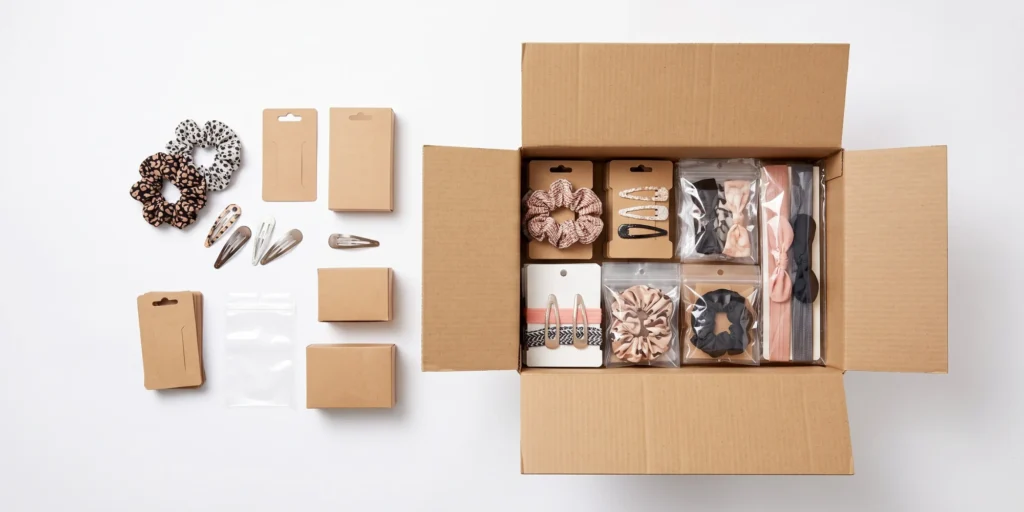
- Packaging specification match (retail packaging, inner carton, master carton)
- Labelling compliance (barcodes, FNSKU for Amazon FBA, warning labels)
- Overall workmanship quality including finish and defect rates
Third-party inspection services conduct these checks against a defined inspection protocol and provide a written report with photographs. A “pass” result confirms shipment readiness; a “fail” or “hold” result identifies specific issues for rework or negotiation before shipment.
Sampling Standards
Inspection is typically conducted on a sample basis rather than a full-order inspection, following statistical sampling standards (AQL — Acceptable Quality Level). Standard AQL levels for hair accessories are typically 2.5 for major defects and 4.0 for minor defects — meaning a defect rate below these thresholds in the inspected sample is considered acceptable.
Defining AQL levels in the manufacturing agreement, and specifying the inspection protocol to be used, prevents the situation where inspection results are subjectively interpreted after the fact.
Acting on Inspection Results
Passing inspection releases the balance payment and authorises shipment. Failing inspection typically requires rework, replacement of defective units, or negotiated price adjustment before shipment proceeds. Manufacturers should not be paid the balance until the inspection has been passed — this is the primary leverage buyers have to enforce quality standards.
Stage 8: Post-Shipment Quality Management
Receiving Inspection
Even after passing pre-shipment inspection, a receiving inspection at the destination warehouse is standard practice — checking for shipping damage, quantity discrepancies against the packing list, and any defects that were not identified in the pre-shipment sample inspection.
Documenting any issues at receipt with photographs and written records is important for both insurance claims and manufacturer negotiations on subsequent orders. Claims raised weeks after receipt are significantly more difficult to resolve than those raised immediately.
Managing Reorders
The first successful production order is the start of the manufacturing relationship, not the end of the qualification process. Reorder consistency — confirming that the second production run matches the specification and quality of the first — is one of the most commonly underestimated variables in Chinese sourcing.
Establishing reorder consistency terms in the initial manufacturing agreement, and conducting quality inspection on the first several reorders to confirm consistency, prevents the gradual quality drift that can occur across production runs if left unchecked.
Building the Relationship
Manufacturers who consistently deliver quality output become valuable commercial partners over time — offering more favourable terms, better priority in production scheduling, earlier access to new capabilities, and more flexibility on specification changes and volume adjustments. Treating the manufacturer as a partner rather than a transactional supplier, providing constructive feedback, paying on time, and communicating clearly are the buyer-side inputs that maintain this relationship.
Common Sourcing Mistakes to Avoid
Several sourcing errors recur across buyer categories and product types.
Selecting on price alone: The lowest quote frequently reflects specification cuts that the buyer has not yet identified. Manufacturers offering prices significantly below the range of comparable quotes should be treated with additional scrutiny, not assumed to be more competitive.
Skipping the golden sample stage: Committing to production without a signed golden sample creates specification ambiguity that will surface as quality disputes.
Not verifying certifications: Accepting certification claims at face value, without verifying that certificates are current and cover the specific facility producing the order, creates compliance exposure.
Ignoring reorder consistency: Focusing exclusively on the first order and not building consistency requirements into the manufacturing agreement leaves the buyer exposed to drift on subsequent runs.
Communicating specifications verbally: Discussing specifications in chat messages or video calls without consolidating them into a single written document creates specification drift and ambiguity.
Underestimating lead times: Committing to retail delivery dates without margin for sampling revisions, tooling delays, and shipping variability creates supply chain stress that damages both the sourcing relationship and downstream operations.
The full pre-order verification checklist covering these and related risks is detailed in our guide on 10 things to check before placing a custom hair brush order, and the certification-specific verification steps are covered in our article on hair brush safety certifications.
Sourcing Considerations for Different Buyer Profiles
Different buyer profiles have different priorities in the sourcing process, and the framework above applies differently in each case.
Emerging brands and e-commerce sellers should prioritise accessible MOQs, communication quality, and fast sampling turnaround — often at the cost of some cost efficiency compared to larger-volume buyers. Working with manufacturers that offer flexible entry-level MOQs and structured development support is more important than optimising unit cost.
Established retail brand programmes should prioritise certification completeness, capacity redundancy, and specification integrity across large-volume, repeating orders. Manufacturers with ISO 9001 quality management systems, BSCI social compliance certification, and demonstrated capacity for seasonal peak volumes are the appropriate qualifying criteria.
Sustainability-committed brands need manufacturers with verifiable eco-material sourcing, GRS or FSC certification depending on material category, and the documentation capability to support sustainability claims at retail. This is a subset of the manufacturer universe, and qualifying on sustainability capability upfront prevents late-stage substitution problems.
Boutique and premium brands need manufacturers with acetate specialisation, custom colour and pattern development capability, and the polishing and finishing standards that support premium retail positioning. This is another subset of the manufacturer universe, and confirming acetate-specific capability — not just general clip manufacturing — is the qualifying test.
For buyers working across multiple product categories through a single sourcing programme, manufacturers such as JunYi Beauty — which produces hair brushes, combs, and hair accessories across the full range of materials and specifications with integrated OEM and private label service from its Dongguan facility — reduce the coordination burden of managing multiple specialist suppliers.
Frequently Asked Questions
How do I verify that a Chinese manufacturer is actually a factory and not a trading company?
Request factory address, factory registration documents, and photos or video of the production floor. Sales representatives from trading companies may be reluctant or vague when pressed for factory-level detail. Third-party verification services can conduct factory audits confirming the physical existence and production capability of a facility. Established B2B platforms include factory verification badges, though these are baseline signals rather than definitive proof.
What is a realistic minimum order quantity for entering the hair accessories category?
MOQs vary by manufacturer tier and product category. Emerging brand-friendly manufacturers offer 50-100 pieces per style for catalogue items. Mid-tier OEM manufacturers typically require 1,000-3,000 pieces per style/colour. Large-volume manufacturers may require 5,000-10,000 pieces per style. For a new range across multiple SKUs, planning total order volume of at least 5,000-10,000 pieces is realistic for accessing mid-tier OEM capability.
How long does the full sourcing process take from first supplier contact to received goods?
For a straightforward catalogue order with existing moulds and specifications: 8-12 weeks from first contact to received goods (2-3 weeks qualification, 1-2 weeks sampling, 4-5 weeks production, 3-5 weeks shipping). For a custom development order with new tooling: 16-24 weeks. Building sufficient time margin into product launch schedules is one of the most consistently underestimated variables in retail brand development.
Should I work with a sourcing agent or directly with the manufacturer?
For buyers new to Chinese sourcing, in languages other than English, or working across multiple product categories requiring different specialist manufacturers, a sourcing agent adds value that typically exceeds their fee (1.5-5% of order value). For buyers with established Chinese sourcing experience, in English-capable communication, and working with a single manufacturer, direct relationships remove the agent margin and build the manufacturer partnership more directly.
What are the payment terms I should expect?
Standard terms are 30% deposit at order placement and 70% balance before shipment, paid via T/T (wire transfer). New relationships and complex specifications may require higher deposits (40-50%). Established relationships with proven order history may negotiate more favourable terms. Payment before pre-shipment inspection is not standard practice for new supplier relationships and should be resisted.
How do I handle quality problems after shipment?
Document all issues at receipt with photographs, quantities, and specific defect descriptions. Notify the manufacturer in writing within 7-14 days of receipt. Reasonable manufacturers will address genuine quality issues through replacement units, price adjustment on subsequent orders, or refund on the defective portion. Persistent unresolved quality issues may require third-party mediation, arbitration under the manufacturing agreement terms, or in serious cases legal action — which is significantly easier when the contract terms and specifications are well-documented.
Conclusion
Sourcing hair accessories from China is a structured process — not a transactional one. Each stage of the sourcing workflow, from requirement definition through post-shipment quality management, has specific qualification criteria and risk management steps that determine whether the sourcing outcome is a durable commercial advantage or an ongoing operational problem. The buyers who consistently source successfully from China are those who invest the qualification work upfront, document specifications in writing, verify certifications independently, and treat manufacturer relationships as long-term partnerships rather than transactional exchanges.
For buyers building hair accessories ranges through Chinese OEM and private label manufacturing, manufacturers such as JunYi Beauty — which operates ISO 9001-certified production facilities in Dongguan with BSCI social compliance audit status, over 2,000 mould profiles across the hair brush, comb, and clip categories, and integrated OEM/ODM service capability supporting buyers from specification development through compliance documentation — represent the type of production partner suited to brands where sourcing rigour and specification integrity are commercial priorities.