Ionic hair brushes are one of the most heavily marketed categories in the styling tools segment. Claims of anti-frizz performance, enhanced shine, faster drying times, and reduced heat damage are common in the marketing copy of ionic brush products across every price tier — from mass-market plastic models to premium salon-grade tools. For consumers and B2B buyers alike, the question is whether these claims reflect a genuine mechanism with measurable outcomes, or whether “ionic” has become a marketing label applied to standard brushes without meaningful performance differentiation.
This article examines what an ionic hair brush actually is, the science behind the negative ion mechanism, the conditions under which it delivers measurable results, and the conditions under which the claims outpace the physics. For B2B buyers building hair brush ranges or evaluating ionic products for retail positioning, it also covers the specification variables that determine whether an ionic brush delivers what its packaging promises.
What “Ionic” Actually Means in a Hair Brush
The ionic performance claim in hair brushes is built around a specific physical phenomenon: the emission of negatively charged ions from the brush during use, which interact with positively charged particles in the hair and surrounding environment.
The Underlying Physics
Hair strands generate positive electrical charge under friction — the process that produces static electricity, flyaways, and the perception of frizz in dry environments. Water molecules on hair, in the air, and in styling products carry both positive and negative charges. In dry conditions, the positive charge on hair tends to dominate, causing individual strands to repel each other and stand away from the head.
Negatively charged ions — when emitted in sufficient concentration and in proximity to the hair — can neutralise this positive charge. The neutralisation reduces the strand-to-strand repulsion that produces frizz and static. Additionally, negative ions can help break up water clusters into smaller particles, which some manufacturers claim allows moisture to penetrate the hair shaft more efficiently rather than sitting on the surface.
This mechanism is real. Negative ion generation is a well-understood physical process, and its interaction with positively charged particles is not marketing invention.
How Ionic Brushes Generate Ions
Ionic hair brushes generate negative ions through one of two primary mechanisms:
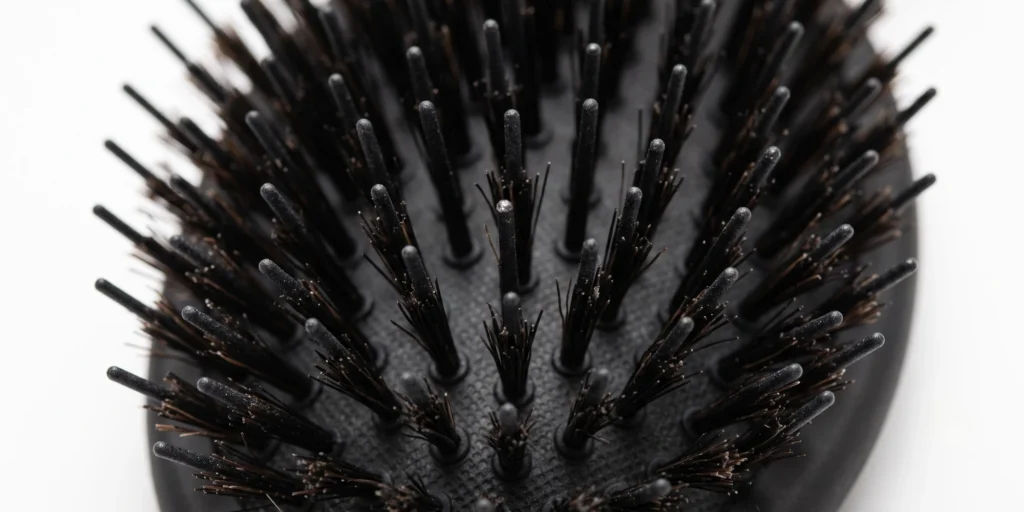
Tourmaline-infused bristles or plates: Tourmaline is a mineral that emits negative ions when heated or under friction. Brushes with tourmaline-coated pins, tourmaline-infused ceramic plates, or tourmaline particles embedded in the bristle material generate ions passively during use, without requiring electrical power.
Electrically powered ionic emitters: Some higher-end ionic brushes — particularly hot air brushes and blow-dry brush hybrids — contain an active electrical circuit that generates negative ions and directs them toward the hair. These require batteries or mains power to operate but can generate ion concentrations significantly higher than passive tourmaline brushes.
The distinction matters. Passive tourmaline-only brushes emit lower ion concentrations than active electrical ionisers. Some products labelled “ionic” contain only a small amount of tourmaline coating that generates negligible ion output — the label is technically accurate but the functional performance may not meaningfully differ from a standard brush.
What Ionic Brushes Actually Do Well
Understanding the mechanism clarifies what ionic brushes are genuinely effective for — and what they are not.
Reducing Static and Flyaways
The clearest and most consistently reproducible benefit of ionic brushes is static reduction in dry conditions. Winter climates with low humidity, indoor heated environments, and anti-static-sensitive hair types (particularly fine hair) all produce elevated static that generates flyaways during and after brushing. An ionic brush — particularly one with active electrical emission or high-density tourmaline coating — reduces this static charge measurably, producing smoother, less floating strands.
For consumers who report their hair looking “electric” or standing away from the head after brushing in dry conditions, an ionic brush delivers a functional improvement over standard synthetic bristle brushes. The mechanism is well-understood and the outcome is consistent.
Enhancing Perceived Shine
The cuticle-smoothing effect of reduced static contributes to a visible shine improvement in most hair types. Positively charged strands with lifted cuticle scales scatter light in multiple directions, producing dullness. When static is neutralised and cuticle scales lie flatter, light reflects more coherently from the strand surface, which is perceived as increased shine.
The shine enhancement is real but is often exaggerated in marketing. Ionic brushes do not add shine to hair that has no underlying shine potential — they reveal shine that is already present by removing the static and cuticle disruption obscuring it.
Faster Blow-Dry Performance (in Combination with Heat)
Ionic hot air brushes and blow-dry brush hybrids — where ion generation is combined with heat application — can reduce drying time compared to non-ionic equivalents in certain hair types. The claimed mechanism is that negative ions break water clusters on the hair surface into smaller droplets that evaporate faster. The measured effect is modest but present in most independent testing.
For consumers with medium to thick hair who spend significant time blow-drying, an ionic blow-dry brush can produce noticeable time savings across daily use. For fine hair that dries quickly regardless, the time savings are less noticeable.
Where the Claims Outpace the Physics
Several common ionic hair brush claims are less well-supported than the static reduction and shine enhancement mechanisms above.
Deep Hair Conditioning Through Ion Emission
Some ionic brush marketing suggests that negative ions “seal moisture into the hair shaft” or produce a deep conditioning effect equivalent to a hair treatment. There is no credible mechanism by which passive ion emission from a brush penetrates the cuticle layer to deliver conditioning effects to the cortex. The cuticle smoothing effect is real; deep conditioning through ionic action is not.
For hair that requires genuine conditioning, product-based treatments — leave-in conditioners, hair masks, oils — deliver measurable results through active ingredient penetration. An ionic brush does not replace these products.
Repairing Damaged Hair
Damaged hair — bleached, heat-processed, colour-treated — has physical structural damage to the cuticle and cortex that cannot be repaired by any brushing action. Ionic emission does not restore protein bonds, fill cuticle gaps, or reverse porosity. Ionic brushes may reduce the appearance of damage by smoothing what remains of the cuticle surface, but they do not repair the underlying structural damage.
Marketing claims of “damaged hair repair” from ionic brushes overstate the mechanism. The appropriate approach to damaged hair remains protein-based treatments, avoidance of further damage, and progressive trimming of the affected sections.
Universal Frizz Elimination
Ionic brushes address the static-driven component of frizz — the strand-to-strand repulsion that causes flyaways in dry conditions. They do not address the humidity-driven component of frizz that occurs when moisture penetrates the cuticle in high-humidity environments and causes the shaft to swell and lift the cuticle scales.
For consumers whose frizz occurs primarily in humid conditions — summer weather, tropical climates, post-shower environments — an ionic brush provides limited benefit. The mechanism it addresses is the wrong one for that frizz cause. This distinction is covered in more depth in our article on whether boar bristle brushes genuinely reduce frizz, which examines the different physical mechanisms behind frizz outcomes.
Working on All Hair Types Equally
Ionic brush performance varies by hair type. Fine hair — which generates more static per strand due to lower shaft mass — shows the clearest improvement from ionic emission. Medium hair shows moderate improvement. Coarse and thick hair generates less static per unit of mass and shows the least clear benefit from ionic emission alone.
For curly and coily hair, the dry brushing that ionic brushes are designed for is not the recommended detangling approach in the first place — wet detangling with a wide-tooth comb or flexible brush is the appropriate technique regardless of ionic capability. The framework for matching brush type to hair type is covered in our guide on how to choose the right hair brush for your hair type.
Types of Ionic Hair Brushes
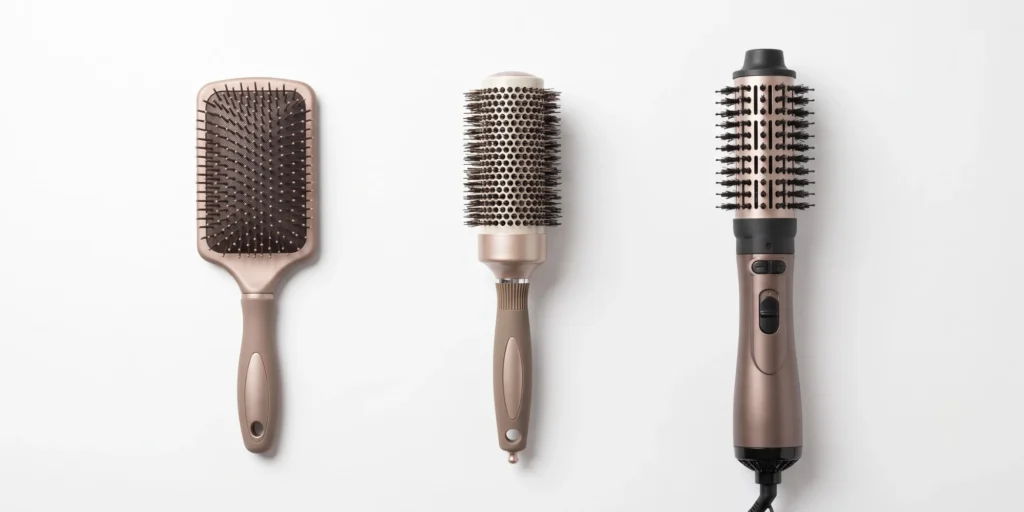
The “ionic brush” category covers several distinct product formats with different mechanisms and use cases.
Passive Tourmaline Paddle Brushes
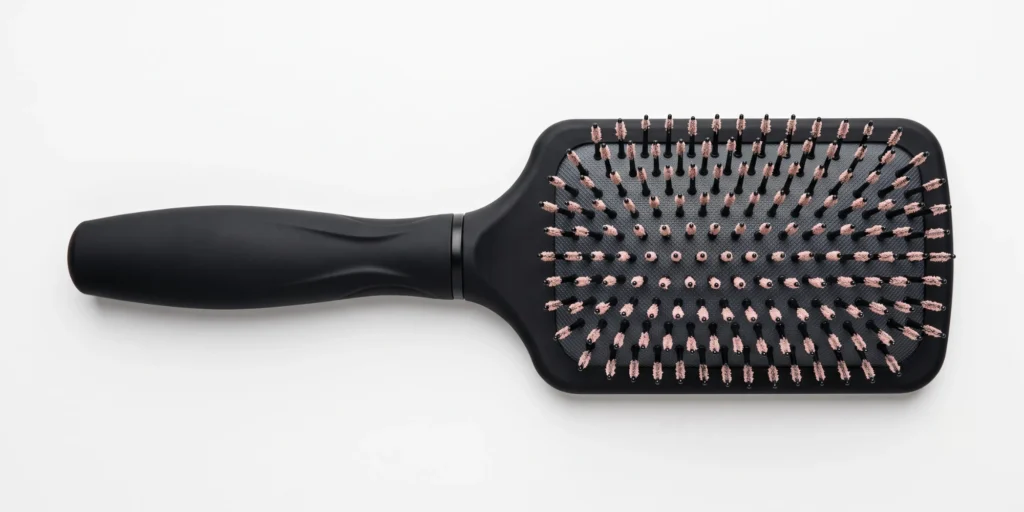
Standard paddle brushes with tourmaline-coated or tourmaline-infused bristles. No electrical component. Generate low to moderate negative ion output through the tourmaline material during dry brushing. Suit consumers looking for daily maintenance improvement over standard synthetic brushes in dry environments.
The performance depends heavily on the amount and quality of tourmaline used. Products with a small amount of tourmaline coating for marketing purposes generate minimal functional ion output. Products with tourmaline-infused ceramic plates or high tourmaline density in the bristle material generate more meaningful output.
Ionic Round Brushes for Blow-Drying
Round brushes with tourmaline-coated barrels, used during blow-drying. The heat from the dryer activates the tourmaline’s ion emission, producing higher output than passive tourmaline brushes used without heat. Suit consumers who regularly blow-dry and want smoother, faster results.
Ceramic-tourmaline barrels also help distribute heat more evenly across the hair, reducing the risk of localised over-heating that damages the cuticle.
Ionic Hot Air Brushes (One-Step Brush Dryers)
Combined hair dryer and round brush units with active electrical ion generation. The hot air, brush shape, and ion emission are integrated into a single tool. The most powerful ionic performance in the category due to active electrical emission combined with heat, but requires electrical power to operate.
These are marketed heavily for time-saving blow-dry styling. The ionic contribution is one component of the overall performance — the heat management, airflow design, and brush shape are equally important variables.
Ionic Detangling Brushes
Flexible detangling brushes with tourmaline-coated pins. Suit consumers who want ionic anti-static benefit combined with wet or damp hair detangling capability. Performance depends on the same tourmaline density considerations as passive paddle brushes.
For wet-hair detangling specifically, the risks and appropriate technique are covered in our guide on whether it is bad to brush wet hair — an ionic label does not change the underlying breakage risk of wet-hair brushing with rigid tools.
What Determines Whether an Ionic Brush Actually Works
Not all ionic brushes deliver equivalent performance. The specification variables that determine functional ion output include:
Tourmaline density and distribution: Higher-density tourmaline coating or infused material generates more negative ions per unit of surface contact. Products advertising “tourmaline-coated” without specifying the coating depth or coverage may have minimal functional tourmaline content.
Bristle or plate material: Ceramic-tourmaline composite plates generate more consistent ion emission than plastic bristles with tourmaline surface coating. The material matters as much as the tourmaline percentage.
Heat activation (where relevant): Passive tourmaline brushes generate more ion emission when heated. Ionic brushes used in combination with heat styling tools — or ionic hot air brushes with integrated heating — deliver higher output than passive brushes used at room temperature.
Active electrical ionisation: Brushes with active electrical ionisers generate substantially higher ion output than any passive tourmaline product. For consumers who want the most pronounced ionic performance, active electrical brushes deliver measurably more.
Cuticle-friendly bristle base: The ionic performance is separate from the mechanical performance of the brush. A brush with harsh synthetic bristles that damage the cuticle mechanically undermines the smoothing benefit of ion emission. Ionic brushes with soft cushioning, ball-tip pins, or mixed boar bristle configurations produce better overall outcomes than aggressive-bristle designs regardless of ionic performance.
Sourcing Considerations for B2B Buyers
For buyers building ionic hair brush ranges, the category presents both a genuine differentiation opportunity and a significant risk of specification-marketing mismatch.
Establishing Genuine Performance Differentiation
Ionic brush ranges positioned as premium tools should deliver measurably better ion output than standard synthetic bristle brushes. This requires specification decisions at the manufacturing stage: high tourmaline density in bristle coating or plate composition, ceramic-tourmaline hybrid materials rather than plastic-plus-coating, and — for premium positioning — active electrical ion generation rather than passive emission alone.
Ranges that carry ionic labelling without meaningful ion output specification fail to deliver on the packaging promise. This generates negative reviews, returns, and long-term brand damage in categories where consumer skepticism about ionic claims is already elevated.
Packaging Claims and Substantiation
Marketing claims made on ionic brush packaging are increasingly subject to consumer protection regulation, particularly in EU markets. Claims such as “eliminates frizz,” “repairs damaged hair,” or “deep conditioning through ion emission” are difficult to substantiate and expose brands to regulatory challenge if enforcement action is taken.
Defensible ionic claims focus on the mechanisms that are physically supported: static reduction, shine enhancement through cuticle smoothing, and (for combined heat products) reduced drying time. Overreaching claims should be avoided regardless of competitive pressure.
Positioning by Hair Type
Ionic brushes deliver the clearest benefit for fine and medium hair in dry environments. Marketing that targets these hair types and use cases produces better consumer outcomes than marketing that positions ionic brushes as universal solutions. Hair-type-specific packaging aligned with genuine mechanism performance is the approach that supports both consumer satisfaction and long-term brand credibility.
Certification and Chemical Safety
Tourmaline and ceramic materials used in ionic brushes require the same chemical safety compliance as any other hair brush material — REACH compliance for EU markets, Proposition 65 for US markets. Confirming that the specific tourmaline or ceramic composition used in production meets these requirements is a pre-order verification step. The broader certification framework is covered in our article on hair brush safety certifications.
Both passive tourmaline paddle brushes and active ionic blow-dry brush formats are available through OEM and private label manufacturing routes, with tourmaline specification, bristle configuration, and electrical component design adjustable to range positioning requirements.
Frequently Asked Questions
Do ionic hair brushes actually work or is it marketing?
Ionic hair brushes deliver a real, measurable reduction in static and associated flyaways in dry conditions — this is the primary mechanism and it works as described. Claims of shine enhancement and faster drying time in combination with heat are also supported. Claims of deep conditioning, hair repair, or universal frizz elimination overstate what ion emission can physically accomplish.
Are ionic brushes better for all hair types?
No. Ionic brushes deliver the clearest benefit for fine and medium hair in dry environments where static generation is elevated. For thick and coarse hair, the ionic contribution is less pronounced because static generation per unit of hair mass is lower. For curly and coily hair, dry brushing is not the recommended detangling approach regardless of ionic capability — wet detangling with a wide-tooth comb or flexible brush is the appropriate technique.
Do ionic brushes damage hair?
The ionic mechanism itself does not damage hair — negative ion emission is a passive physical effect. However, an ionic brush is only as safe as its bristle configuration and cushion base. A tourmaline-coated brush with harsh, rigid nylon pins on a hard base still causes cuticle damage through mechanical contact, ionic label notwithstanding. The ionic feature does not compensate for poor mechanical design.
Can an ionic brush replace a hair dryer or straightener?
No. Ionic paddle brushes and detangling brushes do not generate heat and cannot dry or straighten hair. Ionic hot air brushes combine ion generation with heat and airflow — they can partially replace a separate dryer and round brush for blow-dry styling, but they do not replace a flat iron for straightening or a curling iron for curl formation.
How can I tell if an ionic brush is high-quality or just marketing?
Look for specific tourmaline specifications rather than vague “ionic technology” labels — tourmaline-infused ceramic plates or high-density tourmaline coating are more meaningful than surface treatment claims. Active electrical ionic brushes (typically hot air brushes) generate more ion output than passive tourmaline brushes. Combined specifications — soft cushion base, ball-tip pins, ceramic-tourmaline plates or bristle — indicate a product engineered for genuine performance rather than a standard brush with an ionic label added for marketing purposes.
How often should I use an ionic brush?
For daily maintenance in dry environments, daily use of a passive tourmaline paddle brush is appropriate — the ionic mechanism does not cause cumulative wear beyond what the underlying brush’s mechanical design produces. Ionic hot air brushes, like any heat styling tool, should not be used every day at high temperatures on the same hair sections due to cumulative heat exposure. Standard heat styling frequency guidelines apply.
Conclusion
Ionic hair brushes deliver a real physical mechanism — negative ion emission that neutralises static charge on positively charged hair strands. This mechanism produces measurable improvements in static reduction, flyaway control, and perceived shine, particularly in fine and medium hair in dry conditions. The claims that hold up under physics — anti-static performance, shine enhancement through cuticle smoothing, and modest drying time reduction in combined heat products — are worth the premium that ionic brushes command over standard equivalents for consumers who match the target hair type and use case.
The claims that do not hold up — deep conditioning, damage repair, universal frizz elimination — should be treated skeptically regardless of how prominently they appear in marketing copy. Ionic emission is a specific physical process with specific outcomes; it is not a general-purpose hair improvement technology.
For brand developers building ionic hair brush ranges positioned around defensible performance claims and specification integrity, manufacturers such as JunYi Beauty — which produces passive tourmaline and active ionic brush formats across paddle, round, and blow-dry categories with configurable tourmaline density, cushion base specification, and bristle design from its Dongguan facility — represent the type of OEM partner suited to ranges where the ionic label reflects genuine engineering rather than marketing overlay.