
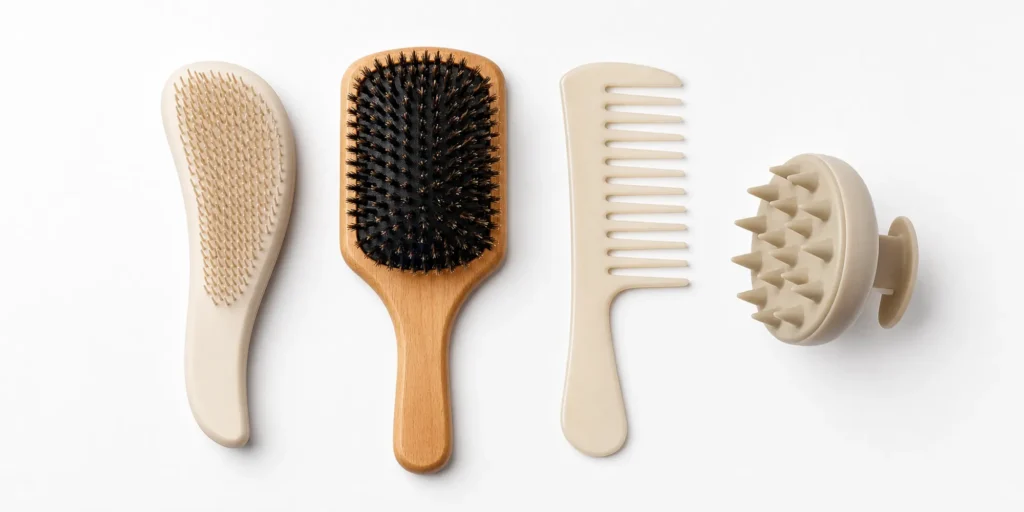
“Hair cycling” is one of the most visible hair care trends to emerge from social media beauty culture in recent years. Adapted from the skin cycling concept — where active skincare ingredients are rotated across days to balance efficacy and skin barrier recovery — hair cycling applies the same rotation logic to hair care: alternating cleansing intensity, treatment products, styling approaches, and, in many versions of the trend, the tools used at each stage.
The question this article addresses is whether the trend’s tool component has genuine substance. Does rotating between multiple brushes across a hair cycling routine deliver measurable benefits, or is the multi-brush recommendation a commercially convenient extension of a product-focused trend? The answer, as with most social media hair trends, sits between the extremes — there is a legitimate functional core wrapped in a layer of overcomplication. For consumers deciding what to actually buy, and for B2B buyers evaluating how the trend affects hair brush range strategy, separating the functional core from the trend packaging is the useful exercise.
What Hair Cycling Actually Is
Hair cycling, in its most common formulation, structures the hair care week into rotating phases rather than repeating an identical routine daily. A typical cycle looks like this:
Cleansing phase: A clarifying or deep-cleansing wash that removes product buildup, excess sebum, and environmental residue. Performed once per cycle rather than at every wash.
Treatment phase: A conditioning-focused wash using masks, bond-building treatments, or intensive conditioners. The clarified hair from the previous phase is claimed to absorb treatment products more effectively.
Maintenance phase: Standard gentle washing and conditioning, often with lighter products, between the more intensive phases.
Rest or protective phase: Days without washing or heat styling, often with protective styles, silk accessories, or leave-in products.
The underlying logic is legitimate. Daily clarifying washes strip the scalp and hair of beneficial oils; never clarifying allows buildup to accumulate. Rotating intensity balances the two. Dermatologists and trichologists have long recommended versions of this approach without the “cycling” branding — the trend has essentially given a memorable name and structure to advice that predates it.
Where the trend expands beyond the evidence is in its proliferation of steps, products, and tools. The commercial ecosystem around hair cycling encourages a distinct product — and often a distinct tool — for each phase, and this is where consumer skepticism is warranted.
The Tool Rotation Claim: What Holds Up
The multi-brush component of hair cycling rests on a claim that different phases of the cycle place different mechanical demands on the hair — and that a single brush cannot serve all of them well. Assessed against the mechanics of how brushes actually interact with hair, this claim is partially correct.
Wet and Dry Phases Genuinely Require Different Tools
The strongest version of the multi-brush argument is the wet/dry distinction, and it is well-founded. Hair in its wet state — during and immediately after the cleansing and treatment phases — is structurally more vulnerable to mechanical stress than dry hair, because water disrupts the hydrogen bonds that give the shaft its rigidity. Detangling wet hair requires a flexible nylon detangling brush or wide-tooth comb; using a rigid boar bristle or hard nylon pin brush on wet hair causes breakage that accumulates over time.
This is not a trend claim — it is established hair mechanics, covered in detail in our article on whether it is bad to brush wet hair. Any hair cycling routine that includes wet-phase detangling and dry-phase brushing genuinely requires two different tools. On this point, the trend is correct.
Treatment Phase Distribution Benefits from a Comb
During the treatment phase, distributing masks and conditioners evenly through the hair improves coverage compared to applying product only with fingers. A wide-tooth comb is the appropriate tool for this — its low contact-point density distributes product without applying significant mechanical stress to conditioner-saturated hair. This function cannot be served well by any dry-hair brush, and it aligns with the comb-versus-brush functional division covered in our guide on hair brush vs hair comb.
Scalp Care Days Use a Genuinely Different Tool Category
Versions of hair cycling that include a scalp-focused phase — pre-wash scalp brushing or in-shower scalp cleansing — involve scalp brushes, which are a functionally distinct tool category rather than a variant of hair brushes. Silicone scalp brushes for in-shower use and natural bristle scalp brushes for dry pre-wash stimulation perform functions that no paddle or round brush replicates. The evidence base for what scalp brushing genuinely delivers — buildup removal, massage benefit, modest circulation effects — is covered in our article on scalp brushing benefits.
The Tool Rotation Claim: What Does Not Hold Up
A Different Brush for Every Day of the Cycle
The maximal version of the trend — a dedicated brush for each named phase, sometimes five or more tools in a rotation — has no mechanical basis. The hair does not distinguish between a “maintenance day brush” and a “rest day brush” if both are the same bristle type used on dry hair. Once the genuine functional distinctions are covered (wet detangling, dry maintenance, product distribution, scalp care), additional tools duplicate function rather than adding it.
Multiple brushes of the same type serve hygiene rotation at most — allowing one to dry fully or be cleaned while another is in use — but this is a convenience consideration, not a hair health mechanism.
Rotating Brushes to “Let the Hair Rest” from a Bristle Type
Some trend content suggests that hair becomes “accustomed” to a bristle type and benefits from rotation the way skin purportedly benefits from ingredient rotation. There is no mechanism for this. Hair is not living tissue beyond the follicle — the shaft does not adapt to, become tolerant of, or develop dependency on a bristle material. A boar bristle brush performs the same sebum redistribution function on day one and day one thousand. The skin cycling analogy fails at this point because skin is living tissue with adaptive responses and hair shafts are not.
Cycling as a Substitute for Correct Tool Selection
The most counterproductive version of the trend treats rotation itself as the benefit — implying that a consumer using several mismatched brushes in rotation is better off than one using a single correctly specified brush. The reverse is true. A consumer with fine hair using one soft boar bristle paddle brush daily is better served than one rotating between a hard nylon brush, a vented brush, and a teasing brush across the week. Tool correctness matters; rotation for its own sake does not. The correct-selection framework is covered in our guide on how to choose the right hair brush for your hair type.
What a Functional “Brush Cycle” Actually Looks Like
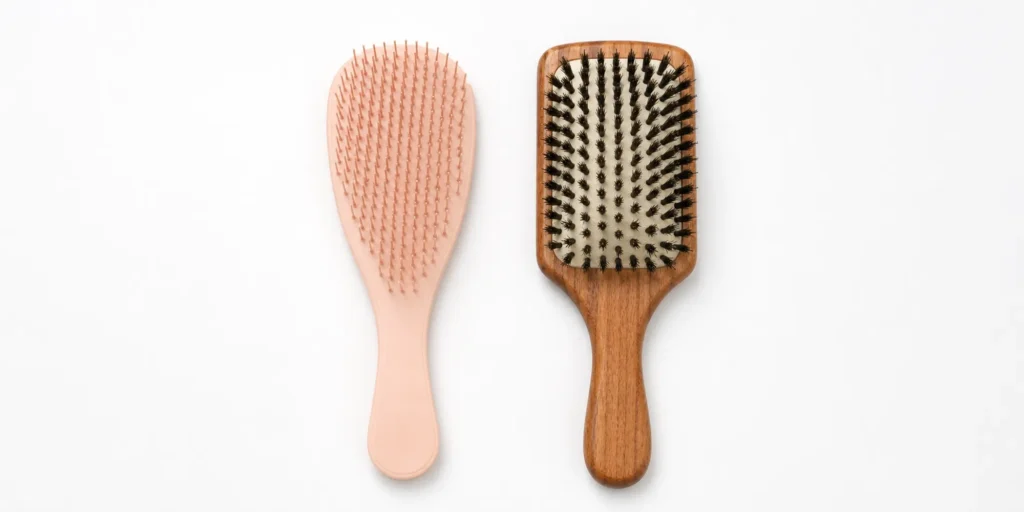
Stripped of trend inflation, the legitimate multi-tool routine that hair cycling gestures toward is the same two-to-four tool system that hair professionals have recommended independently of any trend:
Tool 1 — Wet detangling: A flexible nylon detangling brush or wide-tooth comb, used on conditioner-coated wet or damp hair during and after washing. Non-negotiable for anyone who detangles wet hair, cycling routine or not.
Tool 2 — Dry maintenance and finishing: A bristle brush matched to hair type — soft boar bristle for fine hair, mixed bristle for medium to thick hair — used once daily on dry hair for smoothing, sebum distribution, and finishing.
Tool 3 (optional) — Treatment distribution: A wide-tooth comb for working masks and deep conditioners through the hair during treatment washes. If Tool 1 is a wide-tooth comb, it covers this function.
Tool 4 (optional) — Scalp care: A silicone scalp brush for in-shower cleansing on clarifying days, or a natural bristle scalp brush for dry pre-wash stimulation, for consumers who include a scalp phase in their routine.
This is two essential tools and two optional ones — a defensible, mechanically grounded system. It happens to align with the phases of a hair cycling routine, but the alignment runs in the opposite direction from the trend’s framing: the tools are justified by the wet/dry and function distinctions, not by the cycle structure itself.
Hair Type Changes the Answer
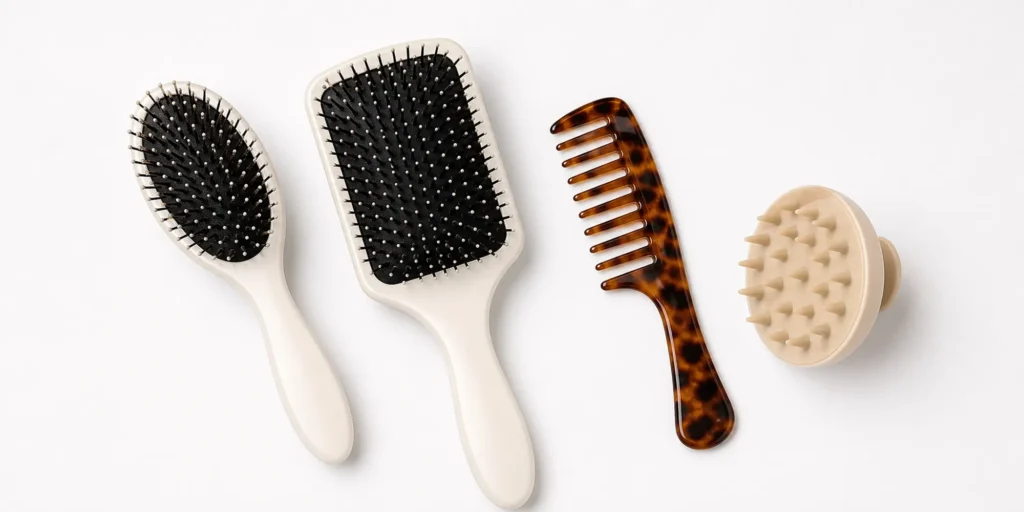
As with most brush questions, hair type determines how much of the multi-tool system is genuinely necessary.
Fine and thin hair benefits most clearly from the two-tool core: flexible detangling for wet phases and soft boar bristle for dry maintenance, since fine hair is disproportionately damaged by using either tool in the wrong condition. The full reasoning is covered in our guide on the best hair brush for fine and thin hair.
Medium and thick straight or wavy hair follows the same two-tool core with mixed bristle replacing pure boar for the dry-phase tool.
Curly and coily hair compresses the system rather than expanding it. Because dry brushing disrupts curl patterns, the dry-maintenance brush drops out entirely — the routine centres on a wide-tooth comb or flexible detangler used exclusively on wet, product-saturated hair. For this hair category, hair cycling’s multi-brush framing is actively misleading: the correct number of dry-hair brushes is zero.
Colour-treated and damaged hair benefits from the treatment-distribution comb more than other categories, since treatment phases are more central to its routine, and requires the gentlest specifications in both core tools.
Sourcing Considerations for B2B Buyers
For brand developers and retail buyers, hair cycling is commercially significant regardless of how much of its tool logic survives scrutiny — consumer search interest and social content volume around the trend translate into retail demand. The strategic question is how to serve that demand without building ranges on claims that will not hold.
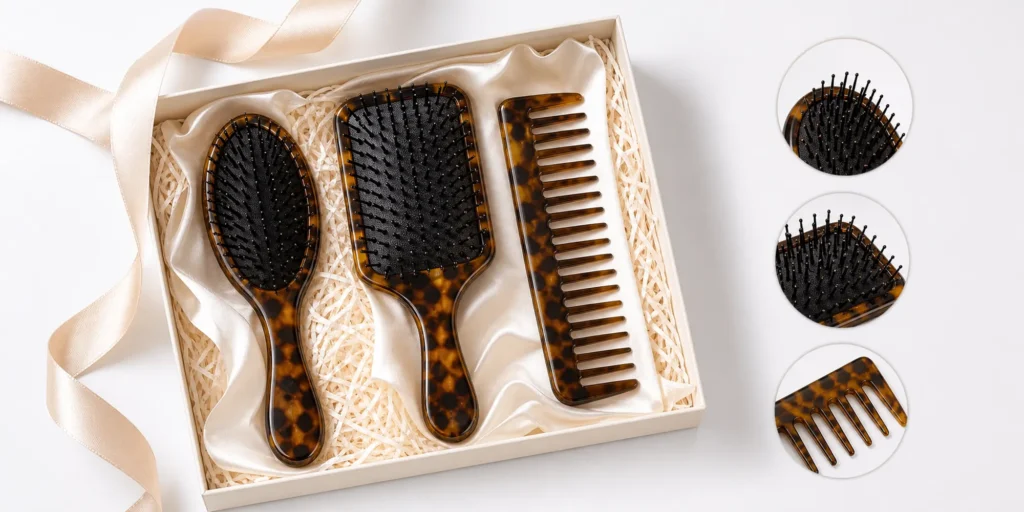
Bundle architecture over SKU proliferation: The defensible commercial response to hair cycling is the curated multi-tool set — a wet detangler, a hair-type-matched dry brush, a wide-tooth comb, and optionally a scalp brush, packaged as a routine system. This aligns with the genuine functional distinctions, supports a higher transaction value than single-brush purchases, and avoids the claim risk of positioning near-identical brushes as phase-specific tools.
Hair-type variants of the bundle: Because the correct system differs by hair type — most notably the absence of a dry brush for curly hair — bundles segmented by hair type (fine, medium/thick, curly) map the trend onto correct tool selection rather than against it.
Claim discipline on packaging: Positioning copy should attach each tool to its mechanical function (wet detangling, dry smoothing, treatment distribution, scalp cleansing) rather than to trend phases (“rest day brush”). Function-based claims are durable and defensible; trend-phase claims age with the trend and invite the expectation mismatches that drive returns.
Trend lifecycle awareness: Social media hair trends have compressed lifecycles. Range investments tied to the “hair cycling” name specifically carry more obsolescence risk than investments in the underlying multi-tool routine architecture, which predates the trend and will outlast it.
Multi-tool sets combining detangling brushes, bristle paddle brushes, wide-tooth combs, and scalp brushes — with hair-type-specific specification and custom bundle packaging — are available through OEM and private label manufacturing routes.
Frequently Asked Questions
Is hair cycling actually backed by science?
The core structure — rotating cleansing intensity and treatment focus rather than repeating an identical routine daily — reflects long-standing professional advice about balancing clarifying and conditioning. That part is sound. The expanded versions involving many products and many tools per cycle go beyond the evidence. The trend is a memorable repackaging of legitimate principles plus a layer of commercial inflation.
How many hair brushes do I actually need?
Most people need two: a flexible detangling brush or wide-tooth comb for wet hair, and a bristle brush matched to their hair type for dry maintenance. A wide-tooth comb for treatment distribution and a scalp brush are useful optional additions. Consumers with curly or coily hair typically need only the wet-hair tools, as dry brushing disrupts curl patterns.
Do I need a different brush for wash days and non-wash days?
Not because of the day itself — because of the hair’s condition. Wet or damp hair on wash days requires a flexible detangler or wide-tooth comb. Dry hair on any day uses the same hair-type-matched bristle brush. The wash-day distinction is really a wet/dry distinction, and two tools cover it.
Does rotating brushes give my hair a rest?
No. Hair shafts are not living tissue and do not adapt to or need recovery from a bristle type. Rotation between brushes of the same type provides no hair health benefit. What genuinely reduces mechanical stress is using the correct tool for the hair’s current condition and moderating brushing frequency — not rotating tools.
Should curly hair follow the multi-brush version of hair cycling?
No. For curly and coily hair, dry brushing of any kind disrupts the curl pattern and produces frizz. The appropriate tool system for this hair type is a wide-tooth comb or flexible detangling brush used exclusively on wet, conditioner-coated hair. Hair cycling phases can still structure the washing and treatment routine, but the multi-brush component does not apply.
Is a brush set better value than buying brushes individually?
A well-constructed set matched to your hair type is usually better value, because it covers the wet and dry functions with correctly paired specifications. A poorly constructed set — multiple similar dry brushes with no wet-hair tool — is worse value than two correctly chosen individual tools. Evaluate sets by whether each included tool serves a distinct function for your hair type, not by piece count.
Conclusion
Hair cycling contains a genuine functional core: hair in different conditions — wet, dry, under treatment, at the scalp — places different mechanical demands on tools, and no single brush serves all of them. That core justifies a two-to-four tool system that hair professionals recommended long before the trend named it. What the trend adds beyond this — phase-specific brushes, rotation for its own sake, the suggestion that hair benefits from tool variety the way skin benefits from ingredient rotation — does not survive contact with how hair actually works.
For consumers, the practical takeaway is to build the small correct system rather than the large trendy one. For brands and buyers, the durable commercial opportunity is the hair-type-matched multi-tool bundle built on functional claims rather than trend vocabulary. Manufacturers such as JunYi Beauty, which produces detangling brushes, bristle paddle brushes, combs, and scalp brushes with hair-type-specific specifications and custom set packaging from its Dongguan facility, represent the type of OEM partner suited to brands building routine-based tool systems designed to outlast the trend that popularised them.