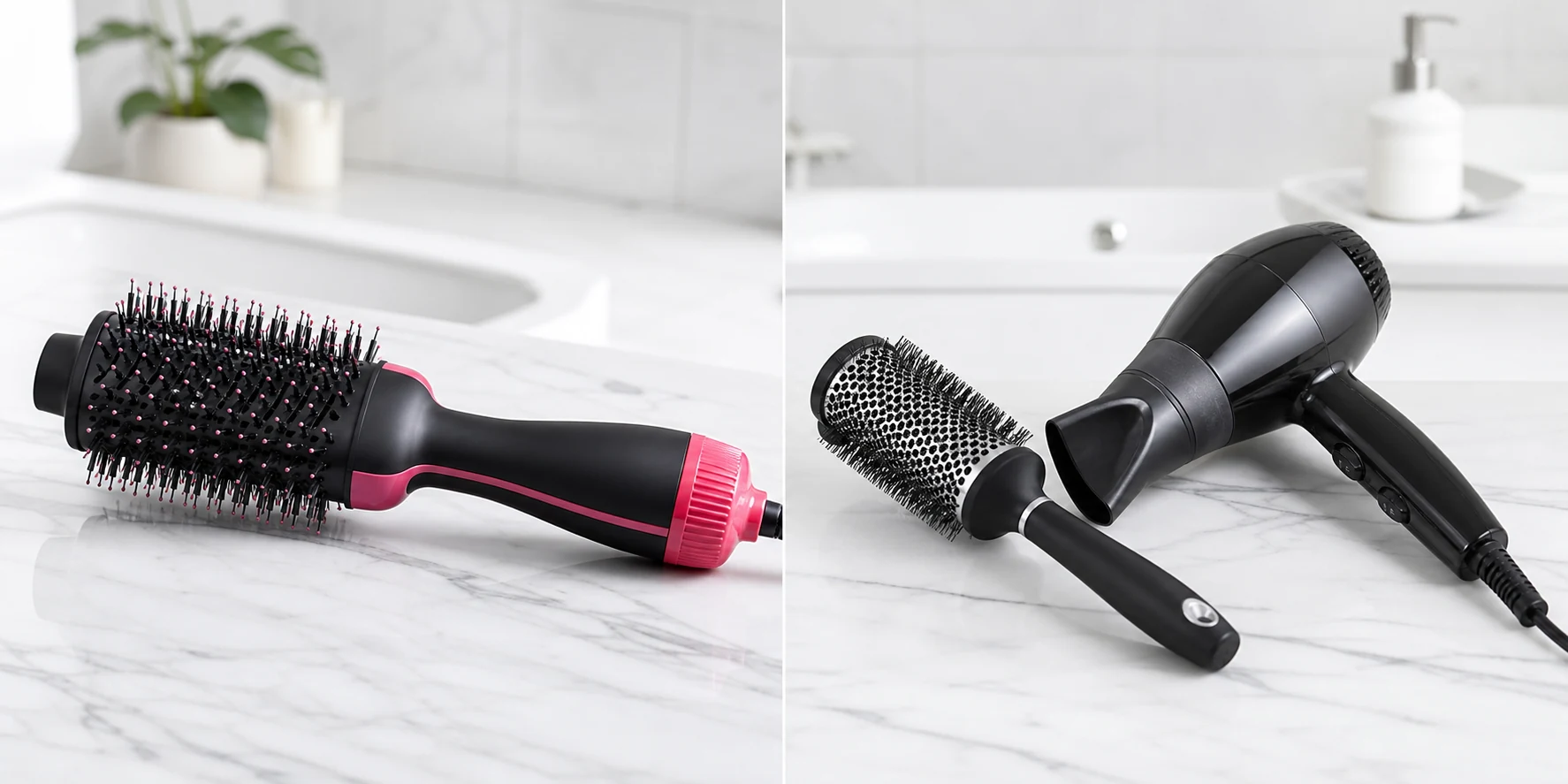
A blow dryer brush is a single tool that combines a round brush head with a built-in heating element and airflow, letting you dry and style hair in one motion. A round brush is a separate barrel-shaped brush used alongside a handheld hair dryer, giving you independent control over airflow direction, heat level, and brush tension. Both produce a smooth, voluminous blowout, but they get there through different mechanics, and the right choice depends on your hair length, texture, arm strength, and how much control you want over the finished result.
This guide compares the two tools across technique, styling control, heat performance, material, cost, and who each one actually suits, so you can pick based on how you actually style your hair rather than guessing from reviews. For the broader framework on matching brush type to hair type, see our guide on how to choose the right hair brush for your hair type.
How Each Tool Works
The Two-Hand Technique Behind a Round Brush
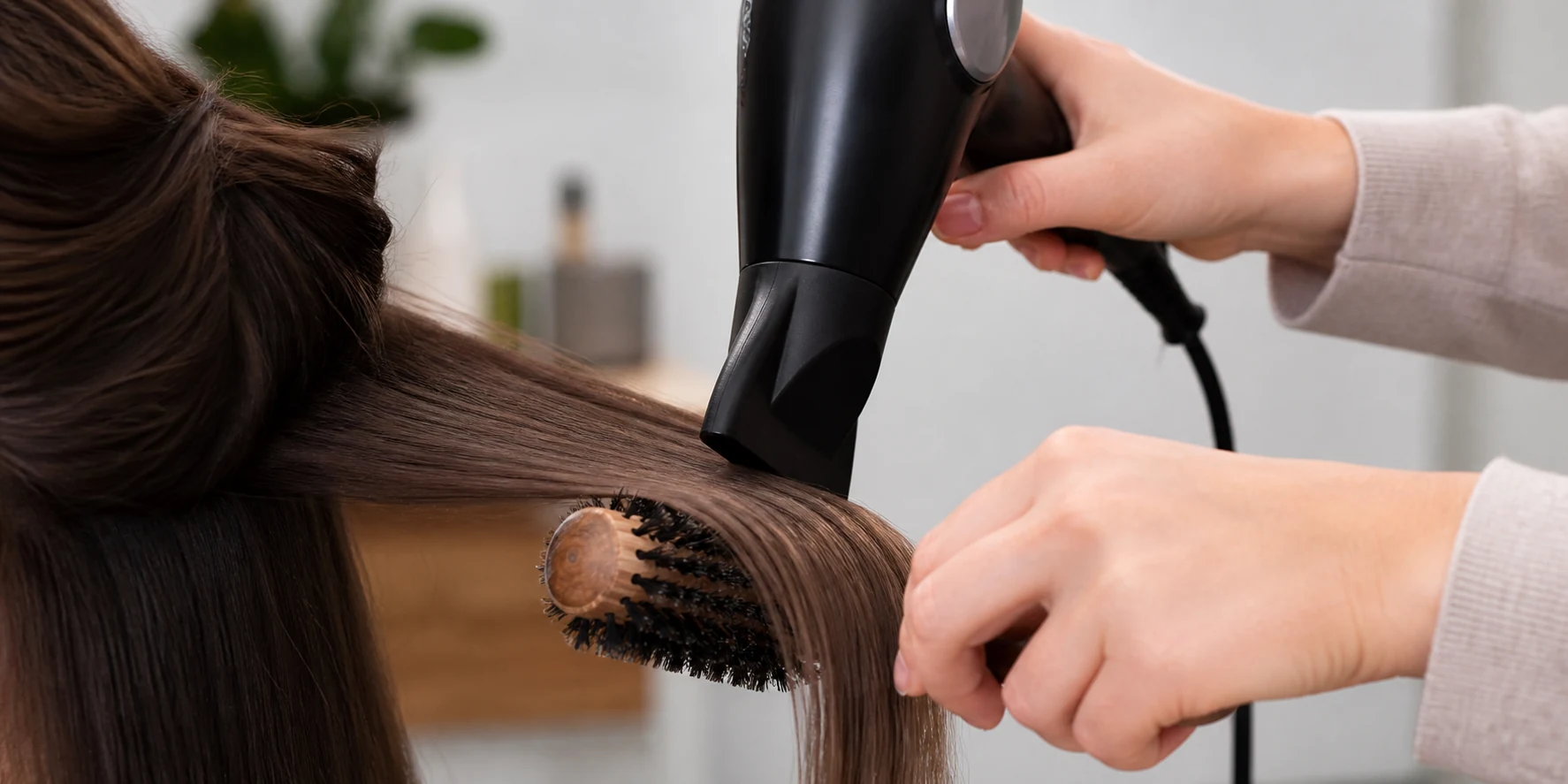
A round brush relies on coordinating two separate motions. One hand holds the dryer and directs airflow along the hair shaft, while the other rotates the brush to create tension and shape. The dryer’s nozzle concentrates heat and airflow exactly where you point it, and angling it downward along the cuticle is what gives a blowout its shine.
The One-Tool Mechanism Behind a Blow Dryer Brush
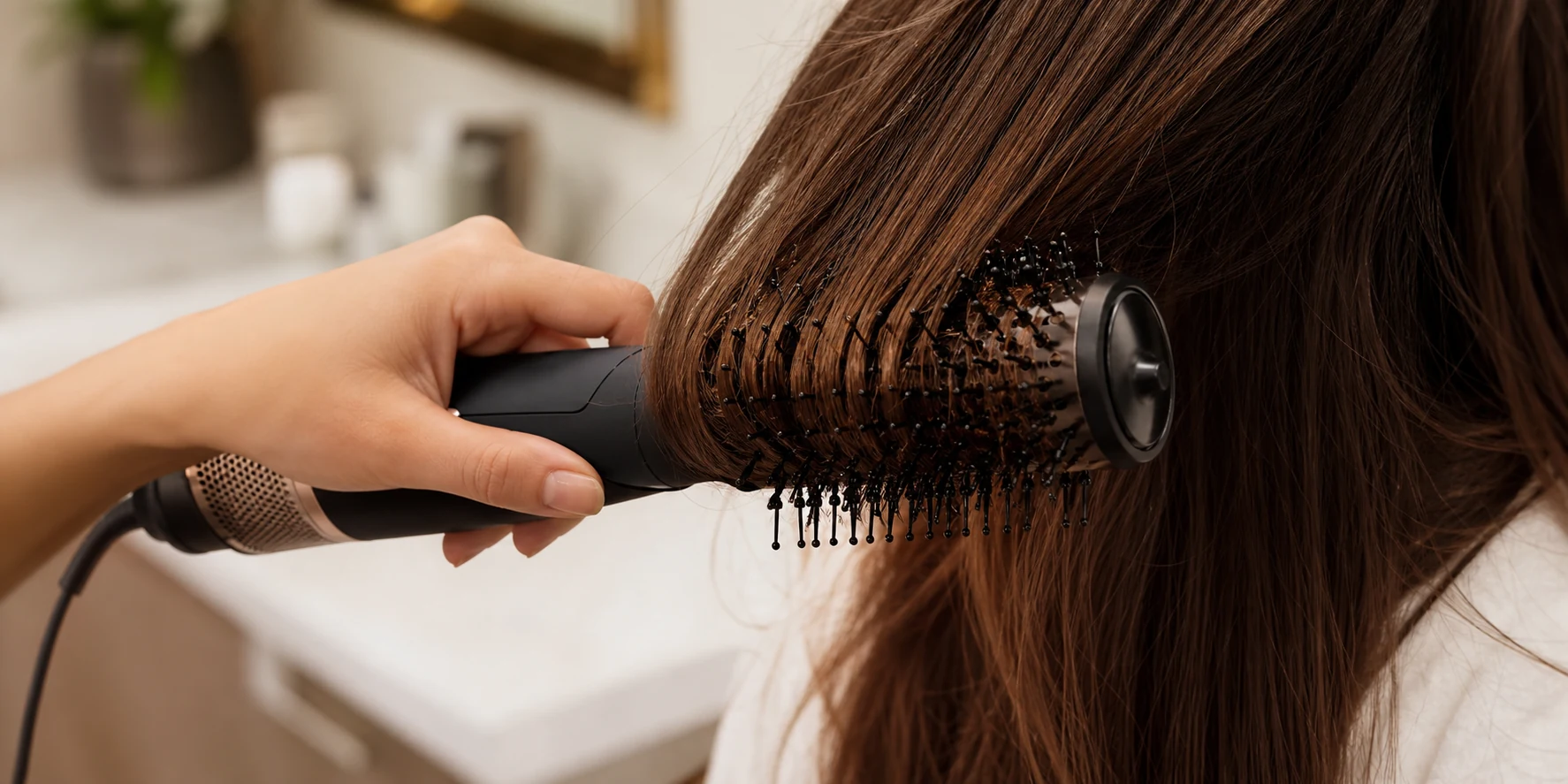
A blow dryer brush merges both jobs into a single tool. Airflow vents through or around the bristles, so brushing and heat application happen at the same time with one hand. Most models offer two or three heat and speed settings, and barrel diameters typically range from 1.5 to 2.5 inches to suit different hair lengths.
Blowout Quality: What Actually Differs
Why Airflow Precision Decides the Finish
The main quality difference comes down to airflow precision. A separate dryer’s nozzle can be angled tightly along the hair shaft from roots to ends, which is the technique that closes the cuticle and produces maximum shine. A blow dryer brush’s airflow is fixed relative to the bristles, so it heats a wider area less precisely.
In practice, a round brush with a separate dryer usually gives slightly more shine and a crisper finish, particularly for anyone chasing a salon-level blowout. A blow dryer brush gets close, especially on second-day hair or lower-maintenance routines, but rarely matches a skilled two-hand technique exactly. If shine is your top priority, that gap is worth knowing before you buy. The heat-resistance specifications behind both tool types are covered in our article on heat-resistant hair brush materials.
The following table summarises where each tool wins across the criteria that matter most.
| Criteria | Blow Dryer Brush | Round Brush + Dryer |
|---|---|---|
| Hands required | One | Two |
| Learning curve | Low | Moderate to high |
| Shine and finish | Good | Best achievable |
| Speed per session | Faster | Slower |
| Control over airflow angle | Fixed | Fully adjustable |
| Arm fatigue | Lower | Higher, especially long hair |
| Best hair length | Shoulder length or shorter | Any length |
| Travel convenience | One tool to pack | Two tools to pack |
Which One Suits Your Hair Length and Texture
Short to Shoulder Length
Hair length changes this comparison more than any other factor. Short to shoulder-length hair works well with a blow dryer brush, since the fixed airflow can reach most sections without much repositioning, and the one-hand technique feels natural on hair that does not require long sweeping strokes.
Below Shoulder Length
Long hair tends to favour a round brush and separate dryer. Below shoulder length, you need to work in smaller sections with more precise airflow control to fully dry and smooth the hair without frizz forming at the ends before the roots are done. A blow dryer brush on long hair often means going over the same sections repeatedly, which erases the time-saving advantage that makes the tool appealing in the first place.
Fine vs. Thick Hair
Fine hair generally styles faster and holds volume more easily with either tool. Thick or coarse hair benefits from the round brush’s stronger, more directed airflow, since a blow dryer brush’s gentler heat spread can leave the driest, thickest sections only partially smooth. If your hair is both long and thick, the round brush combination is worth the extra effort. Our guide on the best hair brush for fine and thin hair covers this distinction in more depth.
Curly and Wavy Hair
Neither tool is designed primarily for curly hair, since both rely on a brush section pulling the hair relatively straight before heat sets it. On loose waves, a round brush can stretch the curl into a soft blowout wave, which is the effect most people want from this technique. On tighter curl patterns, both tools risk disrupting the natural curl pattern rather than enhancing it, and a diffuser attachment on a standalone dryer is usually the better choice if preserving curl definition matters more than a straight blowout look.
Ease of Use and Learning Curve
Why Beginners Reach for the Blow Dryer Brush
A blow dryer brush is the easier tool to pick up. The two functions are built into one motion, so there is no coordination required between a brush hand and a dryer hand, which makes it a common recommendation for anyone new to styling their own hair at home.
Why Stylists Still Prefer the Round Brush
A round brush takes practice to use well. Rotating the brush at the right speed while keeping the dryer at the correct angle and distance is a skill that improves with repetition, and early attempts often produce uneven sections or excess frizz. The payoff for that learning curve is more control once the technique is comfortable, which is why professional stylists almost universally use a separate round brush rather than an all-in-one tool.
Common Mistakes with Each Tool
Blow Dryer Brush Mistakes
Hair tangling in the bristles is the most common complaint, usually caused by rotating the brush too aggressively or using it on hair with existing knots. Detangling fully before you start and rotating slowly rather than yanking through sections avoids most of this. Holding the tool too close to the scalp for too long is the second common mistake, since the heat source sits closer to the hair than on a standalone dryer.
Round Brush Mistakes
Choosing the wrong barrel diameter is the most frequent error. A barrel too small for your hair length produces tight, uneven curling at the ends rather than a smooth wave, while a barrel too large barely shapes short hair at all. As a general guide, shorter hair needs a smaller barrel and longer hair needs a larger one to achieve a full rotation without the ends wrapping around themselves. Pointing the dryer nozzle straight into the brush rather than along the hair shaft is the second common error, since it dries the surface without smoothing the cuticle underneath.
Heat Damage and Hair Health Considerations
Temperature Settings Matter More Than the Tool
Both tools apply heat directly to the hair shaft, and the damage risk depends more on temperature settings and technique than which tool you use. A blow dryer brush with a fixed maximum heat setting can be gentler by design, since manufacturers often cap the temperature lower than a standalone dryer’s highest setting.
A separate dryer gives you the ability to turn the heat up higher than most blow dryer brushes allow, which increases styling speed but also increases the risk of damage if held too close or too long on one section. Using a lower heat setting with either tool and keeping the tool moving rather than holding it stationary reduces the cumulative heat exposure that leads to dryness and breakage over time.
What Barrel and Bristle Material Actually Changes
Ceramic-coated barrels and bristles distribute heat more evenly than plain metal, reducing the hot spots that scorch a section before the rest of it is styled. Tourmaline coatings add a mild ionic effect on top of the ceramic base, which reduces frizz and static by breaking down water molecules faster during drying — a mechanism covered in more detail in our article on what ionic hair brushes actually are. Nylon bristles mixed with boar bristle rows are common on both tool types, with the boar bristles adding smoothing and shine while the nylon rows provide the grip needed to create tension and curl.
Cost and What You’re Actually Paying For
Buying the Tools Separately
A round brush costs very little on its own, often less than a good hair tie multipack, but assumes you already own or will buy a separate hair dryer, which is the larger expense in that combination.
Buying an All-in-One Tool
A blow dryer brush bundles the heating element, motor, and brush into a single retail price, which typically sits well above a standalone round brush but below the combined cost of a premium dryer plus a quality round brush bought separately. For someone who already owns a good dryer, adding a round brush is the cheaper upgrade. For someone starting from nothing, a blow dryer brush can be the more economical single purchase, provided the styling result meets expectations for hair length and texture.
Travel and Everyday Practicality
Packing for a Trip
A blow dryer brush’s single-tool design is the more practical option for travel, since it replaces two items with one and takes up less space in a bag. Dual-voltage models exist for international travel, though not every blow dryer brush is rated for it, so checking the voltage range before relying on one abroad matters. Standalone dryers vary widely in size and voltage compatibility too, and hotel-provided dryers are often a weaker substitute for either tool if you are used to a specific styling routine.
Daily Routine Time
For a daily routine, the time saved by a blow dryer brush’s single-motion styling adds up over a week, which is often the deciding factor for people who blow dry their hair most days rather than reserving it for special occasions.
Maintenance and Protecting the Finished Blowout
Keeping Either Tool Performing Well
Both tools benefit from the same basic care: clearing hair and product buildup from the bristles regularly, since trapped residue reduces airflow efficiency and heat performance over time on either tool.
Making the Blowout Last Past the First Day
The blowout itself also sets better and lasts longer with the right finishing accessory. Sleeping on a silk or satin surface after a blowout preserves the smooth finish far better than cotton. Securing freshly blown-out hair loosely with a soft scrunchie rather than a tight elastic also protects the finish, since tension marks and creases are the most common way a good blowout gets undone within hours of finishing it.
Sourcing Considerations for B2B Buyers
For buyers building blow-dry styling ranges, the specification decisions covered above — ceramic versus aluminium barrels, heat-resistant nylon bristle, tourmaline coating, and appropriate barrel diameter tiering — determine whether a round brush or blow dryer brush actually performs at the level its packaging claims. The full material specification framework is covered in our article on heat-resistant hair brush materials.
Both round brush formats across ceramic, aluminium, and tourmaline-composite barrels, and finishing accessories such as silk and satin scrunchies, are available through OEM and private label manufacturing routes, with barrel material, bristle grade, and handle construction adjustable to range positioning requirements.
Frequently Asked Questions
Is a blow dryer brush as good as a round brush?
It gets close but rarely matches a skilled round brush technique for shine and precision. A blow dryer brush trades some finish quality for speed and ease, while a round brush with a separate dryer remains the choice for a salon-level result.
Which is better for long hair, a blow dryer brush or a round brush?
A round brush with a separate dryer generally works better on long hair, since it allows more precise, sectioned airflow control. A blow dryer brush’s fixed airflow often needs repeated passes on longer hair.
Does a blow dryer brush damage hair less than a regular blow dryer?
Not automatically. Damage depends more on heat setting and technique than the tool itself, though many blow dryer brushes cap their maximum temperature lower than a standalone dryer’s highest setting.
Can you use these tools on curly hair?
Both work best on loose waves rather than tight curl patterns, since brushing through curls while drying tends to stretch or disrupt the natural curl. A diffuser attachment on a standalone dryer usually preserves curl definition better than either tool.
What barrel size should I choose for a round brush?
Shorter hair needs a smaller barrel, generally under 2 inches, to complete a full rotation without the ends wrapping around themselves. Longer hair needs a larger barrel, closer to 2.5 to 3 inches, to shape the length without excessive tension.
How do you make a blowout last longer overnight?
Sleep on a silk or satin surface rather than cotton, and secure hair loosely rather than in a tight elastic. Tension and friction are the two main ways a fresh blowout loses its shape overnight.
Conclusion
Neither tool is universally better. A blow dryer brush wins on speed, ease, one-handed convenience, and travel practicality, and suits shorter to medium hair lengths well. A round brush paired with a separate dryer wins on precision, shine, and versatility across any hair length and texture, at the cost of a steeper learning curve and two hands instead of one. Your hair length, texture, and how much time you want to spend on technique matter more than any brand or price point when making the choice.
For the finishing accessories that protect either style overnight, manufacturers such as JunYi Beauty, which produces silk and satin scrunchies alongside a full range of round brushes and hair accessories at its Dongguan facility under ISO 9001 and amfori BSCI certification, supply the styling and protective products that carry a blowout from one day into the next.