
HS codes classify goods for customs; tariffs determine the duties attached to that classification. Hair brushes, combs, and clips can follow different branches. For imports from China, you need the destination code, origin, and entry date before a duty estimate can support a purchasing decision.
Which HS Codes Cover Hair Brushes, Combs, And Clips?
Hair Brushes: Start With 9603.29
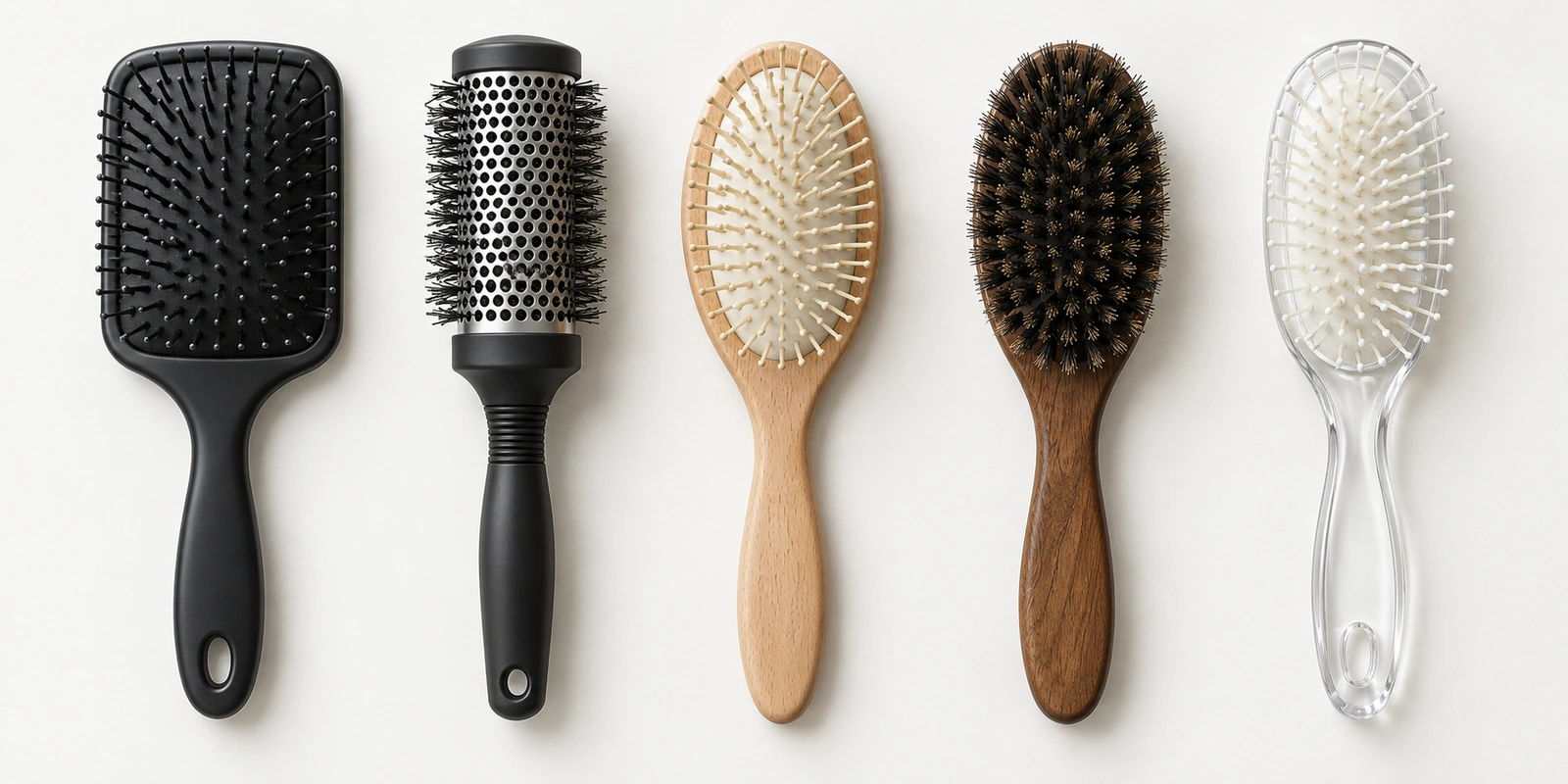
For an ordinary manual hairbrush, HS 9603.29 is the relevant starting branch within heading 9603.
It also covers certain other personal toilet brushes, so the six-digit number alone does not identify a hairbrush completely. A paddle brush and a round styling brush may look very different while remaining within the same broad branch.
Identify what the imported article does before choosing a material heading. A plastic handle does not automatically make a finished hairbrush a general plastic article.
Likewise, a product name containing “brush” does not establish the classification of an electrically heated styling appliance. This guide focuses on manual grooming tools; powered products need a separate assessment.
Combs And Hair-Slides: Follow The 9615 Branch
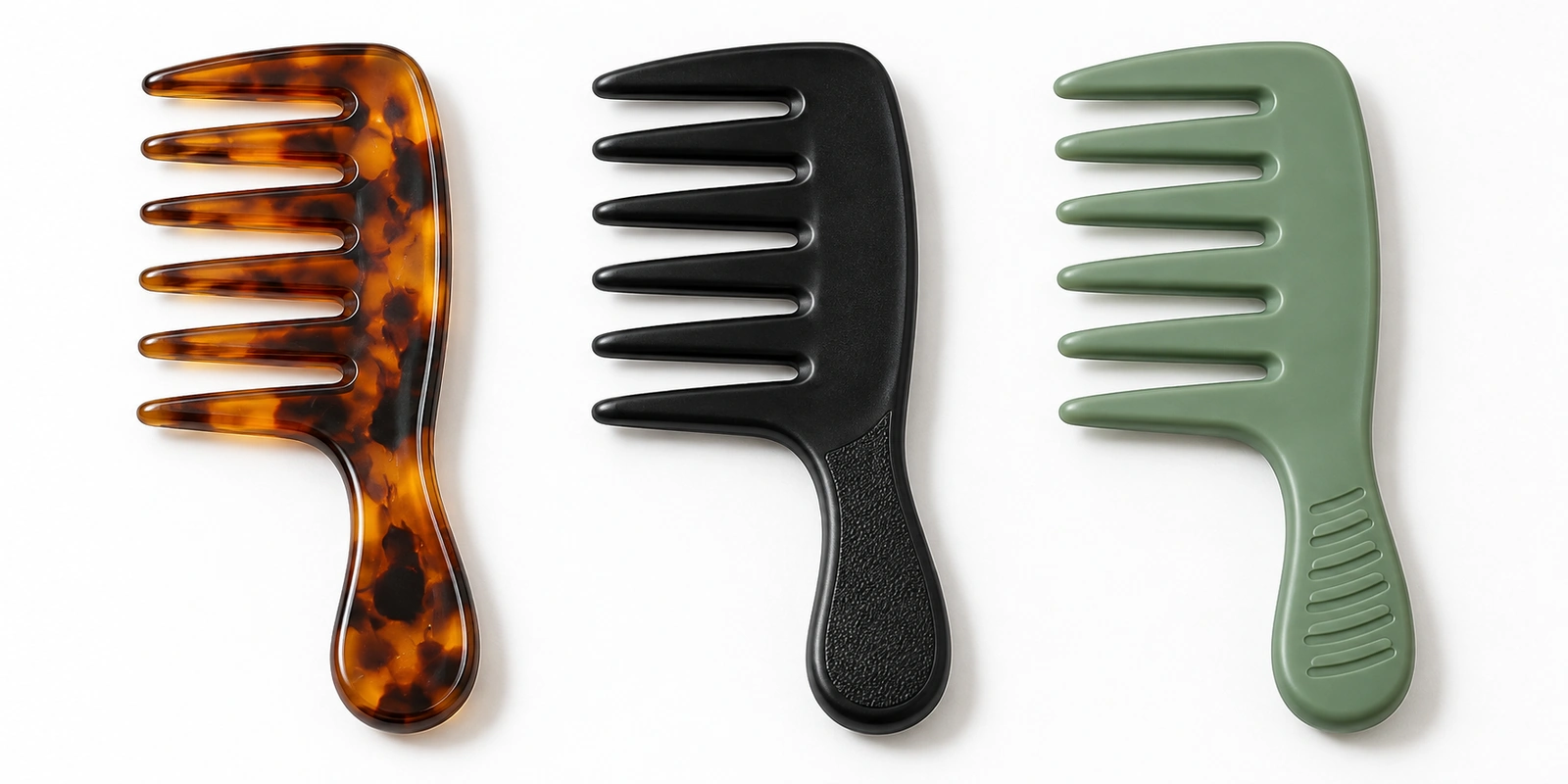
The distinction between a hair brush and a hair comb matters at the heading level. Heading 9615 covers combs, hair-slides, hairpins, and related articles.
Within it, 9615.11 covers combs, hair-slides, and similar articles of hard rubber or plastics; 9615.19 covers other materials in that group.
The following table gives classification starting points, rather than ready-to-file declarations.
| Product Group | Starting Point | Detail Still Needed |
|---|---|---|
| Manual hairbrush | 9603.29 | National hairbrush line |
| Plastic or hard-rubber comb | 9615.11 | Material and value subdivision |
| Other-material comb | 9615.19 | Composition and national subdivision |
| Hairpin or related article | 9615, relevant branch | Specific article and construction |
9615 is not a universal code for every hair accessory. Textile bands, mixed-material decorations, and unusual constructions require their own review. For a range of hair combs, record the actual composition of each SKU rather than treating the assortment as one material.
Why A Supplier’s HS Code May Be Incomplete
The international HS framework is harmonized through six digits. Importing countries then add subdivisions. A Chinese export code can therefore share the first six digits with an import code while differing in the remaining digits and the applicable duty treatment.
Use The Destination’s Full Description
In the United States, the tariff provision extends to eight digits, with a further two-digit statistical suffix for entry reporting.
Current U.S. hairbrush lines distinguish brushes valued at no more than 40 US cents each from those valued higher: 9603.29.40.10 and 9603.29.80.10 respectively.
The threshold concerns the imported goods’ customs valuation, not their eventual retail price.
The official USITC Harmonized Tariff Schedule provides the descriptions and hierarchy. Read the parent headings and legal notes as well as the matching search result. A search for a familiar product name is a way to locate candidates, not a completed classification analysis.
In the EU, the Combined Nomenclature adds detail to form an eight-digit CN code; TARIC develops the nomenclature further for applicable measures.
Do not copy a U.S. ten-digit number into an EU declaration. Ask the destination broker to return the full local code and a description that matches the approved product.
How To Check U.S. Tariffs On Brushes From China
Separate Ordinary Duty From Additional Measures
A general duty rate beside a Chapter 96 provision is only one part of the review. Ordinary duties can contain both a percentage of customs value and an amount per item.
When that happens, multiplying the invoice total by a single percentage leaves part of the calculation out.
For Chinese-origin goods, examine the applicable Chapter 99 provisions and their notes alongside the product classification.
The USTR Section 301 product search helps identify relevant China tariff actions using the eight-digit HTS subheading. It does not replace the current legal provisions or a review of other applicable additional duties.
An exclusion also needs checking against its product description, conditions, and effective dates. Matching an eight-digit code alone may not establish eligibility.
An old ruling or spreadsheet can remain useful for understanding classification while carrying a duty statement that no longer fits the shipment date.
Make The Estimate Reproducible
Request an itemized calculation showing customs value, quantity units, ordinary duty, each applicable additional duty, and separate fees. Save the rate references and the date checked. There is no reliable flat “China hairbrush tariff” that can be applied to every order without these inputs.
Record where manufacturing occurred as well as where the cargo departs. Dispatch through another country does not, by itself, establish that country’s origin. Review the actual manufacturing facts with the broker, and rerun the tariff check if the planned entry date changes before shipment.
How EU Import Duties And VAT Differ
For an EU shipment, begin with the correct local classification, Chinese origin where applicable, and the intended import date. Then consult the measures attached to that combination. An American Section 301 result tells an EU buyer nothing about the amount payable in the EU.
Read TARIC Measures And National Taxes Separately
The European Commission’s TARIC guidance and database access explains its coverage of customs duties, preferences, trade-defense measures, and controls. TARIC data is transmitted daily to national customs administrations. Check conditions and supporting-document requirements, rather than copying the first rate shown.
TARIC does not include national VAT or excise rates. Keep import VAT, customs duty, broker charges, and transport costs on separate lines in the budget.
Ask the destination adviser how the relevant tax base and any available recovery treatment apply to the importer. A customs-duty percentage alone is not a complete landed-cost estimate.
For a recurring range, save the classification basis by product specification. Changing a comb’s material or adding components can make an earlier assessment unsuitable, even when the retail collection name stays the same.
This is especially useful when matching product development records to future import declarations.
Prepare A Classification File Before Shipment
Give The Broker A Usable Product Description
A description such as “beauty accessories” hides the features needed to separate a brush from a comb or a hair-slide.
A more useful hypothetical description is “manual paddle hairbrush, plastic handle, rubber cushion, nylon pins, individually boxed.” Use that wording only when the specification supports every detail.
The following records connect the physical goods to the classification review.
| Record | Information To Include | Reason |
|---|---|---|
| Product specification | Function, dimensions, construction | Identify the imported article |
| Material breakdown | Handle, pins, cushion, decorations | Explain composite construction |
| Commercial records | Unit value, currency, quantity | Support valuation and units |
| Origin evidence | Manufacturing location and operations | Support origin assessment |
| Packaging details | Individual items or retail set | Show presentation at import |
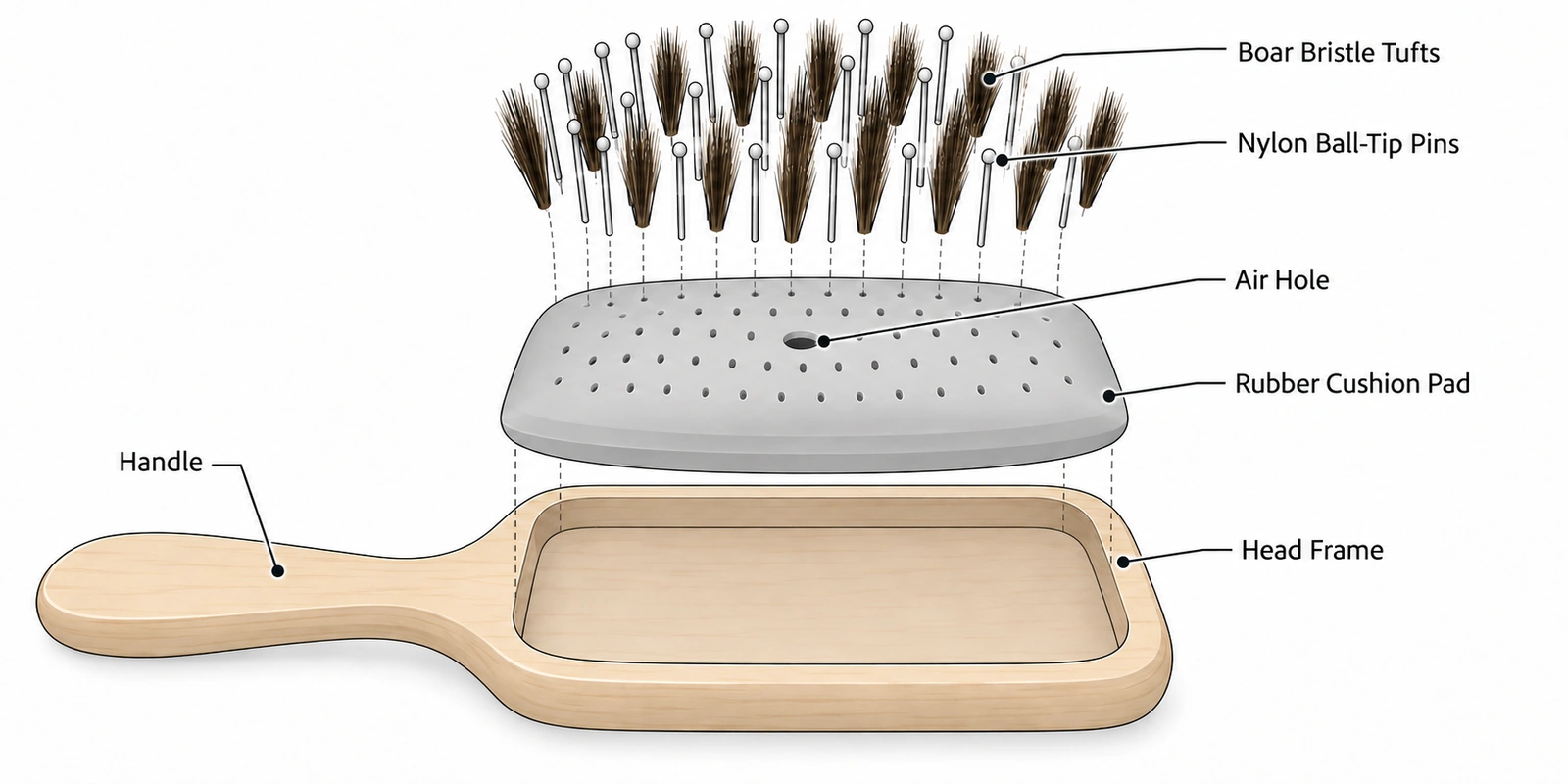
Include clear photographs and the bill of materials, with the relative quantity and value of components where relevant. Do not infer composition from a tortoiseshell pattern or a wood-look finish. The sample, specification, and invoice description should refer to the same product revision.
Resolve Uncertainty Before Committing To The Assortment
U.S. invoice requirements include detailed descriptions, quantities, purchase values or appropriate nonpurchase values, origin, and specified charges. Separately disclose relevant buyer-furnished production inputs for valuation review. Agree how the hair brush packaging and packing list will identify each SKU.
Use a binding ruling when classification uncertainty is commercially significant. CBP can issue U.S. classification rulings for described prospective imports; EU customs authorities issue Binding Tariff Information decisions. Give complete product information.
A factory’s suggestion and a broker’s preliminary opinion help preparation, but neither should be presented as a customs authority’s binding decision.
Frequently Asked Questions
Do Free Hairbrush Samples Have A Zero Customs Value?
Free supply does not automatically mean zero customs value. U.S. invoice rules address merchandise shipped without a purchase and require an appropriate value for each item.
Tell the broker that the goods are samples, explain how they were supplied, and obtain the correct valuation treatment. Avoid using a zero invoice simply because no payment was requested.
Can A Brush And Comb Gift Set Use One HS Code?
Do not assume that putting products in one box creates a single classification. Submit the components, quantities, values, intended use, and retail presentation for assessment under the destination’s classification rules.
The outcome may depend on whether the collection qualifies as a set and how those rules apply to its contents.
Does An HS Code Prove That A Brush Meets Product Safety Rules?
No. Classification identifies the goods for customs treatment; it does not demonstrate that a brush has passed a safety test.
Review any controls and documentary conditions attached to the import, and maintain the product’s safety and material-compliance records separately. A classification decision cannot replace evidence supporting a product claim.
Final Thoughts
Reliable tariff planning starts with the product, destination code, origin, and entry date. For OEM ranges from Dongguan manufacturer JunYi Beauty, keeping brush and comb specifications aligned with import records supports a more useful duty assessment than a generic accessory code.