Claw clips have been one of the defining hair accessories of the past five years, transitioning from a casual at-home tool into a recognised fashion statement worn across editorial, workplace, and everyday contexts. Their longevity in the mainstream has made the question — “are they still in style?” — increasingly common as consumers approach 2026, and increasingly relevant to brand owners and retailers planning their accessory ranges for the year ahead.
The short answer is yes — claw clips remain firmly in style in 2026, but the category has matured significantly. The oversized matte plastic clips that defined the 2021–2023 trend cycle have been joined and increasingly replaced by more refined, material-led, and design-differentiated alternatives. For consumers, this means more options across more price points. For B2B buyers sourcing hair claw and acetate hair clip products, it means the segment is no longer trend-dependent — it has become a permanent accessories category with stable demand and evolving aesthetic preferences.
How Claw Clips Reached Permanent Fashion Status
To understand where claw clips sit in 2026, it is useful to trace how the category moved from utility item to fashion accessory.
From Drugstore to Editorial
For most of the 1990s and 2000s, the claw clip was a functional drugstore product — a way to hold hair up while working, exercising, or doing housework. It carried no particular fashion association and was rarely styled deliberately.
The shift began in 2020 and accelerated through 2021 and 2022, when oversized claw clips began appearing in street style photography, fashion editorial, and celebrity content. The styling moved the clip from a hidden-back-of-head placement to a visible, deliberate statement position, often paired with effortless updos that became the dominant casual styling approach of the early 2020s.
The Material Evolution
The earliest wave of fashion-positioned claw clips was dominated by oversized matte plastic and acrylic designs at accessible price points. From 2023 onward, the category began stratifying. Premium acetate clips — with rich colour depth, marbled patterns, and polished finishes — emerged as the differentiated tier. Recycled-content and bio-based material clips entered the sustainability-conscious segment. Metal-detailed and embellished designs filled the dressier, occasion-wear position. By 2026, the claw clip exists across every price tier and aesthetic category, which is the defining marker of a permanent fashion category rather than a passing trend.
What Is in Style for Claw Clips in 2026
The 2026 claw clip aesthetic has moved away from the oversized, matte, brightly coloured clips of 2022 and 2023 toward more refined, considered, and material-driven designs. The dominant directions for the year:
Cellulose Acetate as the Premium Standard
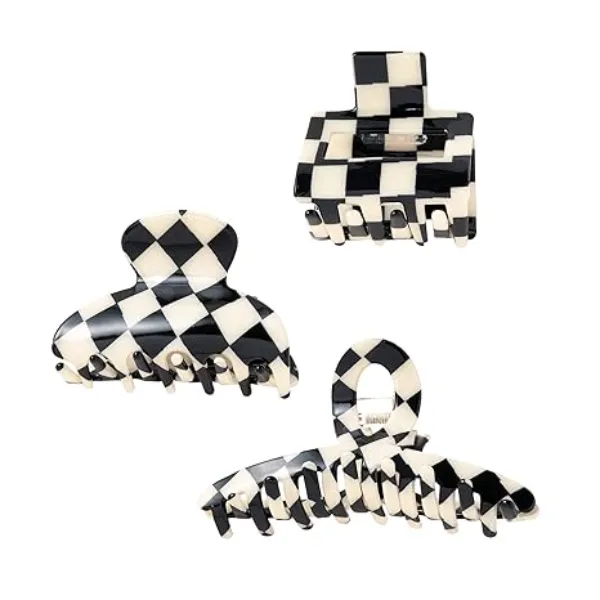
Acetate has consolidated its position as the material of choice for elevated, fashion-credible claw clips. The colour depth, translucency, and surface quality that acetate provides cannot be replicated in standard injection-moulded plastic, and consumers have increasingly learned to recognise the difference at the point of sale.
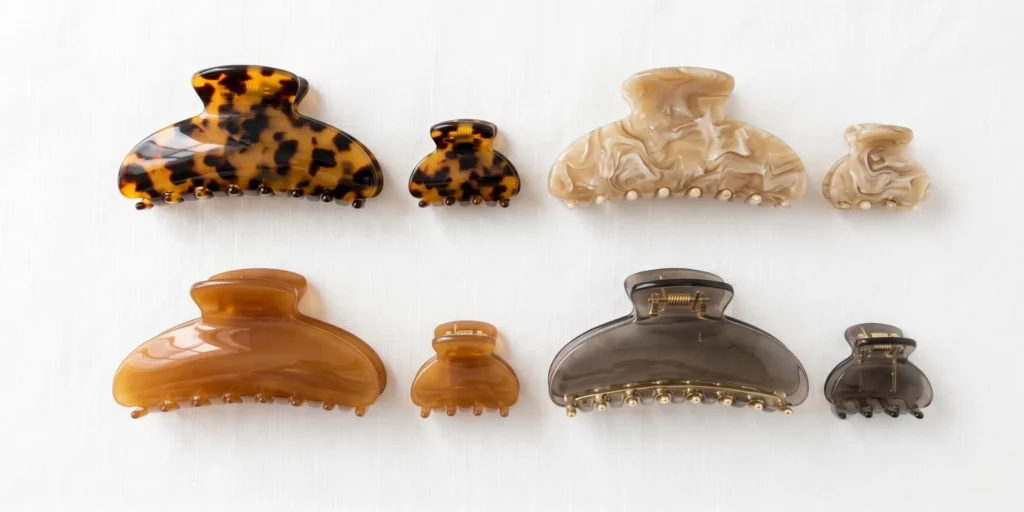
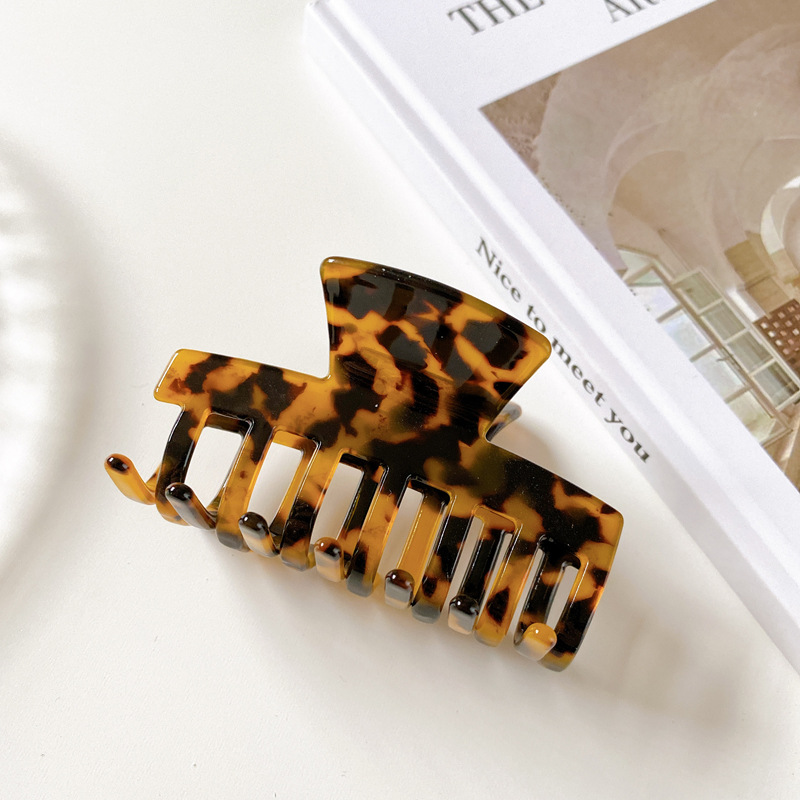
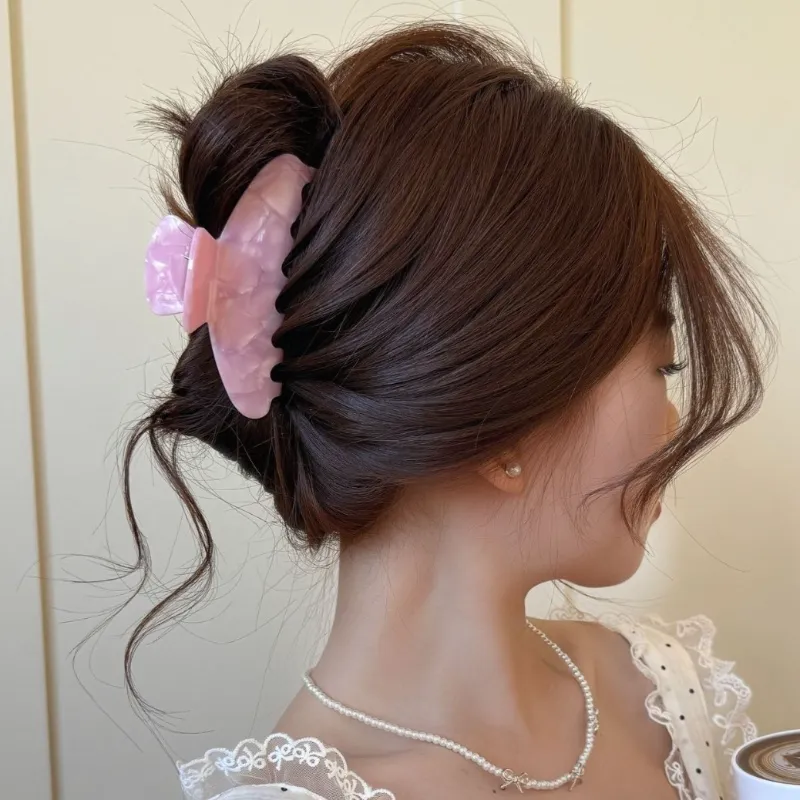
Within acetate, the 2026 directions favour rich, complex colourways — tortoiseshell variations, layered translucent effects, marbled patterns combining two or three tones — over the flat solid colours that dominated earlier trend cycles. Custom acetate sheet development for exclusive colourways is increasingly a brand differentiator at the premium retail tier. The sourcing dynamics for this segment are covered in our guide on top 5 acetate hair clip manufacturers.
Restrained Sizing
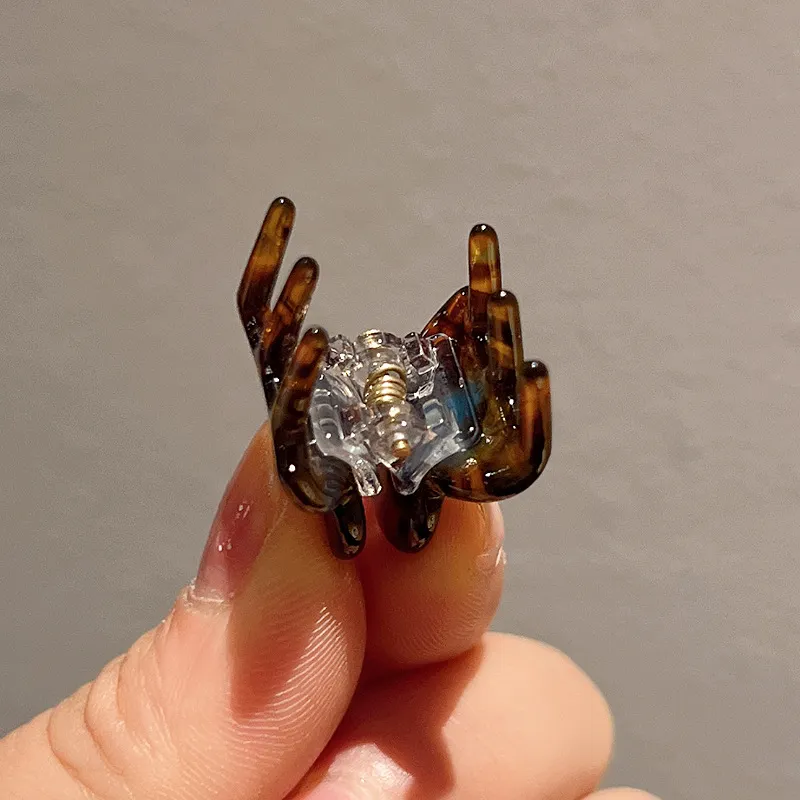
The oversized clip — visibly larger than necessary to hold the hair — has moderated. The 2026 silhouette favours medium-large clips that are functional but not exaggerated in scale. Very small claw clips have also returned as a category, used for partial updos, half-up styles, and accent placements rather than full hair containment.
The shift toward restrained sizing reflects a broader fashion direction toward refinement and away from the maximalist accessories aesthetic that defined the 2021–2023 cycle. It also reflects the practical reality that very oversized clips were sometimes uncomfortable to wear for extended periods, and consumers have gravitated toward proportions that balance visibility with comfort.
Natural and Neutral Colourways
The bright, saturated colours that defined early-cycle claw clip fashion have given ground to natural and neutral palettes. Tortoiseshell — both classic browns and contemporary cool-toned variations — has become a year-round staple. Translucent and frosted finishes in caramel, smoke, and champagne tones replace the matte black and bright pastels that previously dominated. Black remains a fundamental year-round category but increasingly in polished or marbled finishes rather than matte.
This colour direction makes the clip more wearable across more outfits and occasions, which supports the category’s permanent status — clips that coordinate with most wardrobe choices generate more frequent use than statement pieces tied to specific outfits.
Hardware-Detailed and Embellished Designs
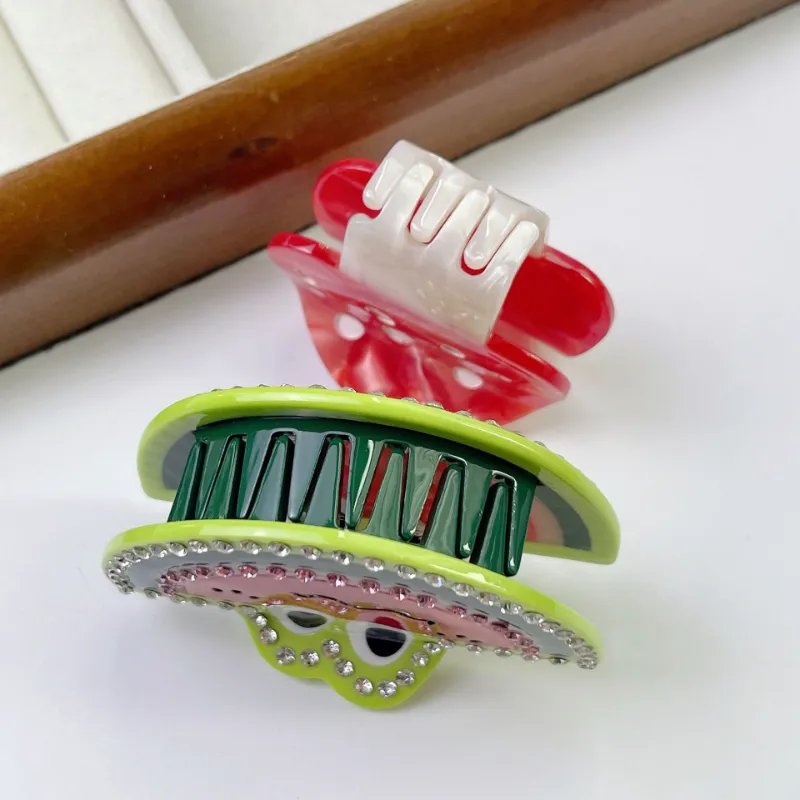
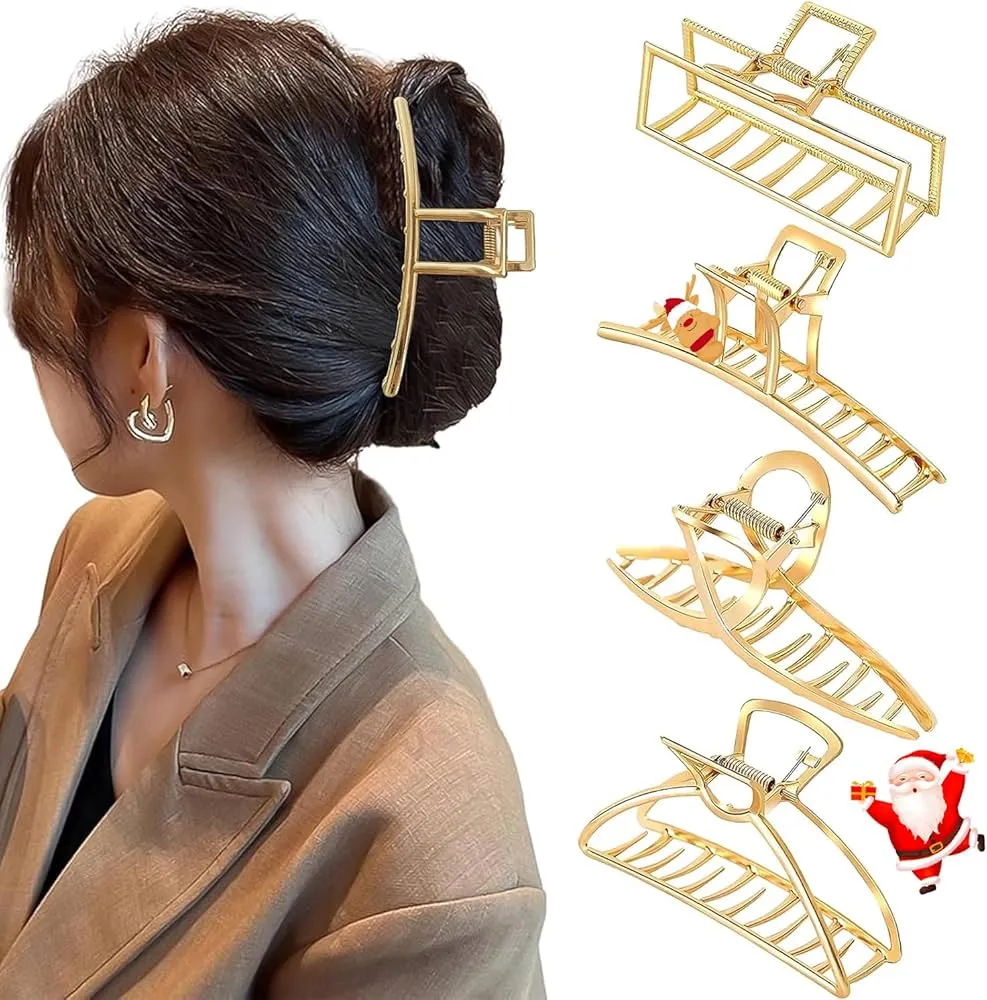
The dressier end of the 2026 category features metal hardware integration — gold or silver bands, hinges with visible detailing, and embellished accents using stones, pearls, or metallic inlays. These designs target occasion wear, evening styling, and the premium gifting segment rather than daily use. The hardware quality and integration in this category is a meaningful differentiator: poor hardware integration, with visible adhesive or misaligned components, immediately reads as low-tier even when the base acetate is high quality.
Claw Clip Styles That Have Faded
Not all of the 2021–2023 directions have carried into 2026. Several styles that were defining at the peak of the trend cycle have moved into the background or out of the mainstream entirely.
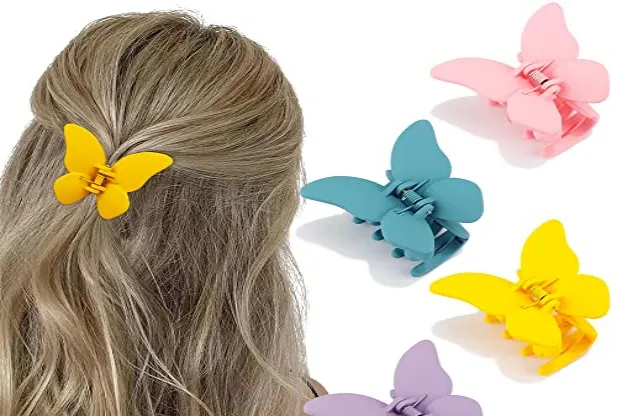
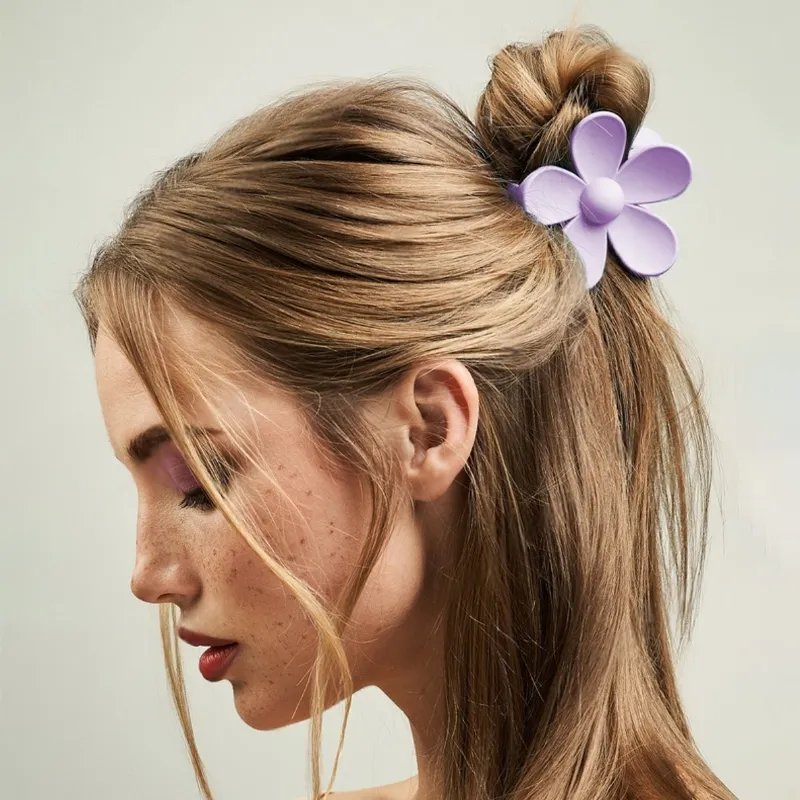
The pure matte plastic oversized clip — particularly in saturated bright colours and pastels — has lost its fashion-forward positioning. It remains available at mass-market price points but is no longer the aspirational reference. Geometric and angular clip shapes that emphasised maximalist silhouettes have softened toward more rounded, organic profiles. Logo-led branded clips at premium price points — where a visible brand mark was the primary value driver — have given ground to material-led designs where the acetate quality and colour development carry the brand value without overt logoing.
This evolution is consistent with the broader maturation of any fashion category: the entry-cycle markers fade, and the sustaining product is the version that emphasises craft, material, and refinement over novelty.
How to Style Claw Clips in 2026
The styling vocabulary for claw clips has expanded significantly as the category has matured. The original positioning — a casual “effortless” updo with deliberate face-framing strands — remains relevant but is no longer the only way claw clips are worn at fashion-forward levels.
The Refined Half-Up
Smaller and medium claw clips are increasingly used for half-up styling — securing the front and crown sections while leaving the lengths flowing — rather than full hair containment. This styling reads more polished and is more office-appropriate than the casual updo aesthetic of the early cycle. The visible clip becomes a deliberate accent rather than a functional necessity.
The Twisted Bun
Twisting the hair before securing it with the claw clip — rather than gathering it as a simple bunch — creates a more structured, intentional look that reads as styled rather than thrown-up. This technique works particularly well with medium-large clips in textured or marbled materials, where the visible clip and the structure of the twist create a coordinated look.
Layered Clipping
Using two or more smaller claw clips together — often in coordinated or complementary materials — creates a layered, fashion-editorial styling that is distinctly 2026 rather than borrowed from the earlier cycle. This approach also creates a use-case for the smaller clip sizes that have returned to the category.
Occasion Styling
The hardware-detailed and embellished tier of claw clip is increasingly used for occasion styling — securing styled hair for events, evenings, and dressed-up contexts. This represents a category expansion beyond the daily-casual positioning that defined the initial trend cycle.
Why Claw Clips Have Permanent Status
Several structural factors explain why claw clips have moved beyond trend status and into permanent accessories category positioning:
Functional Indispensability
Unlike many fashion accessories, the claw clip performs a genuine practical function. It holds up hair quickly and securely without the heat and time of styling tools or the bulk of multiple bobby pins. This functional value means consumers continue to use claw clips even when fashion attention shifts elsewhere, which sustains baseline demand independent of trend cycles.
Cross-Generational Appeal
The category is worn across generations — from teenagers to women in their sixties — with style and material variations adapting to each demographic. This breadth of appeal supports market depth that single-generation accessories cannot replicate.
Price Tier Inclusivity
Claw clips exist at every price point from sub-dollar mass-market clips to designer pieces at hundreds of dollars. This price inclusivity means the category is accessible to consumers at all spending levels, with brand and material differentiation creating clear good-better-best positioning that supports retailer margins across the range.
Material Innovation Headroom
The category continues to generate new development possibilities — sustainable materials, custom acetate colourways, hardware integration, gemstone embellishment — that keep the category visually fresh without requiring shape revolution. The clip silhouette is stable; the material and finish vocabulary continues to evolve.
Sourcing Considerations for B2B Buyers in 2026
For brand owners and retailers planning claw clip and hair accessory ranges for the year ahead, the category’s mature status carries specific sourcing implications.
Range Architecture by Tier
A 2026-ready claw clip range typically spans three to four tiers. An entry-level tier in mid-quality plastic or resin at accessible price points; a core tier in standard acetate covering the most-worn colourways; a premium tier in custom acetate with proprietary colour development; and an occasion tier in hardware-detailed or embellished designs. Each tier requires different sourcing approaches and different manufacturer profiles. The full manufacturer landscape across these tiers is covered in our guide on the top 5 hair clip manufacturers.
Colour Development as Differentiation
In a market where the base clip silhouette is standardised, custom colour and pattern development has become a primary differentiator at the premium and core tiers. Stock acetate sheet colourways — available to any manufacturer’s clients — limit the exclusivity that justifies premium pricing. Custom acetate sheet development, while requiring longer lead times and minimum sheet quantities, creates the proprietary colour story that supports premium positioning and reorder protection.
Sustainability Substantiation
Sustainability claims on hair accessory packaging are subject to increasing regulatory scrutiny in EU and UK markets, with self-declared “eco” and “recycled” claims at risk of challenge without third-party verification. Brands making sustainability claims in 2026 should ensure the underlying certification — GRS for recycled content, biodegradability documentation for cellulose acetate — is in place before the claim is made. The certification framework is covered in our guide on hair brush safety certifications, which applies equally to hair accessory categories.
MOQ and Seasonal Planning
Claw clips have meaningful seasonality — Q3 and Q4 typically see significantly higher sell-through than Q1 and Q2, driven by gifting demand and back-to-school/back-to-work seasons. Planning production and inventory commitments around this seasonality, rather than ordering uniformly across the year, reduces overstock risk on slow-moving SKUs and stockout risk on seasonal peaks. Both standard and custom claw clip formats are available through OEM and private label manufacturing routes, with material specification, mould development, and packaging adjustable to range positioning requirements.
Frequently Asked Questions
Are claw clips still in style in 2026?
Yes. Claw clips remain firmly in style in 2026, though the category has matured significantly from the oversized matte plastic clips that defined the 2021–2023 trend cycle. Premium acetate designs, restrained sizing, natural and neutral colourways, and hardware-detailed occasion styles are the dominant 2026 directions. The category has moved from trend status to permanent fashion accessory positioning.
What size claw clip is fashionable in 2026?
Medium-large clips have become the dominant size — functional but not exaggerated in scale, replacing the very oversized clips of the earlier trend cycle. Smaller claw clips have also returned as a category, used for half-up styles and layered clipping rather than full hair containment. Very oversized clips have moved from fashion-forward to mass-market positioning.
Which colour claw clips are trending in 2026?
Tortoiseshell variations, translucent and frosted neutrals in caramel and smoke tones, marbled multi-tone effects, and polished black finishes are the dominant 2026 directions. The bright pastels and saturated solids that defined the early trend cycle have moved into the background, with natural and complex colourways replacing them at the fashion-forward tier.
What material is best for fashion-credible claw clips?
Cellulose acetate has consolidated its position as the premium material for fashion-credible claw clips. Its colour depth, translucency, and surface quality cannot be replicated in standard injection-moulded plastic. Recycled-content and bio-based materials occupy the sustainability-conscious tier. Standard ABS plastic remains the entry-level material at accessible price points.
Will claw clips go out of style after 2026?
The category has moved beyond trend status into permanent accessories category positioning. The functional indispensability of the claw clip, its cross-generational appeal, its price tier inclusivity, and the ongoing material innovation in the category all support continued mainstream relevance well beyond 2026. The specific styles and materials in fashion will continue to evolve, but the category itself is no longer trend-dependent.
How should brands plan their claw clip range for 2026?
A 2026 range typically spans three to four tiers: an entry-level mid-quality plastic tier, a core acetate tier in standard colourways, a premium acetate tier with custom colour development, and an occasion tier in hardware-detailed or embellished designs. Custom acetate colour development at the premium tier is the primary differentiator in a category where the base silhouette is standardised. Seasonal planning around Q3 and Q4 demand peaks supports inventory efficiency.
Conclusion
Claw clips are unambiguously still in style in 2026 — but the category has matured beyond its trend-cycle origins into a permanent fashion accessories segment with stable demand, evolving aesthetic directions, and clear tier differentiation across price points. The 2026 directions favour cellulose acetate as the premium material standard, restrained and considered sizing, natural and complex colourways, and hardware-detailed occasion designs at the dressier end of the category. The styles that have faded — oversized matte plastics, saturated bright pastels, geometric maximalism — are giving way to refinement, craft, and material-led design.
For brand owners and retailers planning their 2026 hair accessory ranges, the category offers both stability and continuing development opportunity. Manufacturers such as JunYi Beauty, which produces acetate, plastic, and sustainable-material claw clips across the full price tier range from its Dongguan facility, with custom acetate colour development capability and OEM/ODM service framework, represent the type of production partner suited to brands building tier-differentiated claw clip ranges aligned with the 2026 aesthetic direction.