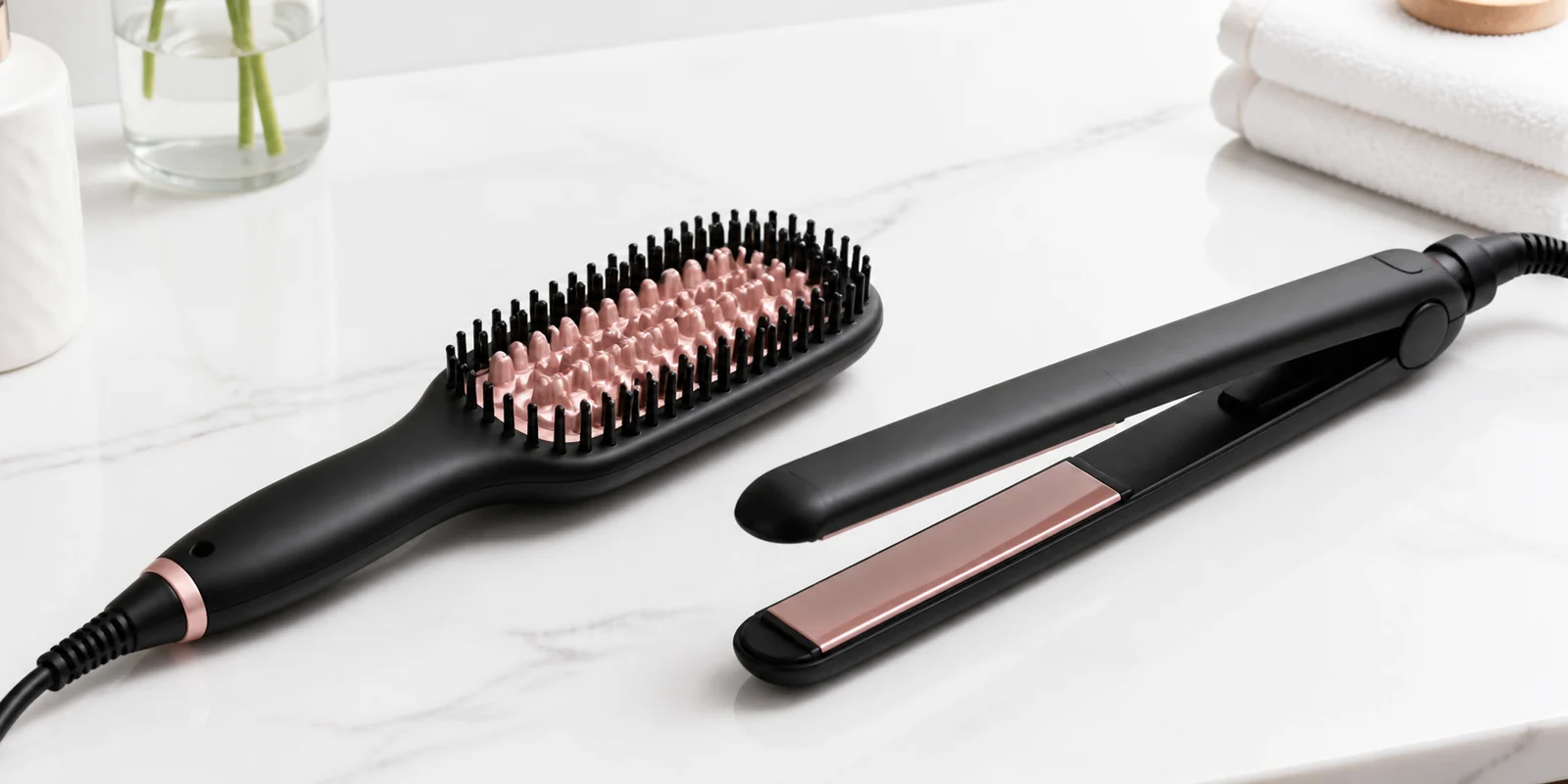
Straightener brushes — hybrid tools that combine a heated plate or heated bristle bed with a brush shape — have become one of the most popular at-home styling categories, marketed as a gentler, faster alternative to a traditional flat iron. Whether they are actually bad for hair is not a yes-or-no question. The honest answer depends on temperature, frequency, hair condition going in, and whether the specific product meets the material and thermal specifications that make heat styling tools safe to use regularly.
This article separates what straightener brushes genuinely do differently from a flat iron, where the “gentler” marketing claim holds up and where it does not, and how to use one without accumulating the kind of damage that makes people regret buying one. For the material specifications that determine whether any heat styling brush performs safely, see our guide on heat-resistant hair brush materials.
What a Straightener Brush Actually Does
The Mechanism
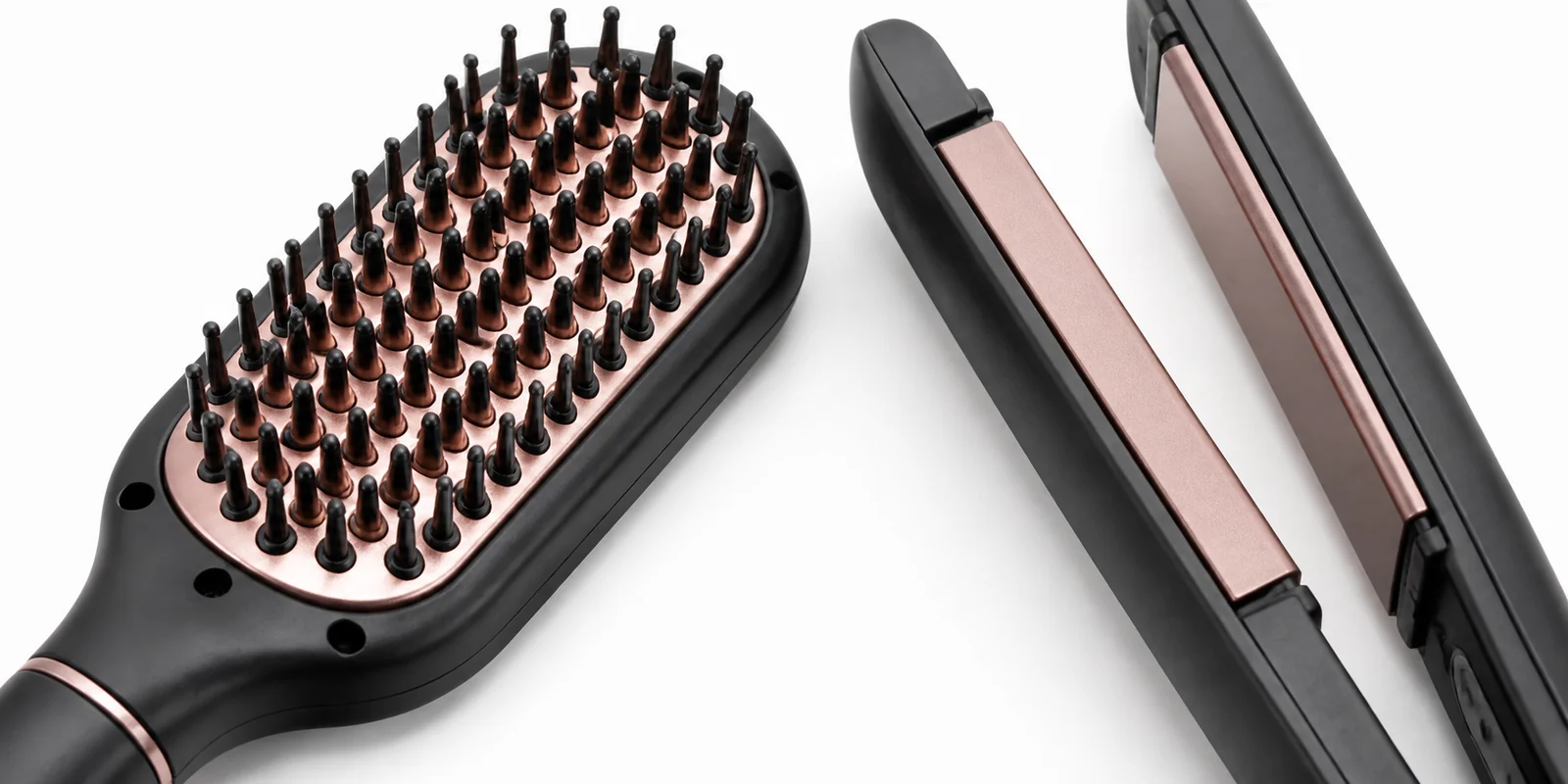
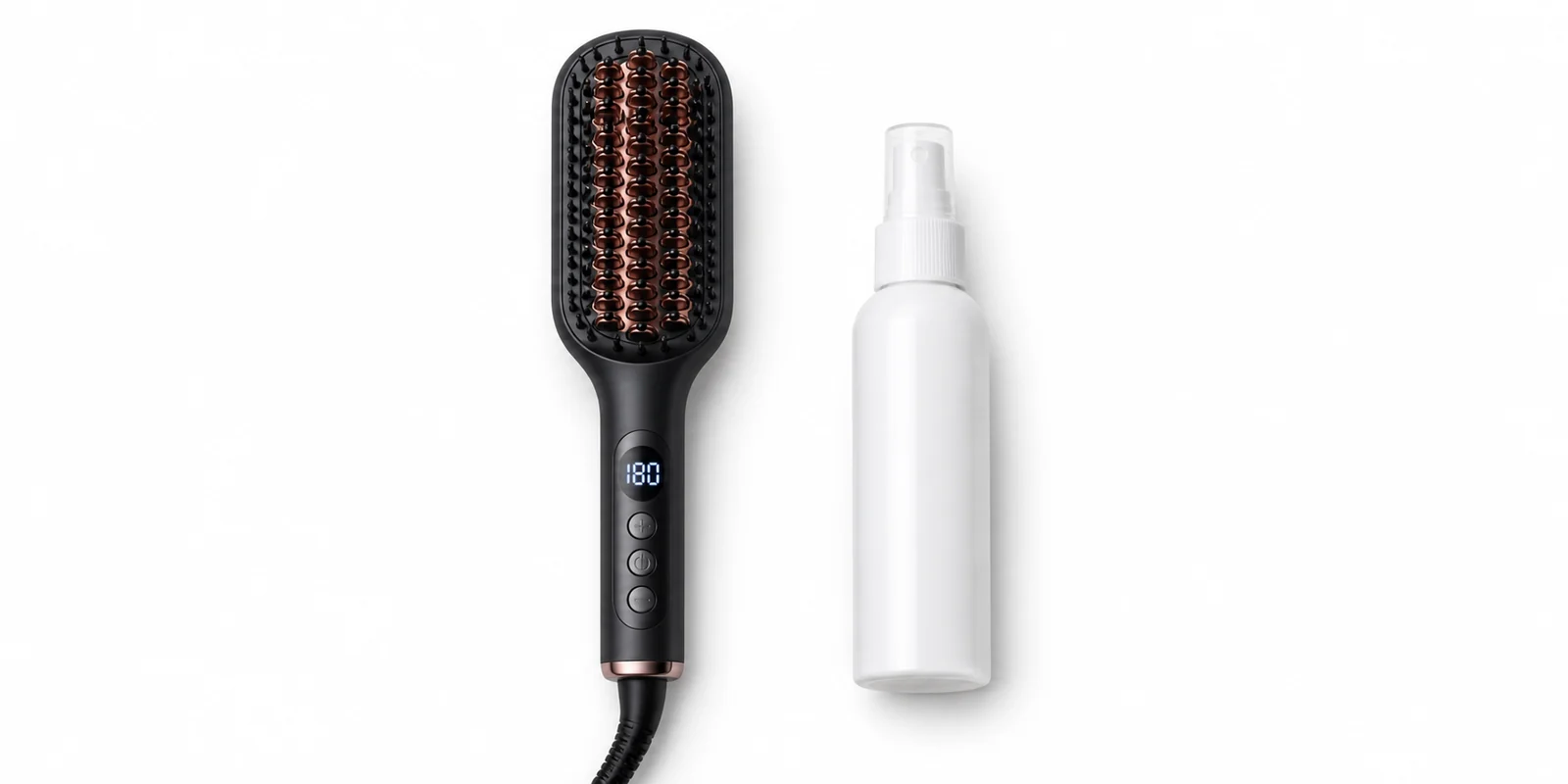
A straightener brush combines heated plates or a heated bristle bed with a brush-like tooth or pin arrangement. As the brush is drawn through a section of hair, the heated surface smooths the cuticle and reduces frizz while the teeth or bristles comb through the section simultaneously — one motion instead of the separate sectioning-and-clamping process a flat iron requires.
Most models operate in a temperature range of roughly 140°C to 230°C (285°F to 450°F), with lower-end consumer models often capped around 180–200°C and higher-end or professional-adjacent models reaching flat-iron-equivalent maximums.
How It Differs Mechanically from a Flat Iron
A flat iron applies heat through two flat plates that fully clamp around a section of hair, creating even, high-contact-area heat transfer across the entire section in one pass. A straightener brush applies heat through a single heated surface (plate or bristle bed) with the hair passing across it in a single-sided, lower-contact-area motion, often requiring more passes over the same section to achieve equivalent straightening.
This mechanical difference is the source of both the “gentler” claim and its limitations, covered below.
Where the “Gentler” Claim Holds Up
Lower Typical Operating Temperature
Many straightener brushes are designed and marketed with lower maximum temperatures than a professional flat iron, which can reach 230°C or higher. A consumer straightener brush capped at 180–200°C is, at that setting, applying less thermal stress per pass than a flat iron run at its maximum. For hair that does not require maximum-temperature straightening to achieve the desired result — looser waves, fine hair, or hair that straightens easily — the lower typical operating temperature is a genuine, if modest, damage-reduction factor.
Reduced Single-Point Pressure
Because a straightener brush does not clamp the hair between two plates under pressure the way a flat iron does, there is less mechanical compression per pass. For hair that is prone to crimping or plate-mark creasing from a flat iron — often a sign of the plates gripping too hard or being drawn through too slowly — a straightener brush’s comb-through motion reduces this specific failure mode.
Fewer Repeated High-Heat Passes for Touch-Ups
Because a straightener brush combines detangling and heat in one motion, quick touch-ups on a section that has slightly reverted often require fewer total passes than re-clamping a flat iron over the same section, which can mean less cumulative heat exposure for small maintenance touch-ups specifically — though not necessarily for a full initial styling session.
Where the “Gentler” Claim Breaks Down
Multiple Passes Often Needed for Full Straightening
The single-sided heat contact that makes a straightener brush feel gentler per pass also makes it less efficient at fully straightening thick or coarse hair in one motion. Many users run a straightener brush over the same section three, four, or more times to achieve the smoothness a flat iron would produce in one or two passes. Total heat exposure per section is a function of temperature multiplied by number of passes and dwell time — a lower-temperature tool used for five passes can expose hair to more cumulative heat than a higher-temperature flat iron used for one clean pass.
Marketing Temperature Claims vs. Actual Output
Not all straightener brushes hold their stated temperature accurately or consistently across the full heated surface. Products with poor thermal regulation can have hot spots on the plate or bristle bed that exceed the displayed setting, particularly on lower-cost models with less precise heating elements. This is a genuine risk factor that undermines the gentleness claim regardless of the advertised maximum temperature.
Brushing Motion on Already-Vulnerable Heated Hair
The comb-through motion that makes a straightener brush convenient also means the hair is under mechanical tension from the bristles or teeth at the exact moment it is heated and therefore most vulnerable to mechanical damage. A flat iron’s clamp-and-glide motion applies less lateral shear to the hair shaft during the heat-application moment itself. For hair that is already fragile — over-processed, bleached, or very fine — this combined heat-plus-mechanical-tension moment can be a meaningful stress point that a flat iron does not replicate in the same way.
Material Specification: Why Not All Straightener Brushes Are Equal
Ceramic and Tourmaline Plates
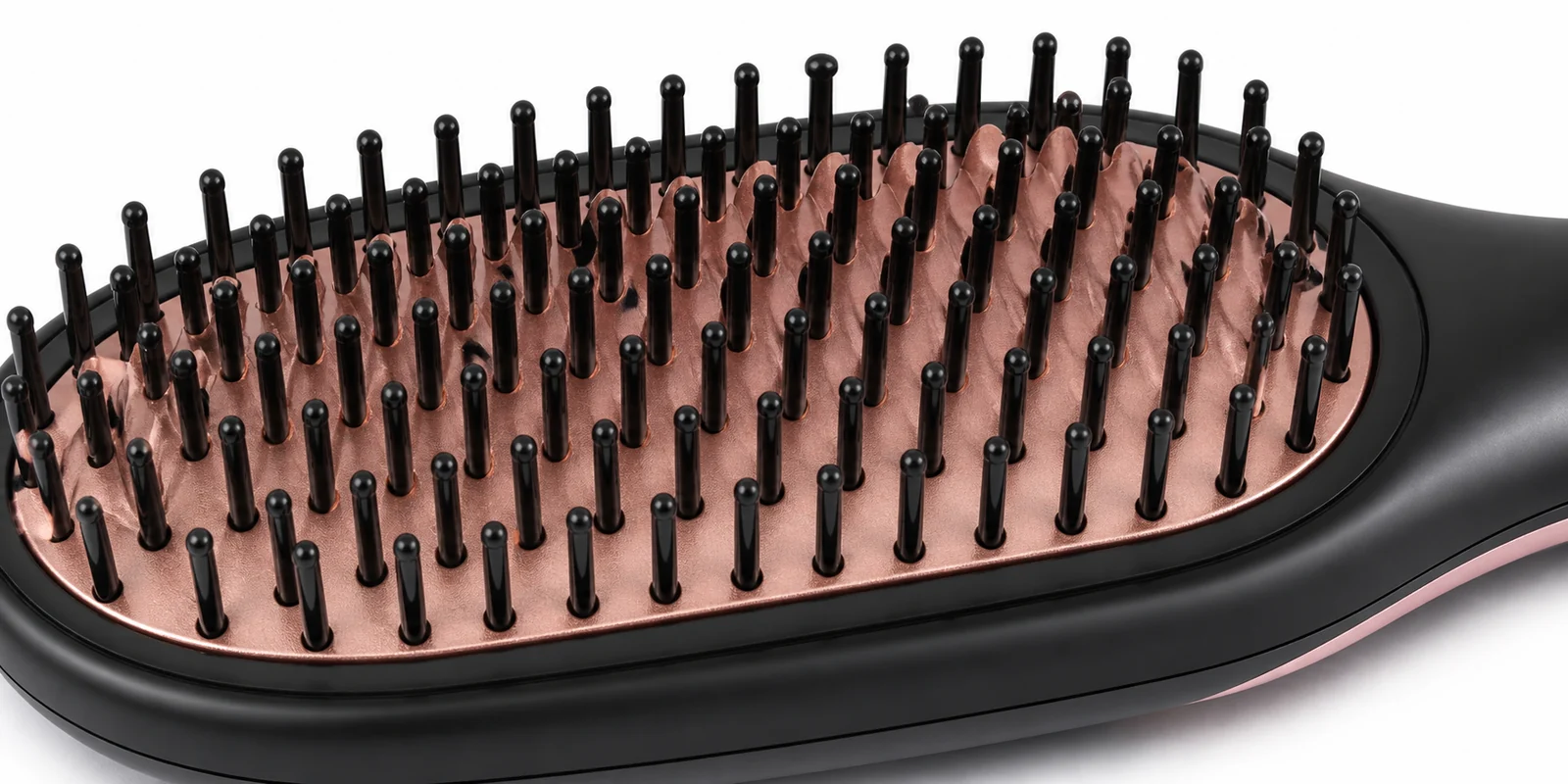
Ceramic-coated heating plates or bristle beds distribute heat more evenly than plain metal, reducing the hot-spot risk described above. Tourmaline-infused ceramic adds an ionic emission component that can reduce frizz and static during the straightening pass, a mechanism covered in more detail in our article on what ionic hair brushes actually are. Products using genuine ceramic or tourmaline-ceramic composite plates generally produce more even results with fewer passes than products using uncoated metal plates, which directly reduces the cumulative-passes problem described above.
Heat-Resistant Bristle or Tooth Material
The bristles, pins, or teeth immediately adjacent to the heated plate must be rated for sustained contact with that heat source, not just brief exposure. Standard nylon degrades under this kind of sustained proximity heat; heat-resistant nylon specifically rated for direct or near-direct contact with a heating element is the appropriate specification. The general framework for identifying genuinely heat-resistant bristle and barrel materials — and the materials to avoid — is covered in our heat-resistant hair brush materials guide.
Temperature Accuracy and Adjustability
A straightener brush with multiple genuine temperature settings — rather than a single fixed heat level — allows the temperature to be matched to hair type and condition, which is one of the more meaningful controllable variables in reducing heat damage risk. Fine or damaged hair styled at 160°C accumulates meaningfully less cumulative stress over repeated uses than the same hair styled at 220°C, even accounting for the extra pass or two the lower setting might require.
How to Use a Straightener Brush Without Damaging Hair
Match Temperature to Hair Type
Fine, colour-treated, or damaged hair should use the lowest setting that still achieves the desired result, generally in the 140–170°C range. Medium to thick, healthy hair can tolerate 180–200°C. Very coarse or resistant hair may need 210°C or above, but this should be the exception rather than the default setting for daily use.
Start on Completely Dry Hair
Straightener brushes, like flat irons, should be used on hair that is fully dry, not damp. Applying heat to hair with residual moisture causes the water in the shaft to heat rapidly and can produce steam-related damage to the cuticle — a risk that applies to any heated styling tool, not just straightener brushes specifically.
Use a Heat Protectant
A heat protectant spray or serum applied before any heat styling tool creates a barrier that reduces direct thermal transfer to the cuticle and reduces moisture loss during the heat-styling pass. This applies equally to straightener brushes, flat irons, and blow-dry tools, and is one of the most consistently effective single interventions for reducing cumulative heat damage.
Limit Passes Per Section
If a section is not smoothing after two or three passes at an appropriate temperature, the answer is usually better sectioning (thinner sections) or a slightly higher temperature setting rather than continuing to pass the tool over the same hair repeatedly at the same settings. Repeated passes at an ineffective temperature accumulate heat exposure without achieving the intended result.
Limit Frequency
Daily heat styling with any tool — straightener brush or flat iron — accumulates cumulative cuticle stress faster than hair’s natural repair processes can offset, particularly for fine or already-processed hair. Alternating heat styling days with heatless styling methods, or limiting straightener brush use to two to four times per week, reduces the cumulative damage burden regardless of which specific tool is used.
Who Should Be More Cautious
Fine hair is more vulnerable per unit of heat exposure due to its smaller shaft diameter and lower structural mass, and should default to the lowest effective temperature setting. The broader specification guidance for fine hair tools is covered in our guide on the best hair brush for fine and thin hair.
Colour-treated and chemically processed hair already has a compromised cuticle and reduced structural integrity, making it more susceptible to heat damage at any given temperature than virgin hair. Lower temperature settings and reduced frequency are appropriate.
Hair that is already showing heat damage signs — brittleness, split ends, a rough or straw-like texture — should minimise all heat styling, including straightener brushes, until the damaged sections are trimmed and the hair’s condition has improved through protein and moisture treatment.
Anyone using a straightener brush daily should assess whether daily heat styling is necessary for their styling goals or whether alternating with heatless methods (braids, rollers, or simply air-drying with a smoothing brush) could reduce frequency without sacrificing the desired look.
Sourcing Considerations for B2B Buyers
For buyers developing straightener brush products, the specification decisions determine whether the “gentler than a flat iron” positioning is genuinely defensible or merely a marketing framing that does not survive scrutiny.
Plate and bristle material: Ceramic or tourmaline-ceramic composite plates with heat-resistant nylon teeth are the baseline specification for a product that can credibly claim reduced-damage performance. Uncoated metal plates or standard nylon undermine the core positioning claim regardless of what the packaging states.
Temperature accuracy and range: Multiple genuine temperature settings, with documented and independently verifiable accuracy against the displayed setting, are a meaningful differentiator. Products with a single fixed temperature or undocumented accuracy claims are more exposed to consumer disappointment and review risk.
Claim discipline: Positioning copy should avoid blanket claims that a straightener brush is universally “safer” or “healthier” than a flat iron. The more defensible and accurate claim is that it offers a faster, more convenient single-motion styling process at typically lower default temperatures, with actual damage outcomes depending on temperature, passes, and frequency — the same variables that govern any heat styling tool. The certification and chemical safety framework relevant to electrically heated hair tools is covered in our article on hair brush safety certifications, and electrical safety certification (CE, ETL/UL, or market-specific equivalents) is a separate, non-negotiable requirement for any electrically heated product.
Straightener brush formats with ceramic or tourmaline-ceramic plates, heat-resistant bristle specification, and multi-setting temperature control are available through OEM and private label manufacturing routes, with plate material, bristle grade, and temperature range adjustable to range positioning requirements.
Frequently Asked Questions
Are straightener brushes better for your hair than a flat iron?
Not universally. They typically operate at lower default temperatures and apply less clamping pressure per pass, which can reduce damage for hair that straightens easily at moderate heat. However, they often require multiple passes to achieve results a flat iron delivers in one pass, and the brushing motion applies mechanical tension to the hair at the same moment it is heated. Actual damage outcomes depend more on temperature, number of passes, and frequency of use than on which tool is chosen.
What temperature should I use on a straightener brush?
Fine, colour-treated, or damaged hair should use 140–170°C. Medium to thick healthy hair can tolerate 180–200°C. Very coarse or resistant hair may need 210°C or higher, but this should be the exception rather than a default daily setting.
Can I use a straightener brush every day?
Daily heat styling with any tool accumulates cumulative cuticle stress faster than most hair can naturally offset, particularly for fine or already-processed hair. Limiting use to two to four times per week, or alternating with heatless styling methods, reduces the cumulative damage burden.
Do straightener brushes cause less breakage than flat irons?
They can reduce plate-clamp pressure-related creasing and crimping, but the comb-through motion applies mechanical tension to hair at the moment it is heated, which is a different stress mechanism a flat iron does not replicate in the same way. Neither tool is inherently free of breakage risk; both require appropriate temperature, technique, and frequency to minimise it.
Should I use a straightener brush on wet hair?
No. Straightener brushes, like flat irons, should only be used on fully dry hair. Applying heat to hair with residual moisture can cause steam-related cuticle damage as the water in the shaft heats rapidly.
How do I know if a straightener brush is genuinely safer for my hair?
Look for ceramic or tourmaline-ceramic plates rather than uncoated metal, heat-resistant nylon bristle specification, and multiple genuine temperature settings rather than a single fixed heat level. These specifications determine whether a product can actually deliver reduced-damage performance rather than simply claiming it in marketing copy.
Conclusion
Straightener brushes are not inherently bad for hair, nor are they automatically gentler than a flat iron — the honest answer depends on temperature setting, number of passes, plate and bristle material quality, and frequency of use. The genuine advantages — typically lower default operating temperatures and reduced clamp pressure — are real but modest, and can be offset entirely by the multiple passes many users need to fully straighten a section, or by the mechanical tension the brushing motion applies during heat exposure. Used at an appropriate temperature, on dry hair, with a heat protectant, and at a reasonable frequency, a well-specified straightener brush with ceramic or tourmaline plates and heat-resistant bristle is a reasonably safe styling tool — the same conditions that make any heat styling tool reasonably safe.
For brand developers building straightener brush ranges around genuine reduced-damage positioning, manufacturers such as JunYi Beauty, which produces heat styling brush formats with configurable ceramic, tourmaline, and heat-resistant bristle specifications from its Dongguan facility, represent the type of OEM partner suited to ranges where the safety claim reflects the underlying material specification rather than marketing framing alone.