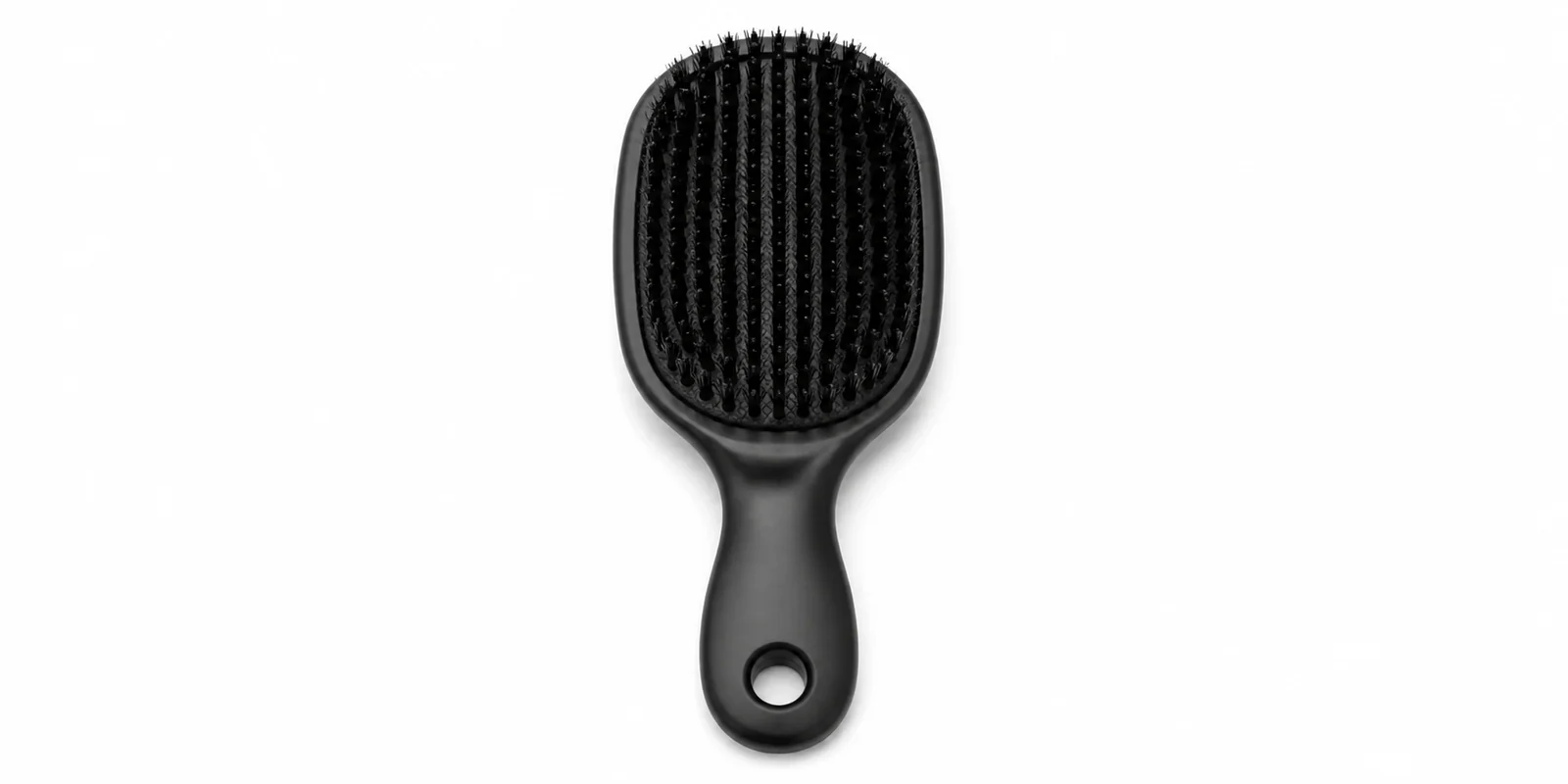
A slick back hair brush — also called an edge brush, grip brush, or slick brush — is a small, densely packed bristle brush designed to smooth flyaways, tame edges, and lay hair flat against the scalp in a sleek, polished finish. It has become one of the most visible tools in the “slicked bun” and “clean edges” styling trend, but the brush itself is not a new invention — it is a long-standing category in professional and textured-hair styling that has recently reached a much broader consumer audience.
This article covers what a slick back brush actually is, how it differs mechanically from a standard hair brush, which hair types and styles it suits, how to use it correctly, and the material and construction variables that separate an effective slick brush from one that will not hold. For the broader bristle framework these brushes draw on, see our guide on how to choose the right hair brush for your hair type.
What Makes a Slick Back Brush Different
Bristle Density and Pattern
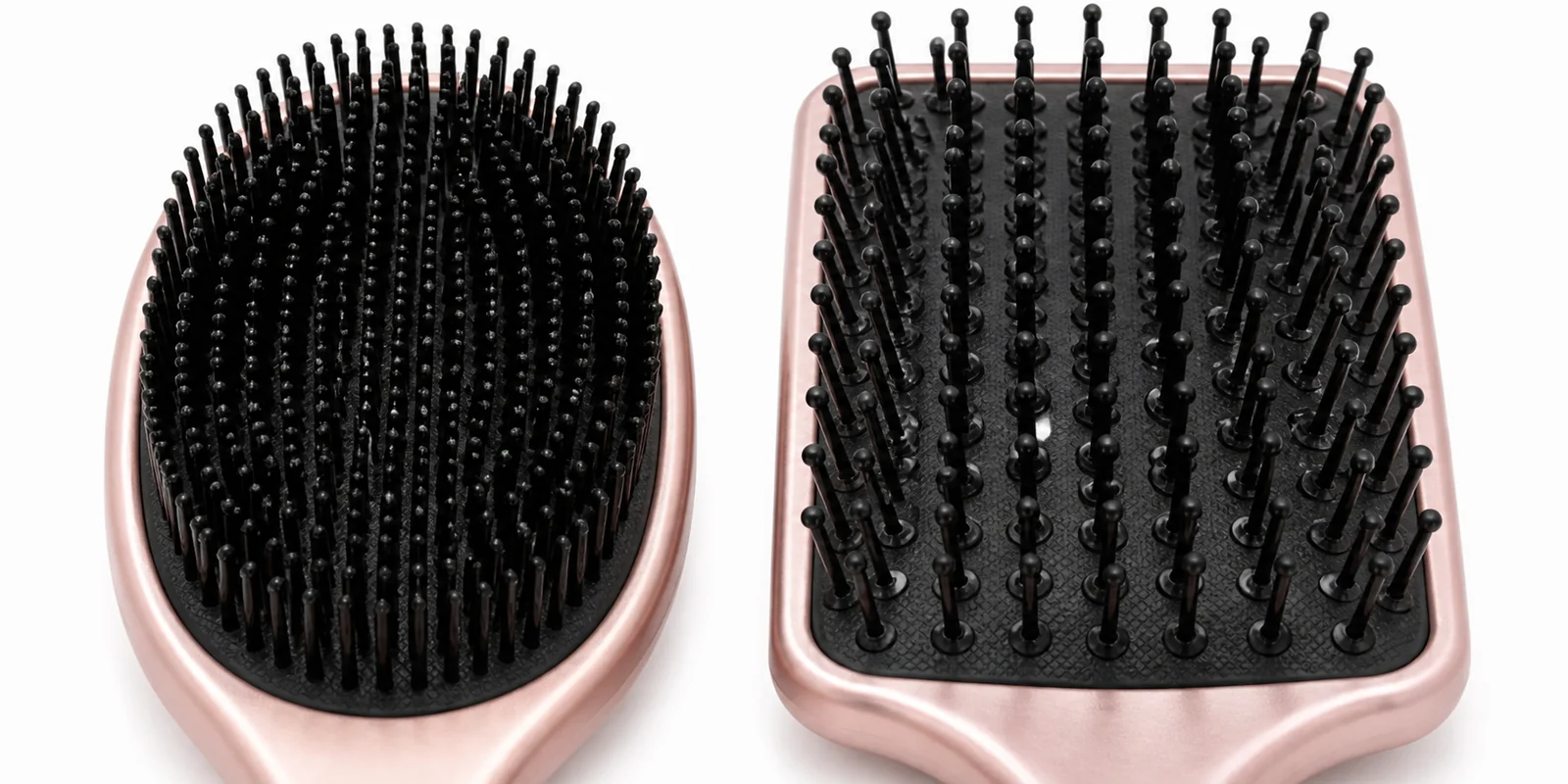
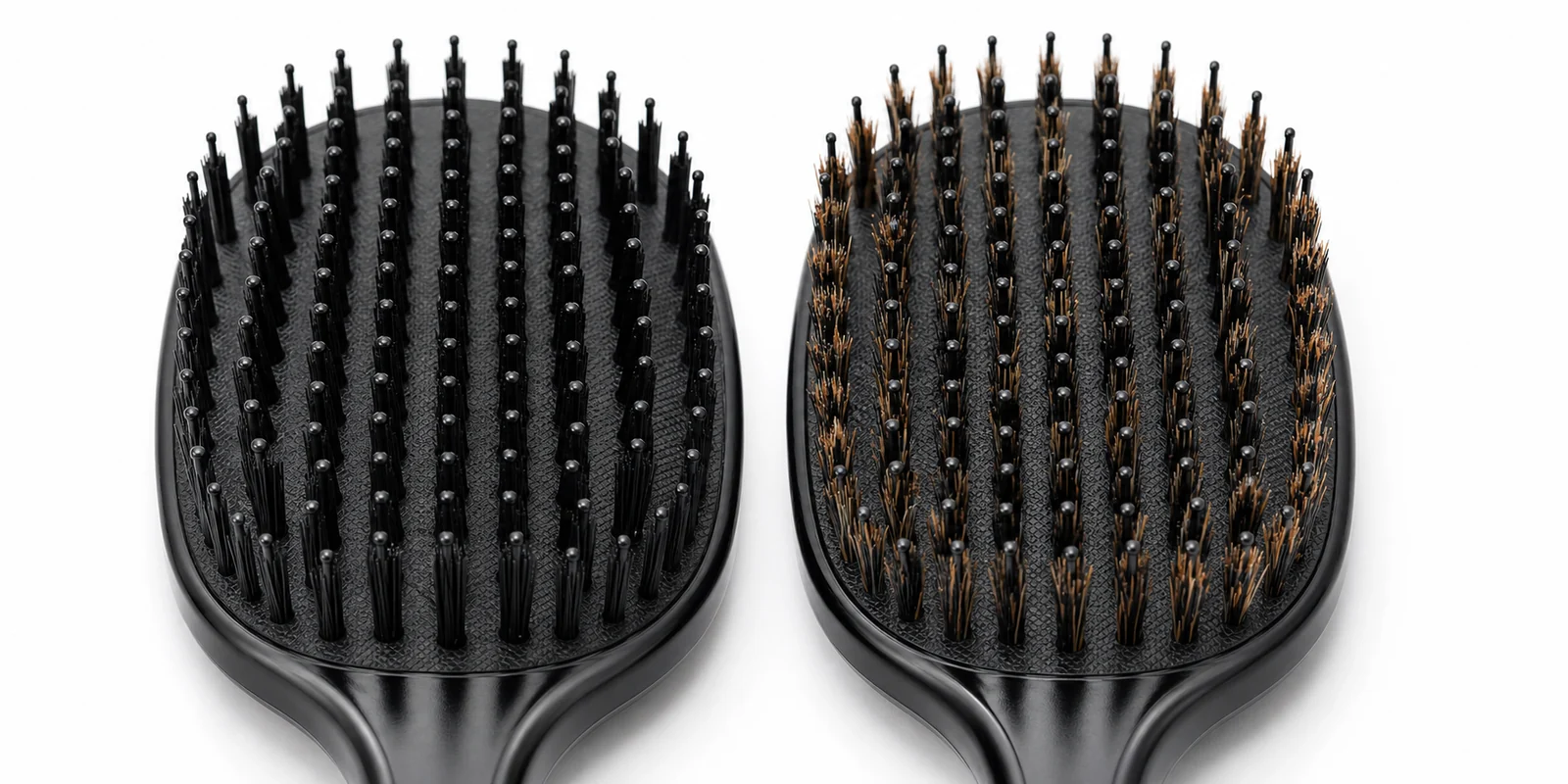
The defining feature of a slick back brush is bristle density. Where a standard paddle brush spaces its bristle rows to allow air and product to move through the hair mass, a slick back brush packs its bristles — usually short, stiff nylon or boar bristle — into a tight, closely set pattern with minimal gaps between rows. This density is what allows the brush to catch and flatten short, fine flyaways and baby hairs that a standard brush’s wider spacing simply passes over.
Small Head Size
Slick back brushes are typically much smaller than a standard paddle or round brush, often only 2 to 4 inches across the bristle head. The compact size gives precise control over small sections — the hairline, edges, and crown — rather than the broad-stroke coverage a full-size brush is designed for. Precision, not coverage speed, is the design priority.
Firm, Low-Profile Base
The base beneath the bristles is generally firm rather than cushioned, and sits close to the bristle tips. This keeps the bristle length short and rigid, which is what produces the flattening, pressed-down effect against the scalp rather than the lifting or smoothing-through effect a longer-bristled brush produces.
Ergonomic Grip Handle
Most slick back brushes have a short, contoured handle designed to be held close to the head at an angle, similar to how an edge control tool or toothbrush would be gripped, rather than the longer handle of a standard styling brush meant for full-arm strokes.
What a Slick Back Brush Is Used For
Smoothing Flyaways and Baby Hairs
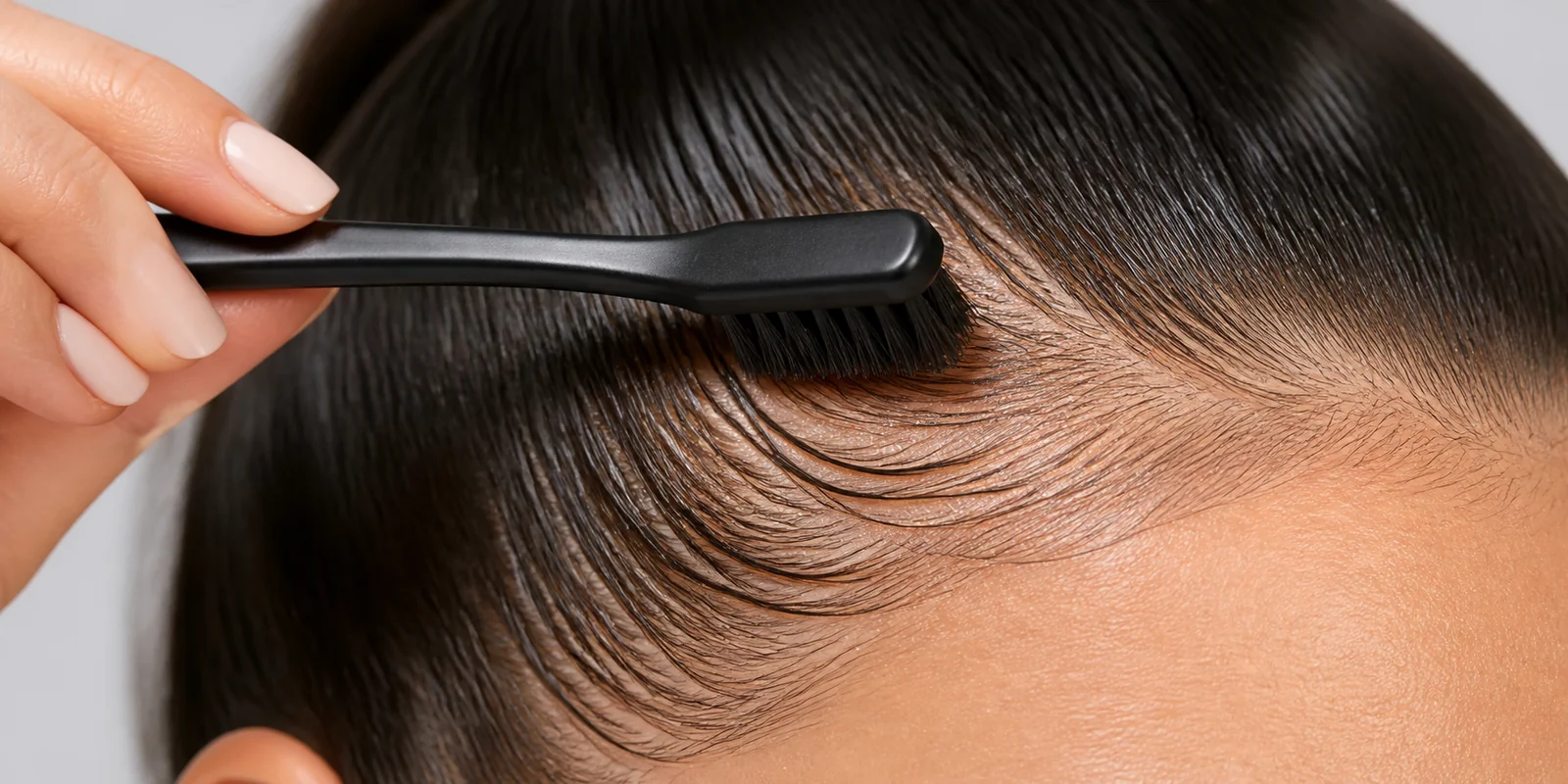
The primary function is controlling the short, fine hairs along the hairline and part line that resist regular brushing because they are too short to be caught by standard bristle spacing. The dense bristle pattern catches these short hairs and presses them flat against the scalp, typically in combination with a styling product (gel, edge control, or pomade) applied first for hold.
Slicked Buns, Ponytails, and ‘Clean’ Styles
Slick back brushes are the primary tool for achieving the smooth, glass-like finish associated with slicked-back buns, high ponytails, and low sleek styles. The brush is used to smooth the surface hair back toward the gathering point before securing with an elastic, working in small sections to eliminate bumps and stray hairs along the way.
Edge Control on Textured and Curly Hair
In the context of textured, curly, and coily hair styling — where the tool has long-standing roots in professional and personal styling routines — a slick back or edge brush is used to lay down the perimeter hairline into clean lines and shapes (waves, swoops, or straight edges) after applying edge control product. This use case predates the recent broader popularity of “slicking” as a general styling trend by decades and remains one of the primary reasons the tool exists.
Beard and Facial Hair Grooming
Smaller slick back brushes, sometimes marketed specifically for facial hair, use the same dense-bristle principle to train and flatten beard hair in a chosen direction, an adjacent use case that shares the same mechanical logic.
How to Use a Slick Back Brush Correctly
Apply Product First
A slick back brush is a styling and finishing tool, not a substitute for the product that provides hold. Gel, edge control, mousse, or a light pomade should be applied to the target section before brushing — the brush distributes and smooths the product into the hair and presses it against the scalp, but it does not create hold on its own. Using the brush without product on very fine or resistant flyaways typically produces a temporary result that reverts within hours.
Work in Small Sections
Because the brush head is small, working in small, deliberate sections — rather than attempting to cover the whole hairline in one broad stroke — produces a cleaner, more even result. This is particularly relevant along a curved hairline, where a small brush can follow the curve more precisely than a larger tool.
Brush in the Direction of the Intended Style
Unlike general detangling or smoothing brushing, slick back brush strokes are directional and intentional — toward the crown for a slicked-back look, along a defined edge line for shaped baby hairs, or toward the gathering point for a bun or ponytail. The short strokes should follow the final direction the hair needs to lie in, not a neutral root-to-tip motion.
Set with a Light Hold Spray
For styles that need to last through the day, a light-hold finishing spray applied after brushing helps lock the smoothed section in place without adding the stiffness or flaking risk of a heavier-hold product applied directly to fine flyaways.
Avoid Daily Use on the Same Section Without Care
Because the bristle is stiff and densely packed, and because slicked styles are often paired with tension from an elastic or pin, repeated daily tension on the same hairline section can contribute to traction stress over time — a consideration covered in more general terms in guides to protective and tension-based styling. Alternating the direction or tightness of a slicked style, and not over-tightening the hairline daily, reduces this risk.
Hair Type Considerations
Straight and Wavy Hair
Slick back brushes work well on straight and wavy hair for controlling flyaways and creating polished ponytail or bun finishes, generally requiring less product than more textured hair types to achieve a smooth result.
Curly and Coily Hair
This is the hair type for which the tool has the deepest styling tradition, particularly for edge control and defined hairline shaping. More product is typically needed to achieve the same flatness given the natural volume and texture of the hair, and technique — brushing in the direction the final style requires while the product is still wet or damp — matters more than on straighter hair types.
Fine Hair
Fine hair flyaways are often the primary reason people reach for a slick back brush in the first place, since fine, short hairs are the ones most likely to resist normal brushing. A gentler touch and lighter-hold product are appropriate for fine hair to avoid over-processing the section with excessive product buildup, a consideration also covered in our guide on the best hair brush for fine and thin hair.
Thick Hair
Thick hair typically needs more product and firmer bristle pressure to achieve the same flattened result, since there is simply more hair mass to press down and hold in place. A slick back brush with a firmer bristle grade and a slightly larger head is often more efficient for thick hair sections than the smallest, most precise edge-brush formats.
Material and Construction Variables
Bristle Material
Nylon bristle is the most common material for slick back brushes because of its stiffness and consistent performance when combined with wet or product-coated hair — natural boar bristle can be used but tends to be softer and less effective at pressing down very short, resistant flyaways compared to a firm nylon bristle pattern. Some premium and professional slick brushes use a boar-nylon mixed bristle for a combination of grip and smoothing.
Bristle Stiffness and Density Grade
Not all slick back brushes are equally dense. Entry-level products may use a sparser bristle pattern that performs closer to a small standard brush than a genuine edge-control tool. Genuine slick back performance depends on bristle count per square inch being meaningfully higher than a standard paddle brush — this is a specification variable worth confirming rather than assuming from the product’s marketed category alone.
Base and Handle Material
A firm plastic or wooden base holds the tight bristle pattern in the fixed, low-profile position that produces the flattening effect. A soft cushioned base — appropriate for a standard daily-use paddle brush — is not appropriate for this tool, as it allows the bristle bed to flex away from the scalp rather than pressing consistently against it.
Sourcing Considerations for B2B Buyers
For buyers developing slick back or edge brush products, the specification precision that separates a genuinely effective tool from a mislabelled small brush is a meaningful differentiator in a category driven heavily by trend-based search demand.
Bristle density specification: The product specification sheet should explicitly document bristle count per row and row spacing rather than relying on a general “densely packed” description. This is the single variable most responsible for whether the finished brush actually performs the flattening function the category promises.
Bristle material and stiffness grade: Firm nylon, or boar-nylon mixed bristle at a firm grade, should be specified explicitly — a soft or standard bristle grade mislabelled as a slick brush will underperform and generate returns from buyers expecting edge-control results.
Base rigidity: The base should be specified as firm/rigid rather than cushioned, distinguishing the construction from a standard daily-use paddle brush at the manufacturing level, not just in marketing copy.
Size and handle variants: A range spanning a compact precision size (for hairline and edge work) and a slightly larger size (for full-crown slicking or thick hair) covers the primary use cases without requiring buyers to guess which single size fits their needs.
Slick back and edge brush formats in firm nylon and mixed bristle, across compact and standard head sizes, are available through OEM and private label manufacturing routes, with bristle density, stiffness grade, and base construction adjustable to range positioning requirements.
Frequently Asked Questions
What is the difference between a slick back brush and a regular hair brush?
A slick back brush has a much denser, stiffer bristle pattern packed into a smaller head with a firm, low-profile base, designed to flatten short flyaways and press hair against the scalp. A regular hair brush has wider bristle spacing and a larger head designed for smoothing and detangling through the full length of the hair, and does not produce the same flattened, pressed-down finish.
Do I need product to use a slick back brush?
Yes, for lasting results. The brush distributes and smooths styling product (gel, edge control, or pomade) into the target section and presses it against the scalp, but the product is what provides the hold. Using the brush without product typically produces a result that reverts within hours, especially on resistant or fine flyaways.
Can I use a slick back brush on curly hair?
Yes — this hair type has the longest-standing tradition of slick back and edge brush use, particularly for hairline shaping and edge control. More product is typically needed than on straighter hair, and brushing while the product is still wet or damp, in the direction of the intended final style, produces the best hold.
Is it bad to use a slick back brush every day?
Daily use of the brush itself is not inherently damaging, but daily tight, tension-based slicked styles paired with an elastic can contribute to traction stress on the hairline over time. Alternating style tightness and direction, and not over-tightening the same section daily, reduces this risk.
What bristle type is best for a slick back brush?
Firm nylon bristle is the most common and effective choice for pressing down short, resistant flyaways. Boar bristle alone tends to be too soft for strong edge-control performance, though boar-nylon mixed bristle is used in some premium formats for a combination of grip and smoothing.
Can a slick back brush replace a regular brush for daily use?
No. It is a precision styling and finishing tool for flyaways, edges, and slicked sections, not a general detangling or smoothing brush for the full head of hair. Most people use it alongside, not instead of, a standard daily brush.
Conclusion
A slick back hair brush is a small, densely bristled, firm-based tool built specifically to flatten flyaways and produce the smooth, polished finish associated with slicked buns, clean edges, and defined hairlines. Its effectiveness depends on genuine bristle density and firmness rather than simply a small brush head, and it works best in combination with an appropriate styling product rather than as a standalone tool. The category has deep roots in textured-hair edge-control styling and has more recently become a mainstream staple for sleek ponytail and bun looks across hair types.
For brand developers building slick back or edge brush products with genuine specification integrity rather than a small brush marketed under a trend name, manufacturers such as JunYi Beauty, which produces firm nylon and mixed-bristle slick back brush formats with configurable density, stiffness grade, and base construction from its Dongguan facility, represent the type of OEM partner suited to ranges where edge-control performance is engineered rather than assumed.