
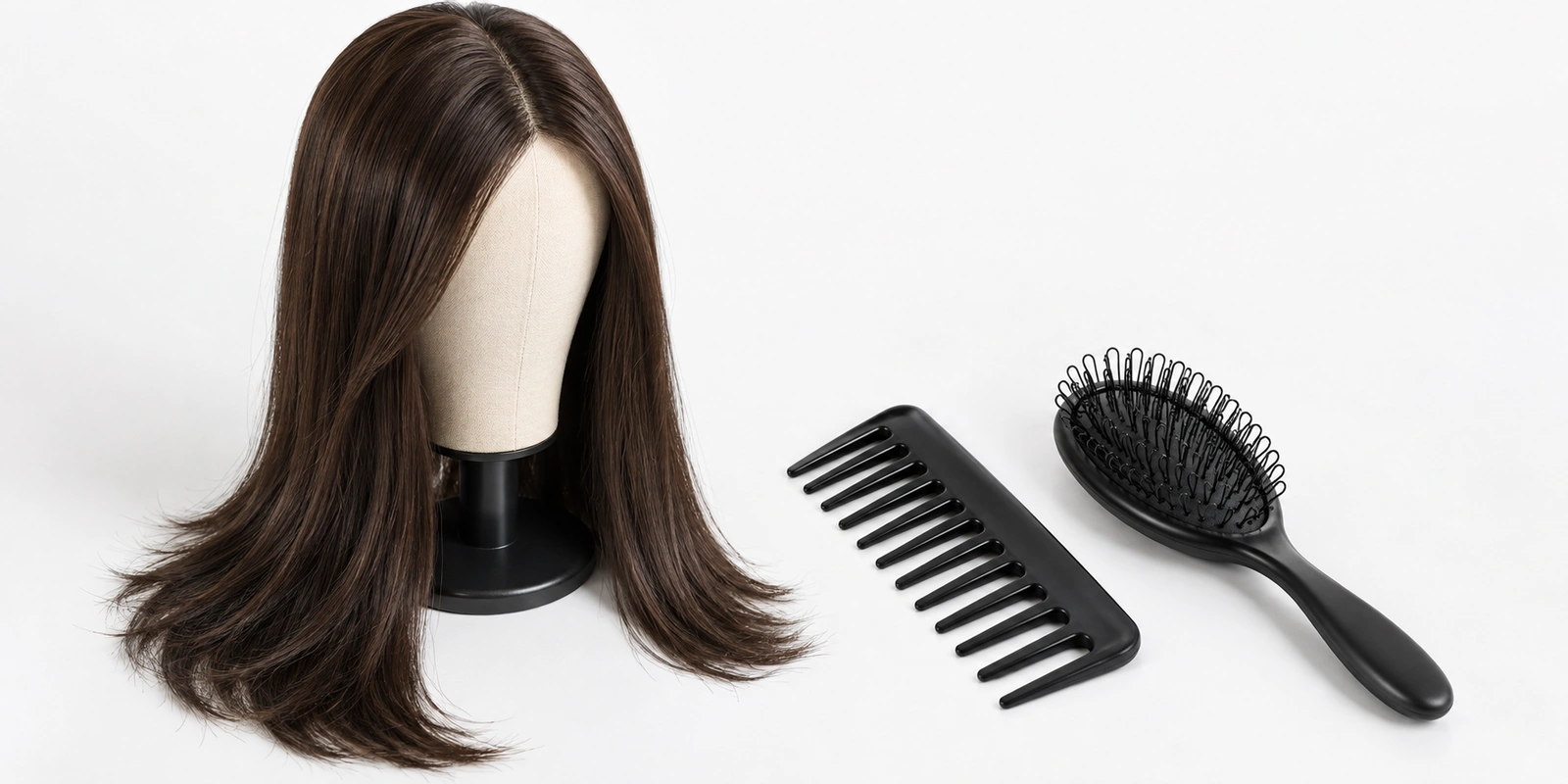
Most wig shedding is not a manufacturing defect. It is the predictable result of applying the wrong tool, in the wrong direction, to hair that has no way of holding itself in place. A strand growing from a scalp is anchored by a living follicle; a strand in a wig is held only by a knot tied into lace or a stitch sewn into a weft. Every brushing stroke that drags a tangle downward transfers force directly onto those anchor points, and once a knot loosens, the strand it holds tends to keep working free with each subsequent stroke.
This guide explains how wig construction affects shedding risk, which combs and brushes suit human hair and synthetic wigs, the ends-first technique that keeps force away from the cap, and the specification points that matter when sourcing wig care tools. For the underlying low-force detangling principles this guide builds on, see our article on whether it is bad to brush wet hair.
Why Wigs Shed: The Anchor Point Problem
Knots and Wefts Are the Weak Link
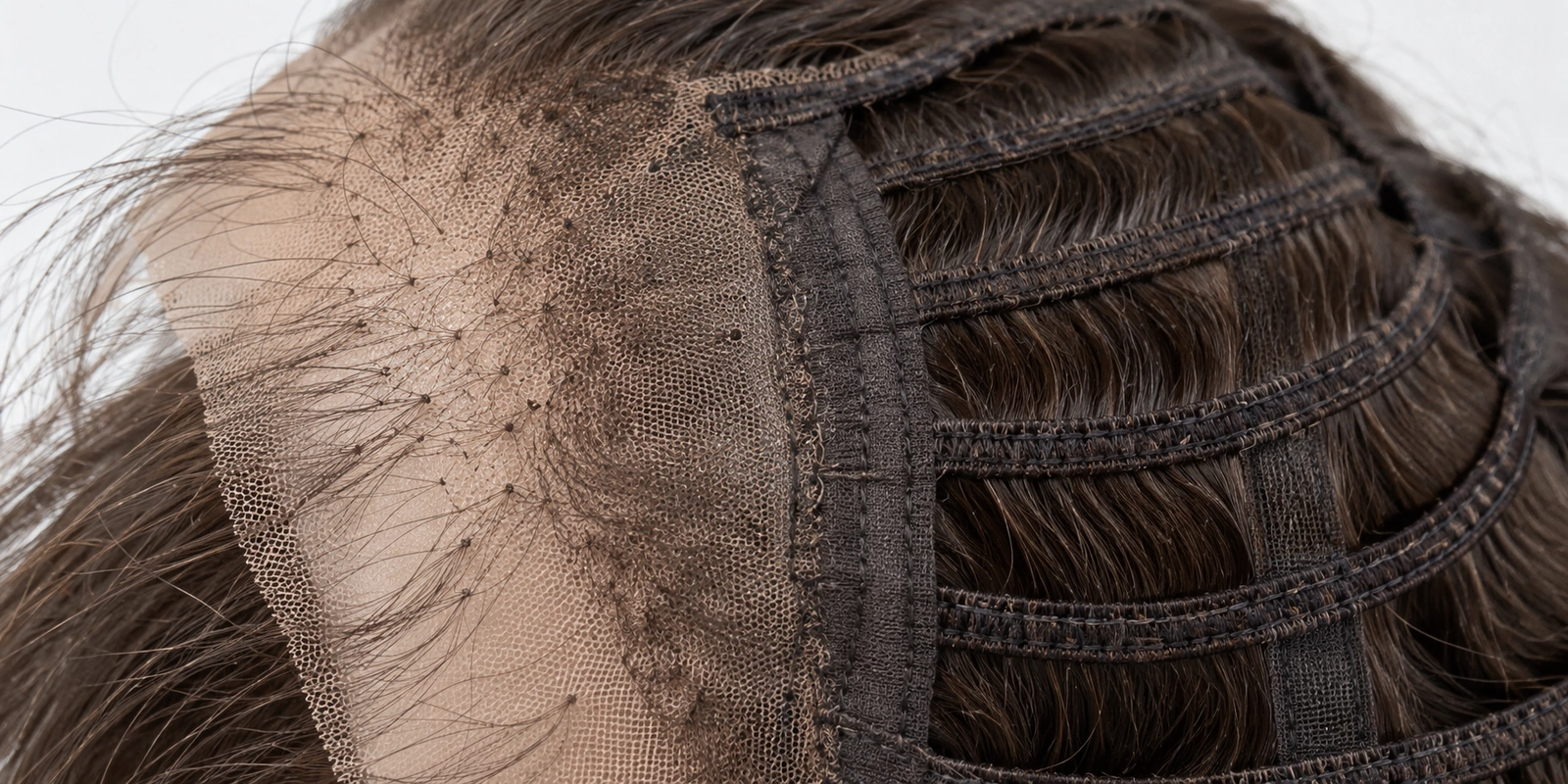
The way a wig is constructed determines where it is most vulnerable. In a hand-tied lace wig, individual strands or small groups of strands are knotted through fine lace mesh, and those knots are small enough to look like hair emerging from the scalp. In a machine-wefted wig, hair is sewn into long tracks that are then stitched onto the cap. Both designs hold hair securely under normal wear, but neither is built to withstand repeated pulling force directed straight at the base.
Lace Fronts and Hairlines Are Most Fragile
The hairline area of a lace front wig typically uses the finest lace and the smallest knots, often single-strand knots, to create a natural-looking edge. This is also where strands are most easily lost. Brushing toward the face or dragging a comb across the hairline repeatedly is one of the fastest ways to thin a lace front, and the hairline is the area where thinning is most visible.
No Sebum, More Tangling
Natural hair receives a steady supply of scalp oil that coats the shaft and reduces friction between strands. A wig receives none. Without that natural lubrication, wig hair tangles more readily, particularly at the nape and ends where friction against clothing is constant. This makes slip from detangling products essential rather than optional, since it is the only thing reducing friction during each stroke.
Human Hair, Heat-Friendly Synthetic, and Standard Synthetic
Human Hair Wigs
Human hair wigs behave much like natural hair that cannot repair or replace itself. They tolerate a wide-tooth comb or a flexible detangling brush, accept leave-in conditioners and light oils, and can be detangled while damp provided there is plenty of slip and the technique is gentle. Because every lost strand is permanent, brushing frequency should be kept to what is necessary rather than habitual.
Heat-Friendly Synthetic Wigs
Heat-friendly synthetic fibres are engineered to tolerate low-to-moderate styling heat, but they still tangle and build static more readily than human hair. A wide-tooth comb is the safest primary tool, and any heat styling should stay within the fibre’s rated range. The material principles behind heat tolerance are covered in our guide on heat-resistant hair brush materials.
Standard Synthetic Wigs
Standard synthetic fibres are the least forgiving. They fray when brushed dry with rigid tools, can melt or frizz near heat, and generally respond poorly to conditioners formulated for human hair. A wide-tooth comb or a dedicated wig loop brush, combined with a synthetic-safe detangling spray, is the appropriate approach.
Choosing the Right Tool
Wide-Tooth Comb: The Primary Tool
For almost every wig type, a wide-tooth comb is the first tool to reach for. Its low contact-point density means each stroke engages relatively few strands, so the force reaching any single knot stays low. Tooth edge quality matters more on a wig than on natural hair: a standard moulded comb with a visible seam along each tooth can catch a single strand and pull it from its knot. Seamless-finished teeth, as covered in our guide to types of hair combs, remove this risk.
Loop Brush: Built for Wigs
Wig loop brushes replace standard bristles with flexible loops or widely spaced tapered pins. The loops bend around a tangle rather than driving through it, and the open spacing lets the brush glide through long lengths without gripping the base. They are particularly effective for finishing a wig once the comb has removed the main knots.
Flexible Detangling Brush: Useful With Limits
A flexible nylon detangling brush can work well on human hair wigs, using the same flex-under-tension principle compared in our Wet Brush vs Tangle Teezer guide. It should be used on the lengths only and never pressed against the cap or dragged across the lace.
Tools to Avoid
Dense paddle brushes with rigid pins, firm boar bristle brushes, and teasing combs all grip many strands at once and load force onto the base. They are designed for natural hair maintenance or volume styling, not for a fibre held in place by knots. The bristle-matching framework in our guide on how to choose the right hair brush for your hair type explains why these specifications suit some hair but not wigs.
The Ends-First Detangling Method
Mount the Wig Before Brushing
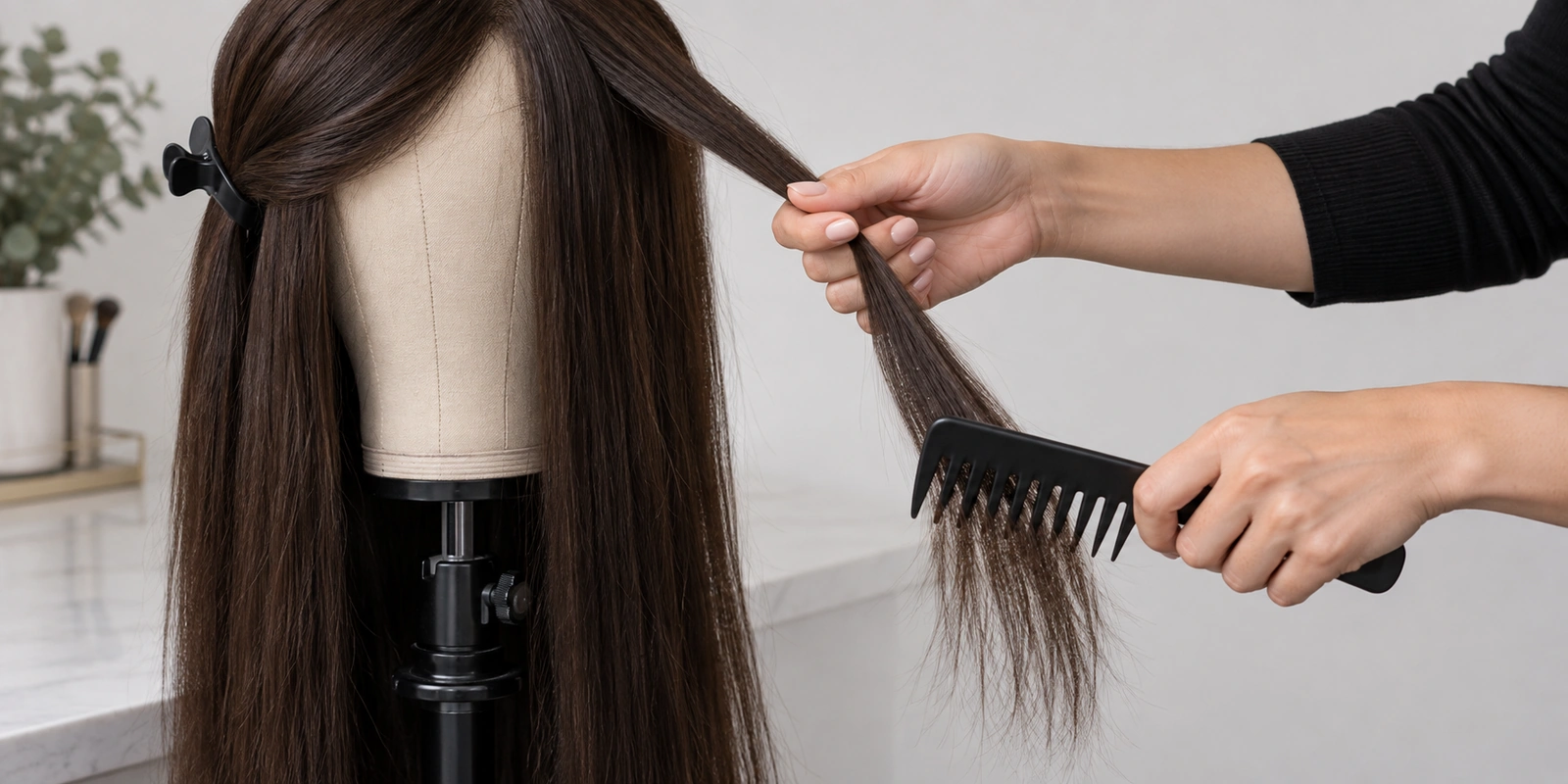
Place the wig on a wig stand or mannequin head and secure it. A wig brushed while held in the hand shifts with every stroke, and that movement transfers strain to the cap. A mounted wig stays stable, so the force of each stroke remains in the hair rather than the base.
Apply Slip to the Lengths
Mist the lengths with a detangling product suited to the fibre, avoiding heavy application at the cap and lace, where product build-up can weaken adhesives and knots over time.
Hold, Then Comb From the Bottom
Take a small section and hold it firmly a few inches above the tangle. This grip absorbs the pulling force so it never reaches the knots. Comb only the last few inches first, then move your hand and the comb upward in small steps. Starting at the roots and dragging downward does the opposite: it pushes every small tangle into one dense knot at the ends and pulls against the base with each stroke.
Work Section by Section
Clip away the hair you are not working on and detangle one section at a time. This keeps each stroke focused on a manageable amount of hair and stops freed strands from re-tangling with knotted sections.
Treat the Hairline Separately
On lace front wigs, detangle the hairline last and with the lightest touch, using your fingers or the finest-controlled strokes of a wide-tooth comb, brushing away from the lace rather than toward it.
Mistakes That Accelerate Shedding
Brushing from the roots down is the single most common cause, followed closely by brushing dry without any slip. Using a dense rigid brush, detangling while the wig is being worn, and over-brushing out of habit all add cumulative strain to knots and wefts. Sleeping in a wig or storing it loose in a drawer also increases tangling, which in turn means more forceful detangling the next time. Storing the wig on a stand or in a hairnet between wears reduces the tangling that leads to shedding in the first place.
Sourcing Considerations for B2B Buyers
For buyers developing wig care tools, either as standalone products or as part of a wig accessory range, the specification details below separate tools that genuinely protect wigs from general-purpose tools rebadged for the category.
Seamless tooth finishing: Wide-tooth combs intended for wigs should be specified with seamless tooth edges. This is a more consequential specification for wig care than for most comb applications, because snagging a single knotted strand causes permanent loss.
Loop and pin geometry: Wig brushes should be specified with documented loop or pin gauge, flexibility, and spacing. Rigid, closely set bristles labelled as wig brushes defeat their purpose and generate returns.
Anti-static materials: Synthetic wig owners deal with static constantly. Anti-static comb materials and brush bases add real value for the synthetic segment.
Fibre-specific positioning: Labelling tools for human hair, heat-friendly synthetic, or standard synthetic wigs helps buyers choose correctly and reduces mismatched purchases.
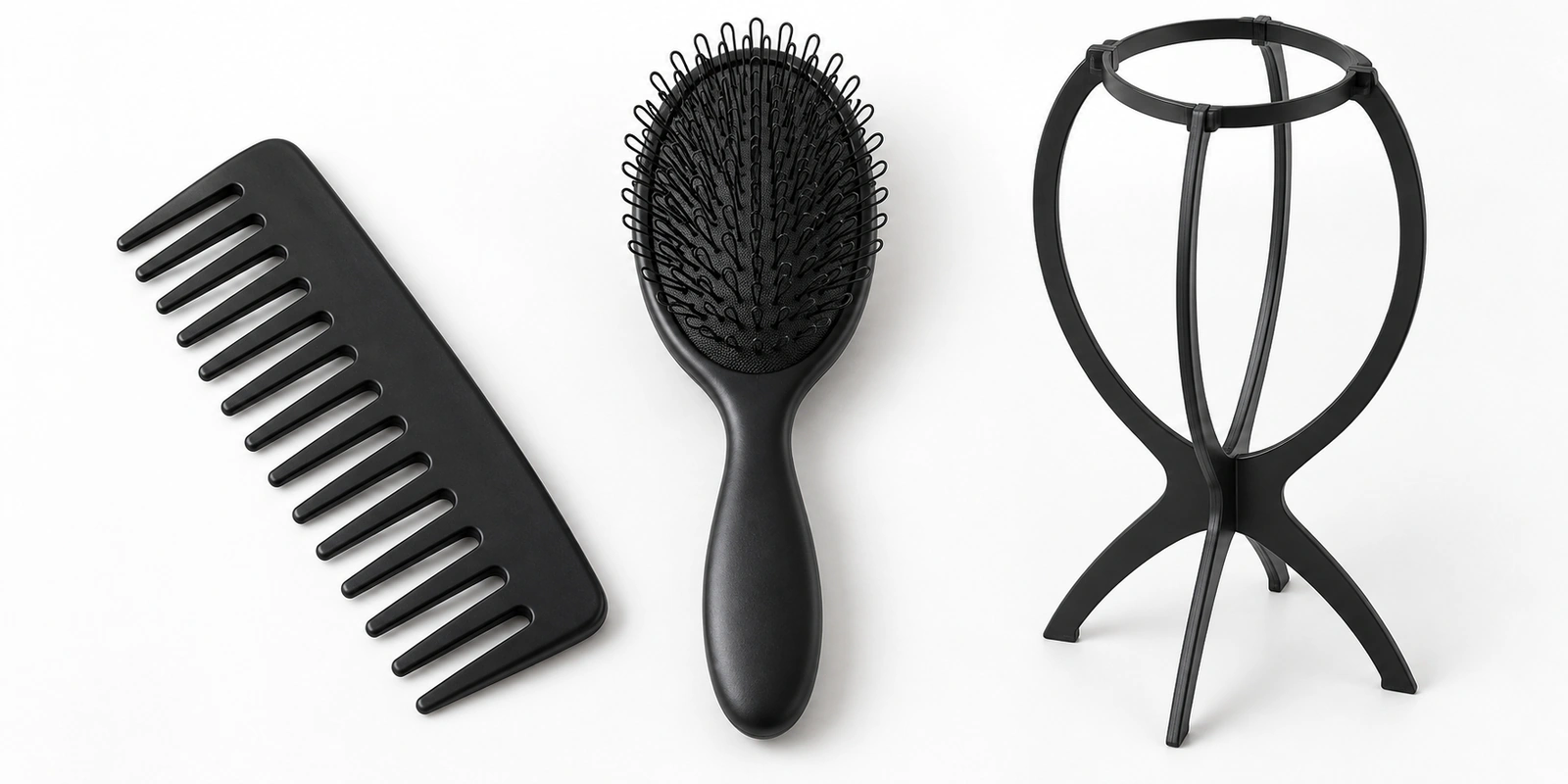
Kit architecture: A wig care kit pairing a seamless wide-tooth comb, a loop brush, and a wig stand reflects the real sequence of correct care and supports a higher transaction value than single tools. Chemical safety expectations for personal care tools are summarised in our guide on hair brush safety certifications.
Wide-tooth combs, loop brushes, and flexible detangling brushes suited to wig care, including kit configurations, are available through OEM and private label manufacturing routes, with tooth finishing, loop flexibility, and material adjustable to range requirements.
Frequently Asked Questions
What is the best tool for detangling a wig?
A wide-tooth comb with seamless teeth is the best primary tool for most wigs. It engages few strands per stroke, which keeps force away from the knots and wefts that hold the hair in place. A wig loop brush works well for finishing once the main tangles are removed.
Why is my wig shedding when I brush it?
The most common causes are brushing from the roots down, brushing dry without detangling product, using a dense rigid brush, and detangling while wearing the wig. Each of these transfers pulling force to the knots or wefts, which loosens strands over time.
Should I brush a wig from the top or the bottom?
From the bottom. Hold a small section above the tangle, comb the ends first, and work upward in small steps. This prevents tangles from compacting into the ends and keeps force away from the cap.
Can I use a normal hairbrush on a wig?
It is not recommended. Dense paddle brushes and firm bristle brushes grip many strands at once and strain the base, and they can fray synthetic fibres. Use a wide-tooth comb, a loop brush, or a flexible detangling brush instead.
Can I detangle a wig while it is wet?
Human hair wigs can be detangled while damp if plenty of slip is applied and the technique is gentle. Synthetic wigs should be handled with synthetic-safe products and minimal force. In both cases, mount the wig and work from the ends upward.
How can I protect a lace front hairline from shedding?
Detangle the hairline last, with fingers or very light comb strokes, brushing away from the lace. Avoid heavy product at the lace and never drag a comb across the hairline repeatedly.
Conclusion
Wig shedding comes down to where force goes during detangling. Strands held by knots and wefts cannot withstand repeated pulling directed at the base, so the tools and technique used decide whether a wig keeps its density. A seamless wide-tooth comb, a loop brush for finishing, a mounted wig, plenty of slip, and an ends-first approach keep force in the hair rather than the cap. Rigid brushes, root-down strokes, and dry brushing do the opposite. Matching tools and products to the fibre type, and giving lace hairlines extra care, extends a wig’s usable life considerably.
For brands building wig care ranges on genuine detangling mechanics, manufacturers such as JunYi Beauty, which produces seamless-finished wide-tooth combs, loop brushes, and flexible detangling brushes with documented tooth and pin specifications from its Dongguan facility, represent the type of OEM partner suited to wig care products built on specification rather than category labelling.
–