Hair brush logo options are the methods a factory uses to put a brand mark on the handle, head, cushion, or packaging of a brush: pad printing, hot foil stamping, laser engraving, screen printing, water transfer printing, molded logos, and metal logo plates. The right method depends on the handle material and finish, the look the brand wants, and how long the logo must survive daily use, heat, and water. A logo that looks sharp on the sample can fade within weeks if the method does not suit the surface.
Where a Logo Can Go on a Hair Brush
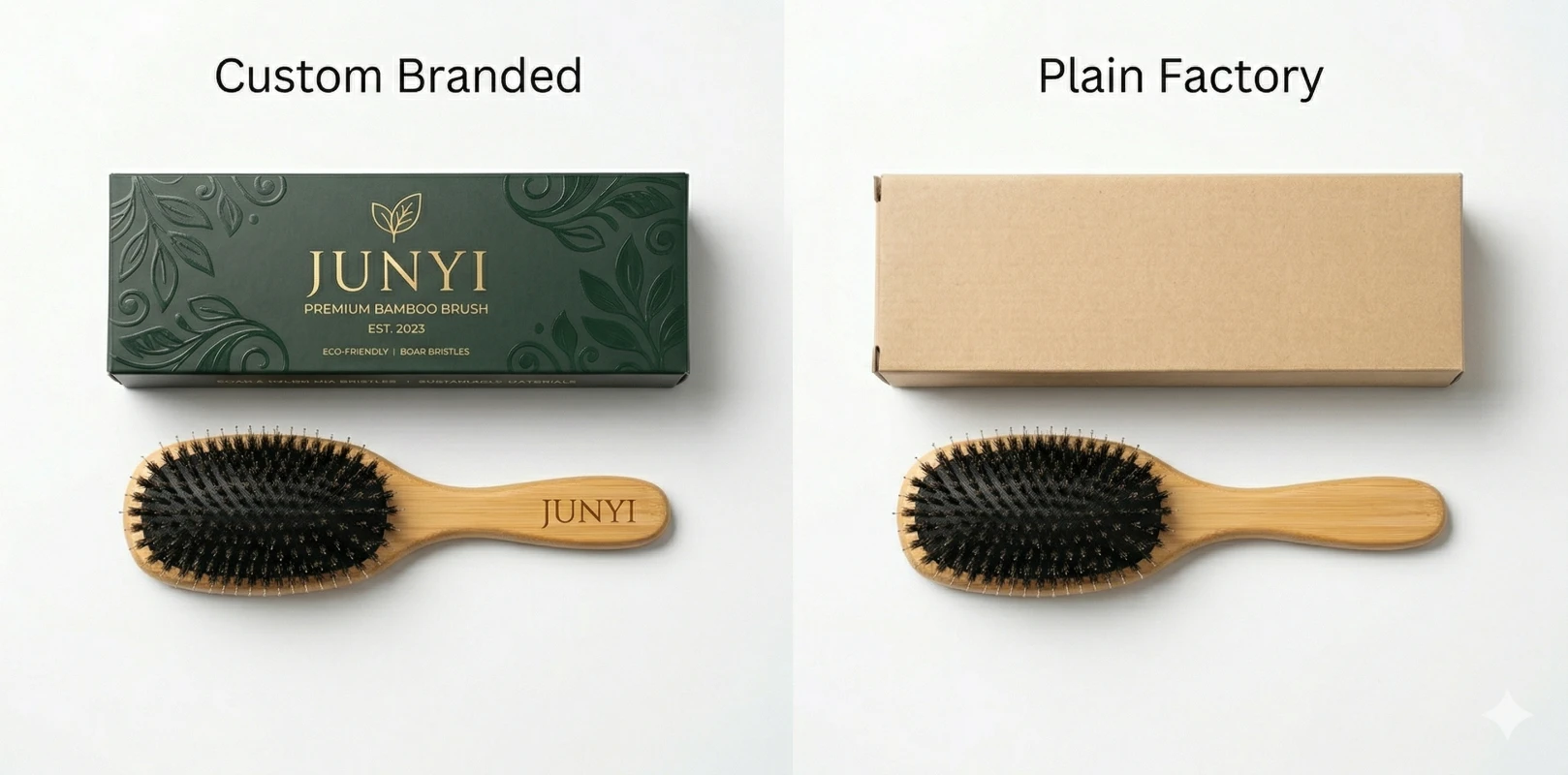
A brush has more usable surface than most hair accessories, but each area takes logos differently.
Handle Face and Back
The upper face of the handle is the most visible position and the one most exposed to wear from hands. The back of the handle or head is more discreet and wears less.
Head Frame and Cushion
The back of a paddle head offers a large flat area for printed patterns or a bold logo. Some brands print a small mark on the rubber cushion, which needs inks made for flexible rubber.
Packaging
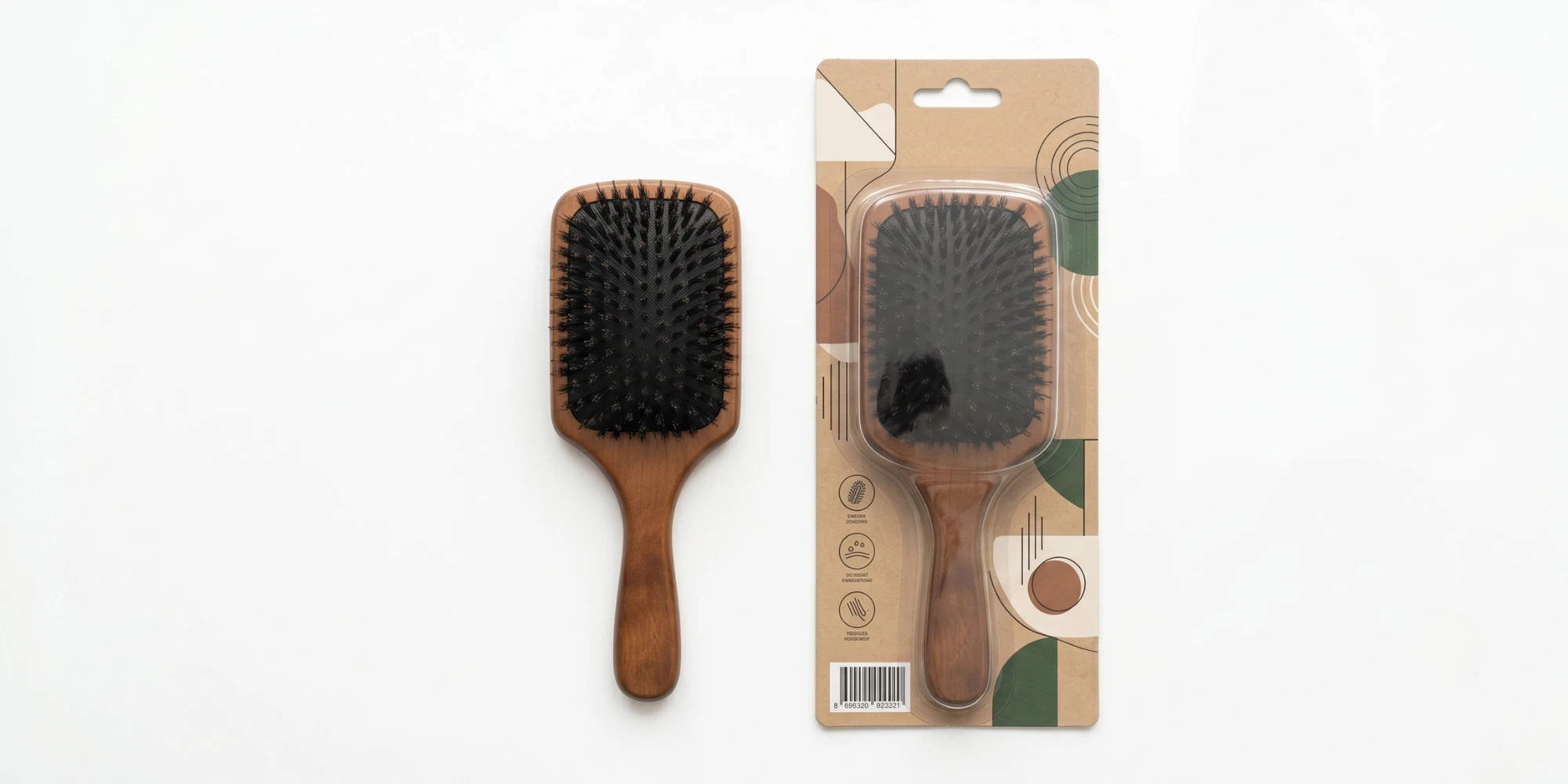
Boxes, header cards, and sleeves carry the full brand, product name, and barcode. Many private label brands keep the product logo small and let the packaging do the work. The guide to custom hair brush packaging compares formats.
Hair Brush Logo Methods Compared
The comparison below summarises the main methods, the handles they suit, and what each needs to start.
| Method | Suited Handles | Look | Setup Needed |
|---|---|---|---|
| Pad printing | Plastic, coated, acetate | Solid color, sharp edges | Plate per color |
| Hot foil stamping | Plastic, wood, coated | Gold, silver, metallic | Stamping die |
| Laser engraving | Wood, bamboo, acetate | Burned or tone-on-tone | Digital file only |
| Screen printing | Flat plastic areas | Thick, opaque ink | Screen per color |
| Water transfer printing | Plastic handles and heads | All-over patterns | Pattern film |
| Molded logo | Plastic | Raised or recessed | Mold insert |
| Metal logo plate | Wood, acetate, plastic | Raised metal badge | Plate mold |
Printing Methods for Plastic Handles
Most plastic brushes are branded by printing. The choice depends on the handle shape and the coating.
Pad Printing
Pad printing transfers ink from an etched plate with a soft silicone pad, so it can follow the curve of a handle. It is the most common method for one- or two-color logos. Each color needs its own plate and printing pass.
Screen Printing
Screen printing lays down a thicker, more opaque ink layer on flat areas, such as the back of a paddle head. It handles larger logos well but does not follow tight curves.
Water Transfer and Thermal Transfer
For all-over floral, marble, or camouflage patterns, a printed film is transferred onto the handle and head, then sealed with a clear coat. Hydrographic water transfer wraps complex 3D shapes; thermal transfer suits flatter parts.

Soft-Touch Coated Handles
Rubberized soft-touch coatings feel good but take ink less reliably. Printing is done over or under the coating depending on the system, and the logo should be rub-tested on the actual coated sample.
Hot Stamping, Engraving and Molded Logos
These methods give a more permanent or more distinctive look than standard printing.
Hot Foil Stamping
Hot stamping presses metallic foil onto the handle with a heated die. Gold and silver foil on black, white, or wood handles is a classic upmarket look. Fine lines can lift on tight curves, so the logo is usually placed on a flat section.
The following video gives a practical overview of the hot foil stamping process.
Laser Engraving
Laser engraving burns or etches the logo into wood, bamboo, or acetate. On wood it leaves a clean brown mark with no ink to wear off. It suits small runs and several logo versions because no plate or die is needed. It cannot add color.
Molded Logos
A logo can be built into the mold as a raised or recessed mark on plastic handles. It never wears off, but it needs a mold insert and only makes sense for repeat volumes or a custom handle.
Metal Logo Plates
A small metal plate glued or inset into the handle gives a jewelry-like finish on wood and acetate brushes. It adds a part and an assembly step, and the bond must be tested so the plate does not come off.
Matching the Logo to Handle Material
Material decides which methods are realistic. The hair brush surface finishes guide covers how coatings and finishes affect branding.
Plastic Handles
Pad printing, screen printing, hot stamping, transfer printing, and molded logos all work. Glossy and matte surfaces print well; soft-touch needs testing.
Wood and Bamboo Handles
Laser engraving and hot stamping are the usual choices. Printing on raw wood can bleed into the grain unless the surface is sealed first.
Acetate Handles
Laser engraving gives a subtle tone-on-tone mark; hot stamping or a metal plate gives a bolder look. Busy tortoise patterns can hide fine printed logos.
Artwork, Setup and Order Size
Many logo problems are artwork problems, and many cost surprises are setup problems. These points save a sampling round.
Send Vector Artwork
Supply the logo as a vector file, with a one-color version for pad printing, hot stamping, and engraving. Low-resolution images produce blurred edges at the small sizes used on handles.
Keep Fine Detail Realistic
Very thin lines and small text can fill in with pad printing or break up with foil. Ask the factory for the smallest line width and text height it can reproduce on your chosen handle, and simplify the logo for products if needed.
Specify Color and Foil
Give a Pantone reference for printed logos and a foil color name or sample for hot stamping. Approve the logo color on the actual handle material, because the same ink looks different on matte, glossy, and soft-touch surfaces.
Mark the Position
State the distance from the handle end and the logo height on a drawing. Curved handles distort large logos, so the flattest section is usually the safest position.
Each method also has a different setup, which affects how economical it is for a first order and how easily the logo can be changed later.
Plate, Screen and Die Methods
Pad printing, screen printing, and hot stamping need a plate, screen, or die for each design and color. They are efficient once set up and suit repeat orders of the same logo.
File-Only Methods
Laser engraving and some digital printing need only a file. They suit first orders, small runs, and ranges with several logo versions.
Mold-Based Methods
Molded logos and metal plates need small molds of their own. They make sense for long-running products where the logo will not change.
Packaging and Accessories
The brush is only one place the brand appears. Packaging and small extras often carry more of the brand story.
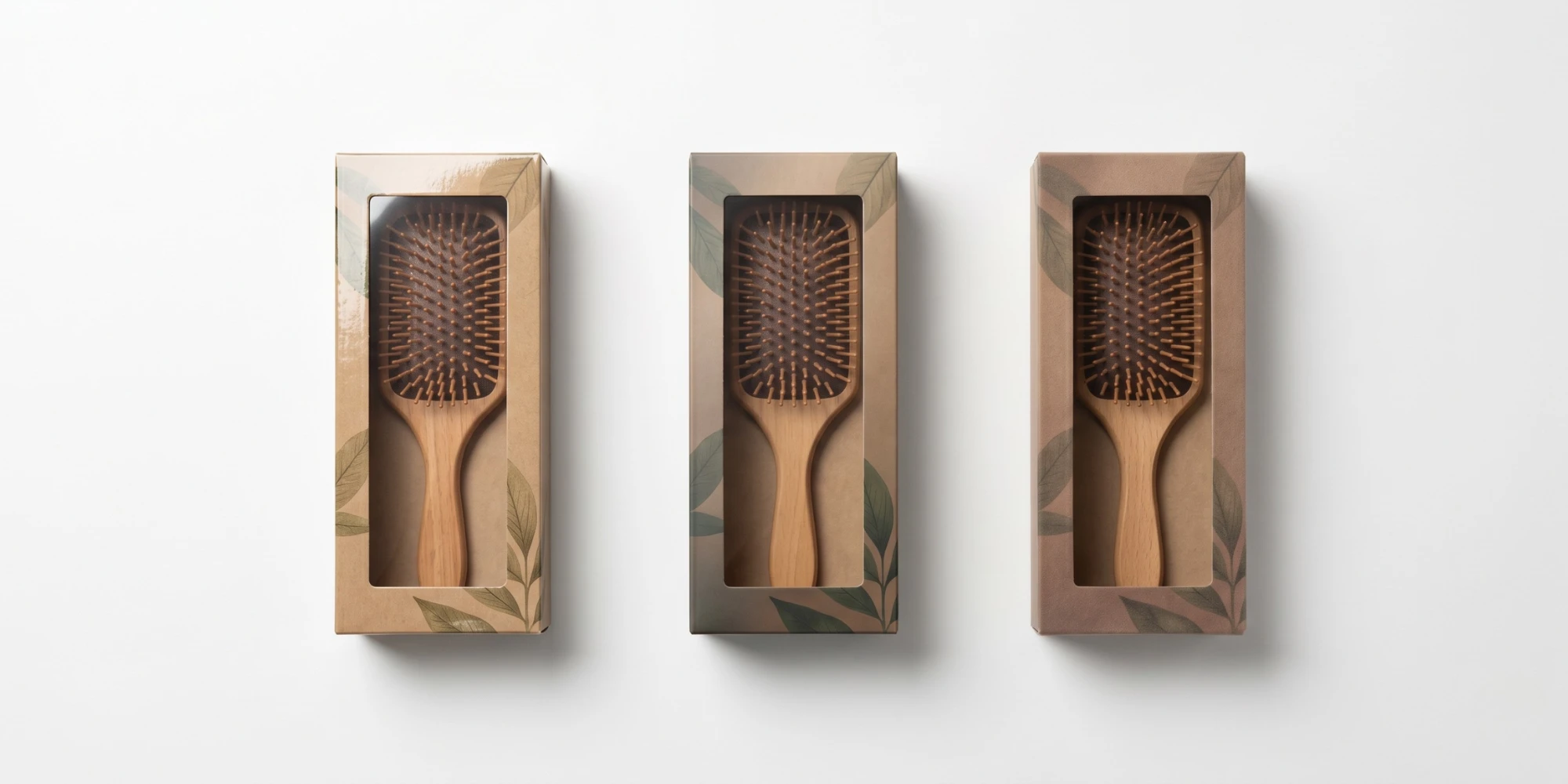
Printed boxes can use offset printing, foil, embossing, and spot varnish. A simple foil logo on the brush paired with a fully printed box is a common private label approach.
Cotton or velvet pouches can carry a printed or embroidered logo. Hang tags and swing tags add product details without crowding the handle.
Testing Logo Durability
Brushes are used daily, often with wet hands, oils, and heat. Logo durability should be tested on the pre-production sample, not assumed.
- Rub test: rub the logo with a cloth and alcohol to check ink adhesion.
- Tape test: press and pull adhesive tape off the logo.
- Water and oil: soak or wipe with water and hair oil, then recheck.
- Heat: for round brushes, check the logo after blow-dryer use.
A logo that fails a rub test will appear in customer reviews long before any other defect. Approving it as part of the golden sample, as described in the private label hair brush guide, sets the standard for bulk production.
Frequently Asked Questions
Q: What is the most common logo method for plastic hair brushes?
Pad printing. It follows curved handles, handles one- or two-color logos cleanly, and is economical at normal order sizes. Hot foil stamping is the usual upgrade when a metallic gold or silver logo is wanted.
Q: How are logos added to wooden hair brushes?
Laser engraving is the most common choice, because it burns the logo into the wood with no ink to wear off. Hot foil stamping is used for gold or silver logos on wood.
Q: Will a printed logo wear off a hair brush?
It can if the ink does not suit the surface or the logo sits where hands rub it most. A rub test, tape test, and water and oil test on the pre-production sample show whether the logo will last.
Q: Can a brush have an all-over printed pattern?
Yes. Water transfer or thermal transfer printing applies floral, marble, and other patterns to plastic handles and heads, sealed with a clear coat for durability.
Q: Which logo methods need extra setup?
Pad and screen printing need a plate or screen per color, hot stamping needs a die, and molded logos or metal plates need small molds. Laser engraving needs only a digital file, which suits small first orders.
Conclusion
Hair brush logo options range from pad printing and hot stamping on plastic to laser engraving on wood and metal plates on acetate and wood handles. Handle material decides what is possible, and a durability test on the sample decides what is approved.
Manufacturers such as JunYi Beauty, which has branded hair brushes for private label clients at its Dongguan facility since 1999, represent the type of OEM hair brush manufacturer able to sample several logo methods on the same handle before bulk production.