The cost of a custom hair brush is the factory unit price of one finished brush, built from the handle, the pin or bristle system, the cushion pad, assembly labour, finishing, logo, and packaging. Where a new mold is needed, a share of tooling is added to those parts. A brush has more parts than most beauty accessories, so small specification changes move its price more than buyers expect. This breakdown explains where the money goes, part by part.
What Goes Into the Unit Price of a Custom Hair Brush
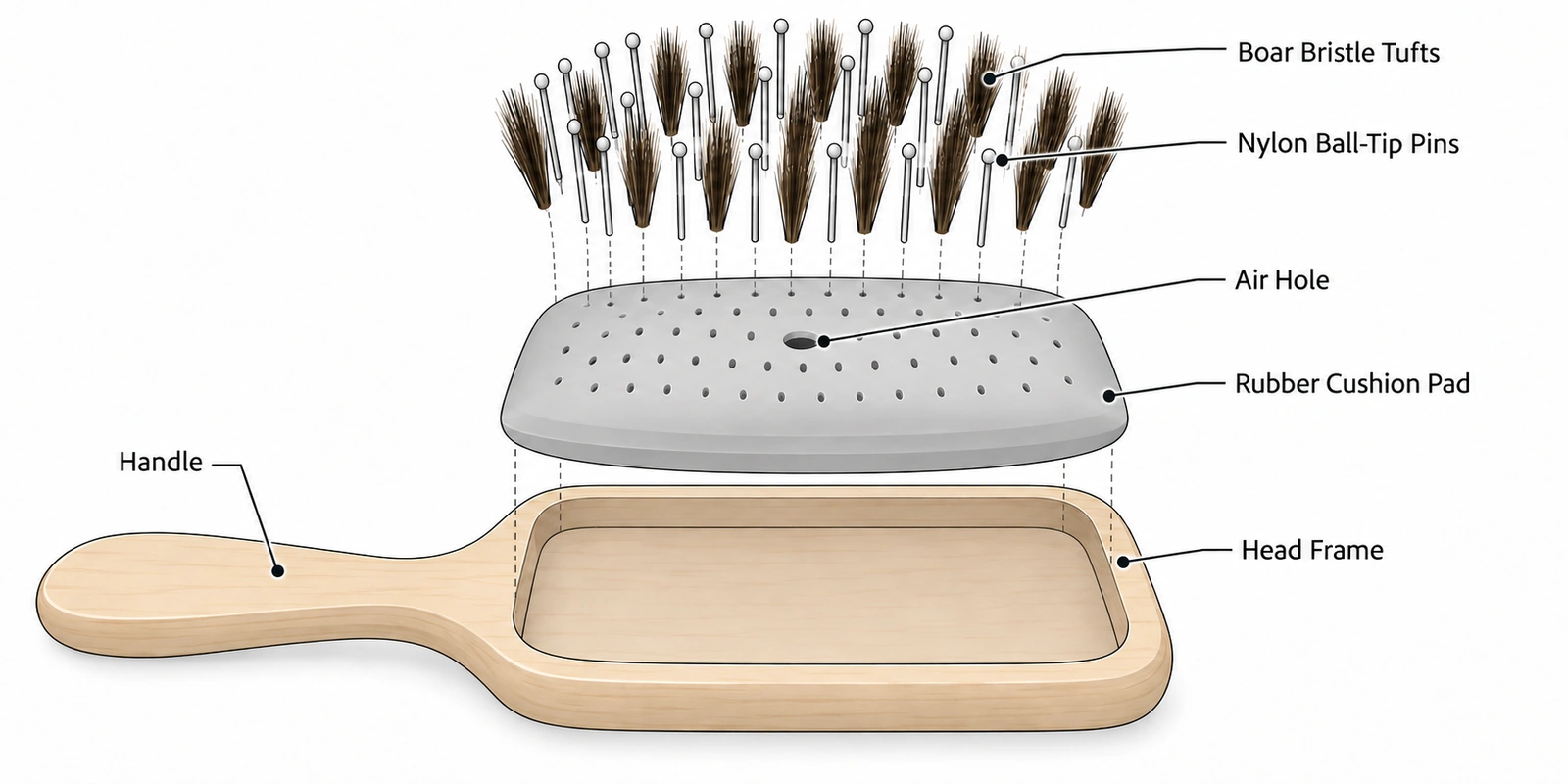
A paddle brush is assembled from five to seven parts. Each part has a material grade, a supplier, and a process step, and each one shows up in the quote.
The Handle
The handle is usually the largest single part. Injection-molded ABS or PP handles cost the least. Wood, bamboo, and cellulose acetate handles cost more because they are cut, sanded, and finished in several steps.
Pins or Bristles
Nylon pins are molded or cut to length, often with ball tips. Boar bristle is a natural material bought by length and grade. A mixed boar and nylon brush carries both costs.
Cushion Pad and Assembly
Cushion brushes need a rubber pad with an air hole, glued or clipped into the head. Pins are then set into the pad, by machine or by hand. Hand-tufted boar bristle brushes carry the highest labour content in the category.
Finish, Logo and Packaging
Soft-touch coating, plating, and printed patterns each add a process step. Logo method and packaging format add smaller amounts, plus their own minimums.
Where Cutting Cost Backfires
The cushion pad and pin anchoring are the usual targets when a quote has to come down. A thinner pad or a weaker glue saves very little per brush. It shows up later as pins pushing through the pad or a cushion lifting from the head after a few months of use.
Savings on the handle color or packaging carry far less risk.
Custom Hair Brush Cost by Brush Type
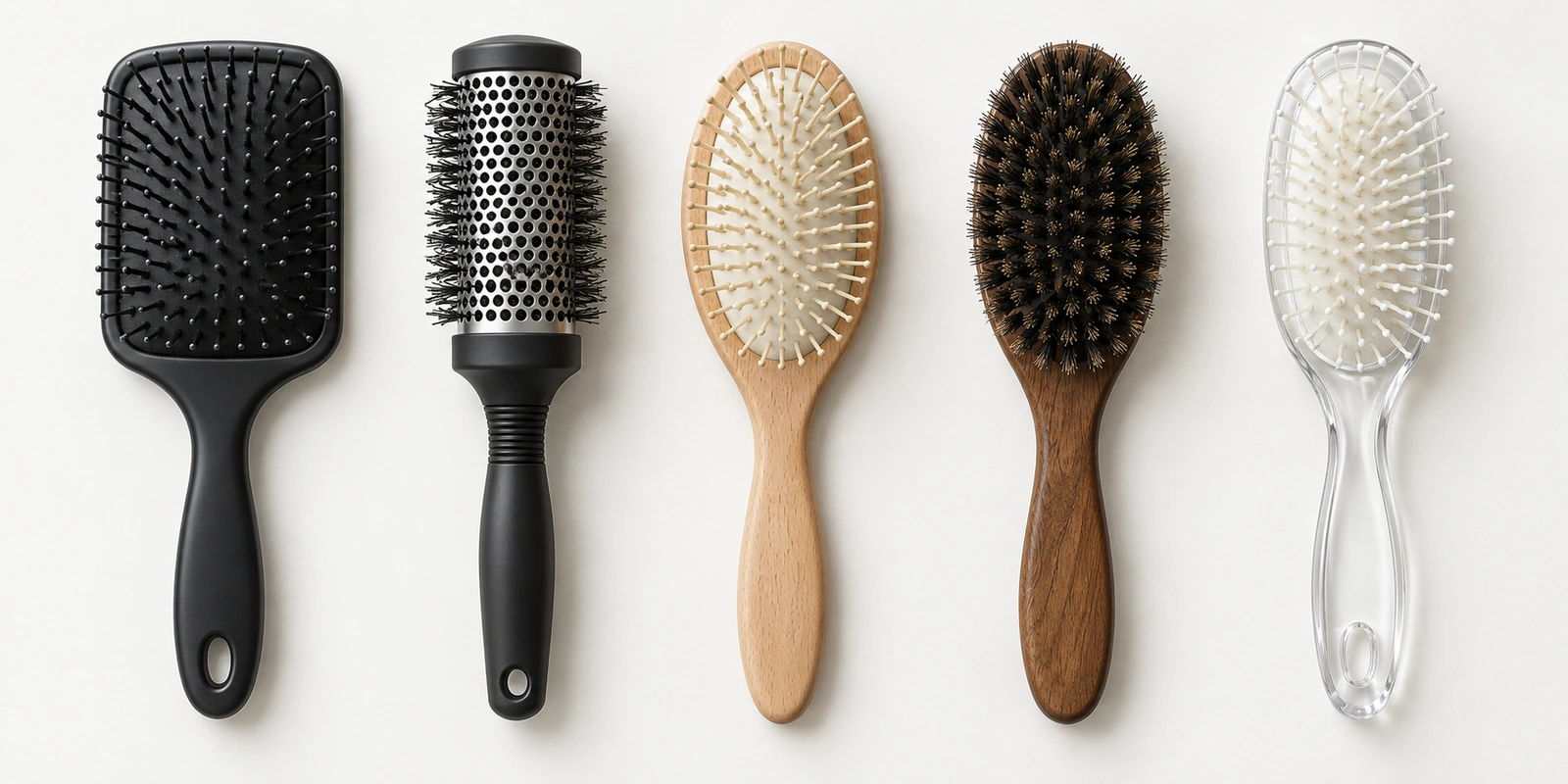
Brush type sets the starting point of the unit price. The comparison below summarises how common brush types rank on cost and what drives each one.
| Brush Type | Main Cost Driver | Relative Unit Cost | Labour Content |
|---|---|---|---|
| Plastic detangling brush | Molded body, pins | Entry | Low |
| Plastic paddle, nylon pins | Cushion, pin count | Entry to mid | Low to medium |
| Round brush | Barrel material | Mid | Medium |
| Wooden cushion brush | Wood, finishing | Mid to upper | Medium to high |
| Boar bristle brush | Bristle grade | Mid to upper | High |
| Acetate handle brush | Sheet, polishing | Upper | High |
Plastic Detangling and Paddle Brushes
These brushes are mostly molded, so unit cost stays low and falls with volume. Pin density and cushion size are the main variables. The paddle hair brush range shows how many existing head shapes can be reused before any tooling is needed.
Round Brushes
Round brushes are priced by the barrel. A plastic barrel is the base option. Ceramic-coated and aluminium barrels add material cost and heat-resistance testing.
Wooden, Boar Bristle and Acetate Brushes
These three carry the most hand work. Wood needs drying, shaping, sanding, and sealing. Acetate needs cutting and polishing. Boar bristle needs grading and tufting. Their unit price falls less with volume than a plastic brush does.
Bristle and Pin Choices That Change the Price
Bristles are the part buyers notice least on a spec sheet and customers notice most in use. They also hide the widest cost range in the brush.
Nylon Ball-Tip Pins
Nylon pins are consistent and inexpensive. Cost rises with pin count, pin length, and tip type. Ball tips protect the scalp and add a small process step.
Boar Bristle Grades
Boar bristle is sold by length and stiffness. Longer, first-cut bristle costs more than short or mixed grades. Two boar brushes that look identical in a photo can sit far apart in price because of bristle grade alone. The guide to boar bristle vs synthetic brushes explains how each performs on different hair types.
Mixed Boar and Nylon
Mixed tufts combine nylon for detangling with boar for shine. They cost more than nylon only and less than full boar. For many brands this is the most practical price point for a boar claim.
Handle Materials and Finishes
The handle decides how a brush looks on the shelf. It is also where appearance most often costs more than it adds in function.
Molded Plastic
ABS and PP handles come from a mold finished in one cycle. Color is mixed into the resin. Soft-touch rubber coating adds grip and a separate spray step.
Wood and Bamboo
Wooden handles vary with species, drying, and sealing. Certified wood, such as FSC-certified timber, adds chain-of-custody paperwork as well as material cost. Wood also varies piece to piece in grain and tone; buyers who need identical color across 5,000 brushes should not choose natural wood.
Cellulose Acetate
Acetate handles show deep tortoise and marble patterns. They are cut from sheet and polished, which keeps their unit cost in the upper range at any quantity.
How Order Quantity Affects Brush Cost
Quantity spreads setup cost across more brushes. It does not reduce hand labour, which is why labour-heavy brushes show smaller quantity discounts.
Existing Mold With Logo and Color
Changing only the logo and color on an existing brush is the lowest-cost route. Factory-direct suppliers commonly start this at about 500 pieces per style.
Wooden and Acetate Styles
Wooden brushes usually start at about 1,000 pieces per style, and acetate brushes at 500 to 1,000. Material batches set these figures more than machine setup does.
New Mold
A new handle or head shape needs tooling and typically 1,000 to 3,000 pieces or more per SKU. Tooling is either invoiced upfront or built into the unit price. Factories with libraries of 2,000 or more molds can often avoid tooling entirely.
For a visual explanation of how hair brushes are made in a factory, see below:
Logo and Packaging Add-Ons
Logo and packaging rarely change the unit price as much as materials do. Their minimums matter more than their cost.
Logo Methods
- Pad printing on plastic handles, one plate per color.
- Hot stamping in gold or silver foil on plastic or wood.
- Laser engraving on wood and bamboo, no plate needed.
- Metal logo plates, which need a small mold of their own.
Packaging Formats
A polybag is the base option. Printed header cards and gift boxes add print setup and printer minimums, often 1,000 to 2,000 pieces per design for offset printing. The guide to custom hair brush packaging compares formats by cost and retail channel.
How to Read a Custom Hair Brush Quote
Brush quotes can only be compared when every supplier prices the same parts. A photo with “same as this” invites each factory to fill the gaps differently.
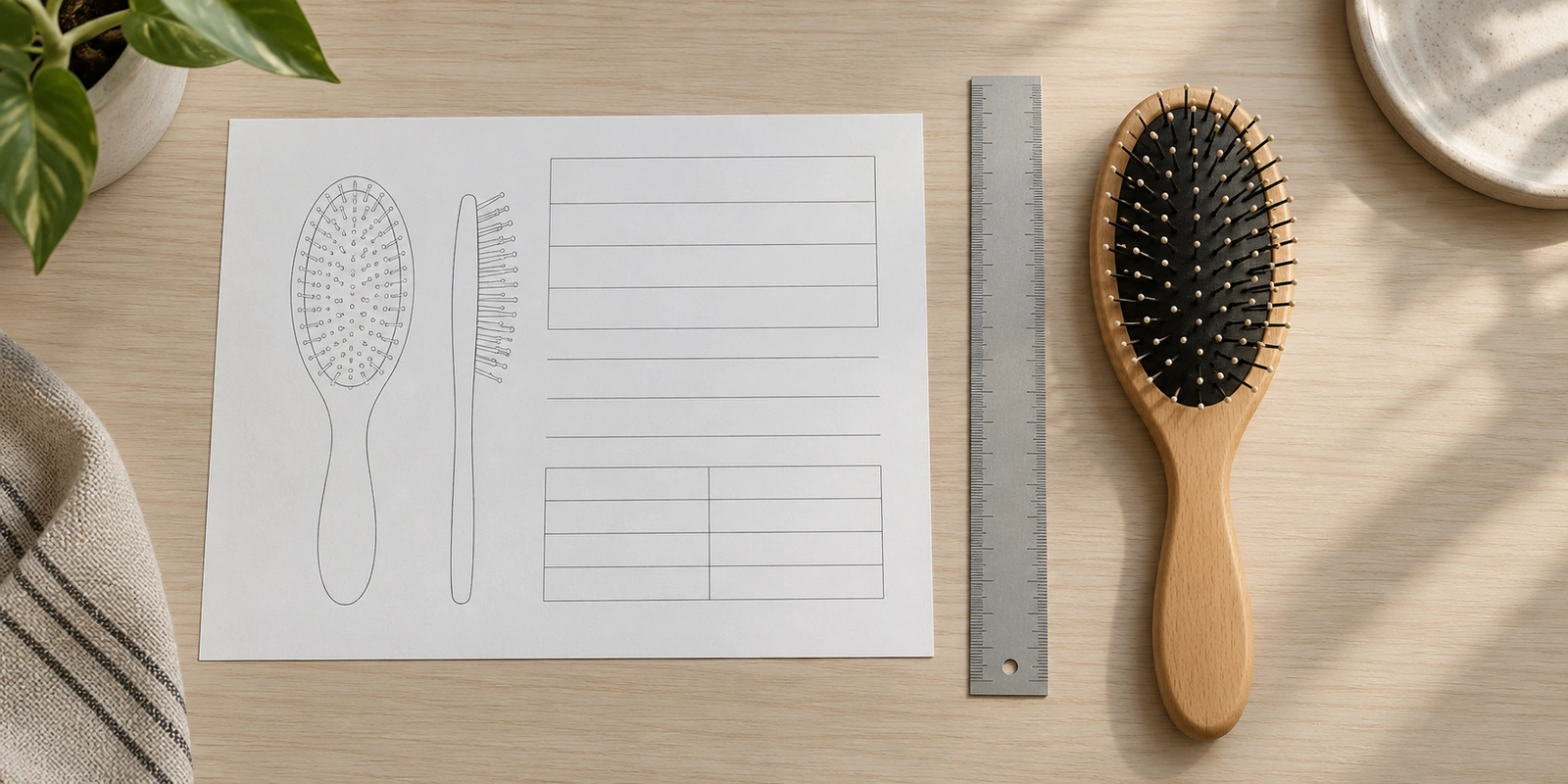
Send a Full Specification
- Brush type, overall length, and head size.
- Handle material and finish.
- Pin or bristle type, length, and grade.
- Cushion color and pin color.
- Logo method, position, and packaging format.
Check What the Unit Price Excludes
Freight, import duty, and third-party testing sit outside the unit price. The trade term matters; the ICC Incoterms rules define what EXW and FOB include. Ask for a pre-production sample built to the quoted specification before paying a deposit.
Sample and Testing Costs
Samples from existing molds with a new logo are often quick and inexpensive, and some factories credit the sample fee against the first order. A sample of a new shape needs a prototype or soft tooling and costs more. Third-party tests, such as heat testing for round brushes or material testing for children’s products, are paid per test and per material. For a range of five SKUs in three handle materials, testing can be a noticeable share of a first order’s budget.
Frequently Asked Questions
Q: How much does a custom hair brush cost?
The price depends on type and specification. Molded plastic detangling and paddle brushes sit at the entry level. Round brushes sit in the middle. Wooden, boar bristle, and acetate brushes sit in the upper range because of material and hand labour. Quantity, logo, and packaging then adjust the figure.
Q: Why do boar bristle brushes cost more than nylon brushes?
Boar bristle is a natural material graded by length and stiffness, and longer grades are scarcer. The bristles are tufted into the pad, often partly by hand. Nylon pins are molded or cut to length by machine, so their cost is lower and more predictable.
Q: What is the lowest-cost way to make a custom hair brush?
Use an existing mold and change only the logo and color. This avoids tooling and keeps the order at the lowest quantity tier, commonly from about 500 pieces per style. A polybag or sticker on a stock box keeps packaging minimums low for a first order.
Q: Is tooling included in a hair brush quote?
Only when a new handle or head shape is needed. Tooling is either a one-time fee or spread into the unit price over an agreed quantity. Quotes for existing designs should carry no tooling line; if one appears, ask what is being tooled.
Q: What is not included in the unit price of a hair brush?
Freight, import duty, third-party testing, and sometimes printed packaging are quoted separately. The trade term on the quote, such as EXW or FOB, shows where the supplier’s costs stop and the buyer’s start.
Conclusion
The unit price of a custom hair brush is built part by part: handle, bristles, cushion, labour, finish, logo, and packaging. Brush type sets the starting range, and quantity mainly reduces setup cost, not hand work.
Manufacturers such as JunYi Beauty, which has produced hair brushes in Dongguan for more than 25 years and holds over 2,000 existing molds, represent the type of OEM hair brush manufacturer able to price one brush across several material and quantity options.