Mold ownership in hair brush manufacturing is the agreed answer to who holds legal title to the steel tooling used to make a custom brush, who may use it, and where it is kept. Paying for a mold does not settle those questions on its own. Ownership, exclusivity, and confidentiality are three separate rights, and each one has to be written into the purchase terms before tooling starts.

What a Hair Brush Mold Includes
A custom brush rarely needs one mold. It usually needs a set, and each part of the set can be owned and controlled differently.
The Typical Mold Set
- Handle mold: forms the handle shape and any logo recess.
- Head frame mold: forms the part that holds the cushion.
- Cushion mold: forms the rubber pad with its air hole and pin holes.
- Pin or bristle tooling: often standard, shared across many brushes.
Steel Molds and Mold Life
Production molds are machined from tool steel for injection moulding. Their life is measured in shots, the number of cycles before major repair. Mold life depends on the steel grade, the plastic, and maintenance, so ask the factory to state the expected life and who pays for repairs.
Stock Molds Are Different
A stock mold already belongs to the factory. Adding a logo or a new color to a stock brush gives the buyer no ownership and no exclusivity over the shape. The guide to hair brush MOQ for stock molds vs custom designs explains how that route affects minimums.
Who Owns the Mold: Four Common Arrangements
Factories and buyers settle tooling in one of four ways. The comparison below summarises how each one handles ownership and exclusivity.
| Arrangement | Who Pays | Who Owns | Exclusivity |
|---|---|---|---|
| Buyer-paid mold | Buyer, upfront | Buyer, if written | Agreed in contract |
| Amortized mold | Buyer, in unit price | Often factory until paid off | Agreed in contract |
| Refunded mold fee | Buyer, refunded later | Must be specified | Must be specified |
| Factory-owned mold | Factory | Factory | Usually none |
Buyer-Paid Molds
The buyer pays the tooling fee upfront. This is the cleanest route to ownership, provided the invoice and contract both say the mold belongs to the buyer. Without that wording, the buyer has paid for a service, not an asset.
Amortized Molds
The tooling cost is spread into the unit price over an agreed quantity. The first order looks cheaper. Until that quantity is reached, the factory usually treats the mold as its own.
Refunded Mold Fees
Some factories refund the mold fee once cumulative orders reach a set volume, sometimes as high as 100,000 pieces. A refund is a pricing term. It should not change who owns the mold unless the contract says so.
Factory-Owned Molds
When the factory pays for a mold, it owns it and may sell the shape to others. Buyers who want exclusivity on a factory-funded mold should expect to pay for it in price or volume commitments.
Exclusivity: Who Else Can Use the Mold
Ownership and exclusivity are often confused. A buyer can own a mold and still find a near-identical brush on sale from another brand.
What an Exclusivity Clause Covers
A clear clause states that the factory will not use the mold, or a copy of it, to make products for anyone else. It should name the mold numbers, the product drawing, and how long the restriction lasts.
What It Cannot Stop
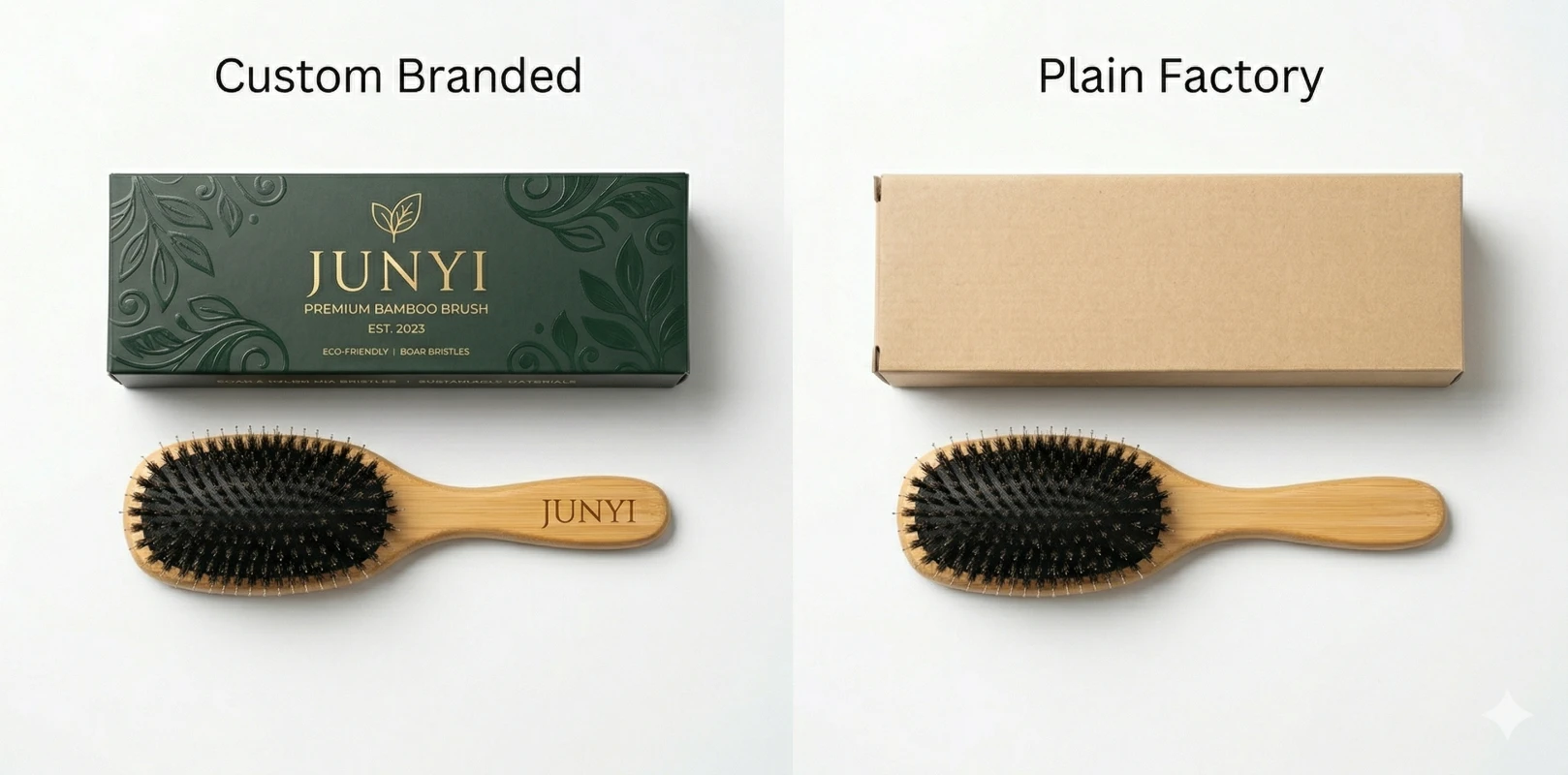
An exclusivity clause binds only the factory that signs it. A competitor can buy the brush at retail and have another factory copy it. Only registered design rights give protection against that, which is why brands with a distinctive handle shape consider registering the design.
Design Registration
Design protection is territorial. A brand selling in the United States and the EU but manufacturing in China may need registrations in each place. The WIPO industrial designs overview explains the options, including the international Hague system. Register before sharing drawings widely, because a design already published may no longer qualify as new.
NDA and NNN Agreements for Hair Brush Designs
A confidentiality agreement protects drawings and samples during development, before any mold exists.
NDA vs NNN
A standard non-disclosure agreement stops the factory from sharing information. Buyers working with Chinese factories often use an NNN agreement instead: non-disclosure, non-use, and non-circumvention. Non-use stops the factory making the product for itself; non-circumvention stops it selling directly to the buyer’s customers.
Making It Enforceable
An agreement is only useful where it can be enforced. Lawyers commonly advise that agreements with Chinese factories be written in Chinese as well as English and name a Chinese court or arbitration body. A short, specific agreement signed by the factory’s legal entity is worth more than a long template signed by a sales agent.
When to Sign
Sign before sending detailed drawings, not after the first quote. Early concept sketches carry little risk; dimensioned drawings and samples carry most of it.
A factory that refuses to sign any confidentiality terms for a custom design is telling the buyer something useful. Most established brush factories sign them routinely.
Mold Storage, Maintenance and Transfer
Molds are heavy, valuable, and usually stay at the factory. The contract should say what happens to them between orders and if the relationship ends.
Storage and Marking
Ask for each mold to be marked with a mold number and, where possible, the buyer’s name. Request dated photos of the molds every year. A mold that cannot be identified is hard to reclaim.
Maintenance and Repair
Routine cleaning is normally the factory’s cost. Major repair or replacement after the mold reaches its expected life is usually the owner’s cost. State both in writing.
Transfer and Idle Molds
The agreement should state how a buyer can move molds to another factory, with notice and a handover inspection. It should also state what happens to molds unused for a fixed period. Without this, idle molds may be scrapped to free storage space. Do not pay for a mold you have no written right to take away.
How Mold Disputes Usually Start
Most tooling disputes are not about fraud. They come from terms nobody wrote down when the first order felt simple.
The Mold Fee Hidden in the Price
A buyer accepts an amortized mold to keep the first order small, then moves to another factory after two orders. The first factory says the mold is not paid off and keeps it. Both sides are acting on assumptions. The way to compare tooling quoted upfront with tooling built into the price is set out in the guide to what a custom hair brush costs.
The Shape That Appears in Another Catalogue
A buyer finds its handle shape in the factory’s general catalogue a year later. If the contract had no exclusivity clause, the factory has broken no agreement, even if the buyer paid for the mold.
The Mold That Cannot Be Found
After a long gap between orders, the factory cannot locate the mold, or it has been modified for another product. Mold numbers, annual photos, and a no-modification clause prevent this.
A Tooling Checklist Before Paying a Mold Fee
These points fit on one page and prevent most tooling disputes.
- Mold set listed by part, with mold numbers.
- Owner of each mold, and when ownership passes.
- Exclusivity scope and duration.
- Expected mold life and who pays for repairs.
- Storage location, annual photos, and transfer terms.
- NNN agreement signed by the factory’s legal entity.
The same terms belong in the wider private label programme described in the guide to private label hair brush development.
The following video gives a practical overview of how injection molds are built and maintained.
Frequently Asked Questions
Q: If I pay for a hair brush mold, do I own it?
Not automatically. Ownership depends on what the contract and invoice say. A buyer-paid mold with written ownership terms belongs to the buyer. An amortized or refunded mold fee may leave the factory as owner unless the agreement states otherwise.
Q: Can the factory sell my custom brush to other buyers?
Only an exclusivity clause prevents it. The clause should name the mold numbers and drawings and state how long it lasts. It binds the signing factory only, so registered design rights are needed to stop copies made elsewhere.
Q: What is an NNN agreement?
An NNN agreement covers non-disclosure, non-use, and non-circumvention. It stops a factory from sharing a design, making it for itself, or selling directly to the buyer’s customers. It is commonly used with Chinese manufacturers in place of a basic NDA.
Q: Can I move my molds to another factory?
Yes, if the agreement gives a right of transfer. It should state notice periods, who pays for removal and shipping, and how the mold condition is checked at handover. Without written terms, reclaiming molds is difficult.
Q: What happens to molds that are not used for a long time?
Factories may scrap idle molds to free storage space. The agreement should state how long molds are kept without orders and require notice before any disposal, so the owner can reclaim them first.
Conclusion
Hair brush mold ownership rests on three written rights: who owns the tooling, who may use it, and who must keep the design confidential. Settling all three before paying a mold fee protects both the brand and the factory relationship.
Manufacturers such as JunYi Beauty, which builds custom handle and head molds for brand owners at its Dongguan facility alongside a library of more than 2,000 stock molds, represent the type of custom hair brush manufacturer that can document mold ownership and exclusivity in writing.