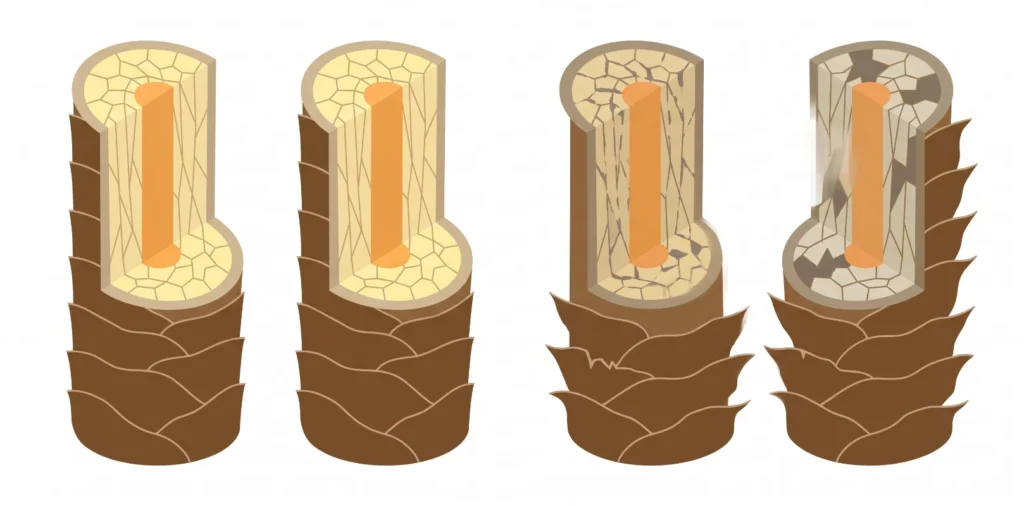
Brushing makes hair frizzier when mechanical friction disrupts the outer cuticle layer of the hair shaft, causing individual scales to lift, separate, and refract light unevenly — the visible result of which is frizz. This response is particularly pronounced in dry, damaged, or naturally curly and wavy hair, where the cuticle is already less smooth and more vulnerable to physical disturbance. Understanding why this happens — and which tools and techniques reduce it — is useful both for end consumers and for buyers sourcing hair brushes for retail or professional channels.
For brands and importers developing hair brush ranges, this is also a relevant product positioning question: the brushes that cause frizz and the brushes that reduce it are structurally different products, and stocking both without distinction creates confusion at the retail level.
What Happens to the Hair Cuticle When You Brush
The hair shaft is covered by a cuticle — a layer of overlapping, scale-like cells arranged like roof tiles from root to tip. When the cuticle lies flat, light reflects evenly off the surface, giving the appearance of smoothness and shine. When the cuticle is disturbed — lifted, roughed up, or broken — light scatters in multiple directions, producing the dull, textured appearance associated with frizz.
Brushing disturbs the cuticle in several ways:
- Friction from bristles passing over the shaft roughens the cuticle surface, particularly when the brush is moved rapidly or against the direction of growth
- Static electricity generated between synthetic bristles and dry hair causes individual strands to repel each other, producing volume that reads as frizz
- Mechanical tension from detangling knots can stretch and crack the cuticle, especially in hair that is already dry or chemically treated
- Brushing wet hair with a rigid brush stretches the hair shaft — hair is significantly weaker when wet — and may cause cuticle damage before the strand returns to its resting state
The degree to which brushing causes frizz depends on hair type, moisture levels, the brush specification, and the technique used. None of these variables operate independently.
Hair Types Most Prone to Brush-Induced Frizz
Not all hair responds equally to brushing. The structural characteristics of certain hair types make them significantly more susceptible to cuticle disturbance.
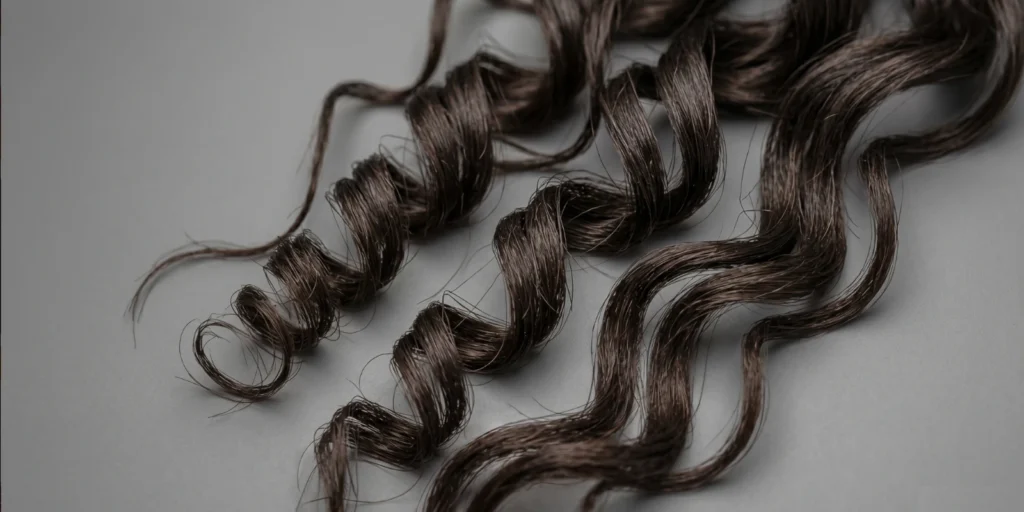
Curly and coily hair (Type 3 and 4) has a naturally elliptical or flattened cross-section rather than a circular one. This shape means the cuticle scales do not lie as uniformly flat as in straight hair, and the twists and bends in the strand create multiple points where bristle contact is uneven. Brushing curly hair in its dry state almost universally disrupts the curl pattern and increases frizz.
Wavy hair (Type 2) sits between straight and curly in terms of cuticle behaviour. Brushing wavy hair dry tends to loosen the wave, separate the strands, and produce a diffuse, frizzy appearance rather than a defined wave pattern.
Fine hair has a smaller shaft diameter, which means each strand has proportionally less cuticle coverage and is more easily disrupted by friction. Fine hair also generates static more readily, compounding the frizz effect.
Dry or damaged hair — whether from chemical processing, heat styling, or environmental exposure — has a cuticle that is already compromised. In this state, even moderate brushing can lift and break cuticle scales that would otherwise remain intact.
Colour-treated and bleached hair has a swollen cortex and weakened cuticle structure. The porosity is higher, meaning moisture enters and exits the shaft more rapidly, leaving the hair more susceptible to both dryness and frizz.
Why the Wrong Brush Makes Frizz Worse
Brush specification has a direct bearing on frizz outcome. The bristle type, pin configuration, and cushion base all influence how much mechanical disturbance occurs during brushing.
Hard nylon pins with ball tips are effective for detangling but generate more friction than natural bristle against the hair shaft. Used on dry, fine, or curly hair, they are among the most common causes of brush-induced frizz.
Boar bristle brushes are significantly less likely to cause frizz in appropriate hair types. The natural keratin structure of boar bristle is close in composition to human hair, which means it creates less friction during contact. Boar bristle also redistributes scalp sebum along the hair shaft as it passes, coating the cuticle and laying it flat rather than disturbing it.
Mixed bristle brushes (boar and nylon combined) offer a compromise: the nylon pins help work through knots while the boar bristles smooth the cuticle between passes. For consumers with medium to thick hair who want detangling performance without excessive frizz, mixed bristle is often the most appropriate specification.
Paddle brushes with a hard, non-cushioned base transmit more pressure per stroke than air-cushion paddle brushes. On scalp-sensitive or fine hair, this additional pressure increases the friction applied to each strand.
Vented brushes — which allow airflow through the base — are designed for use with a blow-dryer and not for dry brushing. Used without heat, they offer no smoothing benefit and tend to roughen the cuticle through their more open pin configuration.
The comparison below summarises how common brush types affect frizz risk:
| Brush Type | Bristle | Frizz Risk | Best Use Case |
|---|---|---|---|
| Boar bristle paddle | Natural | Low | Fine to medium hair, smoothing |
| Mixed bristle paddle | Boar + nylon | Low to medium | Medium hair, detangling + smoothing |
| Nylon pin paddle | Synthetic | Medium to high | Thick hair, pre-styling detangle |
| Round brush (boar) | Natural | Low | Blow-dry styling with heat |
| Vented brush | Nylon | High (if used dry) | Blow-dry only |
| Detangling brush | Flexible nylon | Low to medium | Wet hair detangling |
Technique Factors That Increase or Reduce Frizz
The same brush can produce very different results depending on how it is used. Technique adjustments — most of which require no change in product — are among the most immediate ways to reduce brush-induced frizz.
Brushing direction matters significantly. Brushing from root to tip in long, smooth strokes following the direction of cuticle growth causes less disruption than short, back-and-forth strokes that move against the grain. The cuticle scales open in the direction of the brush moving upward toward the root; moving in the opposite direction closes them.
Starting from the ends — working through knots at the tips before moving to mid-lengths and then roots — reduces the tension placed on individual strands during detangling. Brushing from the root downward when hair is knotted applies tension to the full length of the shaft, increasing the risk of both breakage and cuticle damage.
Brushing damp rather than wet or completely dry is often the least frizz-producing option for straight and wavy hair types. Hair that retains some moisture has more elasticity than completely dry hair, but is less vulnerable than fully wet hair, which stretches rather than bends under tension.
Using a leave-in conditioner or styling product before brushing coats the cuticle and reduces bristle friction during the pass. For curly and wavy hair types, this step is effectively mandatory for maintaining pattern definition while brushing.
Brushing frequency also affects cumulative frizz. Daily brushing with hard nylon pins on dry, fine, or curly hair accelerates cuticle wear over time. For hair types prone to frizz, limiting brushing to once per day — or switching to finger-detangling between brush sessions — reduces long-term mechanical damage.
What to Use Instead for Frizz-Prone Hair
For consumers whose hair consistently frizzier after brushing, the solution usually involves both a change in brush type and a change in when brushing occurs relative to product application and hair dryness.
Wide-tooth combs are the most commonly recommended alternative to brushing for curly and coily hair types. The widely spaced teeth pass through the hair with significantly less contact per strand, reducing both friction and static. They are particularly effective used on hair that is damp and product-coated.
Detangling brushes with flexible, tapered nylon pins — designed with pins that flex under tension rather than pulling through knots — generate substantially less mechanical stress than rigid pin brushes. They are effective on wet hair and are frequently recommended for use in the shower with conditioner.
Boar bristle brushes are the recommended alternative for straight and wavy hair types that want smoothing without frizz. They are not effective for detangling but excel at finishing — running through already-smooth hair to add shine and lay the cuticle flat.
Microfibre towels used for drying before brushing reduce the initial frizz trigger. Standard terry cloth towels roughen the cuticle surface significantly during the drying process, leaving hair in a more frizz-prone state before the brush is even applied. Microfibre removes moisture through absorption rather than friction.
Sourcing Considerations for B2B Buyers
For retail buyers and brand developers sourcing hair brushes, frizz behaviour is an increasingly relevant product attribute — particularly for brands targeting consumers with curly, wavy, or fine hair, or those positioning products in the natural hair or clean beauty segments.
Key specification decisions that affect frizz outcome include:
- Bristle type selection: Boar bristle and mixed bristle command higher price points but carry stronger frizz-reduction claims supported by material science. Nylon-only configurations should be positioned clearly for detangling and pre-styling use rather than smoothing.
- Cushion base: Air-cushion bases reduce pin pressure on the scalp and shaft during each stroke. For frizz-sensitive hair markets, specifying an air-cushion paddle over a hard-base paddle is a meaningful product differentiation.
- Anti-static coating on nylon pins: Some manufacturers offer nylon pins with anti-static treatment, which reduces the static charge generated during brushing — directly addressing one of the primary frizz mechanisms.
- Pin flexibility: Detangling brushes with flexible pin bases reduce the tension placed on individual strands, making them appropriate for wet-hair use without the frizz risk associated with rigid pin brushes.
Both boar bristle and detangling brush categories are available through OEM and private label manufacturing routes, with specification options covering bristle blend ratios, pin hardness, anti-static treatment, and cushion base construction.
Brands developing ranges for curly or textured hair markets should also consider whether brush packaging communicates hair type suitability. At retail, consumers with frizz-prone hair are often buying based on hair type guidance rather than product category alone.
Frequently Asked Questions
Why does my hair frizz when I brush it even though it looks fine before?
Brushing disrupts the outer cuticle layer of the hair shaft through friction and static. Even hair that appears smooth before brushing can frizz if the cuticle is disturbed, particularly in dry conditions or with synthetic bristle brushes that generate static charge.
Should I brush my hair wet or dry to avoid frizz?
Neither fully wet nor completely dry is ideal for frizz-prone hair. Wet hair stretches under tension and is more vulnerable to cuticle damage. Very dry hair generates more static. Damp hair — after towel-drying with microfibre — is generally the lowest-frizz state for brushing straight and wavy hair types. Curly hair is best detangled wet with a wide-tooth comb or flexible detangling brush.
Does brushing curly hair always cause frizz?
Brushing dry curly hair almost always disrupts the curl pattern and increases frizz. Curly hair can be detangled wet with a wide-tooth comb or detangling brush, but dry brushing with any bristle type tends to separate the curl and produce a diffuse, frizzy result.
What type of brush reduces frizz most effectively?
Boar bristle brushes reduce frizz most effectively on straight to wavy hair by smoothing the cuticle and redistributing natural oils without generating static. For curly and wavy hair, a wide-tooth comb or flexible nylon detangling brush used on damp, product-coated hair is the lower-frizz alternative to standard brushing.
Does the cushion base of a brush affect frizz?
Yes. An air-cushion base allows the pins to flex during each stroke, reducing the pressure applied to individual strands. This reduces both mechanical stress on the cuticle and the friction that contributes to static — both of which are primary frizz mechanisms.
Is brushing every day bad for frizzy hair?
Daily brushing with hard nylon pins on dry, fine, or curly hair can accelerate cuticle wear over time, compounding the frizz problem. Reducing brushing frequency, switching to a boar or mixed bristle brush, and applying a leave-in product before brushing are the most effective adjustments for consumers with frizz-prone hair.
Conclusion
Brushing causes frizz primarily through cuticle disruption — via friction, static, and mechanical tension applied to the hair shaft during each stroke. The extent of the problem depends on hair type, brush specification, hair condition at the time of brushing, and technique. For most frizz-prone hair types, the solution involves selecting a brush with lower friction output (boar bristle or flexible nylon detangling pins), brushing at the right moisture level, and applying product before rather than after brushing.
Manufacturers such as JunYi Beauty, which produces boar bristle, mixed bristle, and detangling brush categories across multiple pin and cushion base specifications from its Dongguan manufacturing facility, represent the type of OEM partner suited to brands developing hair brush ranges with clearly differentiated performance claims across hair types.