
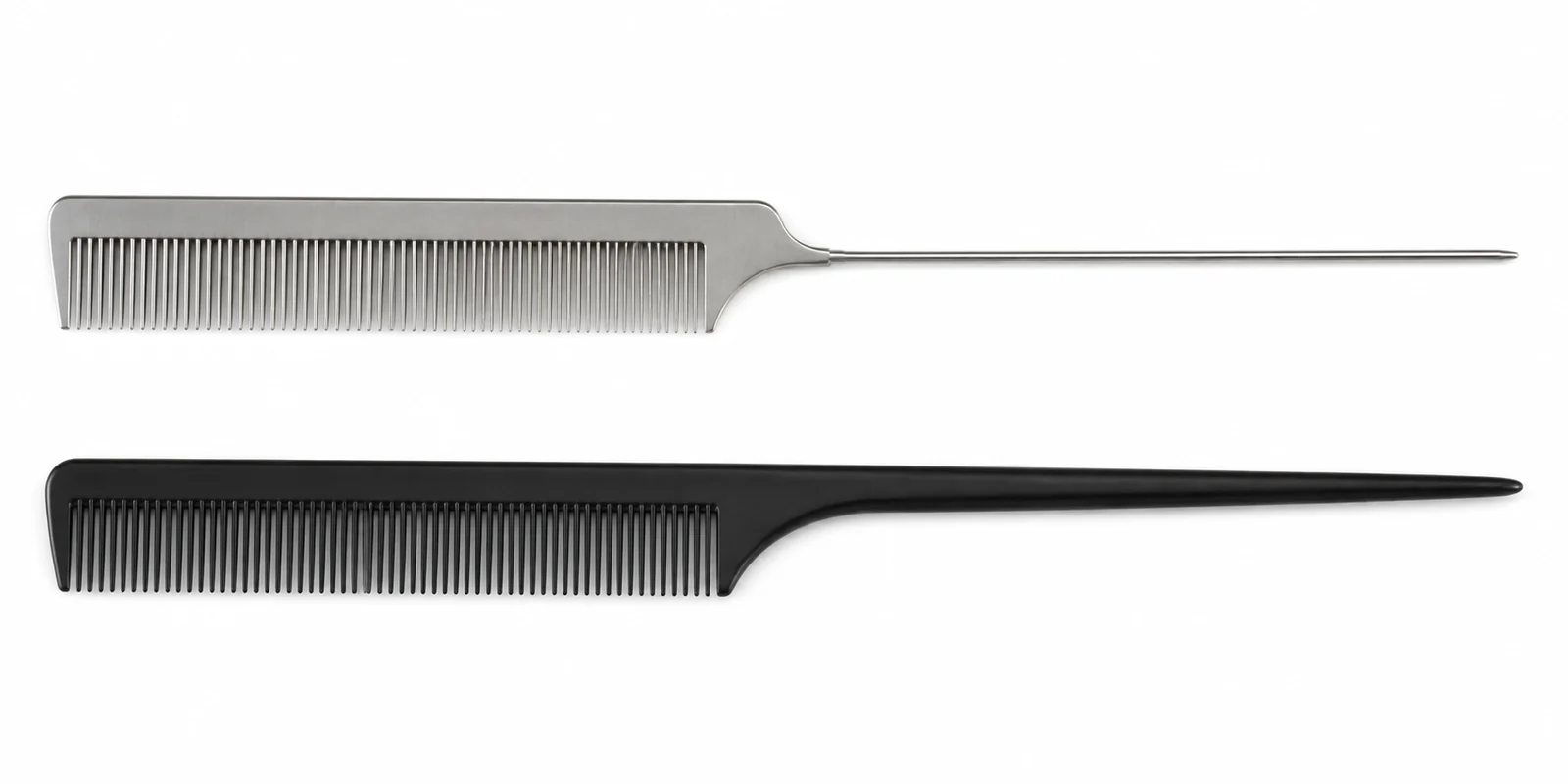
Searches comparing “pin tail comb” and “rat tail comb” are looking for a distinction that, in the overwhelming majority of cases, does not actually exist as a separate product category — the two terms refer to the same tool. Both describe a comb with a tooth section combined with a long, thin, pointed handle extension used for sectioning hair, and the two names are used somewhat interchangeably across regions, brands, and professional contexts, with “rat tail” more common in general and North American usage and “pin tail” appearing more frequently in some professional and UK-influenced supply catalogues.
That said, the honest answer isn’t simply “they’re identical” — there are genuine variations within this single comb category that the two names sometimes, inconsistently, get used to distinguish. This guide covers what actually varies within the rat-tail/pin-tail comb category — tail material, tail thickness and flexibility, tooth configuration — so buyers and stylists can evaluate the real specification differences rather than assuming the name itself indicates a meaningful distinction. For the broader comb category this tool belongs to, see our guide on types of hair combs.
Why the Two Names Cause Confusion
Same Tool, Different Naming Conventions
“Rat tail comb” and “pin tail comb” both describe a comb with a fine or medium tooth section at one end and a long, narrow, pointed handle at the other, used for creating precise scalp partings, sectioning hair for colouring or styling, and directing individual sections during blow-dry or roller work. Professional supply catalogues, manufacturers, and individual stylists use the two names inconsistently — some treat them as pure synonyms, others use “pin tail” specifically for combs with a thin, rigid metal tail (resembling a large sewing pin) and reserve “rat tail” for a slightly thicker, sometimes plastic, tapered tail, but this distinction is not standardised across the industry.
Where a Real (but Inconsistent) Distinction Sometimes Appears
In some supply contexts, “pin tail” specifically signals a fine metal tail — thin, rigid, and precise, similar in profile to a sewing pin — while “rat tail” is used for a broader category that includes both metal and plastic tail options, sometimes with a slightly thicker taper. This usage is common but far from universal, and the safest approach for any buyer or stylist is to look at the actual tail material and dimensions specified for a given product rather than relying on which of the two names it’s marketed under.
What Genuinely Varies Within This Comb Category
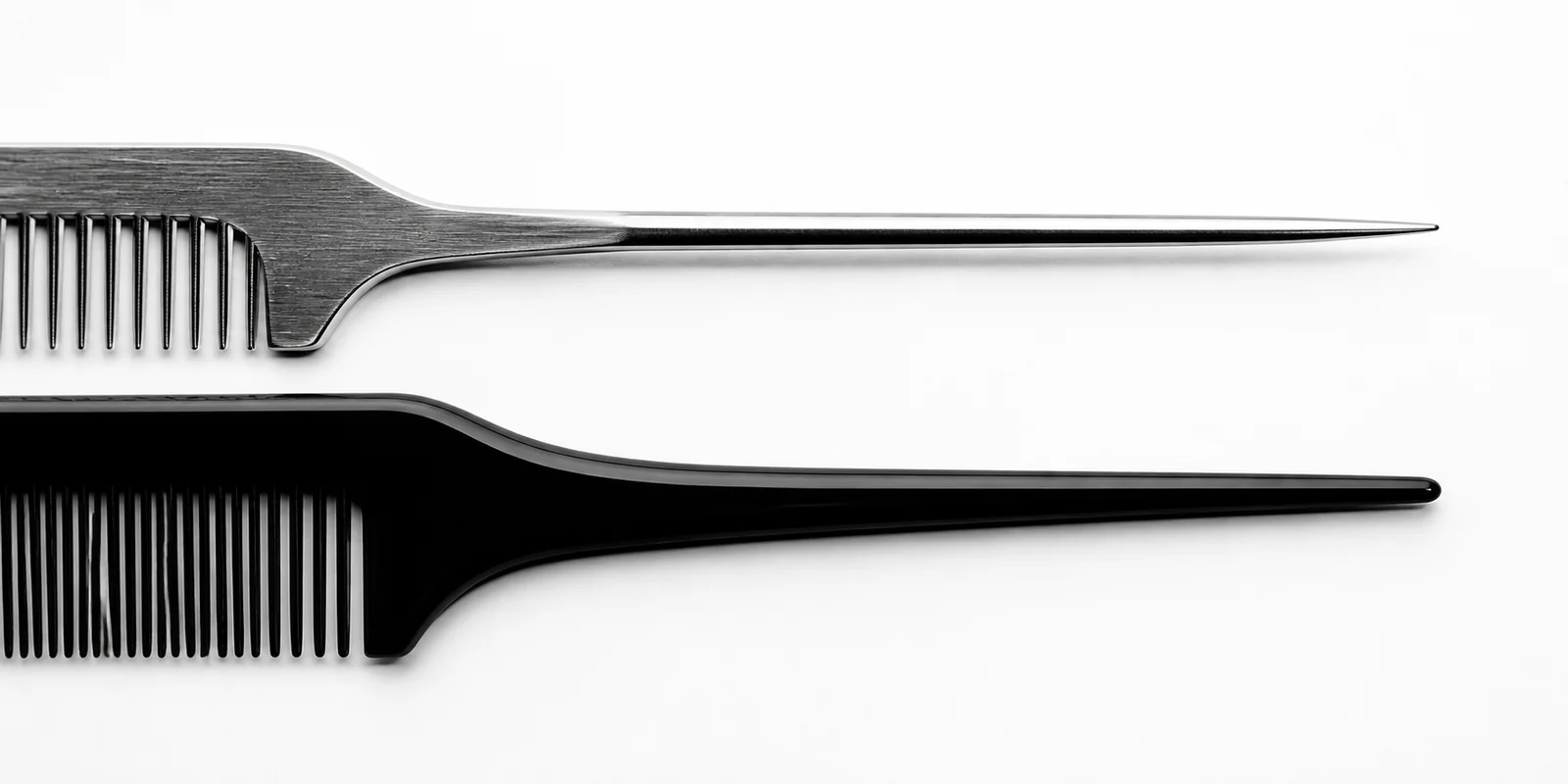
Tail Material: Metal
A metal tail — typically stainless steel — offers the most precision and rigidity of any tail material. It holds a fine point without bending or dulling over repeated use, making it the preferred choice for professional colourists and stylists doing frequent, precise sectioning work such as foil highlights or fine parting patterns. Metal tails conduct heat and cold, and can feel less comfortable in prolonged contact with the scalp compared to plastic, but this is a minor consideration relative to the precision benefit for professional use.
Tail Material: Plastic
A plastic tail is lighter, less expensive to produce, and eliminates any risk of the tail bending out of true shape the way a lower-quality metal tail might under heavy pressure. Plastic tails are more common in consumer-grade and general-purpose combs rather than professional colourist tools, since they typically cannot hold as fine or as durable a point as metal over heavy, repeated use. For general at-home sectioning and styling use, plastic tail durability is generally adequate.
Tail Thickness and Taper
Independent of material, tail thickness varies meaningfully across products sold under both names. A very fine, needle-like tail offers maximum precision for detailed work — sharp, straight partings, small foil sections — but is also the most fragile and prone to bending under repeated firm pressure if made from lower-grade metal. A slightly thicker, more tapered tail sacrifices a small amount of precision for durability and is generally more forgiving for less experienced users or for general sectioning that doesn’t require needle-fine accuracy.
Tooth Configuration
The tooth section attached to the tail varies independently of the tail itself. Some rat-tail/pin-tail combs have a single fine-tooth zone running the full length of the tooth section; others have a dual-density design similar to a styling comb, with wider teeth near the tail transition and finer teeth toward the tip. The tooth configuration affects how the comb performs for general combing and lifting versus pure sectioning, and is a separate specification decision from the tail material question.
Handle-to-Tail Transition and Balance
Higher-quality combs in this category are weighted and balanced so the tool sits comfortably in a working grip during extended sectioning sessions — a consideration that matters significantly to professional stylists doing repeated sectioning throughout a working day, and matters much less to a consumer using the comb occasionally at home.
What These Combs Are Actually Used For
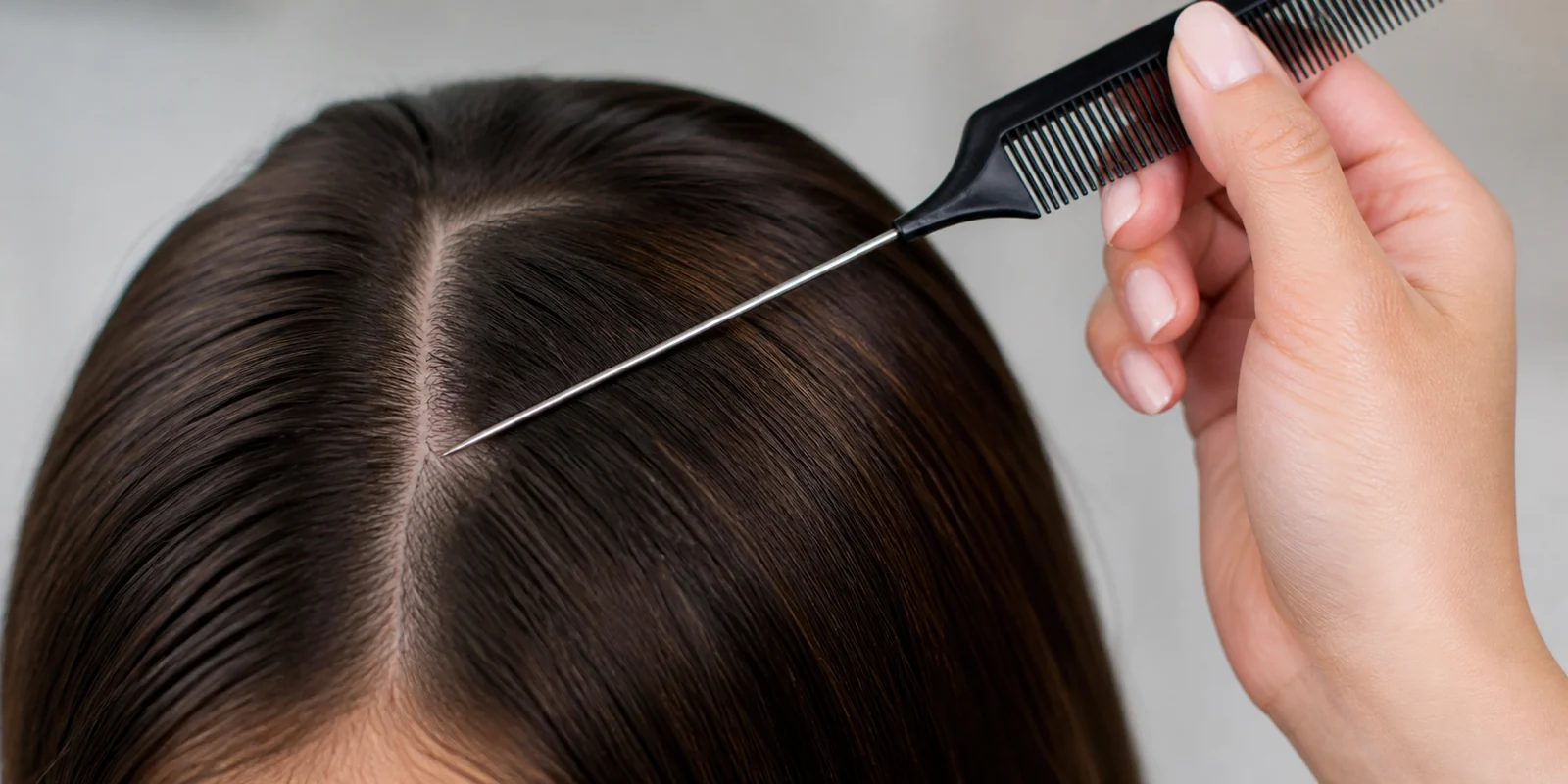
Regardless of which name is used, this comb category serves the following functions:
Precise scalp sectioning — creating clean, straight parting lines for colouring, highlighting, and chemical service work, where the pointed tail draws a defined line through the scalp that separates sections accurately.
Directing hair during styling — lifting and separating individual sections during blow-dry work or roller sets, where the tail is used to isolate a section before the tooth end combs and smooths it.
Precision parting for everyday styling — creating a clean, straight, or zig-zag part for daily styling, a use case that spans both professional and consumer contexts.
Backcombing assistance — some stylists use the tail end to lift and separate small sections before backcombing with a dedicated teasing comb, a related but distinct technique covered in our teasing comb guide.
None of these functions differ based on whether the comb is labelled “pin tail” or “rat tail” — they depend on the tail’s precision, rigidity, and length, and the tooth section’s configuration, which is why evaluating the actual specification matters more than the name.
How to Choose Based on Actual Use Case
Professional Colourists and Precision Sectioning Work
A fine metal tail — whichever name it’s sold under — is the appropriate choice for anyone doing frequent, precise sectioning where the tail needs to hold a consistent fine point through heavy daily use without bending or dulling. Balance and grip comfort become more important the more hours per day the tool is used.
General Styling and Occasional Sectioning
A moderately tapered tail in either metal or durable plastic is adequate for general at-home use, occasional parting changes, or styling work that doesn’t demand foil-highlight-level precision. The cost savings of a plastic tail are reasonable for this use case, since the durability demands are lower.
Backcombing and Teasing Support
Where the comb’s tail will be used to isolate small sections before teasing, tail thinness and a sharp point matter more than overall tail length, since the goal is precise, small-section isolation rather than long sweeping partings.
Material and Care Considerations
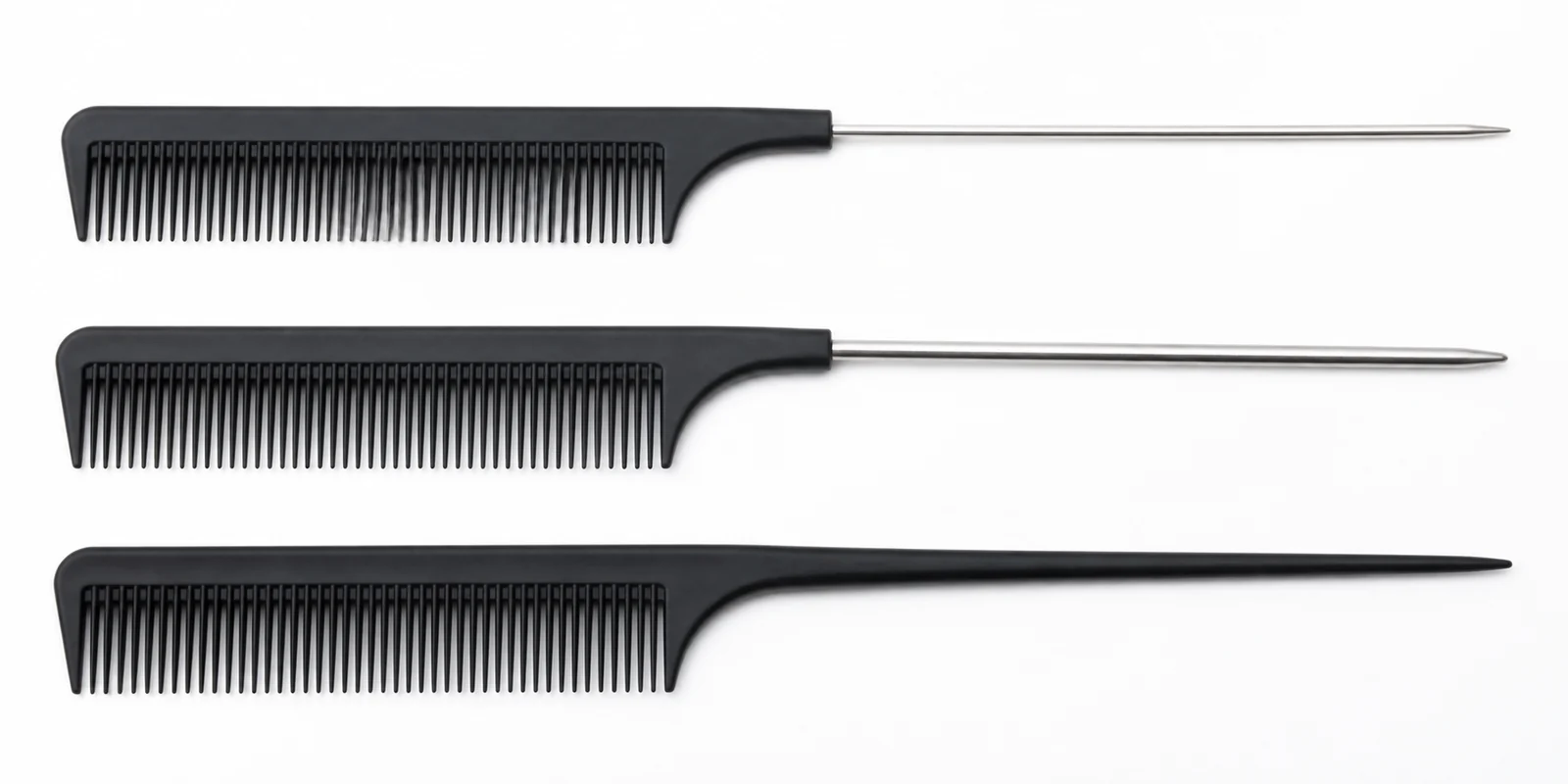
Metal Tail Maintenance
Stainless steel tails resist corrosion under normal use but should be dried after contact with wet hair or cleaning products to avoid the gradual dulling or minor pitting that prolonged moisture exposure can cause over a long professional service life.
Plastic Tail Maintenance
Plastic tails should be checked periodically for warping if stored near heat sources or in direct sun, since prolonged heat exposure can soften the tip and reduce the precision of the point over time — a lesser but real concern compared to metal tail maintenance.
Tooth Section Material
The tooth section of a rat-tail/pin-tail comb follows the same material considerations covered across the broader comb category — cellulose acetate and polished wood generate less friction against hair than standard moulded plastic, and this applies to this comb category exactly as it does to wide-tooth and fine-tooth combs, as covered in our guide on types of hair combs.
Sourcing Considerations for B2B Buyers
For buyers stocking or specifying rat-tail/pin-tail combs, the practical guidance is to source and market based on documented specification rather than relying on either name to communicate a consistent quality tier.
Specify tail material and gauge explicitly: Rather than labelling a product simply “pin tail” or “rat tail” and assuming the name communicates the intended quality tier to buyers, documenting the actual tail material (stainless steel vs. plastic), gauge/thickness, and length in the product specification sheet removes the ambiguity that the inconsistent industry naming convention creates.
Segment by use case, not by name: A range built around use case — a fine stainless steel tail for professional colourist positioning, a durable plastic or thicker metal tail for general consumer sectioning — creates clearer buyer decision-making than a range differentiated only by which of the two interchangeable names appears on the packaging.
Consider naming strategy for search visibility: Because both terms are in active, overlapping consumer and professional search use, product listings and content that reference both names (as this article does) capture search demand that a single-name-only approach would miss, regardless of which term is used as the primary product name.
Tooth configuration as a separate specification: Document whether the comb uses a single-density or dual-density tooth zone, since this affects general combing performance independently of the tail question and is often under-specified relative to the tail material.
Rat-tail and pin-tail comb formats in stainless steel and durable plastic, with fine and standard tail gauges and single or dual-density tooth configurations, are available through OEM and private label manufacturing routes, with tail material, gauge, length, and tooth specification adjustable to range positioning requirements.
Frequently Asked Questions
Is a pin tail comb the same as a rat tail comb?
In the large majority of cases, yes — the two terms describe the same category of comb: a tooth section combined with a long, pointed handle used for sectioning. The names are used inconsistently across brands and regions, with some suppliers using “pin tail” specifically for a fine metal tail and “rat tail” as a broader category term, but this is not a standardised distinction across the industry.
Which is better, metal or plastic tail?
Metal, typically stainless steel, holds a finer, more durable point and is the preferred choice for professional colourists doing frequent precise sectioning. Plastic is lighter, less expensive, and adequate for general consumer or occasional styling use where the highest level of precision isn’t required.
What is a rat tail comb used for?
Creating precise scalp partings for colouring, highlighting, and chemical services; sectioning hair during blow-dry or roller styling; and general precision parting for daily styling. The pointed tail draws clean, accurate lines through the scalp that separate sections consistently.
Do professional stylists use pin tail or rat tail combs?
Both terms appear in professional supply contexts, and professional stylists typically evaluate the actual tail material and precision rather than the name — a fine stainless steel tail, whichever name it’s sold under, is the standard choice for detailed colourist sectioning work.
Can I use a rat tail comb for backcombing?
The tail end is sometimes used to isolate small sections before backcombing with a separate teasing comb, but the rat-tail/pin-tail comb’s tooth section itself is not typically fine or dense enough to perform the backcombing function as effectively as a dedicated teasing comb with its tightly spaced fine teeth.
How do I know which tail thickness to choose?
Choose based on precision needs rather than the product name: a very fine, needle-like tail suits detailed foil highlighting and precise straight partings but is more fragile; a moderately tapered tail sacrifices some precision for durability and is more forgiving for general sectioning and everyday use.
Conclusion
“Pin tail comb” and “rat tail comb” are, in nearly all practical contexts, two names for the same tool rather than genuinely distinct product categories — the confusion comes from inconsistent industry naming rather than a real underlying difference tied to either term specifically. The specification variables that actually matter — tail material (metal versus plastic), tail gauge and taper, tooth configuration, and overall balance — vary independently of which name a given product is sold under, and evaluating those specifications directly is a more reliable approach than assuming either name guarantees a particular quality tier.
For buyers sourcing this comb category with documented, consistent specification rather than name-based assumptions, manufacturers such as JunYi Beauty, which produces both stainless steel and durable plastic tail comb formats across fine and standard gauges with configurable tooth density from its Dongguan facility, represent the type of OEM partner suited to ranges built on genuine specification clarity rather than the interchangeable naming that dominates this category.