Teasing — also called backcombing — is one of the most effective techniques for adding root volume, but it is also one of the most consistently misused, producing tangled, damaged hair when done with the wrong tool or technique. A teasing comb, used correctly, creates lasting lift at the crown and roots without the breakage that gives backcombing its damaging reputation. The difference between a good teasing result and a damaged one comes down almost entirely to comb design, product preparation, and technique — not whether teasing itself is inherently harmful.
This guide covers what a teasing comb actually is, how the backcombing mechanism works, correct technique for adding volume safely, which hair types should approach teasing with more caution, and how to remove teased hair without causing the breakage that incorrect removal often causes. For the broader comb category this tool sits within, see our guide on types of hair combs.
What a Teasing Comb Is
Structure and Tooth Design
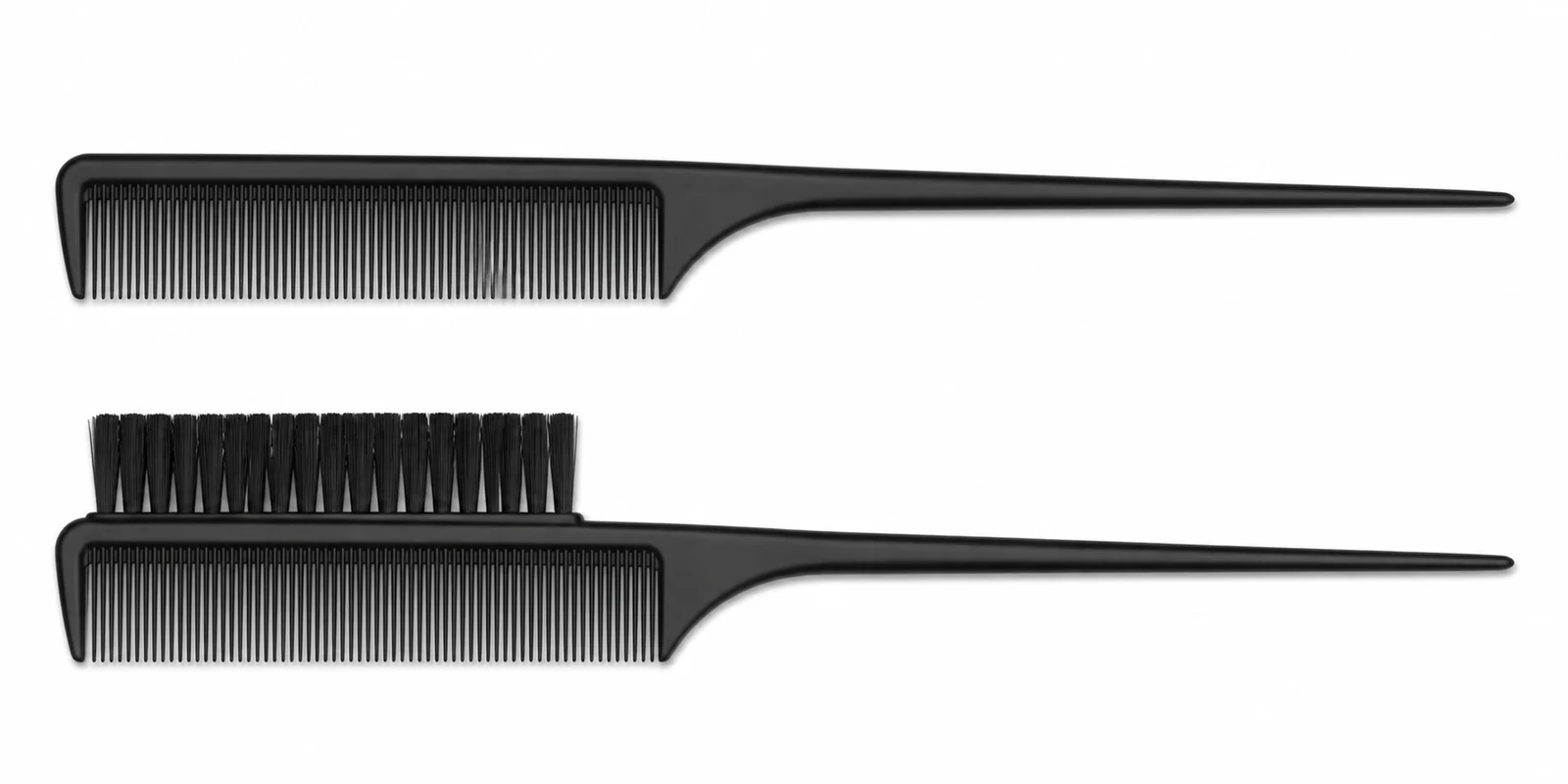
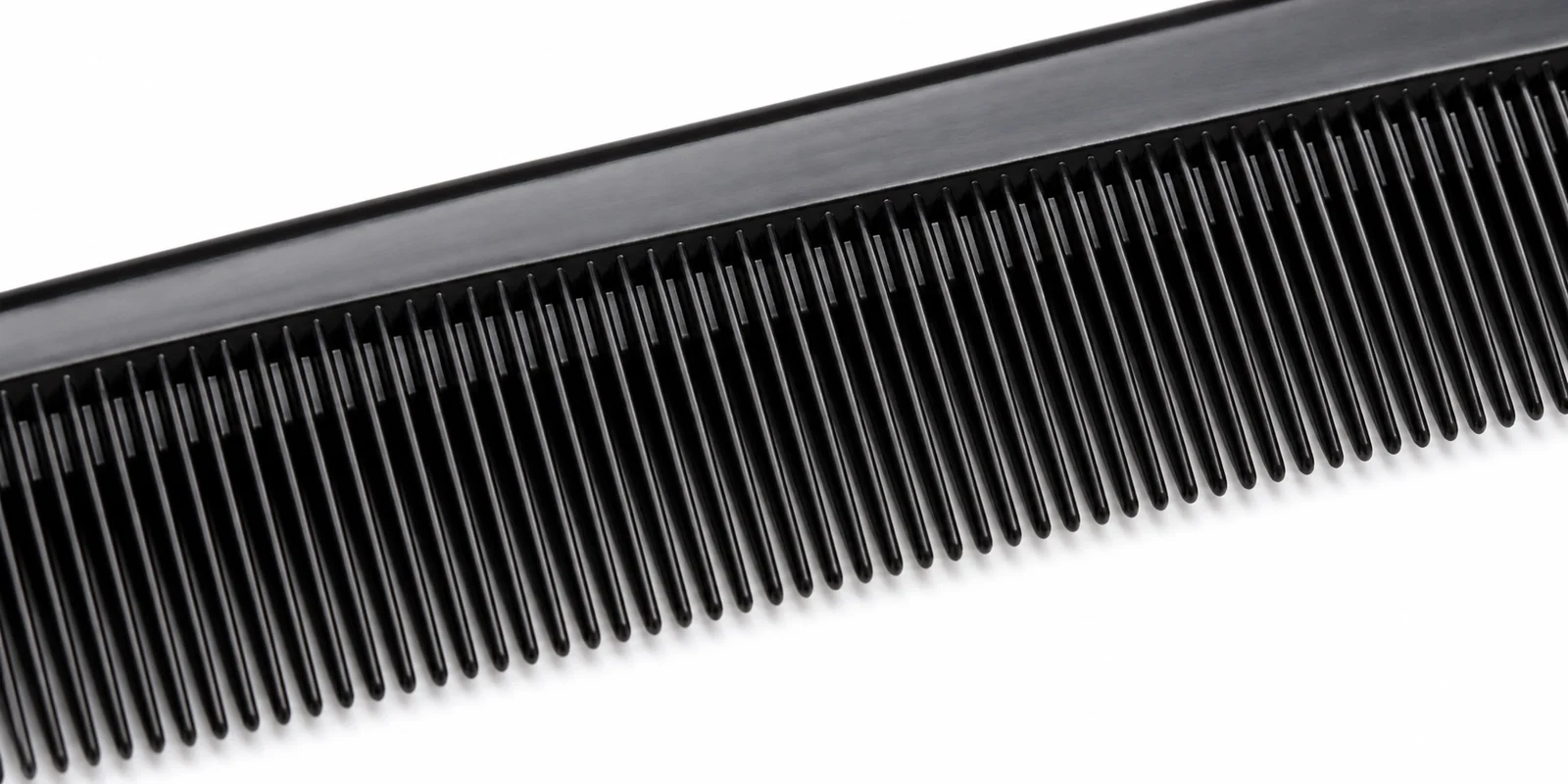
A teasing comb has short, closely spaced, fine teeth — typically finer and more tightly set than even a standard fine-tooth comb — combined with a pointed tail or handle used for sectioning. Some teasing combs include a small brush section on the reverse side, used to smooth the outer layer of hair over the teased section once volume has been created underneath.
The fine, dense tooth spacing is what makes backcombing possible: as the comb is pushed toward the roots in short strokes, the closely set teeth catch the cuticle scales of individual strands against each other, creating a matted, interlocked structure that holds the hair up and away from the scalp rather than lying flat.
How This Differs from a Standard Comb
A wide-tooth or standard fine-tooth comb, with more space between teeth, does not create this locking effect efficiently — the wider spacing allows too many strands to pass through together without enough scale-to-scale catching to build volume. The tight tooth spacing that makes a teasing comb effective for volume is the same feature that makes it inappropriate for general detangling, where wider spacing and less cuticle disruption are the goal.
How Backcombing Actually Creates Volume
The Mechanism
When the teasing comb is drawn from mid-length toward the scalp in short, repeated strokes, the fine teeth catch and lift the cuticle scales of individual strands, causing adjacent strands to interlock rather than lie smooth against each other. This interlocked structure occupies more physical space than smooth, aligned hair, which is what creates the lift and volume at the root — the hair is not being stretched or permanently altered, it is being mechanically matted in a way that holds its shape until brushed or washed out.
Why the Direction of the Stroke Matters
Backcombing strokes move toward the scalp, not away from it — this is the opposite direction from normal smoothing brushing. Each short stroke should start a few inches from the root and push down toward the scalp, then lift the comb away and repeat, rather than dragging continuously back and forth, which increases cuticle disruption without adding proportional volume.
Why This Technique Is Inherently More Damaging Than Smooth Brushing
The interlocking mechanism that creates volume works by deliberately disrupting and catching the cuticle — this is a fundamentally more aggressive action on the hair shaft than the smoothing strokes used in standard brushing. This is not a flaw in technique; it is how the mechanism works. The damage risk from teasing is real and should be managed through frequency, technique, and hair health — not eliminated, because eliminating the cuticle disruption would eliminate the volume effect itself.
Correct Technique for Teasing Without Excess Damage
Start with the Right Hair Condition
Teasing works best, and causes proportionally less damage, on hair that is completely dry and has some texture or product already applied — a light volumising mousse, texture spray, or dry shampoo at the roots gives the strands more grip to catch against each other, meaning fewer aggressive strokes are needed to achieve the same volume. Teasing on wet or damp hair is significantly more damaging, since the hair shaft is already in its most vulnerable, elastic state, and should be avoided.
Section the Hair
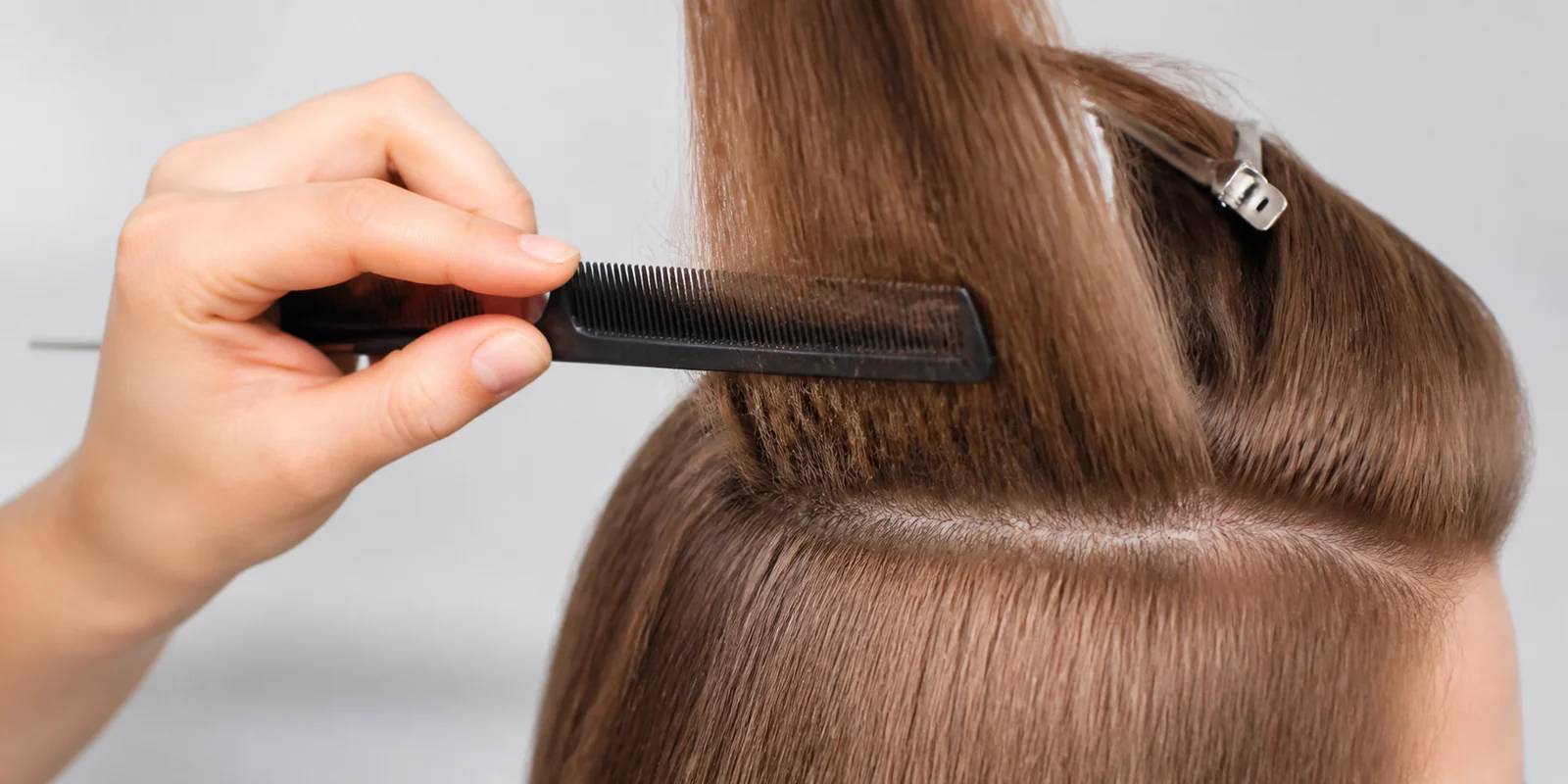
Working in clean, defined sections — rather than teasing large, unsectioned areas — allows more controlled, targeted volume exactly where it’s needed (typically the crown and root area) without unnecessary cuticle disruption across hair that doesn’t need lift. A rat-tail comb or the pointed tail on the teasing comb itself is used to section cleanly before backcombing each piece.
Use Short, Controlled Strokes
Three to five short strokes per section, moving from a point a few inches above the root down toward the scalp, is typically sufficient to create noticeable volume. Continuing well beyond this point does not meaningfully add more volume — it primarily adds more cuticle damage for diminishing returns. If a section isn’t holding enough volume after five strokes, the more effective fix is usually more product at the root, not more strokes.
Smooth the Top Layer
After backcombing the underneath sections, smooth a thin top layer of hair over the teased structure using the brush side of the teasing comb, a boar bristle brush, or your hands. This top layer conceals the visibly matted structure underneath while the teased sections do the structural work of holding the volume — the finished look should not show the teasing itself.
How to Remove Teased Hair Correctly
Why Removal Technique Matters as Much as Application
The interlocked structure that creates volume during teasing has to be undone at the end of the day or before the next wash, and pulling a standard brush straight through teased hair is one of the most damaging moments in the entire process — it applies significant tension to hair that is already mechanically matted and more vulnerable than it was before teasing began.
Correct Removal Steps
Apply a detangling spray, leave-in conditioner, or a small amount of oil to the teased section before attempting removal — this provides the slip needed to work through the matted structure with less force. Starting at the very ends of the teased section and working upward in small increments, rather than starting at the root and pulling downward through the entire matted length, distributes the removal force across shorter segments rather than concentrating it across the full teased area in one pull.
A wide-tooth comb or a flexible detangling brush, rather than a rigid bristle brush or the teasing comb itself, is the appropriate tool for removal — the same wet-detangling logic covered in our guide on whether it is bad to brush wet hair applies directly here, since teased hair being removed is functionally a dense knot that benefits from the same low-force-per-strand approach as wet detangling.
What to Avoid During Removal
Do not attempt to remove heavily teased hair while rushed or with a rigid brush — this is where most of the breakage attributed to “teasing damages hair” actually occurs, not during the backcombing process itself. Do not sleep with heavily teased hair intact repeatedly without removing it, since the prolonged matted tension combined with the friction of a pillow surface compounds the mechanical stress significantly beyond a single day’s wear.
Who Should Approach Teasing with More Caution
Fine and Fragile Hair
Fine hair has less structural mass per strand to absorb the mechanical stress of backcombing, making it more prone to breakage from the same teasing technique that a thicker hair type would tolerate well. Fine-hair users should use fewer strokes, teased more sparingly, and should be especially careful with slow, gentle removal. The broader specification and handling considerations for fine hair are covered in our guide on the best hair brush for fine and thin hair.
Colour-Treated and Chemically Processed Hair
Hair with a compromised cuticle from bleaching, colouring, or chemical processing is more vulnerable to the additional cuticle disruption that backcombing causes on top of existing damage. Teasing this hair type should be minimised in frequency, and extra care with slip product during both application and removal is particularly important.
Curly and Coily Hair
Backcombing on curly and coily hair interacts with the existing curl structure in ways that can produce more tangling and matting than on straighter hair, and the removal process afterward carries higher breakage risk given the additional friction curl patterns create during detangling. Teasing is used less commonly on this hair type for this reason, and when it is used, extra product and gentler, slower removal are appropriate.
Anyone Teasing Very Frequently
Occasional teasing — for special occasions or infrequent styling — carries a manageable cumulative damage profile for most hair types. Daily or near-daily teasing accumulates cuticle stress meaningfully faster than the hair’s natural condition can offset, and is the pattern most associated with visible, longer-term damage from this technique specifically, independent of any single session being done correctly.
Teasing Comb vs. Other Volume Tools
Teasing Comb vs. Round Brush and Heat
A round brush combined with a blow dryer creates volume primarily through directional tension and heat-set shape at the root, rather than through the mechanical matting that a teasing comb produces. Round-brush volume tends to be smoother and less structurally locked than teased volume, making it appropriate for daily use, while teasing typically produces more dramatic, longer-lasting lift suited to special-occasion styling rather than every day.
Teasing Comb vs. Volumising Spray Alone
Root-lift and volumising sprays create volume through product coating and hold rather than mechanical structure, and can be used alone for a lighter volume effect with essentially no mechanical damage risk. Combining a volumising product with a teasing comb produces more dramatic volume than either used alone, since the product provides grip that reduces the number of backcombing strokes needed to achieve a given amount of lift.
Sourcing Considerations for B2B Buyers
For buyers developing teasing comb products, the specification and positioning decisions affect both the tool’s actual performance and the accuracy of the damage-related claims made around it.
Tooth density and fineness: The tooth spacing that makes a teasing comb functionally effective — fine enough to catch and interlock cuticle scales efficiently — is a specific specification variable, not simply “smaller than a standard comb.” Confirming tooth count per inch in the product specification, rather than relying on a general fine-tooth description, ensures the comb actually performs the backcombing function it’s marketed for.
Material and friction: Cellulose acetate or polished materials with a seamless tooth edge reduce unnecessary friction during the removal process specifically, which is where most teasing-related damage complaints originate. A teasing comb specified in standard moulded plastic with a visible seam adds avoidable friction at exactly the stage where hair is most vulnerable.
Dual-function brush-comb combination: Including a brush section on the reverse of the comb — for smoothing the top layer after backcombing — is a functional design feature worth specifying explicitly rather than treating as a cosmetic addition, since it serves a distinct step in the correct teasing technique.
Claim accuracy in packaging and education: Positioning copy that frames teasing combs as risk-free, or that omits guidance on frequency and removal technique, sets consumers up for the damage outcomes that give backcombing its reputation. Packaging or accompanying guidance that addresses correct technique, product preparation, and gentle removal supports both better consumer outcomes and more defensible marketing claims.
Teasing comb formats in acetate and seamless-finished plastic, including dual-function comb-brush configurations, are available through OEM and private label manufacturing routes, with tooth density, material, and brush-section inclusion adjustable to range positioning requirements.
Frequently Asked Questions
Does a teasing comb always damage hair?
Teasing inherently involves more cuticle disruption than smooth brushing, since the volume-creating mechanism works by deliberately catching and interlocking cuticle scales. Used occasionally, with proper product preparation, controlled strokes, and gentle removal, the damage is manageable for most hair types. Frequent teasing, aggressive over-brushing, or rushed removal with a rigid brush are what typically produce the visible breakage associated with backcombing.
How many strokes should I use to tease my hair?
Three to five short, controlled strokes per section, moving from a few inches above the root down toward the scalp, is typically sufficient. Continuing well beyond this adds diminishing volume returns while increasing cuticle damage — if more lift is needed, adding root-gripping product is usually more effective than adding more strokes.
What is the best way to remove teased hair without breakage?
Apply a detangling spray or light oil to the teased section first for slip, then start at the ends of the teased area and work upward in small sections using a wide-tooth comb or flexible detangling brush, rather than pulling a rigid brush straight through from root to tip. Most teasing-related breakage happens during rushed or incorrect removal, not during the backcombing itself.
Can I tease fine hair without it breaking?
Yes, with more caution than thicker hair types require. Use fewer strokes, tease less frequently, apply a light gripping product to reduce the force needed per stroke, and be especially slow and gentle during removal, since fine hair has less structural mass to absorb the mechanical stress of both backcombing and detangling afterward.
Should I tease my hair wet or dry?
Dry, always. Wet hair is already in its most structurally vulnerable state due to water disrupting the hair’s internal bonds, and teasing wet hair significantly increases breakage risk compared to teasing dry hair with a light texturising or gripping product applied first.
How often can I tease my hair without long-term damage?
Occasional use — for special occasions or infrequent styling — carries a manageable cumulative damage profile for most hair types. Daily or near-daily teasing accumulates cuticle stress faster than most hair’s natural condition can offset and is more likely to produce visible longer-term damage, independent of how carefully any single session is done.
Conclusion
A teasing comb’s fine, densely spaced teeth create root volume through a mechanism that is inherently more disruptive to the hair cuticle than standard brushing — this is not a flaw to be engineered away but the fundamental way backcombing works. The damage that gives teasing its reputation comes overwhelmingly from avoidable errors: teasing wet hair, using excessive strokes, and — most significantly — removing teased hair with a rigid brush and insufficient slip product rather than the gentle, ends-first removal technique that reduces force on already-vulnerable, matted hair. Used occasionally, with dry hair, appropriate product, controlled strokes, and careful removal, a teasing comb delivers dramatic root volume without disproportionate long-term damage.
For brand developers building teasing comb products around genuine technique education rather than risk-free marketing claims, manufacturers such as JunYi Beauty, which produces fine-tooth teasing combs in acetate and seamless-finished plastic with dual-function brush sections from its Dongguan facility, represent the type of OEM partner suited to ranges where the tool specification supports the correct technique the category actually requires.