A low-MOQ hair brush order is a purchasing route that limits the first production quantity while a brand tests demand. The lowest-risk route normally uses an existing mold, a narrow specification, and a written sample approval before production.
What Low MOQ Means in Hair Brush Manufacturing
Related planning: OEM hair brush manufacturing explains the factory route, while the custom brush cost guide separates setup and production costs.
MOQ means minimum order quantity. In a hair brush project, it can apply to a complete SKU, a handle colour, a bristle configuration, a package format, or each colour within a style. These are different commercial limits, so a quote that says “low MOQ” is incomplete until the unit of measurement is stated.
Startups should ask four questions early: Is the quantity per design or per colour? Does the minimum include packaging? Can colours be mixed? Is the quoted minimum for an existing mold or a new development? The answers determine whether the first order is a market test or a full product launch.
Per-style and per-colour minimums
A factory may be able to run several colours in one production plan, yet still require a minimum for each colour because colour preparation, inspection and packing are repeated. Mixed-colour ordering can be possible, but it should be written into the quotation rather than assumed from a total quantity.
Why Stock Molds Usually Suit a First Order
Compare this route with the stock-mold versus custom design guide before requesting samples.
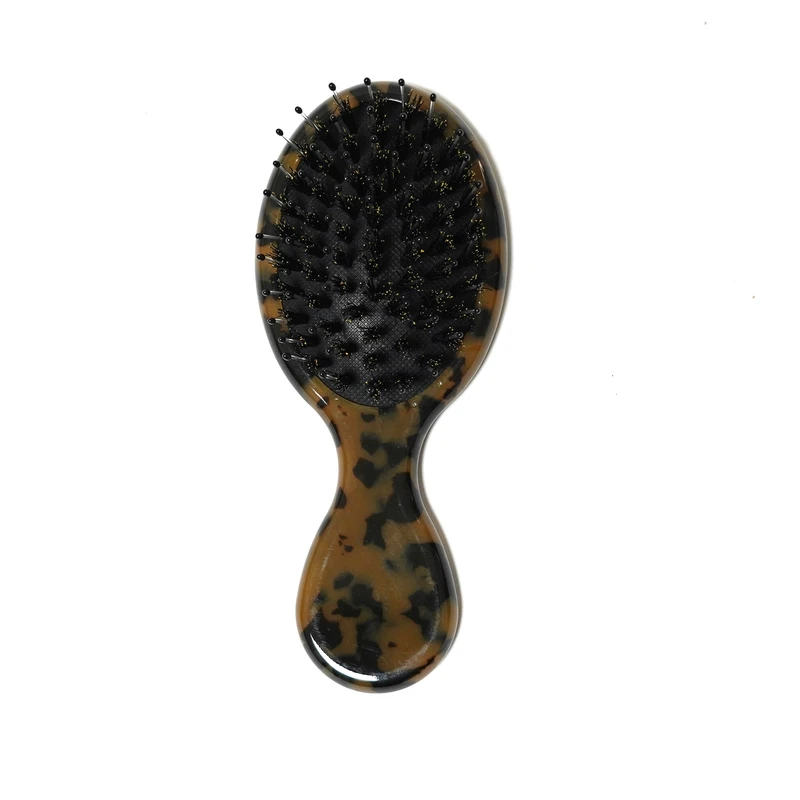
Stock molds remove the first tooling decision and let the buyer focus on a smaller set of variables: handle colour, bristle type, logo method, packaging and quantity. That can shorten the approval path and reduce the amount of inventory tied to one untested shape. It does not make every option available; an existing mold still has fixed dimensions, cavity details and assembly limits.
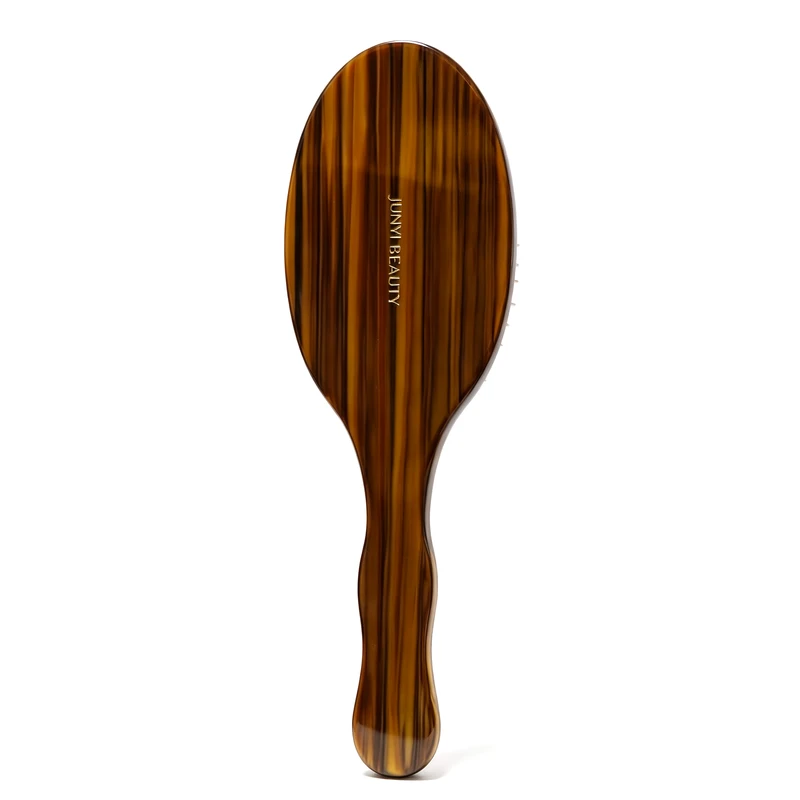
Before selecting a stock design, compare the brush head size, pin or bristle layout, handle balance, finishing surface and available packaging. A lower development quantity is useful only when the resulting product still fits the brand’s channel and customer need.
How to Define a Low-MOQ Hair Brush Brief
Low-MOQ planning works best when the first SKU has a controlled specification. A startup can often reduce complexity by selecting one body shape, one core function and a limited colour range. The decision should be driven by the sales test, not by removing safety or performance checks.
| Specification | Lower-risk launch choice | Question to record |
|---|---|---|
| Body | Existing mold | Which dimensions and cavity details are fixed? |
| Colour | One or two colours | Is the minimum per colour or per style? |
| Branding | One logo method | Where is the logo placed and how is it checked? |
| Packaging | One approved format | Does packaging have its own minimum? |
A usable brief names the brushing job before it names the decoration. State whether the brush is intended for detangling, smoothing, blow-drying, scalp contact or travel use. Then record the head size, pin or bristle layout, cushion, handle, colour, logo and package. This order of decisions helps a startup reduce variants without removing the checks that protect function and safety.
Low MOQ is also a question of what remains fixed. An existing brush platform may hold the head dimensions and assembly method constant while allowing a colour or logo change. A modified platform may alter a handle, surface or package. A new mold can change the shape but adds a separate development decision. Ask the supplier to identify which parts are fixed, which parts are adjustable and which parts create a new setup.
How Customization, Packaging and Colours Change the MOQ
Custom handles, new bristle layouts and special cushions may introduce development work even when the order is small. Logo placement can also affect setup, especially when printing, stamping or a metal plate is required. Ask for the one-time development items and the recurring production items separately.
A mixed order can be commercially sensible, but the factory must confirm whether the variants share the same tooling and process. Different materials, colours or assembly steps can create separate setup requirements. The buyer should keep a variant matrix showing SKU, colour, logo, package and quantity so the minimum is visible for every line.
Sampling Before a Small Production Run
For sample planning, see the private-label brush customization guide and record the approved construction.
A low quantity does not remove the need for a sample. The sample should confirm the shape, opening or brushing action, surface finish, logo position, colour reference and packaging fit. If a sample is approved, retain the approval file and identify the version used for production.

What to put in the approval record
- SKU and colour reference
- Brush dimensions and material notes
- Logo artwork and placement
- Packaging version
- Open points and the person approving them
Packaging can create a second minimum even when the brush itself is available at a small quantity. Printed boxes, inserts, labels and export cartons may have their own setup or production limits. If a startup wants a short test run, compare a standard package, a private-label sleeve and a fully custom retail box as separate routes. This makes the launch choice visible instead of hiding packaging inside the unit price.
How to Compare Low-MOQ Quotes and Reorder Risk
Buyers can also review the hair brush logo options page when comparing branding setup.
Compare quotes on the same basis. A unit price without the quantity tier, packaging scope, logo setup and delivery terms cannot show the real launch cost. Request a line-by-line breakdown and record which assumptions are provisional.
For a first order, the practical comparison is often between a stock-mold route with limited variants and a custom route with more development control. The lower initial quantity may not be the lowest total cost if a later redesign makes the first packaging or inventory unusable.
When comparing quotes, separate the unit price from one-time setup, sampling, packaging and freight assumptions. A supplier-specific MOQ is a commercial condition, not a universal technical standard. Search results show examples ranging from stock-style quantities around 120 or 300 pieces to higher levels for modified or new-mold projects; those figures are useful for forming questions, not for promising a market-wide threshold.
Questions to Ask a Hair Brush Manufacturer
- What is the MOQ per style, colour and package?
- Which existing molds match the required dimensions?
- Can colours or variants be mixed in one order?
- Which sample is the production reference?
- Which costs are one-time setup items?
- What inspection records are available before shipment?
Planning a Test Order Without Losing Control
A test order should answer a commercial question, such as whether a brush suits a target hair type or whether a colour works in a chosen channel. Keep that question visible when selecting the quantity. Ordering many variants at once can create a large amount of slow-moving stock while making it difficult to identify which feature drove demand.
Prepare a simple launch sheet with the SKU, planned quantity, unit assumptions, package count and reorder trigger. The sheet is not a factory promise; it is a way to compare the quote with the sales test. If a variant is below the supplier’s minimum, decide whether to remove it, combine it with another colour, or postpone it.
When to move from stock to custom
A custom mold is more defensible when the shape is central to the brand, the existing range cannot meet the brushing brief, or repeat demand is strong enough to justify development. A startup can first validate the brushing function and channel with a stock platform, then carry the measured feedback into a custom brief.
Documenting this sequence helps the buyer avoid treating an early stock order as a permanent product decision. It also gives the manufacturer a clearer specification when a later custom project begins.
Plan the reorder before the first shipment
Ask how a repeat order will use the same colour reference, packaging file and approved sample. A low first quantity is useful only if the second order can be reproduced without rebuilding the specification. Record the expected reorder quantity, the acceptable colour tolerance and the point at which a new production setup may be needed.
Also check how cartons are packed and how many units fit a standard carton. Freight and storage decisions can change the practical value of a low MOQ. A clear carton plan helps the startup compare a small test shipment with a larger consolidated order without mixing product and logistics assumptions.
Keep the commercial assumptions visible
When comparing a small first order with a larger order, keep quantity, colour count, packaging and freight assumptions in separate lines. This prevents a low unit price from hiding a minimum that the launch cannot meet. It also makes the next quote easier to compare because the buyer can change one assumption at a time.
A controlled first order is valuable because it creates evidence for the next decision: which brush works, which colour sells, and which specification should be repeated. The quantity is only one part of that learning cycle.
Before approving the first run, ask how a reorder will use the same colour reference, artwork file, approved sample and package specification. A small first order is only low-risk if the next order can be reproduced without rebuilding the brief. Record the reorder trigger, acceptable colour variation and any point at which a new setup may be required.
For quality planning, ask what records are available before shipment. ISO 9001 describes a quality-management system framework rather than a product-specific guarantee, so a buyer should still identify the actual inspection points for dimensions, pins, cushion recovery, logo placement and packaging. A package using retail barcodes should also be planned with the buyer’s product-identification requirements in mind.
For a neutral explanation of quality-management systems, see ISO 9001 quality-management requirements. For trade-item identification, see the GS1 barcode guidance. These sources explain general systems and identifiers; they do not set a hair-brush MOQ.
FAQ
For a broader product-development checklist, read the custom hair brush bulk-order guide.
Can a startup order one small batch of custom hair brushes?
Sometimes. The feasible quantity depends on the mold, colour, branding, packaging and production setup. Ask for a written MOQ by SKU and colour instead of relying on a general “low MOQ” statement.
Is a stock mold always cheaper?
It can reduce tooling and development work, but the product may have fixed dimensions or limited customization. Compare the full launch specification, not only the tooling line.
Can several colours count toward one MOQ?
Some projects allow mixed colours, while others apply a minimum per colour. The rule must be confirmed for the specific style and recorded in the quotation.
Low-MOQ sourcing is a specification and risk-control exercise. The related stock-mold MOQ guide and custom hair brush guide provide additional planning references. Manufacturers such as JunYi Beauty can be evaluated against the same documented brief, sample and inspection questions used for any B2B supplier.