
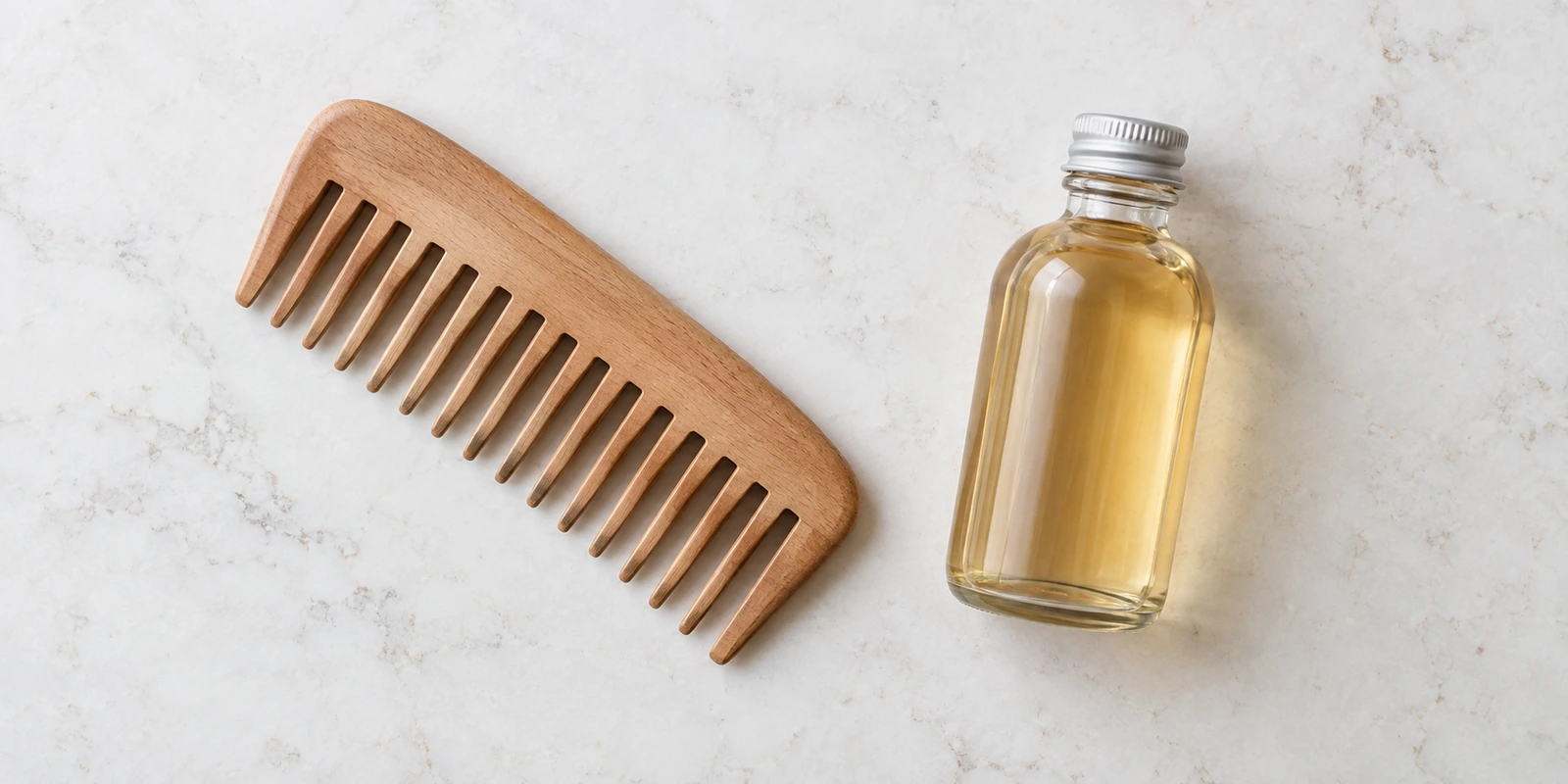
The “vinegar comb” trend involves soaking a comb — usually a wide-tooth or wooden comb — in diluted apple cider vinegar before running it through the hair, with videos claiming the practice boosts shine, balances scalp pH, removes product buildup, and even accelerates hair growth. Like most single-technique viral hair trends, it contains a genuine, well-established mechanism wrapped in claims that extend well past what that mechanism can actually deliver.
This article separates what vinegar rinsing genuinely does for hair and scalp from what the trend’s more dramatic claims assert, examines whether the “comb” delivery method adds anything beyond a standard vinegar rinse, and covers how to try it without damaging hair or the comb itself. For the broader comb category and material considerations relevant to this trend, see our guide on types of hair combs.
What the Vinegar Comb Trend Actually Involves
The technique, as it typically appears in viral content, involves diluting apple cider vinegar (ACV) or, less commonly, white vinegar with water — ratios in circulating videos range widely, from roughly 1 part vinegar to 3 parts water up to much more dilute mixes — soaking a comb (a wide-tooth comb and wooden combs are the most commonly featured) in the mixture for a period ranging from a few minutes to overnight, then combing the vinegar-soaked comb through dry or damp hair, sometimes as a leave-in step and sometimes followed by a rinse.
Some versions of the trend apply the diluted vinegar as a full scalp and hair rinse after shampooing, with the comb serving mainly as the tool used to distribute the liquid evenly through the hair — functionally closer to a standard apple cider vinegar rinse, a hair care practice that predates the specific “comb” framing by many years, than to a fundamentally new technique.
What Vinegar Rinses Genuinely Do
pH Balancing and Cuticle Smoothing
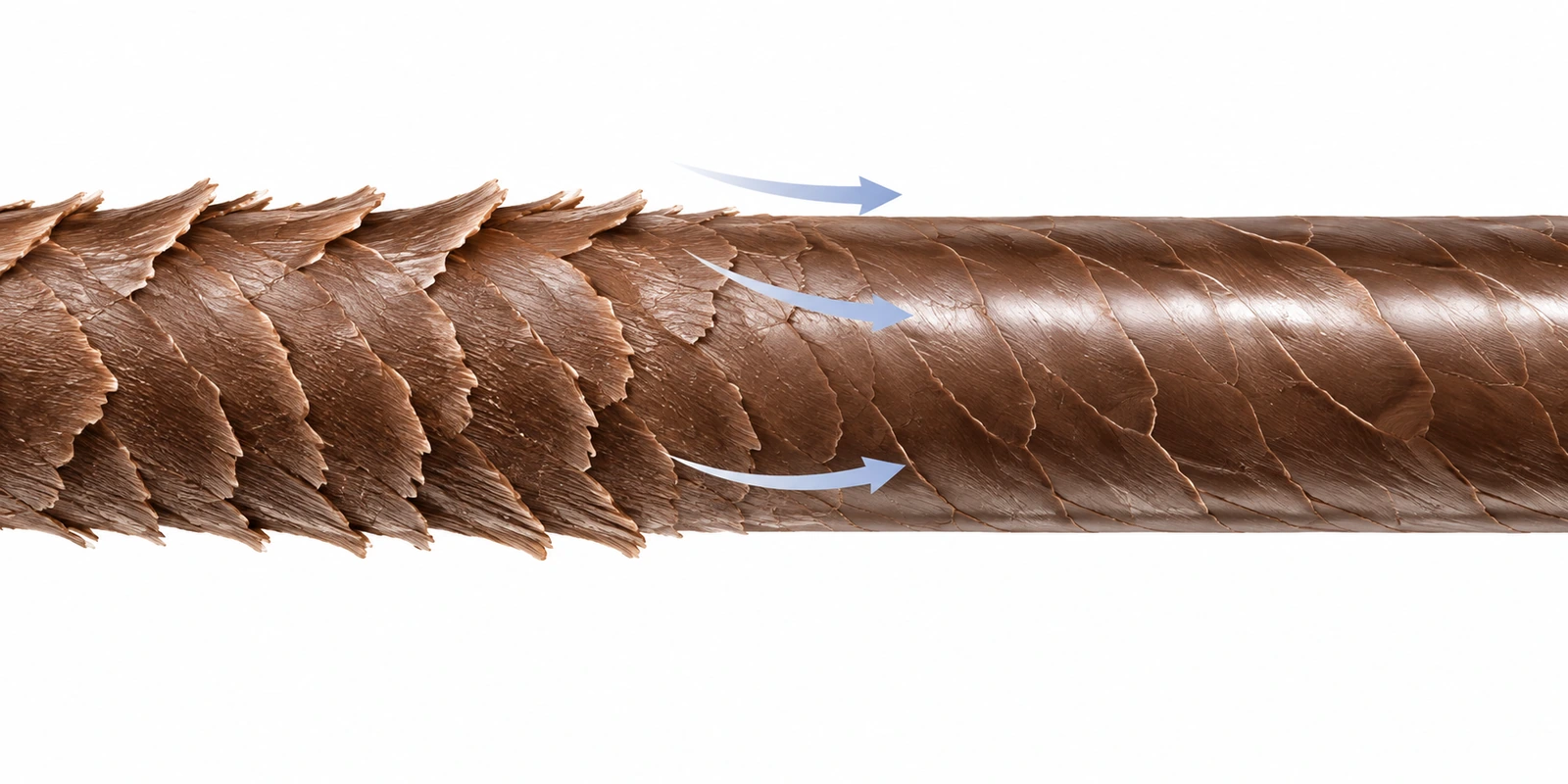
Hair and scalp have a naturally slightly acidic pH, typically in the range of 4.5 to 5.5. Many shampoos, particularly those formulated for deep cleansing, are more alkaline, which can leave the hair cuticle in a temporarily raised, less smooth state after washing. Diluted vinegar, being acidic, can help shift the hair surface back toward its natural pH range, which encourages the cuticle scales to lie flatter. This is a genuine, chemically sound mechanism, and it is the basis for vinegar rinses being a long-standing, non-trend hair care practice used by stylists and consumers well before the recent viral cycle.
Visible Shine Improvement
The cuticle-smoothing effect described above produces a real, visible shine improvement in many hair types, for the same reason covered in our article on whether boar bristle brushes genuinely reduce frizz: flatter cuticle scales reflect light more coherently than raised, disrupted ones. This is one of the more consistently reproducible and genuinely evidence-supported benefits attributed to vinegar rinsing.
Product Buildup Removal
Vinegar’s mild acidity can help dissolve some types of mineral and product buildup on the hair shaft and scalp, complementing (though not replacing) a proper clarifying shampoo. This is a real, if modest, effect and is one of the more defensible reasons the practice has persisted in hair care advice for decades.
Reduced Tangling in Some Hair Types
The smoother cuticle surface produced by a vinegar rinse can make hair feel less prone to tangling immediately after use, since smoother cuticle scales create less friction and inter-strand catching during detangling. This is a real, if modest and temporary, mechanical benefit.
What the Trend’s More Dramatic Claims Get Wrong
Significant Hair Growth Acceleration
Some trend content frames vinegar rinsing, and specifically the vinegar-soaked comb technique, as a hair growth stimulant. There is no established mechanism by which topical vinegar application meaningfully accelerates the biological process of hair growth at the follicle. The pH-balancing and buildup-removal effects described above may create marginally better conditions for the hair that is already growing to look and feel healthier, but this is different from stimulating additional or faster growth, and no credible evidence supports the growth-acceleration claim specifically.
“Detoxifying” the Scalp
As with several other viral scalp-care trends, “detox” claims applied to vinegar rinsing are not scientifically meaningful in the way the term is used. Vinegar can help remove some surface buildup, which is accurately described as mild cleansing or clarifying, not detoxification — there are no toxins being extracted from the scalp through this process.
Reversing Grey Hair or Significant Damage Repair
No amount of vinegar application reverses greying, which is driven by reduced melanocyte activity in the hair follicle and is not affected by surface-level acidic rinses. Similarly, while a vinegar rinse can improve the surface appearance of mildly compromised hair through the cuticle-smoothing mechanism, it does not repair structural protein damage in the cortex the way a genuine protein treatment can — the improvement is cosmetic and surface-level, not restorative at the structural level.
The Comb Itself Adding a Distinct Mechanism
A significant part of the trend’s framing implies that soaking the comb specifically — as opposed to simply applying a diluted vinegar rinse to the hair directly, with or without a comb — is what produces the benefit. Mechanically, this does not hold up. The active ingredient is the diluted vinegar making contact with the hair and scalp; the comb is a delivery and distribution tool, not a source of additional benefit beyond what direct application would achieve. A vinegar rinse applied by hand or with a spray bottle, combined with a standard wide-tooth comb used afterward to distribute it evenly, produces essentially the same outcome as the specific “vinegar-soaked comb” framing that has driven the trend’s viral spread.
Does the Comb Choice Matter?
Wide-Tooth Comb
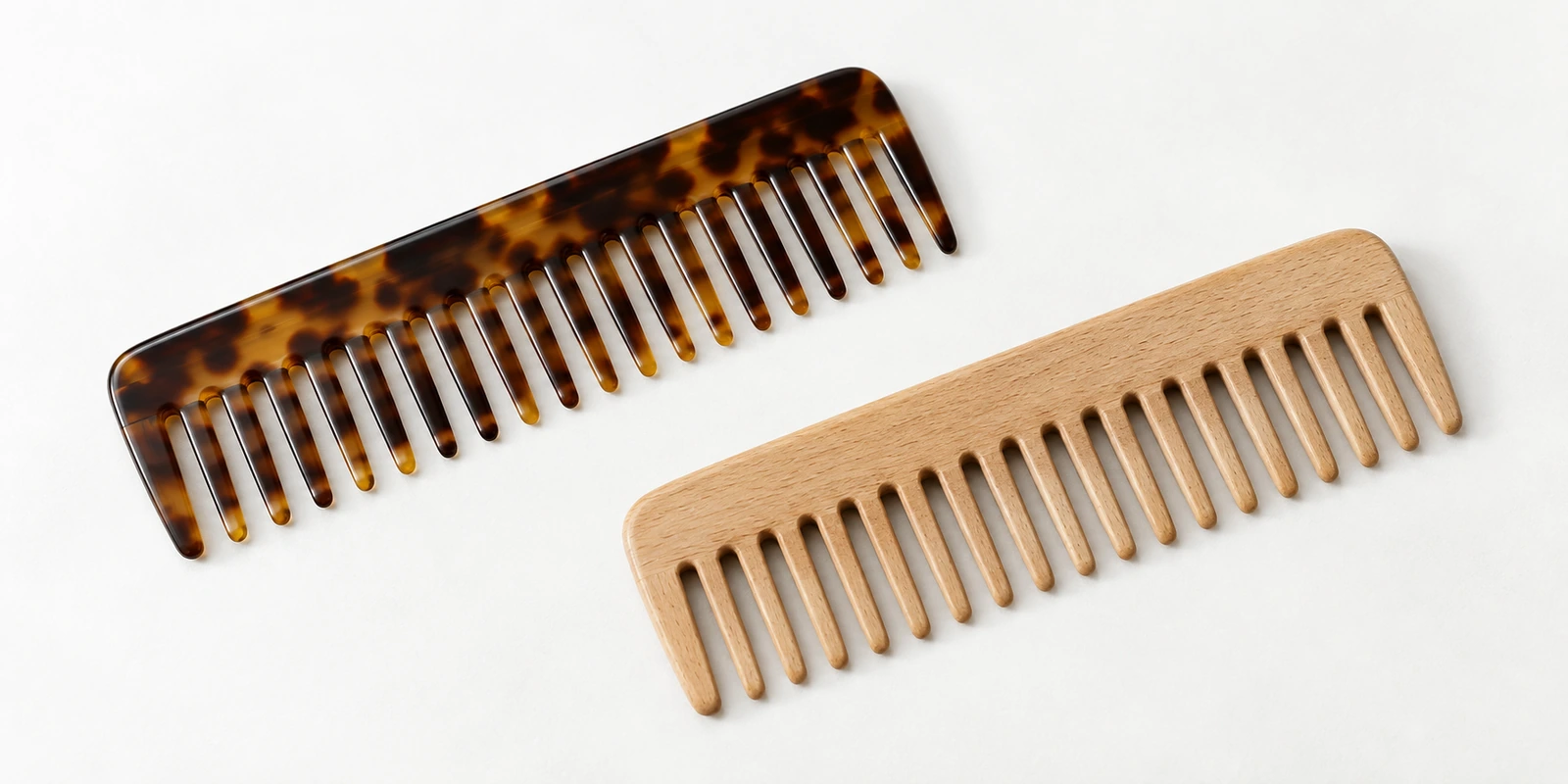
A wide-tooth comb is the most commonly featured tool in vinegar comb content, and it is also the mechanically sound choice regardless of the vinegar component — its lower contact-point density distributes liquid evenly through the hair with minimal mechanical stress, consistent with the general principle covered in our types of hair combs guide that wide-tooth combs are the appropriate tool for product distribution through wet or damp hair.
Wooden Combs
Wooden combs also appear frequently in this trend’s content, sometimes with claims that wood specifically enhances the vinegar’s effect. There is no established mechanism by which wood material interacts with vinegar to produce an enhanced effect beyond what the vinegar itself does. Wood’s genuine advantages — lower friction against the hair shaft, some natural oil absorption — are real properties of the material in general use, covered in our comb materials overview, but they are independent of, not amplified by, the vinegar-soaking step.
A Practical Note on Repeated Vinegar Exposure and Comb Material
Repeated soaking in an acidic liquid is not neutral for every comb material. Untreated or poorly sealed wooden combs can absorb moisture from repeated vinegar soaking, which — as with any repeated wet exposure — risks warping or weakening the wood over time, a durability consideration covered in the material section of our comb types guide. Metal combs, particularly lower-grade or uncoated metal, can be more susceptible to corrosion from repeated acidic exposure than from plain water contact. Cellulose acetate and standard plastic combs are generally more tolerant of occasional vinegar exposure than wood or uncoated metal, making them a more durable practical choice for anyone trying this technique repeatedly rather than as a one-off.
How to Try a Vinegar Rinse (or Vinegar Comb) Safely
Dilution Matters
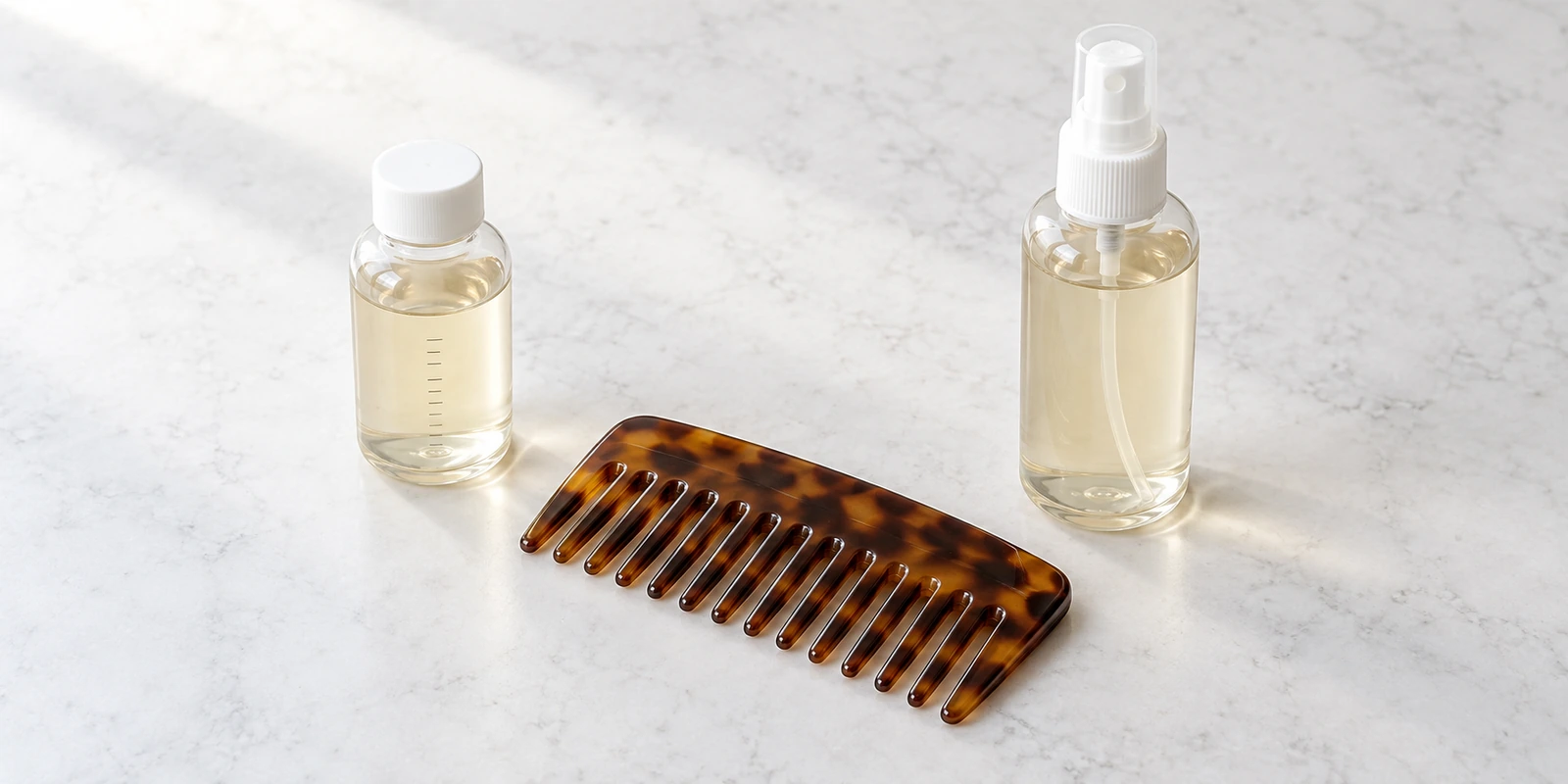
Undiluted or lightly diluted vinegar is acidic enough to cause scalp irritation, dryness, or in some cases mild chemical burns with repeated undiluted contact, particularly on sensitive or already-compromised skin. A dilution in the range of roughly 1 part vinegar to 3–4 parts water is a reasonable, commonly recommended starting point; more sensitive scalps should dilute further.
Patch Test First
Before applying any new product or dilution to the full scalp, a small patch test on a less visible section of skin — the inner wrist or behind the ear, left for 24 hours — is a reasonable precaution, particularly for anyone with a history of skin sensitivity or scalp conditions.
Rinse or Leave-In
Some routines rinse the diluted vinegar out with water after a few minutes; others use it as a leave-in step. A rinse-out approach is generally the more cautious starting point, particularly for sensitive scalps, since it limits total contact time with the acidic solution.
Frequency
Once or twice weekly is a reasonable frequency for most hair types attempting a vinegar rinse routine. Daily use is unnecessary for the buildup-removal and shine benefits the practice can genuinely deliver, and increases the cumulative risk of scalp dryness or irritation without proportional additional benefit.
Who Should Be More Cautious
Consumers with sensitive skin, active scalp conditions (eczema, psoriasis, open irritation), or a known sensitivity to acidic topical products should approach this practice cautiously or avoid it, and consult a dermatologist if uncertain. Colour-treated hair can, in some cases, experience subtle colour shifts from repeated acidic rinsing, so testing on a small section first is a reasonable precaution for colour-treated hair specifically.
Sourcing Considerations for B2B Buyers
For buyers evaluating whether to respond to viral comb trends with dedicated product development, the vinegar comb trend illustrates a useful general pattern in trend-driven demand for hair tools.
The Comb Itself Doesn’t Need Trend-Specific Engineering
Because the trend’s actual mechanism sits in the vinegar solution rather than in any special property of the comb, there is no genuine product engineering opportunity in developing a “vinegar comb” as a distinct SKU with different specifications from a standard wide-tooth comb. A standard, well-specified wide-tooth comb in a material tolerant of occasional liquid exposure — cellulose acetate or standard plastic rather than untreated wood — already serves this use case adequately.
Search Demand Still Has Commercial Value
Even where the underlying mechanism doesn’t justify new product engineering, trend-driven search demand (search volume for “vinegar comb,” “ACV rinse comb,” and related terms spikes during viral cycles) creates a legitimate content and positioning opportunity — directing that search traffic toward an existing, well-specified wide-tooth comb product rather than developing an unnecessary new SKU is the more defensible commercial response.
Claim Discipline Protects Brand Credibility
Any content or packaging that references this trend should stay within the genuinely supported claims — shine, cuticle smoothing, mild buildup removal — and avoid the growth-acceleration and detox framing that dominates much of the trend’s social content. Overreaching claims tied to a specific viral trend are particularly exposed to consumer skepticism once the trend’s novelty fades and more critical coverage (of the kind this article represents) becomes more visible in search results.
Material Guidance as a Value-Add
For buyers selling wide-tooth or wooden combs into markets where this trend has driven search interest, care guidance addressing the material durability question — particularly for wooden combs subjected to repeated liquid exposure — is a genuinely useful content and packaging addition that few competitors are likely to have addressed.
Wide-tooth combs in cellulose acetate, standard plastic, and wood, suited to both general detangling use and occasional liquid-exposure routines like vinegar rinsing, are available through OEM and private label manufacturing routes.
Frequently Asked Questions
Does the vinegar comb trend actually work?
The underlying mechanism — diluted vinegar’s mild acidity smoothing the hair cuticle and helping remove buildup — is genuine and well-established, predating the recent viral trend by decades as a standard vinegar rinse practice. The more dramatic claims circulating in trend content, particularly significant hair growth acceleration and scalp “detoxification,” are not supported by how the mechanism actually works.
Does soaking the comb in vinegar add any benefit over a regular vinegar rinse?
No meaningful additional benefit. The active mechanism is the diluted vinegar making contact with the hair and scalp; the comb is simply the distribution tool. A standard vinegar rinse applied directly, followed by combing with any appropriate wide-tooth comb, produces essentially the same result as the specific vinegar-soaked-comb technique.
Is it safe to put vinegar on my scalp regularly?
Diluted vinegar (roughly 1 part vinegar to 3–4 parts water, or more diluted for sensitive scalps) applied once or twice weekly is reasonably safe for most people. Undiluted or lightly diluted vinegar, or very frequent use, increases the risk of scalp dryness or irritation. Anyone with sensitive skin or an active scalp condition should patch test first or consult a dermatologist.
Will vinegar make my hair grow faster?
No. There is no established mechanism by which topical vinegar application accelerates the biological process of hair growth at the follicle. It may improve the surface condition and appearance of existing hair through cuticle smoothing, which is a different and much more modest effect than accelerating growth.
What kind of comb should I use for a vinegar rinse?
A wide-tooth comb is the mechanically appropriate choice for distributing any liquid evenly through wet or damp hair with minimal mechanical stress. Material matters more for durability under repeated acidic exposure than for the treatment’s effectiveness — cellulose acetate or standard plastic tolerates repeated vinegar contact better than untreated wood or uncoated metal.
Can vinegar rinses affect hair colour?
Repeated acidic rinsing can, in some cases, cause subtle colour shifts in colour-treated hair. Testing on a small, less visible section before applying to the full head is a reasonable precaution for anyone with colour-treated hair who wants to try the practice.
Conclusion
The vinegar comb trend repackages a genuine, long-standing hair care practice — diluted vinegar rinsing for pH balance, shine, and mild buildup removal — inside viral framing that attributes benefits (significant growth acceleration, scalp detoxification) the underlying chemistry does not support. The comb itself adds no distinct mechanism beyond serving as a distribution tool; a standard vinegar rinse combined with any appropriate wide-tooth comb achieves the same genuine result. Used at a sensible dilution and frequency, and without expecting more than cuticle-smoothing and shine benefits, the practice is a reasonable, low-cost addition to a hair care routine — not the growth or detox breakthrough much of the trend’s content suggests.
For brands responding to viral comb-trend search demand with content and positioning rather than unnecessary new product development, manufacturers such as JunYi Beauty, which produces wide-tooth combs across cellulose acetate, plastic, and wood formats suited to both everyday detangling and occasional liquid-exposure routines from its Dongguan facility, represent the type of OEM partner suited to brands building trend-aware content on top of genuinely well-specified, versatile existing products.