
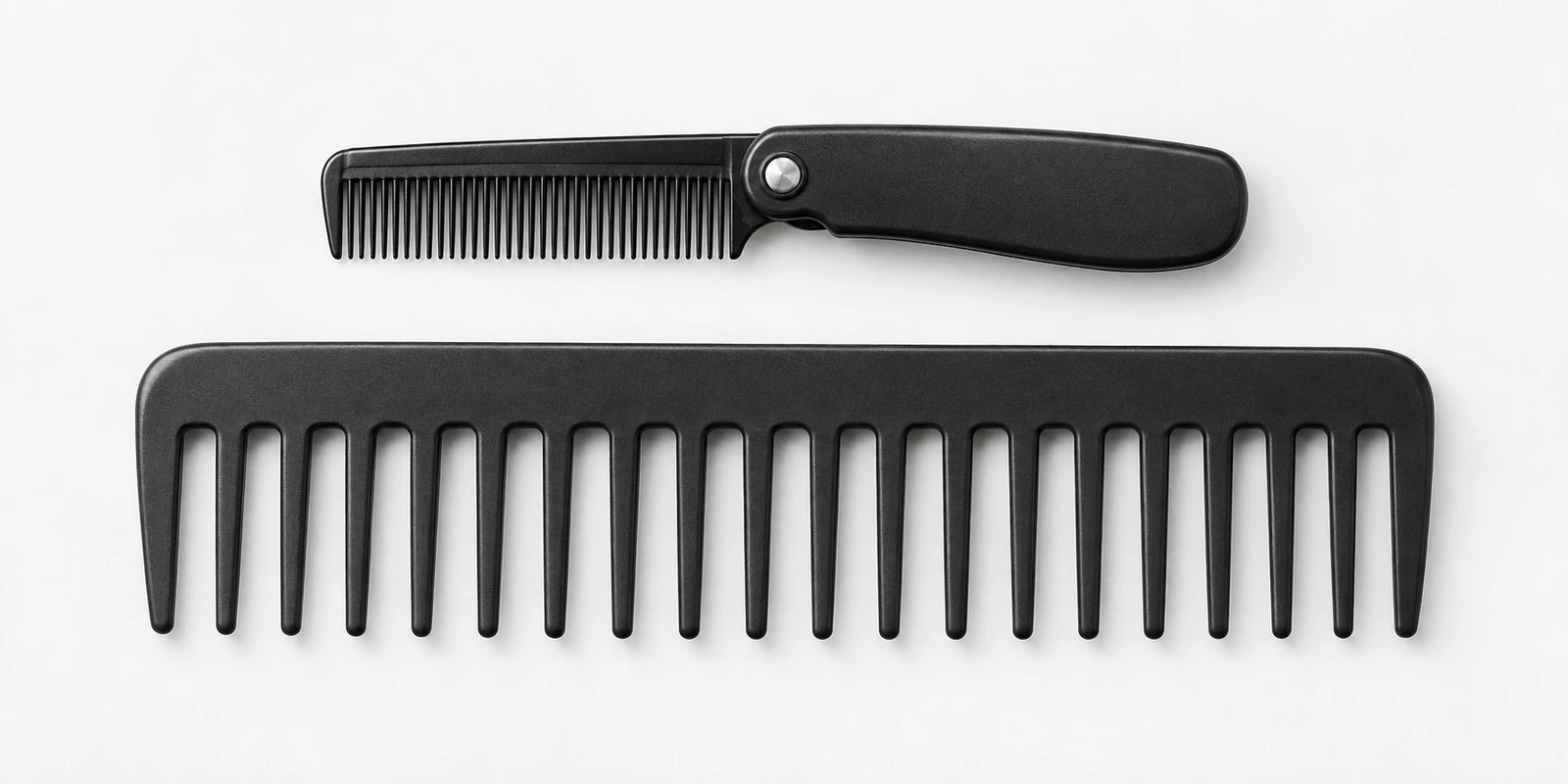
Pocket combs and full-size combs occupy different positions in a retail comb assortment, and the stocking decision is less about which is objectively better and more about which purchase occasions, price points, and customer segments each SKU actually serves. Both are genuinely useful products, but they compete for different shelf placements, different impulse-purchase triggers, and different margin structures — treating them as simple size variants of the same product undersells the distinct commercial roles each plays.
This guide compares pocket combs and full-size combs across function, materials and construction, retail positioning, margin economics, and merchandising, so buyers can build a stocking decision around actual sell-through behaviour rather than assuming one size fits all purchase occasions. For the broader comb category framework, see our guide on types of hair combs; for the professional-channel version of this size question, see our 12 types of professional hair combs guide.
What Distinguishes a Pocket Comb from a Full-Size Comb
Size and Portability
A pocket comb is typically 3 to 5 inches long, designed to fit in a pocket, bag, or small travel case without adding meaningful bulk. A full-size comb — whether wide-tooth, fine-tooth, or styling — generally runs 6 to 8 inches or longer, sized for full-hand grip and efficient coverage of larger sections of hair in fewer strokes.
Tooth Configuration
Pocket combs often use a single, moderate tooth spacing across their full length, prioritising general-purpose versatility in a compact footprint over the specialised tooth zones found in larger combs. Some pocket combs include a dual-density design (fine teeth on one half, wider on the other) to add some versatility despite the compact size, but this is less common than in full-size styling combs where there’s more room for a true dual-zone design.
Folding Mechanisms
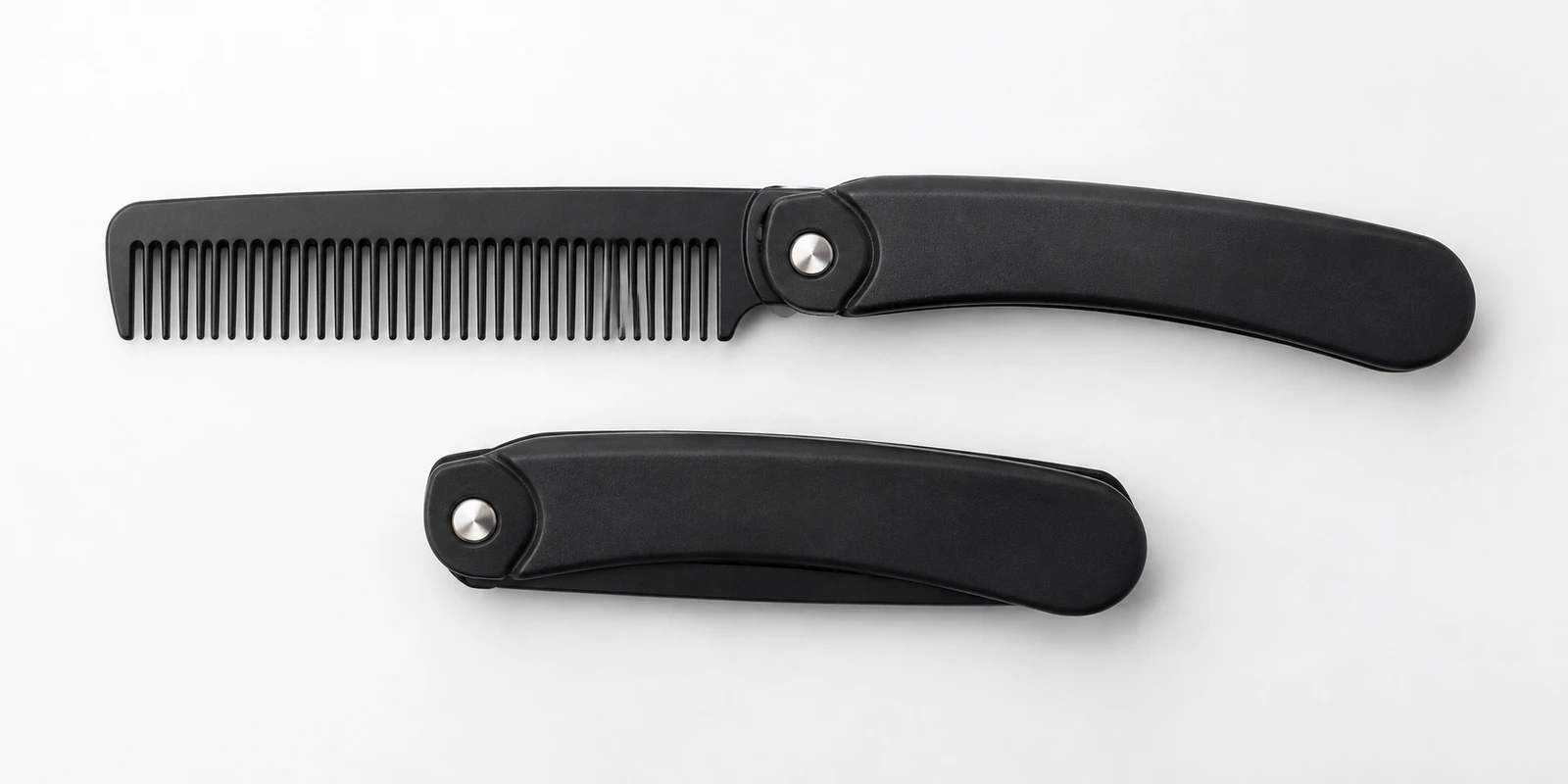
A meaningful share of pocket combs include a folding mechanism, where the tooth section folds into a protective handle or sleeve when not in use — a feature almost never found on full-size combs, since the size that makes folding worthwhile (protecting teeth during pocket or bag carry) is specific to the compact-carry use case.
Function: What Each Size Is Actually Used For
Pocket Comb Use Cases
Quick touch-ups throughout the day — smoothing flyaways, resetting a part, general maintenance between full styling sessions. Travel grooming, where luggage space and weight are genuine constraints. Beard and facial hair maintenance, where a compact size is often better suited to the smaller grooming area than a full-size comb. Barber and stylist tool-belt carry, where a compact comb supplements a fuller kit for quick access during a service.
Full-Size Comb Use Cases
Complete detangling sessions covering the full head of hair efficiently. Precise sectioning and styling work requiring the longer tooth section and, in styling combs, the dual-density zones full-size construction allows. Salon and barbershop primary-use tools, where the comb is the main working tool for a full service rather than a supplementary touch-up item.
The two sizes are not competing for the same purchase occasion — a pocket comb rarely substitutes adequately for a full detangling session on long or thick hair, and a full-size comb is rarely what someone reaches for to fix a stray hair while out during the day.
Retail Positioning and Purchase Occasion
Pocket Comb: Impulse and Convenience Purchase
Pocket combs are frequently positioned as checkout-adjacent impulse purchases, travel-section items, or low-price-point add-ons to a larger purchase. The purchase decision is typically fast and low-consideration — price sensitivity is high, and the primary purchase drivers are portability and low cost rather than detailed specification comparison.
Full-Size Comb: Considered, Function-Driven Purchase
Full-size combs are more commonly a considered purchase, where the buyer is evaluating tooth spacing, material, and hair-type fit against a specific need — a genuinely tangled or thick head of hair, a particular styling technique, or a professional use case. This purchase occasion supports more detailed packaging communication and a wider material and price tier spread, since buyers are engaging more deliberately with the specification.
Materials and Construction Differences
Pocket Comb Materials
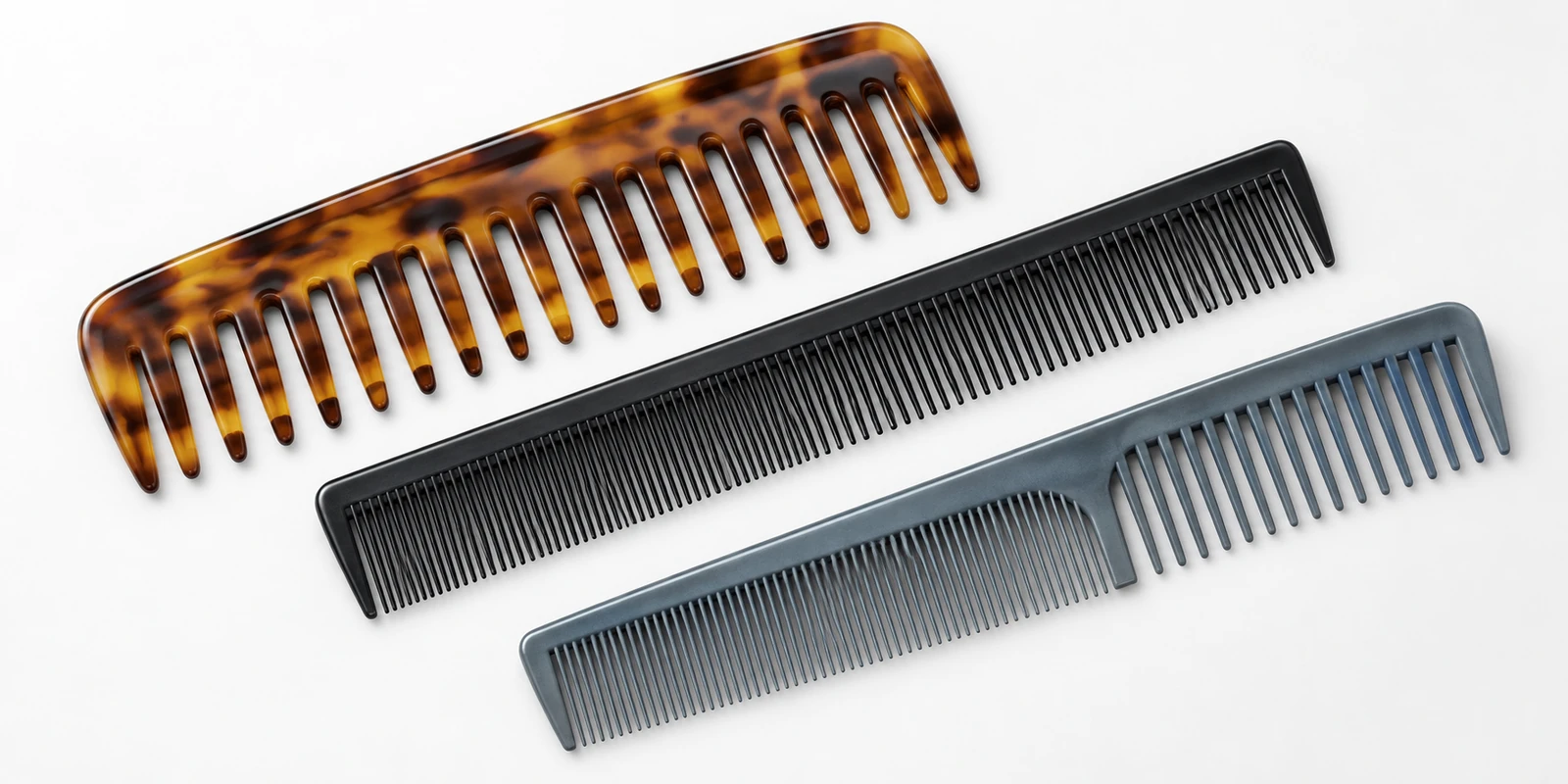
Given the low-price-point, high-volume nature of most pocket comb sales, standard injection-moulded plastic (ABS or PP) dominates this category. Premium pocket combs in cellulose acetate or carbon fiber exist and serve travel-oriented premium positioning, but the material spread in pocket combs skews heavily toward cost-efficient plastic relative to full-size combs, where premium material tiers see meaningfully more volume.
Pocket Comb Durability Considerations
Because pocket combs are carried in pockets, bags, and cases rather than stored flat on a surface, they experience more compression and bending stress in normal use than a stationary full-size comb. Material toughness under repeated flex and compression matters more for this category specifically than for full-size combs, and folding mechanisms — where present — need hinge durability specified explicitly, since hinge failure is a common pocket-comb complaint.
Full-Size Comb Materials
Full-size combs see the full material spread covered across our broader comb guides — standard plastic, seamless-finished ABS, cellulose acetate, carbon fiber, and titanium for professional sectioning and rat-tail formats, as detailed in our comparisons of carbon fiber vs ABS plastic combs and titanium combs vs carbon fiber combs. This wider material spread reflects both the broader range of use cases (mass-market through professional) and the more considered purchase behaviour that supports premium material positioning.
Margin and Volume Economics
Pocket Combs: Lower Unit Margin, Higher Volume Potential
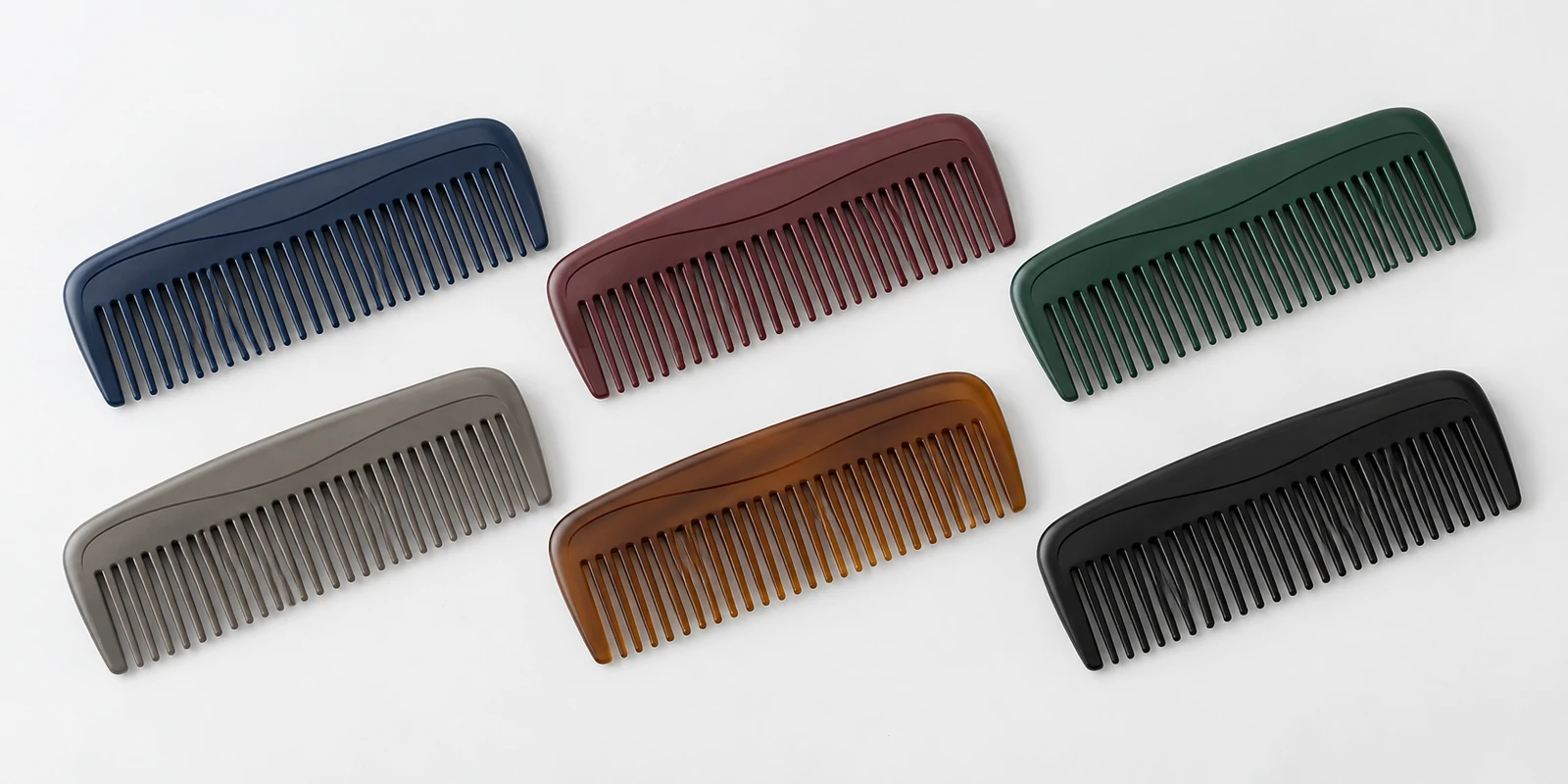
Pocket combs typically carry a lower absolute retail price and lower per-unit margin in dollar terms, but their low price point and impulse-purchase positioning can support higher unit volume — particularly as an add-on item that increases average transaction value without requiring the customer to make an additional considered purchase decision. Multi-packs (several pocket combs sold together, sometimes in different colours) are a common format that improves per-transaction economics for this category specifically.
Full-Size Combs: Higher Unit Margin, More Considered Volume
Full-size combs, particularly at premium material tiers, carry meaningfully higher per-unit margin in both percentage and dollar terms, but volume is more directly tied to genuine need and considered purchase behaviour rather than impulse add-on dynamics. A well-merchandised full-size comb range, spanning multiple material tiers, captures a wider range of price sensitivity within the considered-purchase customer base.
Combined Category Economics
A retail assortment carrying both sizes captures different parts of the same customer’s spending — a pocket comb as a low-consideration add-on alongside a primary full-size comb purchase, or as a standalone travel or gift-adjacent item. Treating the two sizes as a combined category with cross-merchandising (displaying pocket combs near full-size combs, or bundling a pocket comb into a full-size comb’s packaging as a bonus item) can improve overall category transaction value beyond what either size achieves independently.
Merchandising and Shelf Placement
Pocket Comb Placement
Checkout-adjacent placement, travel-section placement (near luggage, travel-size toiletries), and multi-pack end-cap displays are the most common effective placements for pocket combs, leveraging the category’s low-consideration, impulse-driven purchase behaviour.
Full-Size Comb Placement
Full-size combs perform better in a dedicated hair-tools section where customers are actively comparing options, often merchandised alongside brushes and other styling tools rather than near checkout, since the purchase decision benefits from side-by-side comparison and more deliberate browsing time.
Cross-Category Bundling
Pairing a pocket comb as a bonus or bundle item with a full-size comb, brush, or a broader hair-tool gift set is a practical way to introduce the pocket comb category to a customer already making a considered full-size purchase, supporting incremental category awareness without requiring a separate marketing push for the pocket comb line specifically.
Sourcing Considerations for B2B Buyers
For wholesale and retail buyers deciding how to allocate assortment space and sourcing budget between pocket and full-size combs, several practical principles apply.
Match material investment to purchase behaviour: Because pocket combs are predominantly impulse and low-consideration purchases, standard ABS at a low price point is the appropriate default material investment for the bulk of this category — premium material tiers in pocket combs serve a narrower, specifically travel- or gift-oriented premium segment rather than the core pocket comb customer.
Specify hinge durability explicitly for folding pocket combs: Where a pocket comb includes a folding mechanism, hinge cycle-durability (how many open-close cycles the hinge withstands before failure) should be a documented specification requested from the manufacturer, since this is the most common failure point in this specific sub-category.
Allocate material tier breadth to full-size combs: Because full-size comb purchases are more considered and support a wider price ladder, sourcing budget and material tier variety (standard, seamless ABS, acetate, and premium materials where relevant) is generally better allocated toward the full-size category, where buyers will actually engage with and pay for that differentiation.
Consider multi-pack formats for pocket combs specifically: Multi-pack and colour-variety packaging is a format that performs disproportionately well in the pocket comb category relative to full-size combs, reflecting the different purchase psychology (buying several low-cost items at once vs. selecting one considered full-size item) between the two segments.
Both pocket comb and full-size comb formats, across standard plastic, seamless ABS, and premium material tiers, including folding pocket comb mechanisms and multi-pack configurations, are available through OEM and private label manufacturing routes.
Frequently Asked Questions
Should a retail store stock both pocket combs and full-size combs?
Yes, generally — they serve different purchase occasions and customer psychology rather than competing for the same sale. Pocket combs perform well as impulse, checkout-adjacent, or travel-section items, while full-size combs serve considered purchases in a dedicated hair-tools section. Carrying both captures more of the total category spending than either alone.
Are pocket combs made from lower-quality materials than full-size combs?
Not inherently lower quality, but the material mix skews differently — pocket combs are predominantly standard ABS plastic given their low-price, high-volume, impulse-purchase positioning, while full-size combs see a wider spread across standard, seamless-finished, and premium materials reflecting more considered purchase behaviour and a broader use-case range including professional applications.
What’s the biggest quality issue with folding pocket combs?
Hinge durability is the most common failure point. A folding mechanism that doesn’t specify and meet a documented cycle-durability standard is prone to loosening or breaking under repeated daily open-close use, which is a common source of pocket comb returns and complaints.
Do pocket combs and full-size combs need different tooth spacing?
Not necessarily by category rule, but pocket combs more commonly use a single moderate tooth spacing for general versatility in a compact footprint, while full-size combs more often offer true dual-density zones (fine and wide teeth) given the additional length available to accommodate two distinct zones effectively.
What retail placement works best for pocket combs?
Checkout-adjacent displays, travel and luggage-adjacent sections, and multi-pack end-cap placements tend to perform well, since pocket comb purchases are typically low-consideration and impulse-driven rather than the result of active comparison shopping.
Is a full-size comb better value than a pocket comb?
They’re not directly comparable on value in the way two versions of the same product would be — a full-size comb serves complete detangling and styling sessions, while a pocket comb serves portability and quick touch-ups. Most customers benefit from having access to both rather than choosing one as a universal replacement for the other.
Conclusion
Pocket combs and full-size combs are not simply the same product at different sizes — they serve distinct purchase occasions, carry different margin and volume profiles, and warrant different material investment and merchandising strategies. Pocket combs capture impulse, travel, and touch-up purchase behaviour at a lower price point and predominantly standard-material construction; full-size combs capture considered, function-driven purchases across a wider material and price spread. A well-structured retail assortment stocks both, allocating sourcing budget and material tier breadth toward full-size combs where considered purchase behaviour supports it, while keeping pocket combs positioned around low-cost, high-volume, impulse-driven placement.
For retail and wholesale buyers building a comb assortment that reflects these distinct commercial roles, manufacturers such as JunYi Beauty, which produces both pocket comb formats (including folding mechanisms with documented hinge durability) and full-size combs across the full material tier spread from its Dongguan facility, represent the type of OEM partner suited to assortments built around genuine purchase-occasion segmentation rather than treating comb size as a simple variant question.