
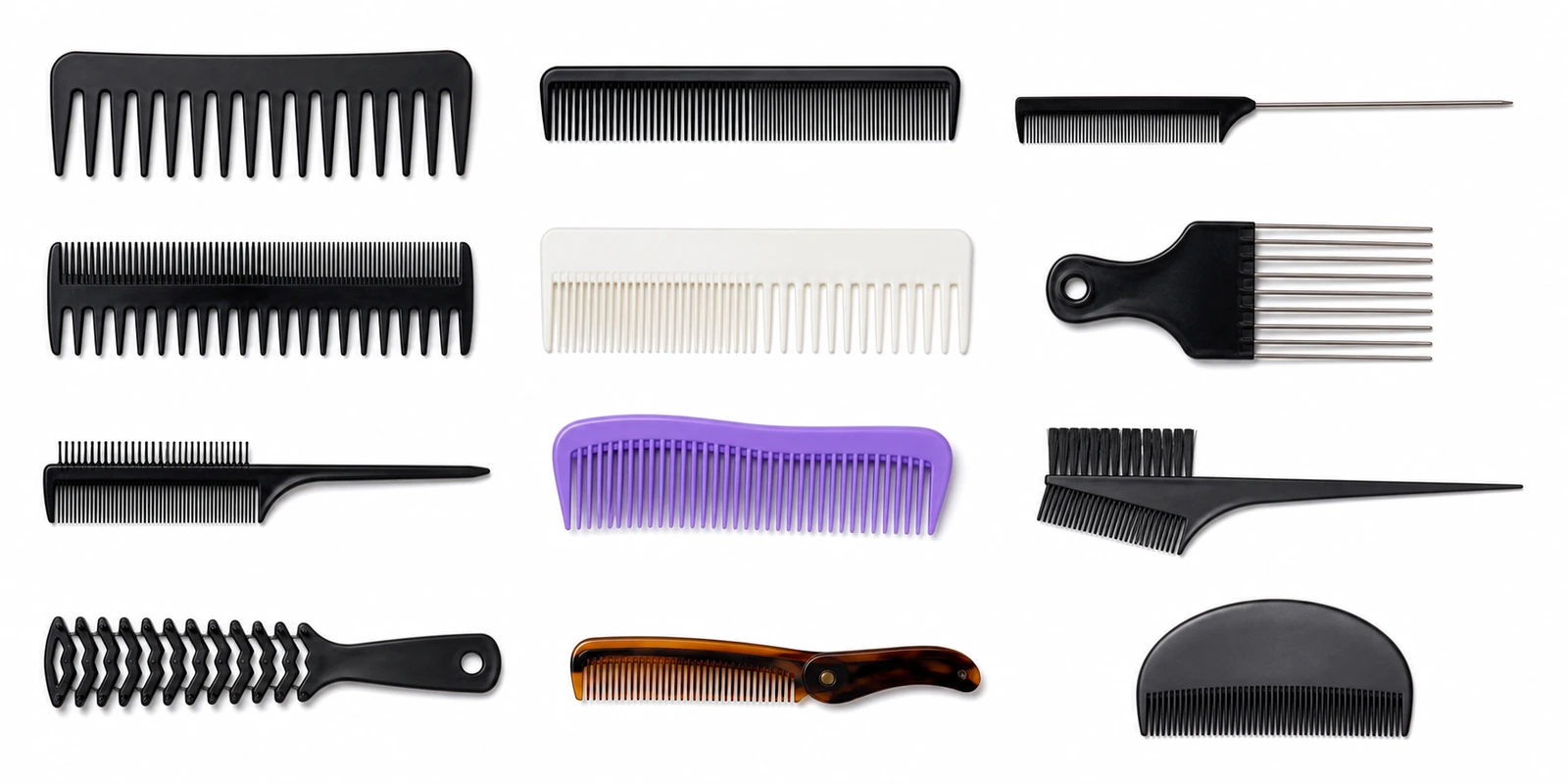
The professional comb category is far larger than the wide-tooth, fine-tooth, and rat-tail basics most buyers start with. Salon supply and wholesale ranges typically span a dozen or more distinct comb types, each engineered for a specific technical function within a stylist’s or barber’s daily workflow — sectioning, blending, colour application, teasing, fading, and general maintenance among them.
This guide profiles 12 professional comb types relevant to wholesale and B2B buyers building a salon supply or professional hair tool range, covering what each comb does, the material and construction variables that matter for that specific function, and where each fits in a well-structured wholesale catalogue. For the foundational comb mechanics and consumer-facing framework, see our guide on types of hair combs; for premium material specification, see our comparisons of carbon fiber vs ABS plastic combs and titanium combs vs carbon fiber combs.
1. Wide-Tooth Comb
Widely spaced teeth (typically 5–8mm apart) reduce contact-point density per stroke, making this the standard tool for wet detangling, product distribution, and pre-wash detangling across all hair types — particularly curly, coily, and thick hair. It is a near-universal SKU in any professional range and typically the highest-volume mover in a wholesale comb catalogue given its use across nearly every service type.
Wholesale note: Available at low MOQ across virtually every manufacturer tier, making it a reliable anchor SKU with minimal sourcing risk.
2. Fine-Tooth Comb
Closely spaced teeth (1–2mm apart) engage maximum strand contact per stroke, producing the smooth, polished results needed for sleek styles, precise product distribution on straight hair, and finishing work on already-detangled sections. A standard fixture in barbershop and salon kits for daily styling and product work.
Wholesale note: Frequently paired with wide-tooth combs in starter kit bundles for new stylists or salon supply starter packs.
3. Rat-Tail / Pin-Tail Comb
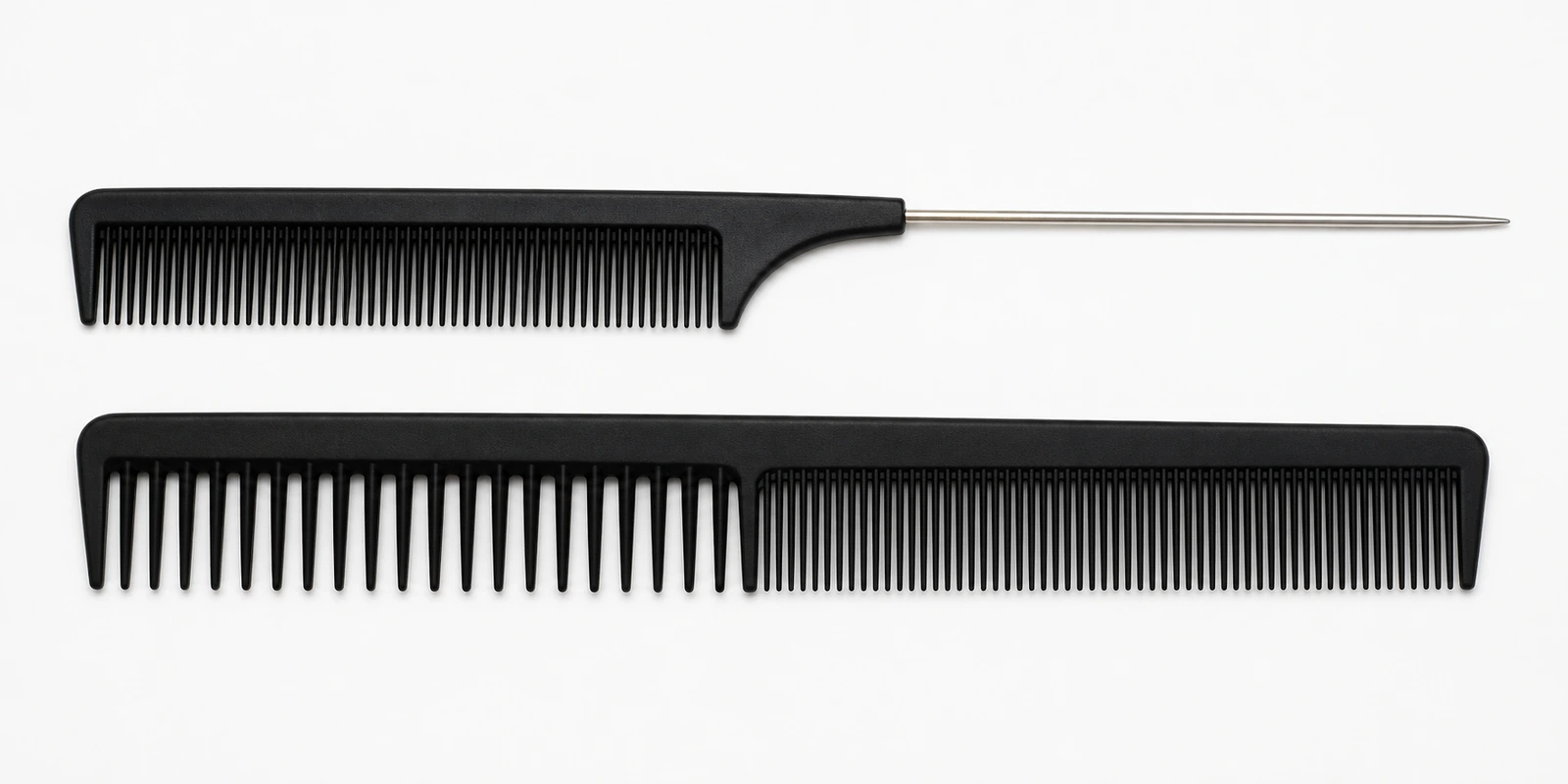
A tooth section combined with a long, pointed tail used for precise scalp sectioning during colouring, highlighting, and styling. As covered in detail in our pin tail vs rat tail comb comparison, the two names largely describe the same tool, with genuine variation found in tail material (stainless steel vs. plastic) and tail gauge rather than in the naming itself.
Wholesale note: A core SKU for any colourist- or salon-focused range; stainless steel tail versions command premium pricing and are worth stocking as a distinct tier from plastic-tail consumer versions.
4. All-Purpose Styling / Cutting Comb
A dual-density comb with a fine-tooth zone at one end and a wider-tooth zone at the other, used for guiding scissors during cuts, lifting sections, and general barbershop styling. Its versatility makes it one of the most consistently carried combs in any barber or stylist kit — often the single most-used tool on a working day.
Wholesale note: High repeat-purchase item given daily wear in professional settings; durability of the dual-density tooth transition zone is a quality differentiator worth specifying explicitly to manufacturers.
5. Teasing / Backcombing Comb
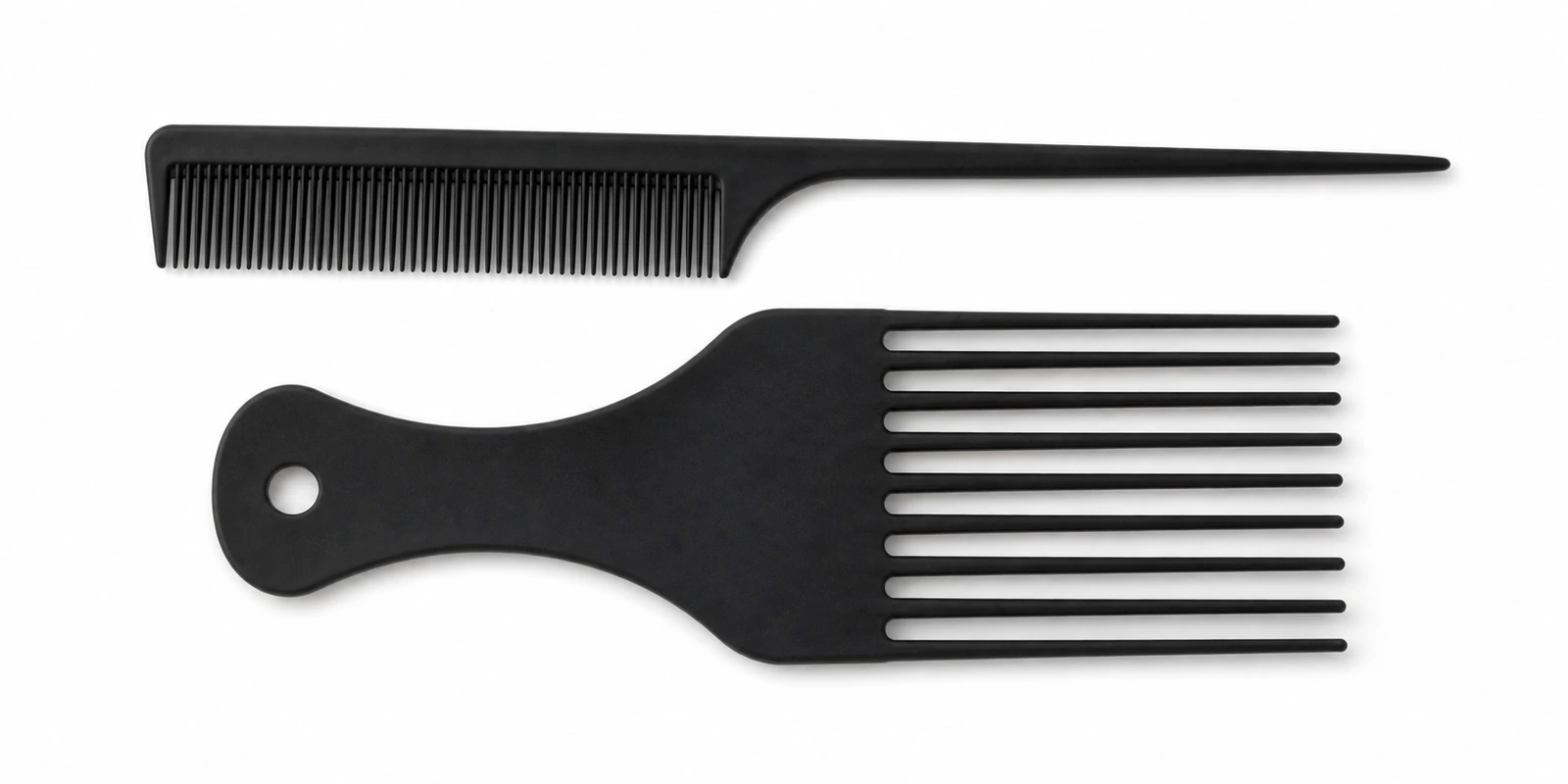
Short, tightly spaced fine teeth combined with a pointed tail, designed to create root volume through controlled backcombing. Covered in full technical detail — including correct technique and the removal process that determines whether the tool produces damage — in our teasing comb guide. Some models include a small brush section on the reverse for smoothing the top layer after backcombing.
Wholesale note: A specialty item with lower unit velocity than general-purpose combs but higher margin potential; positioning around correct-use education (rather than risk-free marketing) supports better long-term brand credibility.
6. Afro Pick
Long, widely spaced, rounded prongs designed to lift and shape afro-textured, coily, and very curly hair from the root without compressing curl structure — a function standard wide-tooth combs cannot replicate at the same penetration depth. An essential SKU for any range serving textured-hair-focused salons or retail segments.
Wholesale note: Handle material (wood, metal, or moulded plastic) and prong flexibility are the key specification variables; metal picks require rounded, polished tips to avoid scalp scratching.
7. Detangling Comb
Widely spaced teeth engineered to flex or taper under tension rather than pulling through knots with consistent resistance, positioned between a standard wide-tooth comb and a flexible detangling brush in mechanical philosophy. Particularly effective for very tangled, fragile, or fine hair where reducing peak force at each knot matters more than raw detangling speed.
Wholesale note: A newer, differentiated SKU category relative to the traditional wide-tooth comb; useful for ranges wanting a distinct mid-tier product between basic combs and premium detangling brushes.
8. Barber Fade Comb
A flat-backed comb, often with a slightly curved or contoured spine, designed to guide clippers smoothly over the scalp during fade and taper cuts. Tooth spacing and rigidity are calibrated specifically for clipper-over-comb technique rather than general combing, and the comb’s flat back is what allows a barber to run clippers directly against it for a clean line.
Wholesale note: A barbershop-specific SKU rather than a general salon item; stocking multiple tooth-spacing variants (fine for close fades, wider for longer tapers) serves barbers doing varied fade work.
9. Tint / Colour Application Comb
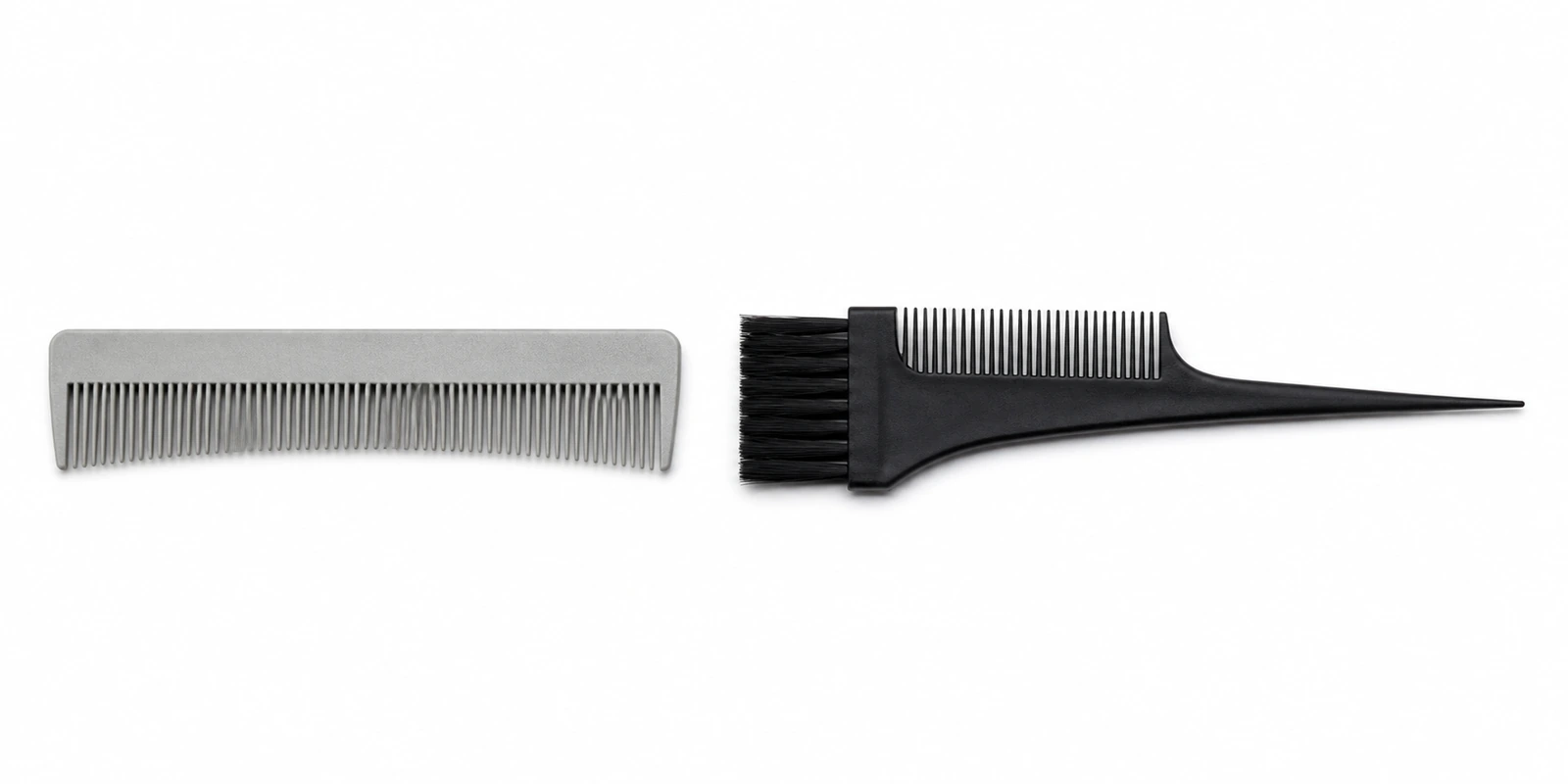
A narrow-tooth comb, sometimes combined with a pointed applicator tip or a small brush bristle section, designed for precise colour or bleach application directly at the root or along fine sections during colour services. Chemical resistance is the defining specification requirement for this comb type specifically.
Wholesale note: Material must be genuinely resistant to bleach and colour chemical exposure over repeated use — standard ABS can degrade faster under this specific exposure pattern than under normal mechanical use, making material specification verification particularly important for this SKU.
10. Vent Comb
A comb with open slots or vents running through the tooth section (sometimes combined with a brush section), designed to allow airflow through the hair during blow-dry styling while also providing lift and directional control. Functions as a hybrid between a styling comb and a blow-dry tool.
Wholesale note: Often positioned alongside round brushes and blow-dry brushes in a styling-tool product cluster rather than in the general comb category; heat tolerance of the tooth material matters here given proximity to blow-dryer airflow.
11. Pocket / Folding Comb
A compact comb, often with a folding mechanism that protects the teeth when not in use, designed for portability in a barber’s or stylist’s tool belt or a consumer’s bag. Prioritises durability under repeated folding and compact storage over specialised function.
Wholesale note: A practical add-on SKU for barber tool kits and travel-oriented consumer ranges; hinge durability under repeated folding is the primary quality variable to specify.
12. Handleless Salon Comb (Palm Comb)
A compact, handleless comb designed to be held directly in the palm for precise, close-in section work — similar in grip philosophy to a handleless detangling brush. Used by some colourists and stylists for detailed sectioning work where a full-length handle would be less precise than direct palm control.
Wholesale note: A smaller-volume specialty item most relevant to professional colourist and precision-styling supply lines rather than general consumer or barbershop ranges.
Building a Wholesale Comb Assortment
For buyers structuring a wholesale comb catalogue, the 12 types above map onto distinct customer segments rather than forming a single undifferentiated product list:
General salon and barbershop essentials: Wide-tooth, fine-tooth, all-purpose styling/cutting comb, and rat-tail/pin-tail — the four highest-frequency, broadest-appeal SKUs that belong in any core professional range.
Colourist and chemical service specialists: Rat-tail/pin-tail (stainless steel tail), tint/colour application comb, and teasing comb — combs where chemical resistance and precision sectioning are the primary purchase drivers.
Barber-specific tools: Fade comb and pocket/folding comb — combs built around clipper-work and portability rather than general styling.
Textured-hair specialists: Afro pick and detangling comb — combs addressing curl-pattern-specific mechanical needs that general-purpose combs do not serve well.
Precision and blow-dry specialists: Vent comb and handleless palm comb — lower-volume but higher-margin specialty items for stylists doing detailed technical work.
A well-structured wholesale catalogue offers the four general-essentials combs across multiple material tiers (standard plastic, seamless ABS, cellulose acetate, carbon fiber, titanium), while the specialty categories can be carried in a single well-specified tier without the same material breadth, since their buyers are typically purchasing for a specific technical need rather than comparing options across a price ladder.
Sourcing Considerations for B2B Buyers
For wholesale buyers assembling a comb catalogue across these 12 types, several sourcing principles apply across the full range.
Material tiering by SKU velocity: High-frequency SKUs (wide-tooth, fine-tooth, styling comb) justify carrying multiple material tiers to capture both budget and premium buyers. Lower-velocity specialty SKUs (afro pick, vent comb, palm comb) are usually better served by a single well-specified tier rather than fragmenting limited demand across multiple price points.
Chemical resistance verification for colour-service combs: Tint combs and any comb marketed for repeated chemical exposure should have documented material resistance to bleach and colour product exposure — a specification point worth confirming directly with the manufacturer rather than assuming standard plastic performs adequately under this specific use pattern.
MOQ consolidation across related SKUs: Because many of these comb types share base tooling or material sourcing (a fine-tooth comb and a styling comb, for example, often use similar plastic or acetate stock), consolidating orders across related SKUs with a single manufacturer can improve per-unit economics compared to sourcing each type separately, a consideration also relevant to the broader pre-order planning covered in our guide on 10 things to check before placing a custom hair brush order.
Segment-matched packaging: Barber-specific items (fade comb, pocket comb) and colourist-specific items (tint comb, stainless rat-tail) benefit from packaging and presentation that signals their professional-specialist positioning distinctly from general consumer-facing SKUs, even when sold through the same wholesale catalogue.
All 12 comb types, across standard plastic, seamless ABS, cellulose acetate, carbon fiber, and titanium material tiers, are available through OEM and private label manufacturing routes, with tooth configuration, material, and tail or handle specification adjustable to range and segment requirements.
Frequently Asked Questions
What are the most essential combs for a professional salon starter kit?
A wide-tooth comb, fine-tooth comb, all-purpose styling/cutting comb, and rat-tail/pin-tail comb cover the core functions — detangling, finishing, cutting guidance, and sectioning — that nearly every service requires. These four are the highest-priority SKUs for any new professional range or starter kit.
What comb is best for chemical and colour services specifically?
A tint/colour application comb with a narrow-tooth or applicator-tip design, made from a material with documented resistance to bleach and colour product exposure, is the purpose-built tool for this function. A stainless steel rat-tail comb is also standard for creating the precise scalp sections colour services require.
What’s the difference between a fade comb and a regular styling comb?
A fade comb has a flat, rigid back specifically designed to guide clippers directly against it during clipper-over-comb fade and taper techniques. A regular styling comb is not built for this direct clipper contact and does not provide the same stable guiding edge.
Do I need both a detangling comb and a wide-tooth comb in a wholesale range?
They serve overlapping but distinct functions — a wide-tooth comb applies consistent rigid-tooth force at each knot, while a detangling comb’s flexible or tapered teeth reduce peak force specifically. Carrying both allows a range to serve both general wet-detangling needs and a more specialised, gentler product tier for very fragile or fine hair.
What material should professional colourist combs be made from?
Cellulose acetate or stainless steel are the standard premium choices for colourist rat-tail and sectioning combs, given their resistance to chemical exposure and precision tooth or tail construction. Standard plastic is acceptable for lower-tier or occasional-use products but degrades faster under repeated bleach and colour exposure specifically.
How many comb SKUs does a typical professional wholesale range need?
A focused general-salon range can operate effectively with 5–6 core SKUs (the essentials plus one or two specialty items). A comprehensive range serving barbers, colourists, and textured-hair specialists alongside general stylists typically spans 10–12 SKUs across the categories covered in this guide, often with multiple material tiers on the highest-velocity items.
Conclusion
The professional comb category extends well beyond the wide-tooth and fine-tooth basics into a set of purpose-built tools — rat-tail sectioning combs, teasing combs, fade combs, tint combs, afro picks, and more — each engineered for a specific technical function within a stylist’s or barber’s workflow. A well-structured wholesale catalogue reflects this functional breadth rather than treating combs as a single undifferentiated category, matching the four general-essentials SKUs to broad multi-tier material availability and the specialty SKUs to focused, well-specified single-tier offerings for the professional segments that need them.
For wholesale buyers building a comb catalogue that spans these 12 professional types with genuine material and construction differentiation, manufacturers such as JunYi Beauty, which produces the full range of professional comb types across standard, seamless-finished, acetate, carbon fiber, and titanium material tiers from its Dongguan facility, represent the type of OEM partner suited to catalogues built on functional completeness rather than a narrow general-purpose selection.