A curl defining comb — sometimes marketed as a curl-shaping comb or denman-style shaping comb — is used to distribute product and encourage curl clumping in a way that produces visible, defined curls rather than the diffuse volume and frizz that dry-brushing curly hair typically causes. The technique and tool are closely associated with the broader curly-hair community’s styling methodology, but the underlying mechanics are straightforward enough to be genuinely useful for anyone with wavy to coily hair once the comb, the product routine, and the timing are correctly matched.
This guide covers what a curl defining comb actually does mechanically, the technique that produces definition rather than frizz, which curl patterns benefit most, and the common mistakes that turn a defining tool into a frizz-generating one. For the underlying comb-versus-brush mechanics behind curly hair care generally, see our guide on types of hair combs, and for the wet-detangling principles this technique builds on, see whether it is bad to brush wet hair.
What a Curl Defining Comb Actually Is
Tooth Configuration
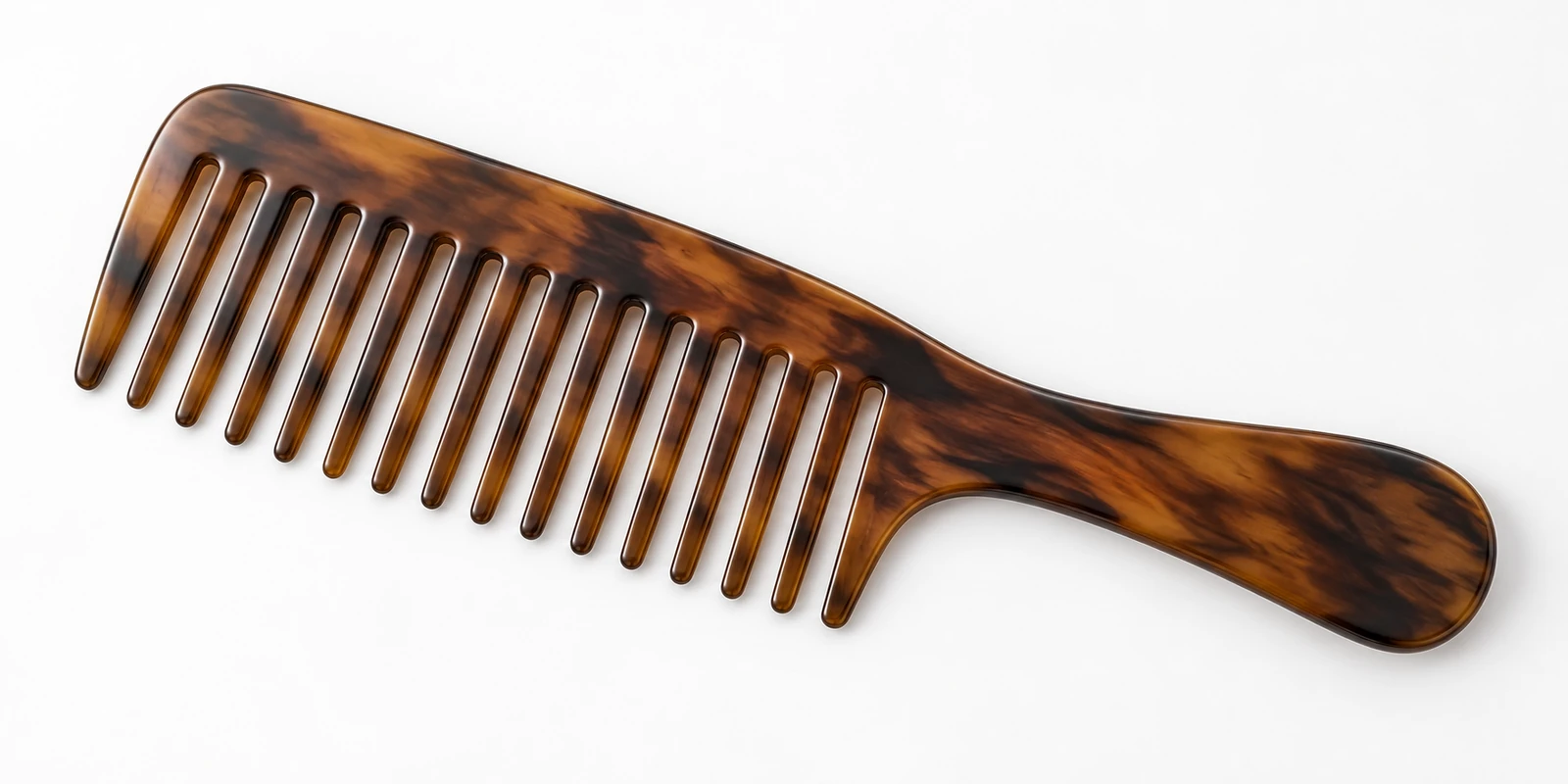
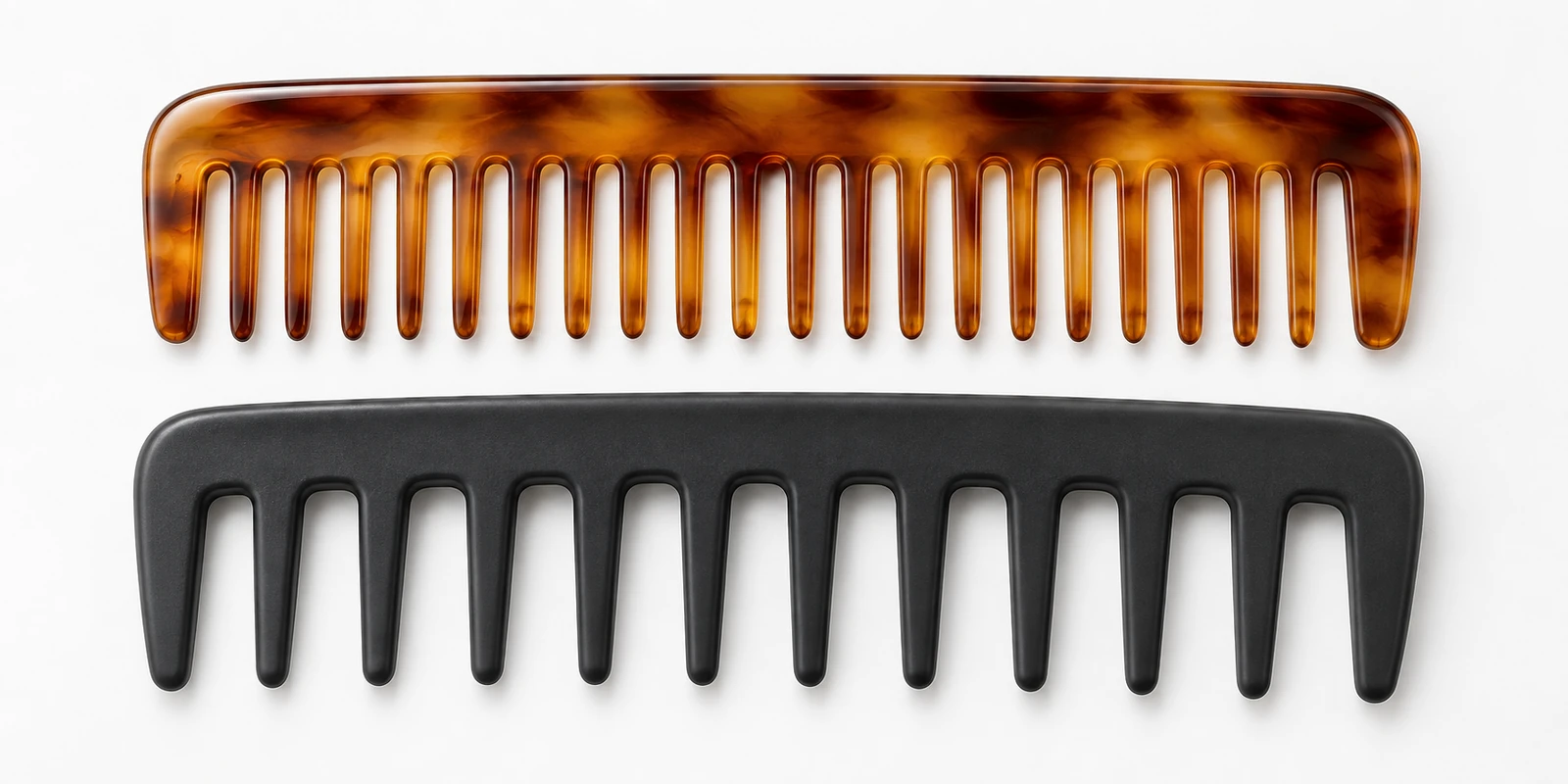
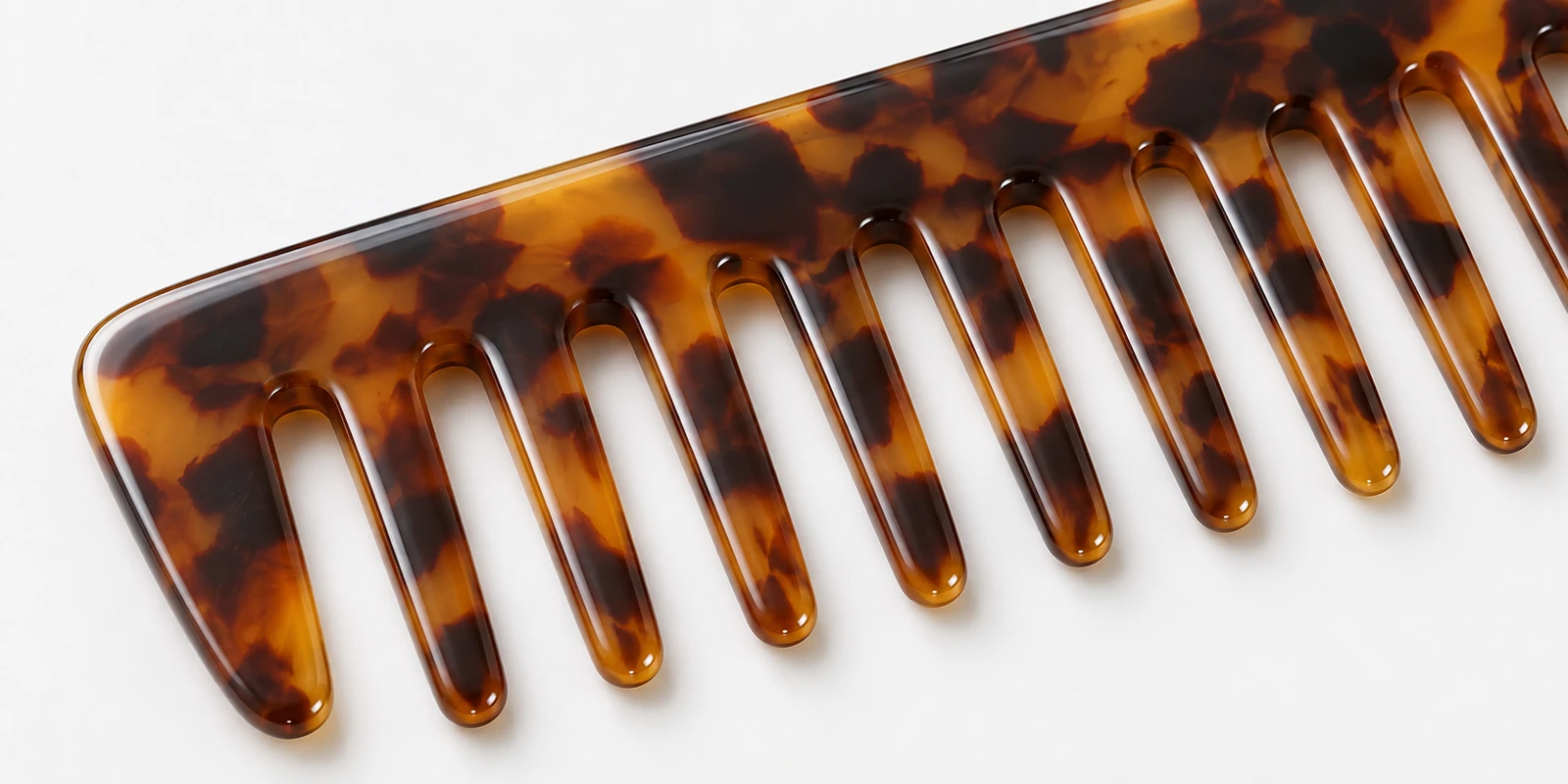
Curl defining combs typically use medium-wide tooth spacing — narrower than a standard wide-tooth detangling comb but wider than a fine-tooth finishing comb — set into a flat, wide-bodied design rather than a narrow comb profile. The wider body allows more strands to be gathered and guided together in each pass, which is central to the definition mechanism described below.
Flat, Wide Profile
Unlike a rat-tail or standard comb’s narrow tooth section, curl defining combs are usually broader and flatter, closer in overall shape to a small paddle than a traditional narrow comb. This wider surface makes it easier to guide larger clumps of curls through the comb in a single, continuous motion rather than working in the very narrow sections a fine-tooth comb requires.
Tooth Material and Edge Finish
Smooth, polished tooth edges — in cellulose acetate or seamless-finished plastic — matter more for this comb type than for most general-purpose combs, since the comb is typically used on product-coated wet hair where any snagging immediately disrupts the curl clump being formed and introduces the frizz the technique is specifically trying to avoid.
How Curl Definition Actually Works
The Clumping Mechanism
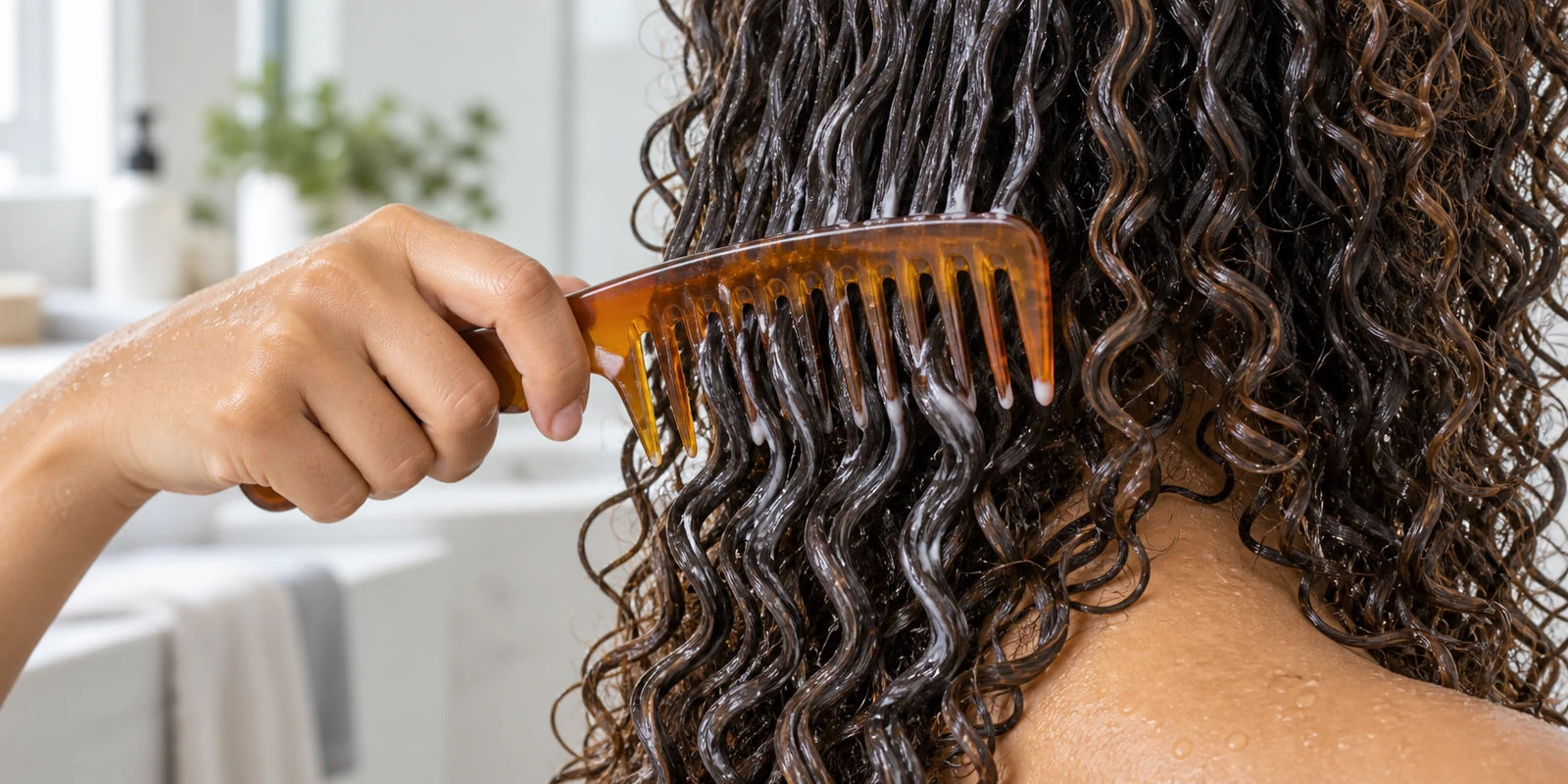
Curls form more defined, cohesive shapes when multiple individual strands are encouraged to move and dry together as a single clump rather than drying independently. A curl defining comb, drawn through product-coated wet hair in the direction of the natural curl pattern, gathers strands together and coats them evenly with product, encouraging them to clump and dry as a unified curl rather than as separate, frizzy individual strands.
Why This Differs from Standard Detangling
Standard wet detangling with a wide-tooth comb or flexible brush prioritises separating strands with minimal tension to remove knots — the goal is untangled, individually free-moving hair. Curl defining works in partial opposition to this instinct: after detangling is complete, the defining comb’s job is to gently re-group already-detangled strands into cohesive clumps, which is a distinct step with a different goal from detangling itself.
Why Product Coverage Matters More Here Than in Most Comb Use
Because the clumping effect depends on strands drying together in a shape held by product, uneven product coverage produces uneven clumping — some sections defined, others frizzy. The defining comb’s job includes distributing product evenly through the clump being formed, which is why product application technique and comb technique are inseparable in this specific use case in a way they are not for general combing.
Correct Technique for Definition Without Frizz
Start with Fully Detangled, Soaking Wet Hair
Curl defining should happen after detangling is complete, not as a combined step — attempting to detangle and define simultaneously with the same comb pass typically produces worse results at both tasks. Hair should be soaking wet, not just damp, when defining begins, since product distributes and clumps most evenly on fully saturated hair.
Apply Product Before Combing, Not After
A leave-in conditioner, curl cream, or gel should be applied to the hair before the defining comb is used — the comb’s job is to distribute and shape product that is already present, not to work product in from a dry or under-coated starting point. Applying more product after combing to compensate for uneven initial coverage rarely produces the same clumping quality as adequate product applied first.
Comb in the Direction of Natural Curl Pattern
Strokes should follow the direction the curl naturally falls, not a neutral vertical stroke. Working against the natural fall direction disrupts the clump formation the technique depends on and is a common source of frizz specifically attributable to defining-comb technique rather than to the tool itself.
Use Fewer, More Deliberate Strokes
Unlike detangling, where multiple gentle passes are normal and expected, curl defining benefits from fewer, more decisive strokes through each section. Repeated combing through an already-defined clump tends to break up the clump structure and introduce frizz — once a section is clumped and coated, moving on to the next section produces a better result than continuing to comb the same area.
Let Hair Dry Undisturbed
Touching, scrunching, or re-combing hair while it dries disrupts the clump structure before it has set. Air-drying or diffusing without further disturbance — sometimes described as avoiding “the frizzies” that come from touching curls mid-dry — is as important to the final result as the combing technique itself. This is arguably the single most common source of frustration with the technique: correct combing followed by repeated touching during drying still produces frizz.
Which Curl Patterns Benefit Most
Wavy Hair (Type 2)
Wavy hair sees the most variable results from a defining comb — the technique can help create more visible, cohesive wave patterns on hair that would otherwise dry with a looser, less defined shape, but wavy hair’s looser curl pattern means the clumping effect is generally more subtle than on curlier types, and some wavy-hair users find a defining comb produces less benefit relative to simply scrunching with product by hand.
Curly Hair (Type 3)
This is where curl defining combs are most consistently effective. Type 3 curls have enough natural curl pattern to hold a defined clump shape once formed, and the comb’s ability to gather multiple strands into a cohesive unit produces a clearly more structured, less frizzy result than dry brushing or finger-only styling for most people with this hair type.
Coily Hair (Type 4)
Coily hair benefits from the technique but often requires more product and a comb with slightly wider tooth spacing than the finer end of the defining-comb spectrum, since coily hair’s density and shrinkage mean the comb needs to move through more hair mass per stroke without excessive resistance. Some Type 4 hair responds better to finger detangling and shaping combined with a wide-tooth comb than to a dedicated defining comb, and individual curl pattern and density should guide the choice more than a blanket hair-type rule.
Common Mistakes That Cause Frizz
Using the Comb on Dry Hair
A curl defining comb used on dry, unstyled hair produces the same disruption a standard comb or brush would — dry combing breaks up existing curl clumps and introduces frizz rather than creating definition. This technique is specifically a wet-styling tool, not a dry-maintenance tool.
Insufficient Product
Attempting curl definition with too little product means the comb has nothing to distribute and clump strands around — the strands separate and frizz rather than clumping, regardless of comb technique. Curl-pattern and porosity-appropriate product volume matters as much as the comb technique itself.
Over-Combing a Section
Continuing to comb through an already-defined clump, whether out of habit or an attempt to further perfect the shape, tends to break down the clump structure that’s already formed. Once a section looks reasonably defined, moving to the next section produces a better overall result than perfecting one area at the expense of disturbing formed clumps.
Disturbing Hair While Drying
As covered above, touching, re-combing, or repositioning curls during the drying process is one of the most common sources of post-styling frizz, independent of how correctly the initial combing and product application were done.
Combing Against the Curl Pattern
Strokes that move against the hair’s natural fall direction fight the clump formation rather than assisting it, producing a more frizzy, less defined result than strokes that follow the natural direction the curl wants to fall.
Material and Construction Considerations
Seamless Tooth Edges
Because this comb type is used almost exclusively on wet, product-coated hair where snagging is particularly disruptive to the clumping process, seamless-finished tooth edges — eliminating the moulding seam that standard injection-moulded plastic often carries — are a more consequential specification for this comb type than for many general-purpose combs.
Flexible vs. Rigid Comb Body
Some curl defining combs use a slightly flexible comb body or base, allowing the tool to follow the curl pattern’s natural curve during the combing stroke rather than forcing a rigid straight path through curved hair. This is a genuine functional advantage for curlier hair types specifically, where a completely rigid comb body can work against the hair’s natural shape during the stroke.
Handle Design for Wet-Hair Grip
Because this comb is used exclusively on wet, product-coated hair (and often held in a bathroom or shower environment), a handle design with adequate grip texture under wet conditions is a practical specification consideration distinct from dry-hair comb ergonomics.
Sourcing Considerations for B2B Buyers
For buyers developing curl defining combs, the specification and positioning decisions determine whether the product genuinely supports the technique it’s marketed for.
Tooth spacing calibration: Medium-wide spacing — narrower than a standard detangling wide-tooth comb but wider than a fine-tooth finishing comb — is the functional specification that supports clumping rather than either pure detangling or pure fine-finishing. This is a distinct spec from simply relabelling an existing wide-tooth or styling comb.
Seamless finishing as a non-negotiable spec: Given the wet, product-coated use context, seamless tooth edges are more functionally important for this comb type than for general-purpose combs, and should be specified explicitly rather than assumed.
Educational positioning: Because correct technique (product-first application, direction-following strokes, undisturbed drying) matters as much as the tool itself for achieving frizz-free definition, packaging or accompanying content that addresses technique — not just the comb’s specifications — supports better customer outcomes and reduces the returns and negative reviews that come from users expecting the comb alone to guarantee results regardless of technique.
Hair-type-specific tooth spacing variants: A range spanning a slightly narrower-spaced variant for Type 2-3 hair and a wider-spaced variant for denser Type 4 hair serves the different mechanical needs across curl patterns more effectively than a single universal tooth spacing.
Curl defining comb formats in seamless-finished cellulose acetate and plastic, across tooth spacing variants suited to different curl densities, are available through OEM and private label manufacturing routes, with tooth spacing, comb body flexibility, and handle grip texture adjustable to range positioning requirements.
Frequently Asked Questions
What’s the difference between a curl defining comb and a regular wide-tooth comb?
A curl defining comb typically has medium-wide tooth spacing and a wider, flatter body designed to gather and clump multiple strands together during styling. A standard wide-tooth comb has wider spacing optimised for gentle detangling and strand separation, which is a different, often preceding, step from curl clumping.
Should I use a curl defining comb on wet or dry hair?
Wet, and specifically soaking wet rather than just damp. Curl defining is a wet-styling technique — using the comb on dry hair disrupts existing curl clumps and produces frizz rather than definition, since the clumping mechanism depends on product-coated, saturated strands moving and drying together.
Why does my hair still frizz even when I use a curl defining comb correctly?
The most common cause is disturbing the hair while it dries — touching, scrunching, or re-combing curls before they’ve set breaks the clump structure regardless of how correct the initial combing technique was. Insufficient product volume and combing against the natural curl direction are the other most common causes.
Can I use a curl defining comb for detangling too?
It’s not the ideal tool for detangling specifically — a standard wide-tooth comb or flexible detangling brush is better suited to gentle strand separation. Curl defining works best as a distinct step after detangling is already complete, re-grouping already-separated strands into cohesive clumps rather than combining both functions in one tool.
Does a curl defining comb work on wavy hair?
Results are more variable on wavy (Type 2) hair than on curlier patterns — the technique can produce a more visible, cohesive wave shape, but the effect is generally subtler than on Type 3 or 4 hair, and some wavy-hair users find simply scrunching product in by hand produces comparable results without a comb.
How much product should I use with a curl defining comb?
Enough to fully saturate and coat the section being combed — insufficient product is one of the most common causes of frizz with this technique, since the comb needs adequate product to distribute in order to create the clumping effect. Exact volume varies by hair density, porosity, and curl pattern, and is usually more generous than users initially expect.
Conclusion
A curl defining comb‘s medium-wide tooth spacing and wide, flat body are engineered specifically to gather and clump wet, product-coated strands into cohesive curl shapes — a distinct function from the detangling or smoothing purposes most other combs serve. The technique’s success depends as much on correct sequencing (detangle first, product before combing, comb in the direction of curl fall, minimal strokes, undisturbed drying) as on the comb’s specification itself, and most of the frizz users attribute to the tool actually traces back to a technique error, most commonly disturbing curls during the drying process.
For brand developers building curl defining comb products around genuine technique support rather than tool-alone marketing claims, manufacturers such as JunYi Beauty, which produces curl defining combs in seamless-finished acetate and plastic across tooth spacing variants suited to different curl densities from its Dongguan facility, represent the type of OEM partner suited to ranges where the specification and accompanying guidance work together to deliver the frizz-free definition the category promises.