
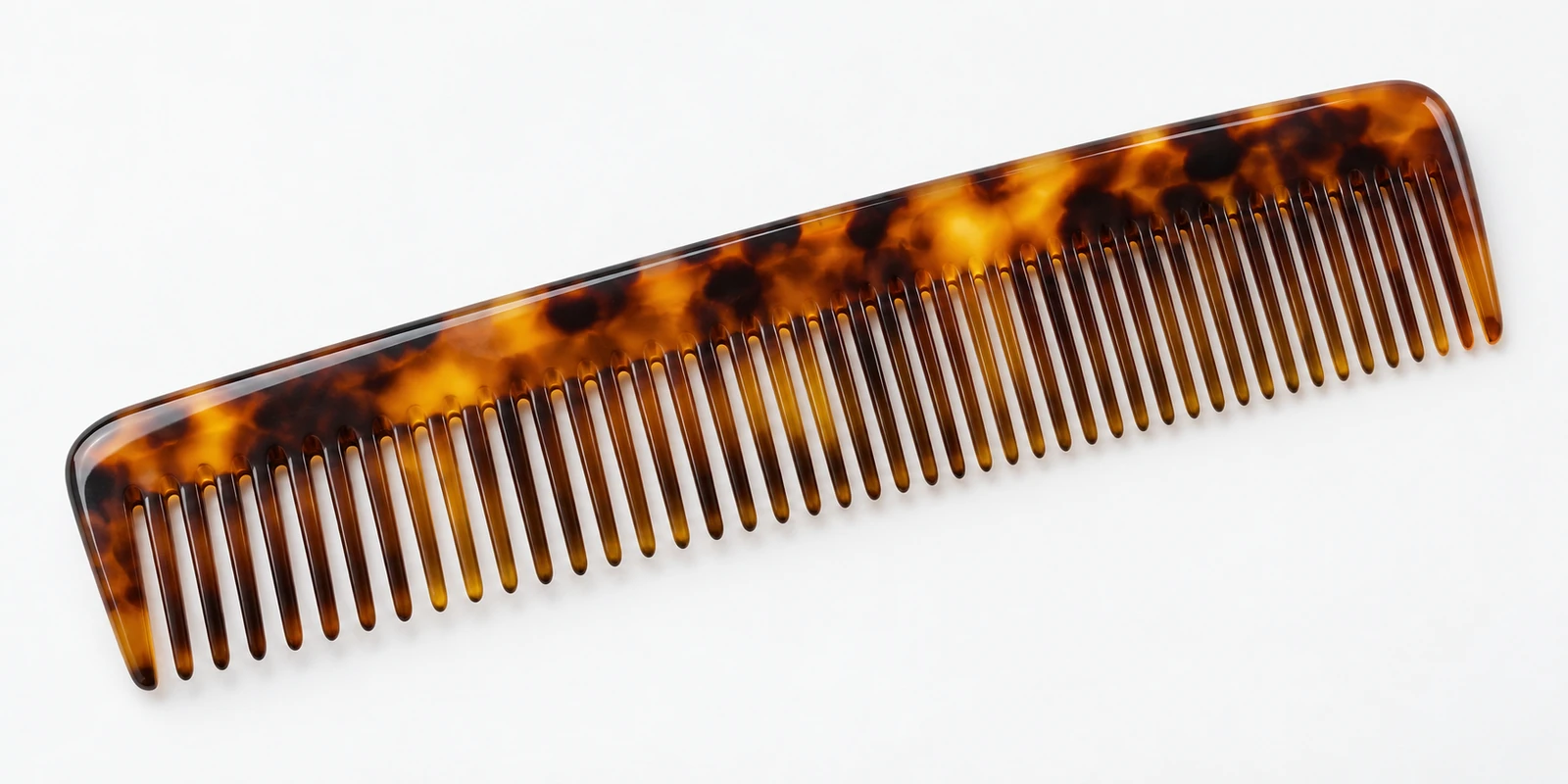
Kent Brushes has built a strong reputation over nearly two centuries as one of the best-known names in handmade sawcut combs, and searches for “Kent comb alternatives” typically come from one of two directions: buyers looking for a similarly crafted handmade comb at a different price point, or B2B buyers trying to understand what actually justifies the premium pricing handmade combs command before sourcing their own range. Both questions have the same underlying answer — the value in a genuinely handmade comb comes from specific, identifiable production steps, not from the brand name alone.
This guide breaks down what separates a handmade sawcut comb from a standard injection-moulded comb, which of those differences are functionally meaningful versus primarily aesthetic or heritage-driven, and what to look for when evaluating alternatives — whether as a consumer comparing options or a buyer sourcing a comparable product. For the broader premium material landscape this sits within, see our guides on carbon fiber vs ABS plastic combs and titanium combs vs carbon fiber combs.
What “Handmade Sawcut” Actually Means
The Production Process
A sawcut comb is produced by cutting individual teeth into a solid sheet of material — traditionally cellulose acetate — using a fine circular saw, rather than moulding the tooth shape as part of an injection process. Each tooth is cut, and the cut edges are then rounded and polished, typically through a multi-stage process, rather than emerging from the mould already smooth.
This is fundamentally different from injection moulding, where the tooth shape (including the tooth edge profile) is determined entirely by the mould itself, and the comb emerges from production already at its final shape with no cutting step required.
Why This Process Produces a Different Result
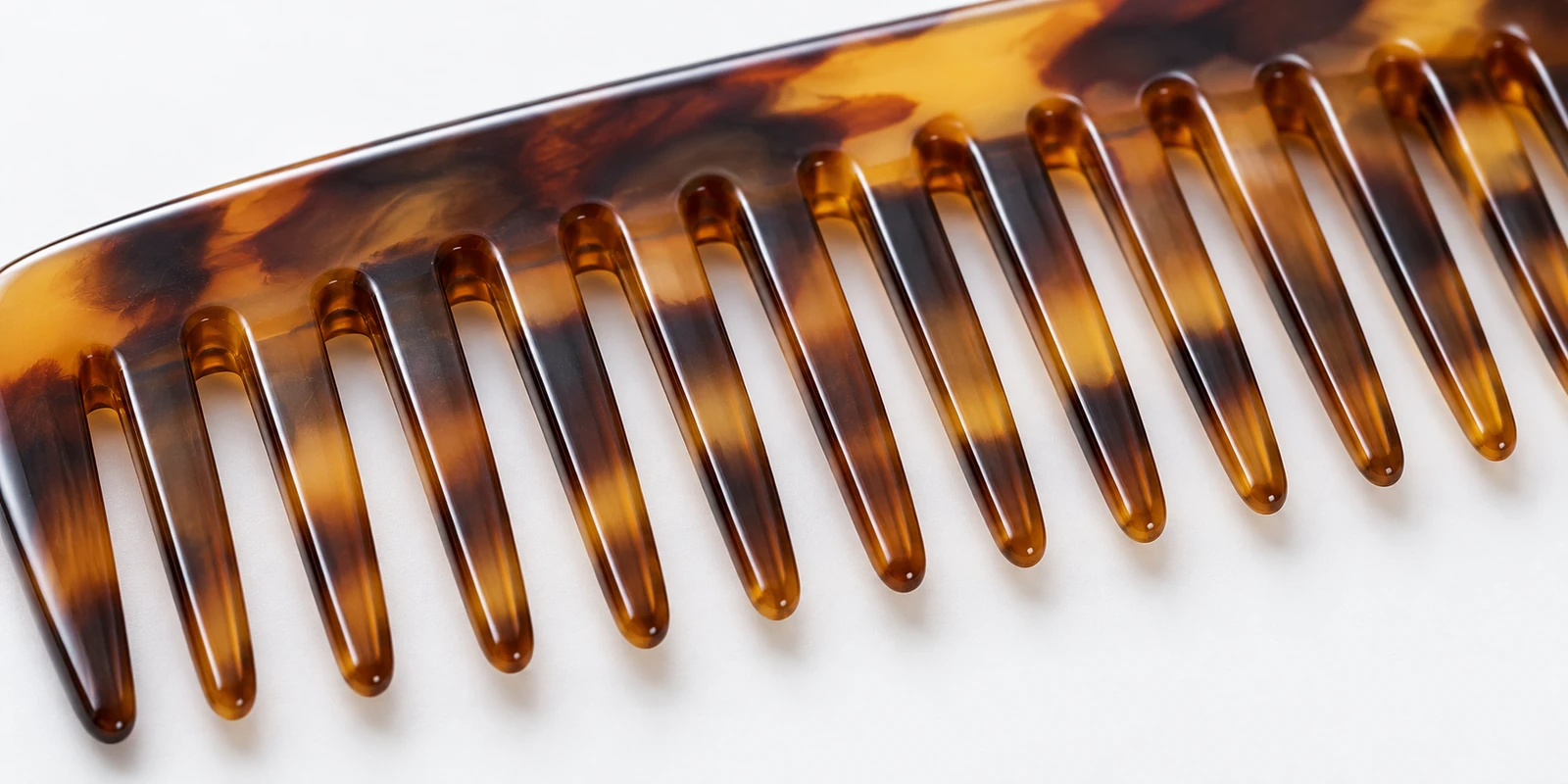
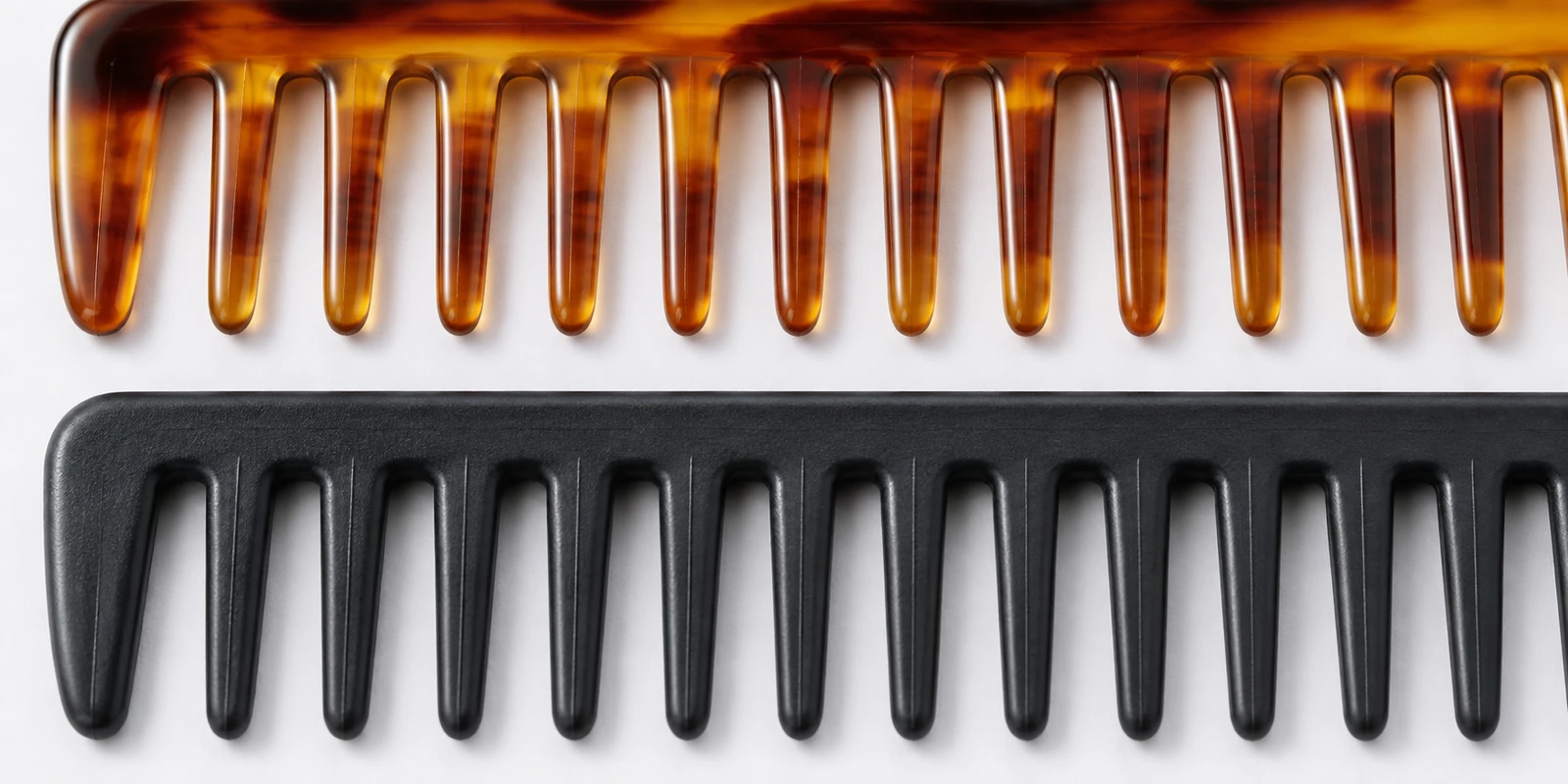
Sawcutting followed by hand-polishing produces genuinely rounded, seamless tooth tips and edges when done well — there is no moulding seam line to begin with, since the tooth was never formed by two mould halves meeting. This directly addresses the friction and snagging issue covered in our broader types of hair combs guide, where standard injection-moulded combs carry a seam line along the tooth edge unless an additional seamless-finishing step is applied after moulding.
Why “Handmade” Doesn’t Mean Entirely Manual
Most commercial sawcut comb production, including from long-established heritage brands, uses mechanised saws and polishing equipment rather than teeth cut individually by hand with no machinery involved. “Handmade” in this context typically refers to hands-on quality control, finishing, and inspection at each stage of a partially mechanised process, rather than a fully manual production method. This distinction matters for buyers evaluating claims, since “handmade” as a marketing term covers a range of actual production approaches.
What Genuinely Justifies the Price Premium
Tooth Edge Quality and Friction Reduction
This is the most functionally meaningful difference. A well-executed sawcut-and-polish tooth edge produces measurably lower friction against the hair shaft than a standard moulded edge, which translates to less cuticle disruption per stroke — a real, physical benefit rather than a purely aesthetic one, consistent with the friction principles covered across our comb material guides.
Material Quality and Consistency
Premium handmade combs are typically produced from higher-grade cellulose acetate sheet than the material used in mass-market moulded combs, with more consistent thickness, colour depth, and structural integrity throughout the sheet. This material quality is a genuine input cost that a lower-priced alternative using thinner or lower-grade acetate cannot fully replicate regardless of production process.
Individual Inspection and Quality Control
Sawcut production, being less automated than injection moulding, more commonly includes individual comb inspection at multiple production stages — checking tooth alignment, edge smoothness, and material consistency on each unit rather than relying solely on mould consistency across a high-volume run. This reduces the defect rate reaching the end consumer, though it is a quality-control difference rather than a difference in the comb’s fundamental physical properties once both have passed inspection.
Durability Under Long-Term Use
Higher-grade acetate sheet and precise tooth cutting generally produce a comb that holds its shape, edge smoothness, and structural integrity longer under repeated daily use than a lower-grade moulded equivalent, supporting a genuinely longer service life that partially offsets the higher upfront price over time.
What’s Mostly Heritage and Marketing, Not Function
Brand Heritage and Story
A long production history and established brand reputation are real business assets and can correlate with consistent quality control, but the heritage narrative itself — founding dates, royal warrants, historical production methods — does not directly determine any individual comb’s physical performance. Two combs with identical tooth edge quality and material grade perform identically regardless of which has the longer brand history attached.
Country of Origin Framing
“Made in England” or similar origin claims carry marketing weight and can correlate with certain quality control standards, but origin alone does not guarantee tooth edge quality or material grade — a well-specified comb manufactured elsewhere with equivalent sawcut-and-polish production and equivalent acetate grade delivers equivalent physical performance, and a poorly specified comb claiming premium origin does not automatically outperform it.
Packaging and Presentation
Premium packaging, gift-oriented presentation, and retail environment all contribute to the overall purchase experience and justify some portion of a price premium as a legitimate value-add, but they are separate from the comb’s functional performance and shouldn’t be the primary factor in a functional-performance comparison.
Evaluating a Genuine Alternative
Confirm the Production Method, Not Just the Marketing Term
“Handmade” and “sawcut” are used inconsistently across the market, similarly to the naming ambiguity covered in our pin tail vs rat tail comb guide. A genuine alternative should be able to describe or demonstrate the actual cutting and finishing process — sawcut tooth formation followed by multi-stage edge polishing — rather than simply attaching the word “handmade” to a standard moulded product.
Check the Material Grade
Ask specifically about the acetate sheet grade and thickness being used, not just the material category. As covered in our carbon fiber comparison guides, material category names (carbon fiber, acetate, titanium) can cover a wide quality range depending on grade and construction — the same principle applies to handmade acetate combs, where sheet quality varies significantly across manufacturers claiming the same general production method.
Look for Tooth Edge Evidence, Not Just Claims
A genuinely well-finished sawcut tooth edge should show visibly rounded, polished tips with no sharp cut lines or residual seam — this is verifiable by close visual and tactile inspection of an actual sample, which is a more reliable evaluation method than relying on marketing description alone.
Consider Whether Full Sawcut Production Is Necessary for Your Use Case
Not every comb use case requires the highest tier of handmade sawcut production. For general daily consumer use, a well-executed seamless-finished injection-moulded comb — where the mould seam is removed through a dedicated post-moulding finishing step rather than left as-is — can deliver much of the friction-reduction benefit at a meaningfully lower cost than full sawcut production, a middle-tier option covered in our carbon fiber vs ABS plastic combs guide.
Sourcing Considerations for B2B Buyers
For buyers evaluating whether to develop a handmade or sawcut comb line as an alternative to established heritage brands, several practical sourcing questions apply.
Confirm actual production capability, not just material sourcing: Sawcut production requires specific tooling and finishing expertise distinct from standard injection moulding. A manufacturer sourcing acetate sheet but applying standard moulding rather than sawcutting and hand-polishing is not producing a functionally equivalent product, regardless of how the material is described in the specification sheet.
Request tooth-edge samples before committing to volume: Because tooth edge quality is the primary functional differentiator and is difficult to fully specify in writing, requesting physical samples for direct comparison against a reference-quality benchmark comb is a more reliable qualification step than relying on written specification alone — consistent with the golden sample principles covered in our guide on 10 things to check before placing a custom hair brush order.
Position around verifiable production claims: Marketing copy referencing “handmade” or “sawcut” production should reflect the manufacturer’s actual process, since these terms are increasingly scrutinised by informed buyers, and overstated production claims are a specific and identifiable risk in this category given how closely comparison shoppers examine tooth edge quality.
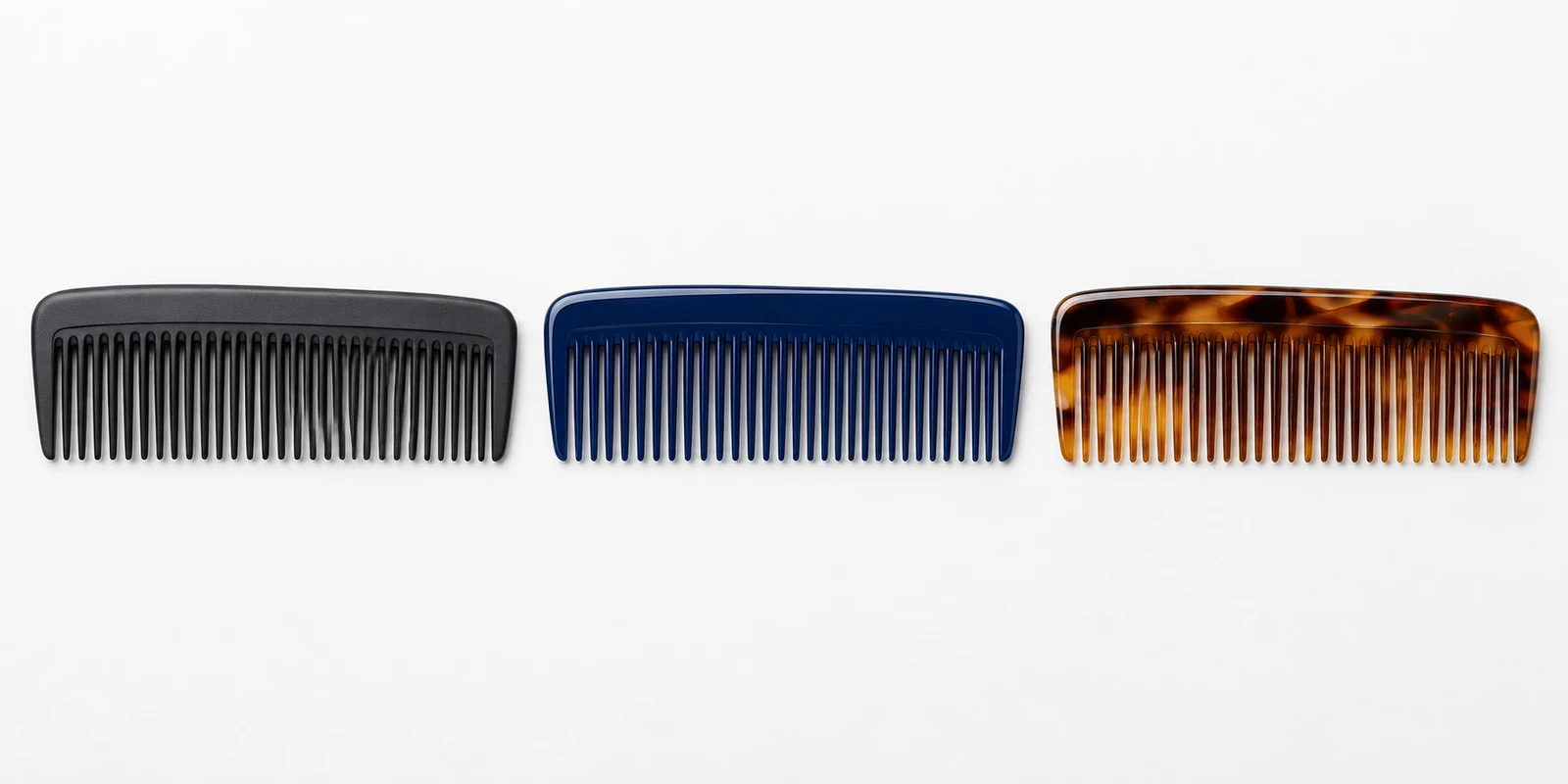
Tiered range architecture: A range spanning seamless-finished standard acetate at a mid-tier and full sawcut hand-finished acetate at a premium tier allows buyers to capture both the value-conscious and heritage-comparison-shopping segments of the market with genuinely differentiated, defensible products at each level, rather than a single tier attempting to serve both.
Sawcut and seamless-finished cellulose acetate comb formats, across standard and premium production tiers, are available through OEM and private label manufacturing routes, with sheet grade, cutting method, and finishing process adjustable to range positioning requirements.
Frequently Asked Questions
Is a handmade sawcut comb actually better than a moulded comb?
For tooth edge smoothness and the reduced friction that comes with it, genuinely well-executed sawcut production does produce a measurably better result than standard injection moulding. However, a seamless-finished moulded comb — where the mould seam is removed through a dedicated post-production step — can close much of that gap at a lower price point, so the comparison depends on the specific quality tier of the moulded alternative being considered.
What makes handmade combs so expensive?
Higher-grade acetate sheet material, the sawcut production process itself (which is slower and more labour-intensive than injection moulding), multi-stage hand-polishing of tooth edges, and individual quality inspection all contribute genuine production cost beyond what standard moulding requires. Brand heritage and packaging also contribute to price but are separate from the functional production cost.
How can I tell if a comb is genuinely sawcut versus just marketed as handmade?
Look for and ask about the specific production process — sawcut tooth formation followed by multi-stage polishing — rather than accepting the word “handmade” alone. Physical inspection of the tooth edges for genuine rounding and the absence of any seam line is the most reliable verification method for an individual sample.
Are there good alternatives to premium heritage comb brands?
Yes — the key is confirming that an alternative uses genuinely comparable production (sawcut and multi-stage polished, or well-executed seamless-finished moulding) and comparable acetate material grade, rather than assuming a lower price automatically means lower quality or a higher price automatically means better production. Requesting samples for direct comparison is the most reliable evaluation approach.
Is cellulose acetate always used in handmade combs?
Cellulose acetate is the traditional and most common material for sawcut handmade combs due to its combination of colour depth, polish quality, and suitability for the sawcut-and-finish process, but it is a material choice within the handmade production category rather than a requirement — other materials can theoretically be sawcut and polished, though acetate remains the dominant choice in this specific comb tradition.
Do handmade combs actually last longer than moulded combs?
Generally yes, provided the handmade comb uses genuinely higher-grade acetate sheet, since material grade and construction quality — not the cutting method alone — are the primary drivers of long-term durability. A handmade comb using lower-grade material would not necessarily outlast a well-made moulded comb using higher-grade material, so grade matters as much as process.
Conclusion
The genuine value in a handmade sawcut comb comes down to tooth edge quality achieved through sawcutting and multi-stage hand-polishing, higher-grade acetate sheet material, and more individualised quality control — all of which produce a measurable reduction in friction and a longer service life compared to a standard moulded equivalent. Brand heritage, country-of-origin framing, and premium packaging contribute to price and purchase experience but do not independently determine functional performance. A genuine alternative to an established heritage brand is one that can demonstrate comparable production process and material grade, verifiable through direct sample inspection, rather than one that simply borrows the “handmade” language without the underlying process to support it.
For buyers developing a handmade or sawcut comb line with genuine, verifiable production quality, manufacturers such as JunYi Beauty, which produces both sawcut hand-finished and seamless-finished cellulose acetate comb formats across multiple sheet grades from its Dongguan facility, represent the type of OEM partner suited to ranges where premium comb claims need to reflect demonstrable production process rather than marketing language alone.