A dual-sided comb — combining two different tooth zones, or a tooth zone paired with a brush section, on a single tool — is one of the most practical multi-function items in the comb category, letting a stylist or consumer switch between volumising and smoothing tasks without reaching for a second tool. The design isn’t new, but the range of configurations sold under “dual-sided comb” has expanded, and not every version delivers genuine two-function performance — some are closer to a single-function comb with a cosmetic second side.
This guide covers the different dual-sided comb configurations, what each side is actually engineered to do, which combinations genuinely add function versus which are mostly marketing framing, and how to evaluate a dual-sided comb’s real usefulness before buying or stocking one. For the broader comb category this sits within, see our guide on types of hair combs.
What “Dual-Sided” Actually Covers
Tooth-and-Tooth Configurations
The most common dual-sided design pairs two different tooth zones on a single comb — most typically a wider-spaced tooth section at one end and a finer-spaced section at the other, the same dual-density logic used in a standard all-purpose styling comb. This configuration serves two genuinely distinct combing functions (initial detangling or lifting versus finishing and precision work) within one tool.
Tooth-and-Brush Configurations
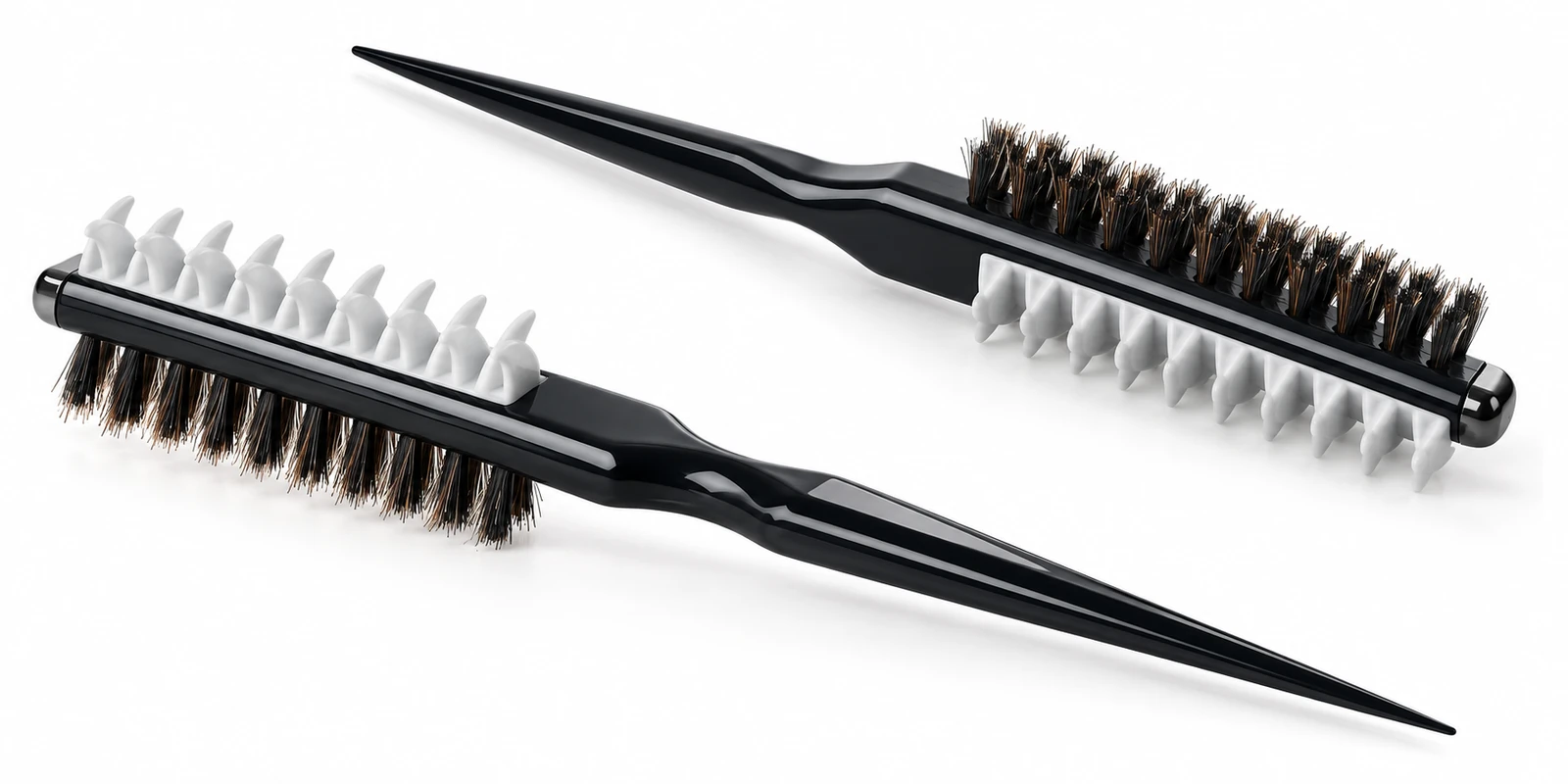
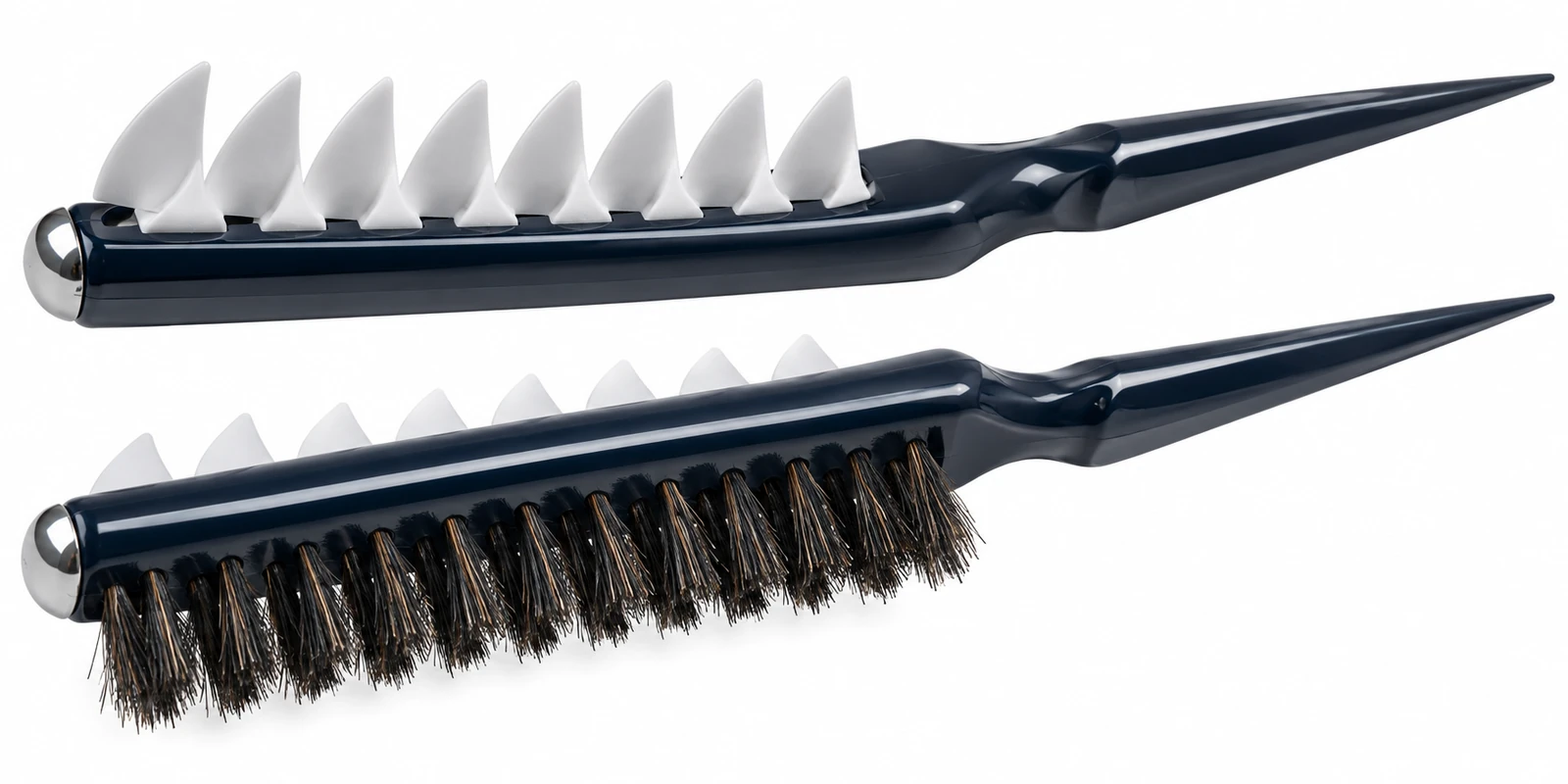
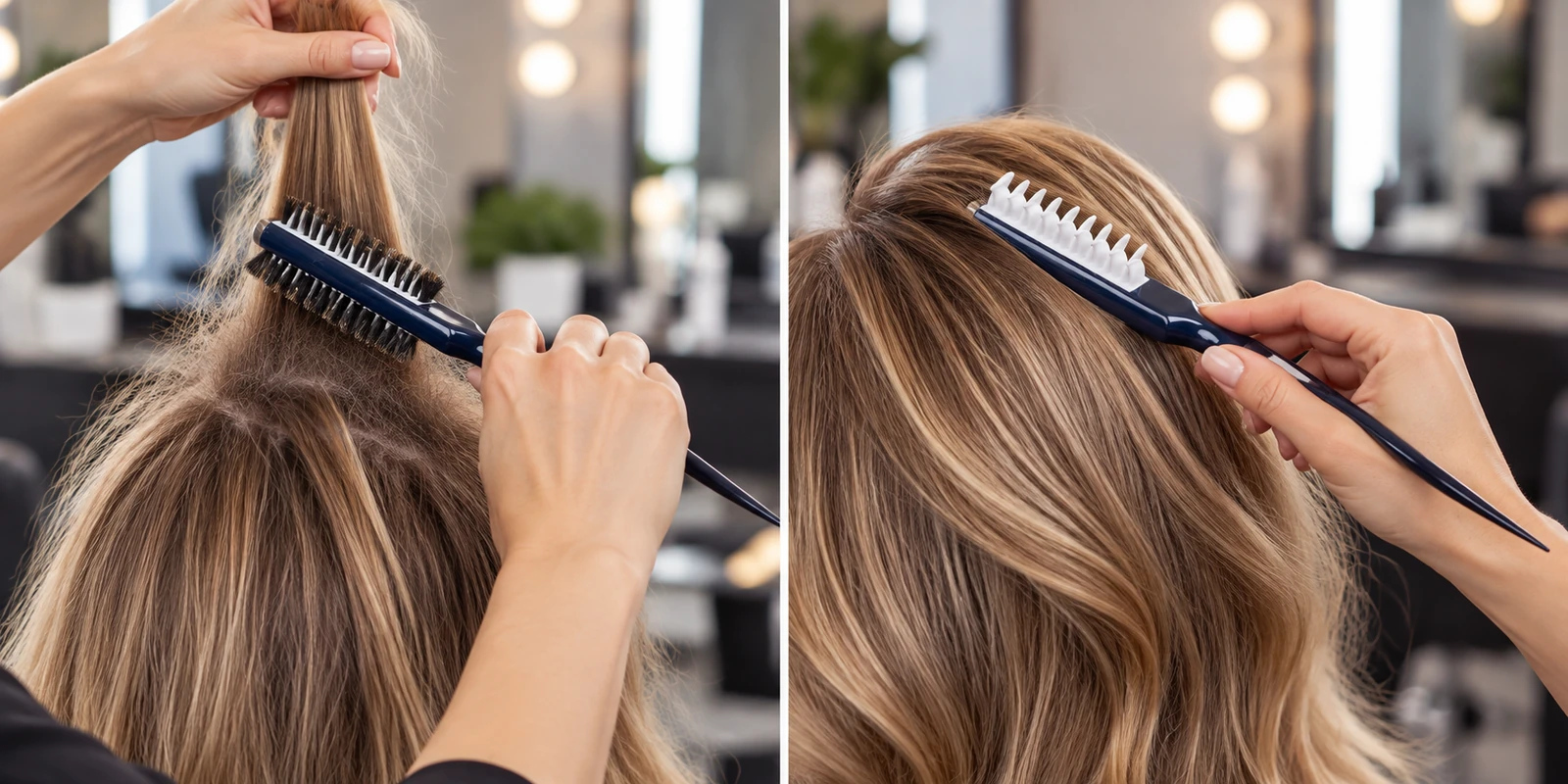
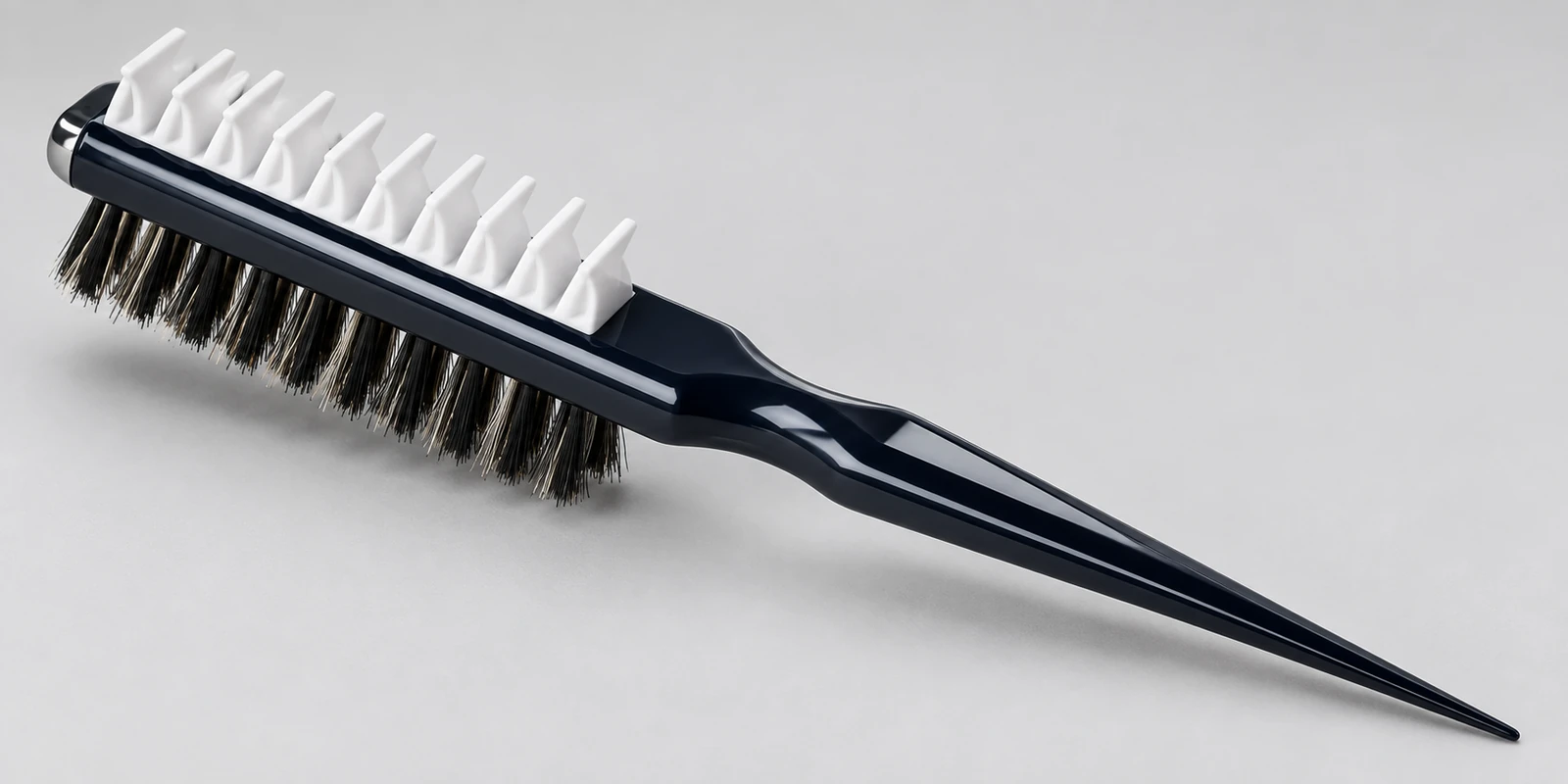
A second common design pairs a tooth section on one side with a small brush section — often boar bristle or short nylon pins — on the other. This is the configuration most directly marketed around “volume and smoothing” specifically: the tooth side is typically fine and closely spaced enough to support light backcombing or lifting at the root, while the brush side smooths the outer layer of hair over the lifted section afterward, mirroring the two-step technique covered in our teasing comb guide.
Tail-and-Tooth Configurations
Some dual-sided combs pair a tooth section with a pointed tail rather than a second tooth zone or brush — functionally overlapping with the rat-tail/pin-tail category covered in our pin tail vs rat tail comb guide, where sectioning rather than volumising or smoothing is the second function being added.
The Volume-and-Smoothing Mechanism Specifically
Why This Pairing Makes Mechanical Sense
Volume and smoothing are genuinely sequential steps in the same styling process rather than unrelated functions bundled together for convenience. As covered in our teasing comb guide, creating root volume through backcombing deliberately catches and interlocks cuticle scales to build lift, and the resulting structure needs a separate smoothing step — a brush or fine-tooth pass over the top layer — to conceal the matted structure underneath and produce a finished look rather than a visibly teased one. A dual-sided tooth-and-brush comb puts both steps within reach in a single tool, which is a genuine workflow efficiency rather than a purely cosmetic pairing.
Why the Tooth Side Needs to Be Genuinely Fine
For the volume side of this pairing to function correctly, the tooth spacing needs to meet the same fine, closely-set specification covered in our teasing comb guide — tooth spacing too wide fails to create the interlocking effect that produces lift, regardless of how the comb is marketed. Some dual-sided products use a moderate general-purpose tooth spacing on the “volume” side that does not actually perform genuine backcombing, which is the clearest sign of a dual-sided comb that adds a second side without adding genuine second function.
Why the Brush Side Needs Appropriate Bristle, Not Just Any Bristle
The smoothing side’s bristle should be dense enough and appropriately firm to lay a top layer of hair flat over a teased section — a sparse or overly soft bristle arrangement smooths less effectively than the function requires. Boar bristle, or a firm nylon pin arrangement, are the appropriate specifications here, following the same bristle-firmness logic covered in our guide on what makes a slick back hair brush effective at its comparable smoothing function.
Where Dual-Sided Designs Genuinely Add Value
Travel and Compact Kits
For travel, gym bags, or any context where carrying two separate tools is impractical, a genuinely functional dual-sided comb consolidates two real functions into one compact item without meaningfully compromising either function, provided both sides are correctly specified.
Professional Stylist Workflow
For a stylist moving between backcombing and smoothing repeatedly during a single updo or volume-focused style, a dual-sided tool removes the friction of picking up and putting down two separate implements mid-service, which is a genuine time and workflow benefit in a professional setting where speed and tool access matter.
Simplifying a First-Time Buyer’s Purchase
For a consumer newly interested in adding root volume to their routine, a well-specified dual-sided comb removes the need to research and purchase two separate specialised tools (a teasing comb and a finishing brush) before being able to attempt the technique at all, lowering the barrier to trying it correctly rather than improvising with an unsuited single tool.
Where Dual-Sided Designs Compromise Performance
When Both Functions Need Different Handle Orientation
A teasing comb’s fine tooth section is typically used in short, controlled strokes close to the scalp, while a smoothing brush section works better with a slightly different handle angle and grip for the broader strokes smoothing requires. A dual-sided comb’s single fixed handle sits at a compromise angle for whichever end is in use, which can feel less ergonomic for either function than a dedicated single-function tool held at its own optimal angle — a minor but real tradeoff experienced users sometimes notice.
When One Side Is Under-Specified to Cut Cost
The most common quality failure in this category isn’t the dual-sided concept itself but a manufacturer specifying one side properly (usually the more visually obvious tooth section) while under-specifying the other (commonly a sparse, low-density brush side that doesn’t smooth effectively) to reduce production cost while still marketing the product as genuinely dual-function.
When the Comb Tries to Add a Third Function
Some products extend the dual-sided concept to three or more zones — tooth, brush, and tail, for example — in an attempt to maximise marketed versatility. Beyond two genuinely well-specified functions, each additional zone tends to compress the space available for the others, and a three-function comb frequently performs all three functions less well than a well-specified two-function version would perform its two.
How to Evaluate a Dual-Sided Comb Before Buying or Stocking
Assess Each Side Independently
Rather than evaluating the product as a single item, assess the tooth side against the specification standard for its intended function (fine, closely-set teeth for genuine backcombing capability, as covered in our teasing comb guide) and the brush side against its own standard (adequate bristle density and firmness for effective smoothing) — a dual-sided comb is only as good as its weaker side.
Check for Balanced Material Investment
A well-made dual-sided comb should show comparable material and construction quality on both sides — visibly higher-quality tooth construction paired with a visibly cheaper brush attachment is a specification imbalance worth noting before purchase, whether evaluating as a consumer or a B2B buyer reviewing a sample.
Consider Whether Your Actual Use Case Needs Both Functions Simultaneously
If volume and smoothing genuinely happen in sequence in your typical styling routine, a dual-sided comb offers real workflow value. If you only need one of the two functions regularly, a well-specified single-function tool for that specific need may outperform the relevant side of a dual-sided compromise product, since single-function tools are not subject to the same specification-splitting cost pressure.
Sourcing Considerations for B2B Buyers
For buyers developing or stocking dual-sided comb products, the specification discipline that separates genuine two-function tools from single-function-plus-marketing products is the central sourcing consideration.
Specify both sides independently in the product spec sheet: Rather than a single general product description, documenting tooth spacing/density for the comb side and bristle material/density for the brush side as separate, explicit specifications prevents the common failure pattern of one side being under-specified relative to the other during production.
Request functional testing on both sides, not just the more visible one: Evaluating a sample against the standard for its intended function — does the tooth side actually create backcombing lift, does the brush side actually smooth a teased section — is a more reliable qualification step than visual inspection alone, since a comb can look well-made while one side underperforms functionally.
Position around the genuine workflow benefit, not generic “2-in-1” framing: Marketing copy that explains the actual sequential use case (create volume, then smooth) communicates real value to an informed buyer more effectively than a generic multi-function claim, and sets accurate expectations that reduce returns from buyers expecting a genuinely different result than the product delivers.
Consider a matched single-function pair as an alternative SKU: For buyers whose customer base skews toward more demanding or professional use, offering a correctly matched single-function teasing comb and finishing brush as a companion pairing — alongside, not instead of, a dual-sided option — captures the segment of buyers who prefer dedicated tools without abandoning the dual-sided convenience segment.
Dual-sided comb formats across tooth-and-tooth, tooth-and-brush, and tail-and-tooth configurations, with independently specified material and construction on each side, are available through OEM and private label manufacturing routes.
Frequently Asked Questions
Do dual-sided combs actually work for both volume and smoothing?
Genuinely well-specified ones do — the fine tooth side needs to be closely spaced enough for actual backcombing, and the brush side needs adequate bristle density and firmness for effective smoothing. Poorly specified versions, where one side is under-built to cut cost, underperform on that side regardless of overall marketing claims.
Is a dual-sided comb better than buying a teasing comb and a separate brush?
Not necessarily better, but more convenient for travel or workflow efficiency, provided both sides are correctly specified. A dedicated teasing comb and a dedicated smoothing brush, each optimised individually, can outperform the relevant side of a dual-sided compromise product, particularly for frequent or professional use where the ergonomic differences between the two functions matter more.
What should I look for in the tooth section of a volume-and-smoothing comb?
Fine, closely spaced teeth — the same specification a dedicated teasing comb requires for genuine backcombing capability. A moderate or general-purpose tooth spacing on the “volume” side will not create effective lift regardless of how the product is marketed.
What bristle type works best for the smoothing side?
Boar bristle or a firm nylon pin arrangement, with adequate density to lay a top layer of hair flat over a teased section. Sparse or overly soft bristle arrangements smooth less effectively and are a common sign of an under-specified dual-sided product.
Can a dual-sided comb do more than two functions well?
Generally not as effectively as a well-specified two-function version. Adding a third zone (such as a tail for sectioning) tends to compress the space and specification investment available for the other functions, and three-function combs frequently underperform on all three relative to a focused two-function design.
Are dual-sided combs suitable for professional salon use?
Yes, for stylists who move between backcombing and smoothing repeatedly during a single service and value the workflow efficiency of one tool over two — provided the specific product meets professional-grade specification on both sides rather than the lighter-duty specification common in consumer-tier versions.
Conclusion
Dual-sided combs that pair a genuine backcombing-capable tooth section with an adequately specified smoothing brush deliver real workflow value by consolidating two sequential steps of the same styling process into one tool. The category’s quality variance comes down almost entirely to whether both sides receive genuine specification investment or whether one side — usually the less visually obvious brush section — is under-built to reduce cost while the product is still marketed as fully dual-function. Evaluating each side independently against the standard a dedicated single-function tool would need to meet is the most reliable way to separate a genuinely useful dual-sided comb from one that only appears to be.
For brand developers building dual-sided comb products with genuine, independently specified performance on both sides, manufacturers such as JunYi Beauty, which produces tooth-and-tooth, tooth-and-brush, and tail-and-tooth dual-sided comb configurations with documented specification on each side from its Dongguan facility, represent the type of OEM partner suited to ranges where the “2-in-1” claim needs to hold up to functional testing rather than marketing description alone.