
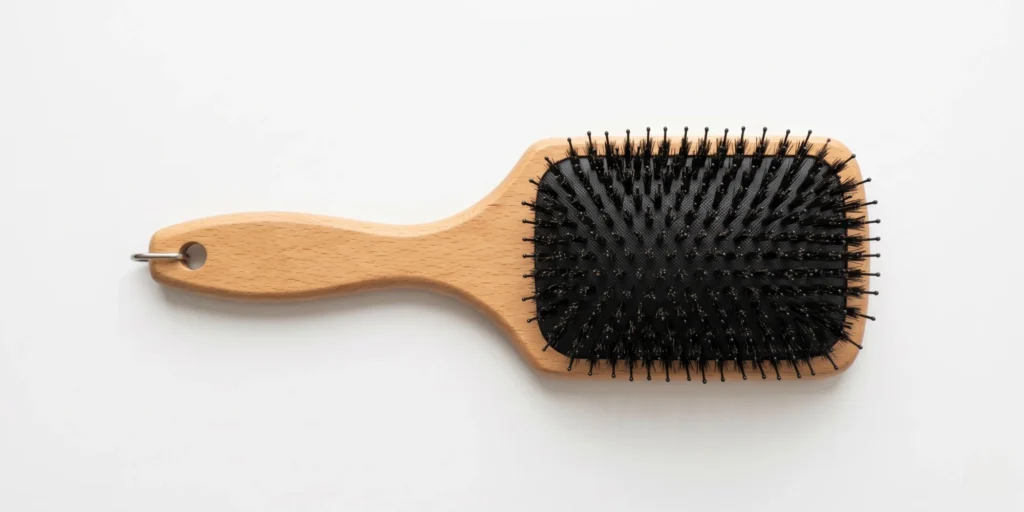
The advice to brush hair 100 strokes a day is one of the most persistent myths in hair care. It appears in Victorian-era beauty manuals, has been passed down across generations, and is still repeated today — sometimes by people who have never questioned where it came from or whether it has any basis in how hair actually functions. The short answer is that brushing hair 100 strokes a day does not help and, for most hair types, causes measurable harm. The longer answer requires understanding what brushing actually does to the hair shaft and scalp, and what a genuinely beneficial brushing routine looks like in practice.
This article examines the origin of the 100-strokes idea, what the biology of hair and scalp actually supports, which hair types and conditions make excessive brushing particularly damaging, and what frequency and technique produce the best outcomes across different hair types.
Where the 100-Strokes Idea Came From
The 100-strokes recommendation originated in an era before modern hair care products existed. In the 19th and early 20th centuries, the primary means of distributing scalp oil along the hair shaft — and of removing environmental dust and debris from the hair — was mechanical brushing. Shampoo as a modern category did not exist in its current form; hair was washed infrequently, sometimes weekly or less. In that context, daily brushing served a practical distribution function: moving scalp sebum from the root zone along the shaft toward the tips, coating and conditioning the hair in the absence of commercial leave-in products.
For women with long, straight, fine-to-medium hair who washed infrequently and had no alternative conditioning products, daily brushing with a natural bristle brush did have a functional basis. The 100-stroke number was not the result of a clinical study — it was a culturally transmitted practice that originated in a specific context and was then propagated out of that context into a world of daily washing, silicone-based conditioners, leave-in treatments, and heat styling tools that has made it largely obsolete as a hair health practice.
The practice persisted partly because it feels productive — it is a quantifiable, ritualistic action — and partly because the hair does often feel smoother immediately after brushing, which is a real effect but does not require 100 strokes to achieve.
What Brushing Actually Does to the Hair Shaft
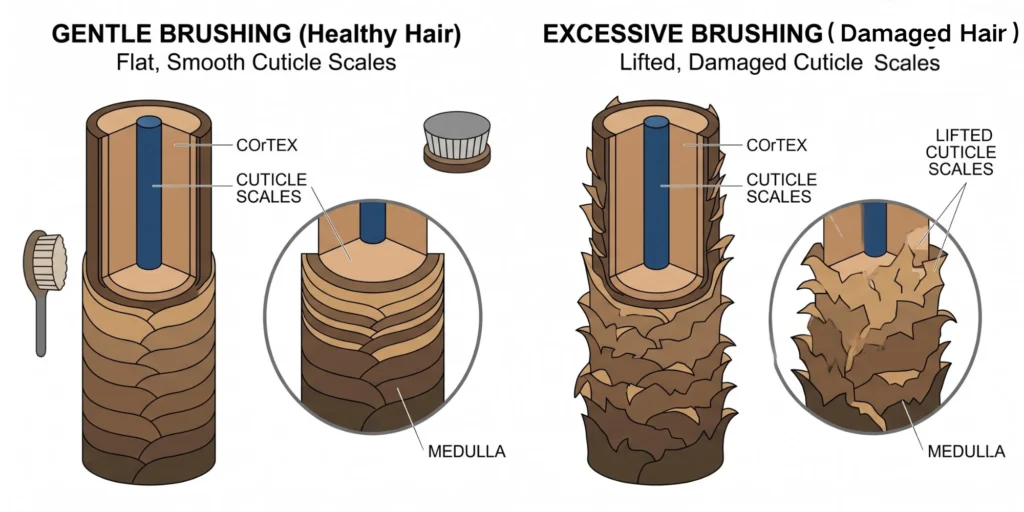
To evaluate whether 100 strokes is beneficial, it is necessary to understand what each brushing stroke mechanically does to the hair shaft. The hair shaft is covered by a cuticle layer — overlapping, scale-like cells that lie flat when healthy and reflect light evenly. Each brushing stroke makes contact with this cuticle and applies friction, which causes varying degrees of cuticle disturbance depending on the bristle type, hair type, and hair condition.
The Sebum Redistribution Mechanism
The genuine benefit of brushing — the one that supported the original 100-strokes practice — is sebum redistribution. Scalp sebum is produced at the hair follicle and travels down the shaft by gravity and by mechanical contact. Brushing with a natural bristle brush — particularly boar bristle — picks up sebum at the root zone and deposits it along the mid-lengths and tips during each stroke. This provides a light conditioning effect on hair that would otherwise have dry tips and oily roots.
This mechanism is real and is why boar bristle brushes genuinely improve shine and texture in appropriate hair types, as covered in our article on whether boar bristle brushes actually reduce frizz. The effect occurs within the first 10 to 20 strokes of a brushing session — it does not continue to increase proportionally with each additional stroke beyond that point.
The Cumulative Damage Mechanism
Every brushing stroke also generates friction against the cuticle. This friction lifts and chips cuticle scales, generates static charge, and applies mechanical tension to the hair shaft. The degree of damage per stroke depends on bristle type (natural bristle causes less friction than hard nylon), hair condition (damaged and fine hair is more vulnerable per stroke), and technique (short, back-and-forth strokes cause more cuticle disruption than long, smooth strokes).
The important point is that the benefits of brushing — sebum redistribution, scalp stimulation — are largely achieved within the first 10 to 20 strokes of a session. The remaining 80 to 90 strokes in a 100-stroke routine add cuticle friction without proportional additional benefit. This is the fundamental problem with the 100-strokes practice: it extends the mechanical contact with the hair shaft well beyond the point at which the functional benefit has been achieved.
What the Science Says About Brushing Frequency
There is no peer-reviewed clinical evidence supporting 100 strokes as an optimal brushing frequency. The dermatological and trichological literature on hair brushing is consistent in the opposite direction: excessive brushing is a recognised cause of mechanical hair damage, particularly in fine, chemically treated, and fragile hair.
Traction and Breakage
Each brushing stroke applies tension to the hair shaft, particularly at points where the brush encounters resistance — knots, density changes, and areas where multiple strands are engaged simultaneously. Over 100 strokes, the cumulative tension applied to individual strands is significantly higher than over 10 to 20 strokes. For fine hair — which has less structural resilience per strand — this cumulative tension is a primary cause of the breakage that fine-hair consumers often attribute to genetic thinning rather than mechanical damage from brushing.
The relationship between brushing technique and breakage risk is covered in more detail in our guide on the best hair brush for fine and thin hair.
Sebum Over-Distribution
In the original context of infrequent washing, distributing sebum from root to tip was a benefit. For consumers who wash their hair daily or every other day, the scalp sebum that accumulates between washes is relatively limited — and redistributing it aggressively over 100 strokes can produce a greasy appearance at the mid-lengths and tips rather than a smoothing effect. This is particularly relevant for fine hair, where the smaller shaft diameter means each strand absorbs the deposited oil more visibly.
Scalp Stimulation — Real but Limited
One frequently cited justification for extensive daily brushing is scalp stimulation — the idea that brushing increases blood circulation to the scalp and thereby promotes hair growth. Scalp stimulation through massage and light mechanical contact does have a physiological basis. However, the stimulation effect is achieved through the contact and movement of brushing, not through a specific number of strokes. 100 strokes does not deliver proportionally more scalp stimulation than 20 strokes — after the initial contact and movement across the scalp, additional strokes primarily extend the duration of the mechanical contact with the hair shaft rather than increasing meaningful scalp benefit.
How Many Strokes Is Actually Beneficial
The evidence-based position is that the beneficial effects of brushing — sebum redistribution, scalp stimulation, detangling, surface smoothing — are achieved within 10 to 30 strokes per session for most hair types. Beyond this range, additional strokes primarily add cuticle friction without proportional functional benefit.
For practical purposes:
Fine and thin hair: 10 to 15 smooth strokes with a soft boar bristle brush on dry hair is sufficient for daily maintenance. More than this accelerates cumulative cuticle wear in the hair type most vulnerable to it.
Medium hair: 15 to 25 strokes with a boar bristle or mixed bristle paddle brush achieves effective sebum distribution and surface smoothing. A longer session is not harmful for medium hair in good condition, but does not produce proportionally better outcomes.
Thick and coarse hair: The priority for thick hair is working through the hair mass rather than achieving surface polish, so stroke count is less relevant than ensuring the brush reaches through the full depth of the hair. 20 to 30 strokes with an appropriate mixed bristle or nylon paddle brush is a reasonable daily maintenance session.
Curly and coily hair: Daily dry brushing of any type is not recommended for curly and coily hair. The appropriate tool for this hair type is a wide-tooth comb or flexible detangling brush used on wet, product-coated hair, not a brush used for dry daily maintenance sessions. The reasons for this — and the specific tools that work for curly hair — are covered in our article on why brushing makes hair frizzy and what to do instead.
When Brushing Causes More Harm Than Good
Fine and Damaged Hair
Fine hair is the hair type most negatively affected by excessive brushing. The smaller shaft diameter means each strand has less structural resilience, and the cumulative friction of extended daily brushing sessions is a primary cause of the breakage and thinning that fine-hair consumers frequently notice over time. For fine hair that is also chemically processed or colour-treated, the combination of compromised cuticle integrity and mechanical stress from daily over-brushing accelerates visible damage more rapidly than in any other hair category.
Wet Hair Brushing
Brushing wet hair — regardless of stroke count — is higher risk than brushing dry hair because wet hair has reduced structural rigidity. The hydrogen bonds that give the shaft its normal resilience are disrupted by water, making wet strands more susceptible to stretching and breaking under mechanical tension. 100 strokes on wet hair with any brush type is one of the most reliably damaging practices in daily hair care. The specific risks of wet hair brushing and the tools that minimise them are covered in our guide on whether it is bad to brush wet hair.
Heat-Styled and Chemically Processed Hair
Hair that has been regularly heat-styled or chemically treated has a cuticle that is already partially compromised. Extended daily brushing sessions apply mechanical stress to a structure that has less capacity to absorb it than healthy hair. For this hair type, reducing daily brushing frequency and stroke count — and ensuring the correct brush specification is being used — produces better long-term hair condition outcomes than maintaining a high-stroke-count routine.
The Right Brushing Routine: What Actually Works
Technique Matters More Than Stroke Count
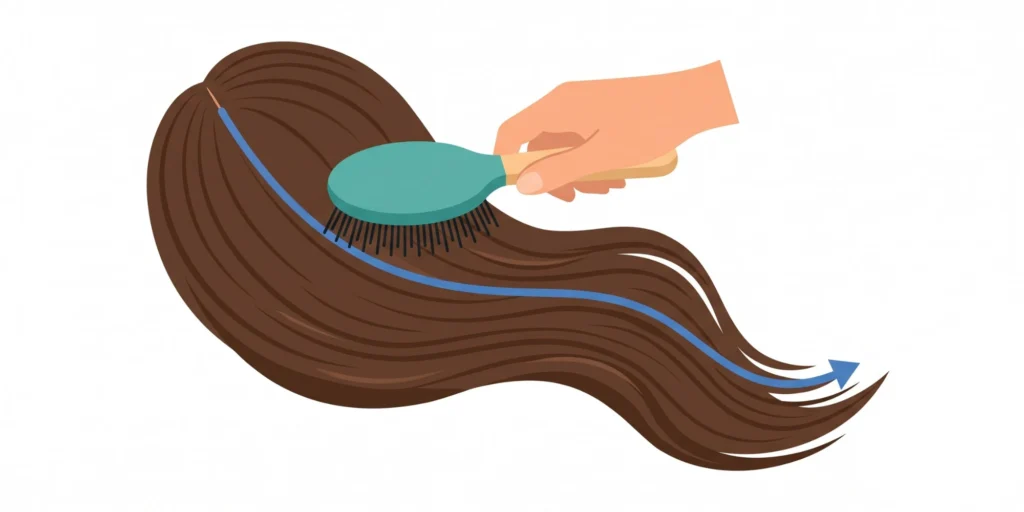
The way a brushing session is conducted affects the outcome more than the number of strokes. Long, smooth strokes from root to tip — following the direction of cuticle growth — cause less cuticle disturbance than short, back-and-forth strokes or strokes that move against the growth direction. Holding the hair section taut with one hand while brushing with the other reduces the amount of tension transmitted to the roots and shaft during each stroke.
Starting from the ends and working upward to the roots when detangling — rather than root-to-tip brushing through knotted hair — reduces the breakage risk at each knot concentration point. This technique matters more than stroke count for daily breakage prevention.
Brush Selection Matters More Than Stroke Count
A correctly specified brush used for 15 to 20 strokes produces better outcomes than an incorrectly specified brush used for 100 strokes. A soft boar bristle paddle brush on fine dry hair provides sebum redistribution and surface smoothing with minimal friction. A hard nylon pin brush on the same hair for 100 strokes generates static, lifts cuticle scales, and causes cumulative mechanical stress — regardless of how many strokes are applied.
The brush selection framework by hair type — covering bristle type, cushion base, and use-case alignment — is covered in our complete guide on how to choose the right hair brush for your hair type.
Timing Within the Hair Care Routine
When in the routine brushing occurs matters as much as how many strokes are applied. Brushing at the damp stage — after towel-drying to remove excess moisture but before the hair is fully dry — achieves sebum redistribution and cuticle smoothing at a point where the hair has sufficient elasticity to absorb mechanical contact without the static generation associated with very dry hair. Brushing on soaking wet hair applies mechanical stress at the point of maximum vulnerability.
Does Brushing Stimulate Hair Growth?
The question of whether brushing promotes hair growth is separate from the 100-strokes question, though it is frequently linked to it. The short answer is that scalp stimulation through brushing may support a healthy scalp environment, but does not directly cause hair growth in hair that would not otherwise grow.
Hair growth is determined primarily by follicle health, hormonal environment, nutrition, and genetics. Scalp massage and light mechanical stimulation have been shown in some studies to modestly increase blood flow to the scalp, which supports follicle health in the same way that overall scalp health supports follicle function. This is a real but modest effect — it does not mean that brushing 100 strokes per day produces meaningfully more growth stimulation than 20 strokes, or that extending a brushing session beyond the point of sebum distribution benefit produces growth results.
For consumers whose primary goal is hair growth rather than hair maintenance, the scalp stimulation effect of brushing does not justify extending brushing sessions beyond the functional range. A scalp massage — conducted with fingertips rather than a brush — provides scalp stimulation with less mechanical stress on the hair shaft than extended brushing.
Sourcing Considerations for B2B Buyers
For brand developers and buyers building hair brush ranges, the evidence base around brushing frequency has direct implications for product positioning and packaging claims.
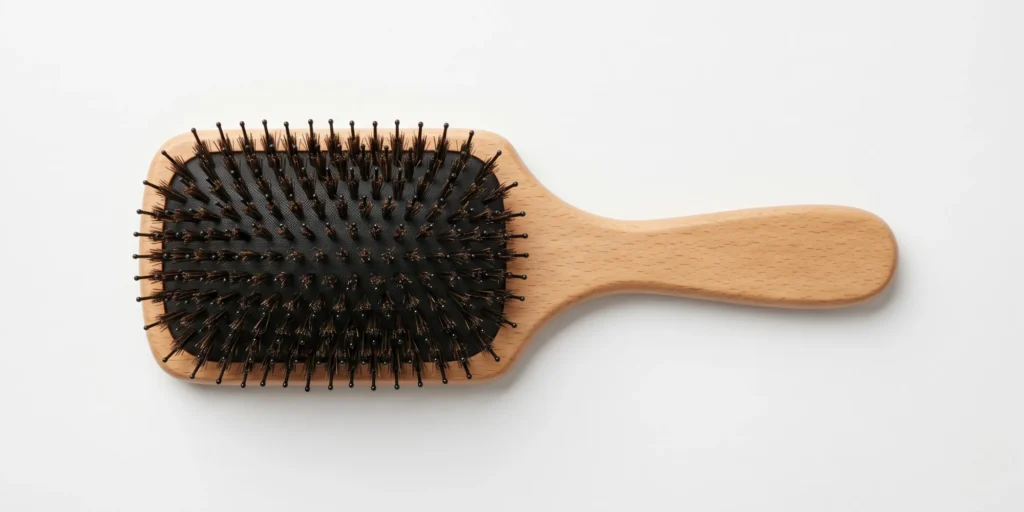
Brushes positioned for daily maintenance use — where the consumer may be using the product once per day in a reasonable-length session — should be specified to minimise cumulative cuticle friction per stroke. This means boar bristle or soft mixed bristle for fine-to-medium hair, air-cushion bases to reduce pin pressure, and ball-tip nylon pins rather than straight-cut pins for synthetic specifications.
Brushes positioned with claims around scalp stimulation or hair health should reflect what the evidence actually supports: light mechanical scalp contact through brushing supports a healthy scalp environment, but does not directly drive hair growth and does not require extended high-stroke-count sessions. Claims that imply extended daily brushing produces hair growth benefits are not supported by the current evidence base and create the consumer expectation mismatches that drive returns.
Packaging guidance that helps consumers use the brush correctly — including recommending a 10 to 25 stroke session rather than implicitly validating the 100-strokes practice — produces better consumer outcomes and strengthens brand trust. Both boar bristle and mixed bristle paddle brushes suited to daily maintenance use are available through OEM and private label manufacturing routes with bristle grade, cushion base, and handle specification adjustable to range positioning requirements.
Frequently Asked Questions
Does brushing hair 100 strokes a day make it healthier?
No. The beneficial effects of brushing — sebum redistribution from root to tip, scalp stimulation, and surface smoothing — are achieved within 10 to 30 strokes per session for most hair types. Beyond this range, additional strokes primarily add cuticle friction without proportional functional benefit. For fine, damaged, or chemically treated hair, 100-stroke sessions cause measurable cumulative damage over time.
Where did the 100-strokes advice come from?
The 100-strokes recommendation originated in the 19th and early 20th centuries, when hair was washed infrequently and brushing was the primary means of distributing scalp oil along the shaft. In that specific context, extended daily brushing served a conditioning function. In the context of modern hair care — with daily or frequent washing, commercial conditioners, and leave-in products — the original functional basis for 100 strokes no longer applies.
Can over-brushing cause hair loss?
Excessive brushing does not typically cause permanent hair loss at the follicle level, but it does cause mechanical breakage — damage to the hair shaft above the scalp that reduces the apparent length and density of the hair over time. In fine hair, cumulative mechanical breakage from extended daily brushing sessions can produce visible thinning that is frequently attributed to other causes. Reducing brushing frequency and using an appropriate brush specification typically resolves brushing-induced breakage within one to two growth cycles.
How many times a day should I brush my hair?
Once per day is sufficient for most hair types. A single well-executed brushing session — 10 to 25 smooth strokes with a correctly specified brush — achieves effective sebum distribution and surface smoothing. Additional sessions during the day should be limited to short touch-up passes rather than full-length sessions, as each session adds cumulative cuticle contact.
Is it better to brush hair in the morning or at night?
Either is appropriate — the timing is less important than the condition of the hair at the time of brushing. Brushing on damp-to-dry hair produces the most effective sebum redistribution and the least static generation. Brushing immediately after waking on very dry hair in a low-humidity environment generates more static than brushing after a light spritz of water or leave-in product.
Does brushing your scalp stimulate hair growth?
Scalp stimulation through brushing or massage has a physiological basis — light mechanical contact increases localised blood flow, which supports follicle health in the same way overall scalp health supports follicle function. However, this is a modest supporting effect rather than a direct growth stimulus. Extended high-stroke-count sessions do not produce meaningfully more growth stimulation than shorter sessions, and the cuticle friction generated by extended brushing offsets scalp stimulation benefit in fine and damaged hair.
Conclusion
The 100-strokes advice is a historical artefact from a specific context — infrequent washing, no commercial conditioners, long straight hair — that has persisted far beyond its relevance. The biology of hair and scalp does not support 100 strokes as an optimal daily brushing quantity for any hair type in the modern hair care context. The benefits of brushing are real but are achieved within the first 10 to 30 strokes; extending sessions beyond this range adds mechanical stress without proportional benefit and, in fine, damaged, or chemically processed hair, causes measurable cumulative harm.
What matters more than stroke count is bristle specification, brush selection by hair type, technique, and the moisture state of the hair at the time of brushing. A shorter session with the right brush, applied correctly, produces better hair health outcomes than a 100-stroke session with a mismatched specification. Manufacturers such as JunYi Beauty, which produces soft boar bristle and mixed bristle paddle brushes suited to daily maintenance use across fine-to-medium hair types from its Dongguan facility, represent the type of OEM partner suited to brands developing brushes with evidence-aligned positioning around daily hair care.